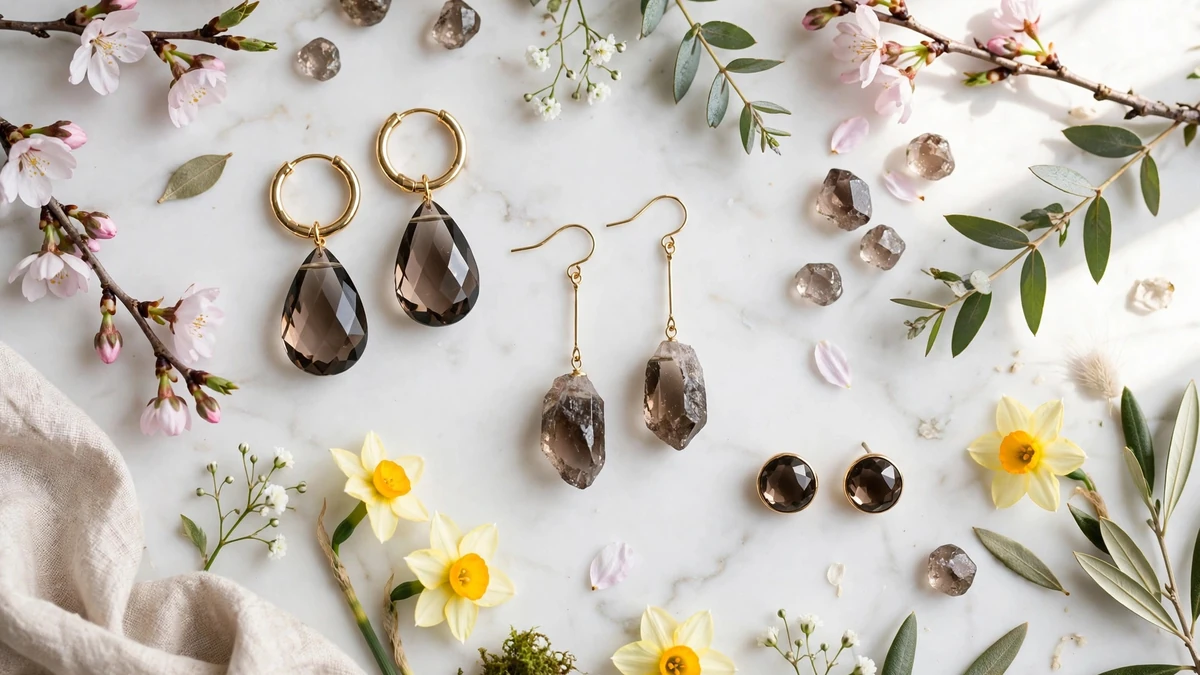

Smoky quartz is the quiet, smoky brown member of the quartz family, and in spring it does something few coloured stones manage: it looks warm, grounded and expensive without trying. It is the colour of wood smoke and dark honey, and it pairs beautifully with the season’s soft neutrals, from cream and camel to sage green and pale grey. The problem is not finding smoky quartz earrings. It is finding a pair with a good colour, a clean stone and a setting that will actually last, at a price that reflects what the stone really is.
That is why this guide is organised by what matters when you buy, not just by brand name. A very dark, almost black stone can look flat on the ear, while a smaller, well-cut stone in a warm, transparent brown can look far more expensive than it is. Price is a poor guide on its own. Smoky quartz is one of the most affordable gemstones, so most of what you pay for is the metal, the cutting and the brand, not the gem itself. A very expensive pair is not automatically a better pair.
Below are nine smoky quartz earrings worth considering in 2027, from classic studs to light drop earrings for spring evenings. Each one is described by what it is good at, what to watch for, and who it suits best, so you can choose with your ears and your budget in mind, not just a bestseller list.
Key takeaways
- Smoky quartz is brown quartz, hard enough for everyday wear at Mohs 7, and its best colour is a warm, transparent medium brown rather than a very dark or almost black stone.
- Most smoky quartz is irradiated to deepen its colour, which is standard, stable and must be disclosed, and it does not make the stone less genuine.
- Choose a bezel or low-prong setting for everyday wear, and check the stone is clean, with no visible cloudiness or large inclusions.
- Smoky quartz is a very affordable stone, so compare the metal and the making, not just the stone size, before you pay a premium price.
- Smoky quartz has no proven healing properties and is not an investment stone, and dyed glass imitations exist, so buy from a seller who states the treatment and the origin honestly.
What smoky quartz actually is
Smoky quartz is the brown to grey-brown variety of quartz, coloured by natural radiation acting on tiny traces of aluminium in the crystal over millions of years. Its colour ranges from a pale, smoky grey to a deep, almost black brown, and the most valued shade for jewellery is a warm, transparent medium brown, often with a hint of honey or cognac. Very dark stones are common and cheaper, while clear, warm stones with good transparency are the ones that look best on the ear.
Most smoky quartz on the market today has been irradiated. The treatment deepens a pale stone to a richer brown, it is stable and permanent, and it is widely accepted in the trade, but a reputable seller should still disclose it. Heat can lighten smoky quartz back towards clear quartz, so a stone left in strong heat can fade. Synthetic smoky quartz exists, and so do glass imitations, which are usually easy to spot because they are too dark, too uniform and too cheap for their size.
For earrings, smoky quartz is a practical stone. At Mohs 7 it is hard enough for daily wear, it does not scratch easily, and it can be cleaned with warm soapy water and a soft brush. It is not as tough as sapphire, and a hard knock can still chip a corner, but in a bezel setting it is one of the most wearable coloured stones you can buy. It suits yellow gold and rose gold best, because warm metals bring out the brown, while silver and white gold give it a cooler, more modern look.
How we chose these earrings and what to look for
Look first at the colour. Hold the stone against a white background in daylight and check whether the brown is warm and transparent, or dark and flat. A medium, honeyed brown with good transparency is the sweet spot for spring, and it is worth paying a little more for than a very dark stone that looks black on the ear. Avoid stones that look cloudy or muddy, and avoid stones with large visible inclusions, which weaken the gem and dull its sparkle.
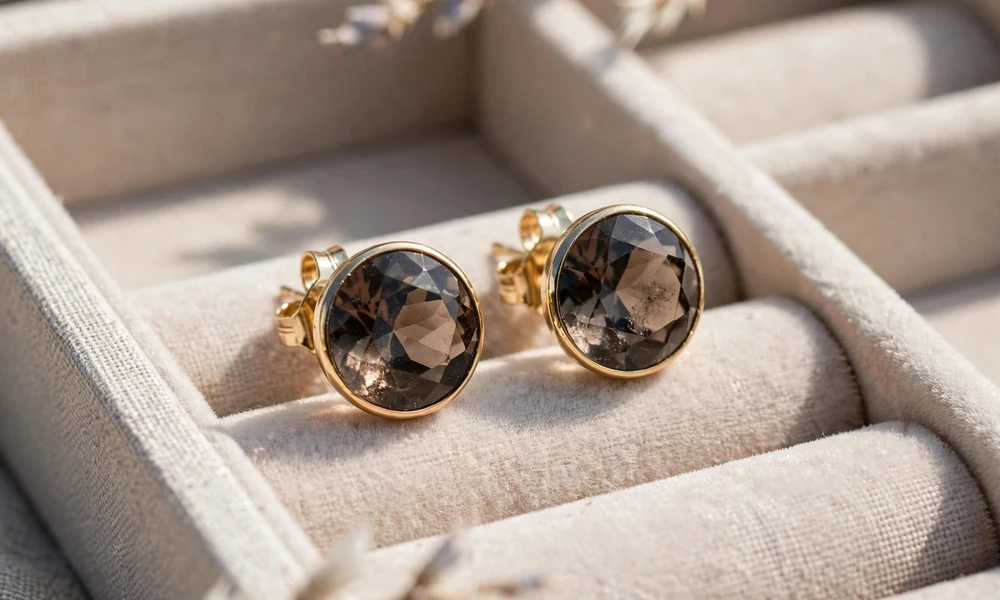
Look next at the setting and the metal. A bezel setting protects the stone and suits everyday wear, while prongs show more of the stone but leave the corners exposed. Check the backs are secure, especially for drops, and check the metal is hallmarked. Our guide to diamond earrings explains the same setting checks in more detail, because the questions that matter for a diamond stud, security, metal quality and wearability, matter just as much for smoky quartz.
Finally, look at the disclosure. A good seller states whether the stone is irradiated, whether it is natural or synthetic, and where it comes from. If a listing says nothing about treatment, or calls a very large, very cheap stone natural and untreated, treat that as a warning sign. Smoky quartz is one of the cheapest gemstones, so a price that looks too good for the size usually means glass, synthetic material or a stone far darker than the photograph suggests.
The 9 best smoky quartz earrings for spring 2027
Tiffany & Co. Studs
What we like: Classic six-prong studs in yellow gold with clean, well-matched smoky quartz, a secure screw back, and a cut that keeps the warm brown bright even in a small stone. What to consider: Premium price for the size, and the warm colour suits warm skin best. Stone: Natural smoky quartz, irradiated. Setting: 18k yellow gold prong. Best for: Everyday luxury and spring occasions. Price range: £900 to £1,400.
A safe, beautifully made choice if you want smoky quartz from a house with strict stone standards and a setting that will last for years.
Cartier Studs
What we like: Elegant studs in 18k yellow gold with a warm, even brown and a refined, low-profile setting that sits comfortably all day. What to consider: Expensive for the stone size, and the design is deliberately simple. Stone: Natural smoky quartz, irradiated. Setting: 18k yellow gold prong. Best for: Polished daytime wear and gifts. Price range: £800 to £1,300.
Cartier does understatement well, and these studs are the kind of pair you reach for without thinking, which is exactly what a good everyday earring should be.
David Yurman Studs
What we like: Smoky quartz studs with the brand’s signature cable detail, a warm honeyed brown, and a comfortable, well-balanced back. What to consider: The cable detail adds weight, and the colour is on the darker side. Stone: Natural smoky quartz, irradiated. Setting: Sterling silver or 18k gold cable. Best for: Relaxed luxury and spring weekends. Price range: £400 to £700.
A good middle ground between fine jewellery and fashion jewellery, with a recognisable design and a stone colour that suits most skin tones.
Mejuri Stud Earrings
What we like: Simple, well-cut smoky quartz studs in solid gold at a fair price, with a warm brown and a secure butterfly back. What to consider: Small stones, so the colour reads darker on the ear than in photographs. Stone: Natural smoky quartz, irradiated. Setting: 14k solid gold prong. Best for: Everyday wear and first smoky quartz studs. Price range: £110 to £200.
One of the best value pairs in this guide, and a sensible first buy if you want to try smoky quartz without committing to a luxury price.
Monica Vinader Studs
What we like: Delicate smoky quartz studs in gold vermeil with a warm, clear brown and a light, comfortable fit. What to consider: Vermeil wears faster than solid gold, and the stones are small. Stone: Natural smoky quartz, irradiated. Setting: 18k gold vermeil on sterling silver. Best for: Spring outfits and layering with other earrings. Price range: £80 to £140.
A pretty, affordable pair for spring, best kept for regular rather than constant wear so the vermeil lasts longer.
Missoma Stud Earrings
What we like: Modern smoky quartz studs with a warm, transparent brown and a slim setting that works well alone or as part of a stack. What to consider: Small stones and a light setting, so they suit delicate styling rather than statement looks. Stone: Natural smoky quartz, irradiated. Setting: 18k gold vermeil on recycled sterling silver. Best for: Minimal spring styling and ear stacks. Price range: £90 to £150.
Good for anyone building an ear stack, because the warm brown sits neatly beside gold hoops and small diamond studs without competing with them.
Maria Black Studs
What we like: Sculptural smoky quartz studs with a cool, contemporary shape and a deep, smoky brown that suits silver and white gold. What to consider: The design is modern rather than classic, and the colour is very dark. Stone: Natural smoky quartz, irradiated. Setting: Sterling silver or 14k gold. Best for: Modern, minimal spring looks. Price range: £100 to £190.
A good choice if classic studs feel too plain, and you want smoky quartz with a design edge rather than a traditional setting.
Astrid & Miyu Drops
What we like: Light smoky quartz drop earrings with a warm brown that catches the light as you move, and a comfortable hook that stays put. What to consider: Drops need more care than studs, and the stones are small. Stone: Natural smoky quartz, irradiated. Setting: 18k gold-plated recycled sterling silver. Best for: Spring evenings and occasion dressing. Price range: £70 to £120.
The most affordable drops in this guide, and a good way to wear smoky quartz as a spring evening earring without a fine-jewellery budget.
Thomas Sabo Drops
What we like: Smoky quartz drops with a warm, cheerful brown and a playful design that suits spring, with a secure hook and a light feel on the ear. What to consider: Fashion jewellery rather than fine jewellery, so the plating will wear with heavy use. Stone: Natural smoky quartz, irradiated. Setting: 925 sterling silver, gold-plated. Best for: Fun spring styling and holidays. Price range: £85 to £140.
A light-hearted pair for spring, best worn for occasions and holidays rather than every day, so the finish stays bright.
Which smoky quartz earrings are right for you
Warm skin usually suits a medium honeyed brown best, because the warmth flatters the complexion and the stone reads clearly on the ear. Fair skin can wear the full range, though a very dark stone can look heavy, so a lighter, more transparent brown is often the better choice. Medium and olive skin suit deeper browns well, and dark skin suits a warm, transparent brown that stands out clearly in both gold and silver.
For everyday wear, choose studs in a bezel or low-prong setting, in solid gold if your budget allows, because they are the most secure and the most comfortable. For spring evenings, drops are the better choice, and a light pair with a secure hook will stay comfortable for hours. If you wear glasses or a hat often, studs are more practical, because drops can catch on frames and brims.
Budget matters more than brand here. Smoky quartz is one of the cheapest gemstones, so a £120 pair in solid gold can be better made than a £900 pair that charges mostly for the name. Our guide to gold jewellery for everyday wear is a useful companion, because the metal and the making decide how long a pair lasts far more than the stone does.
The caveats that matter
Smoky quartz is durable, but it is not indestructible. A hard knock can chip a corner, especially on a prong-set stone, and a very dark stone can look black in dull light, so check the colour in daylight before you buy. Irradiation is standard and stable, so it is not something to worry about, but it should be disclosed. Strong heat can lighten smoky quartz, so keep it away from high heat and ultrasonic cleaners with hot solutions. Dyed glass imitations are sold, sometimes without clear labelling, so buy from a seller who states the treatment and the origin in writing.
| Detail | What is known |
|---|---|
| Stone | Brown quartz, coloured by natural radiation, Mohs 7 |
| Best colour | Warm, transparent medium brown with a hint of honey |
| Treatment | Irradiation is standard, stable and must be disclosed |
| Best setting | Bezel for everyday wear, low prongs to show more stone |
| Best metal | Yellow or rose gold for a warm brown; silver for a cooler look |
| Care | Warm soapy water and a soft brush; avoid high heat |
| What to avoid | Very dark flat stones, cloudy stones, undisclosed synthetics or glass |
| What it does not do | It has no proven healing properties and is not an investment stone |
If you are buying smoky quartz as a gift, check the returns policy before you buy, because colour is personal and a dark stone can look different on the ear than in a photograph. Keep the receipt and any certificate, and ask for the treatment to be stated in writing, so you have a record if you ever need a repair or a valuation.
Checklist: choosing smoky quartz earrings honestly
Use these checks before you buy, and again when the pair arrives.
- Check the colour in daylight against white: warm, transparent medium brown, not black or flat.
- Check the stone is clean: no cloudiness and no large visible inclusions.
- Check the setting: bezel or low prongs, secure backs, and hallmarked metal.
- Check the disclosure: irradiation, natural or synthetic, and origin stated in writing.
- Check the price against the metal: smoky quartz is very affordable, so most of the cost is the making.
- Check the fit: studs for everyday wear, secure hooks for drops, and no pinching or pulling.
Frequently asked questions
Is smoky quartz a good stone for everyday earrings?
Yes. At Mohs 7 it is hard enough for daily wear, it does not scratch easily, and it cleans well with warm soapy water. A bezel setting gives the best protection for everyday use.
Is irradiated smoky quartz still a real smoky quartz?
Yes. Irradiation is a standard, permanent process that deepens the brown colour, and the stone is still natural smoky quartz. It should be disclosed, and it does not make the stone less genuine.
What colour smoky quartz should I choose for spring?
A warm, transparent medium brown is the best choice for spring, because it reads fresh and bright in daylight. Very dark stones can look black, while very pale stones can look grey.
Does smoky quartz go with gold or silver?
Both, but warm metals suit it best. Yellow and rose gold bring out the brown, while silver and white gold give it a cooler, more modern look.
How can I tell smoky quartz from glass?
Glass imitations are often too dark, too uniform and too cheap for their size, with bubbles or a dull, flat colour. Real smoky quartz has a warm, transparent brown and small natural inclusions. When in doubt, buy from a seller who discloses treatment and origin in writing. Our guide to diamond necklaces covers the same buying checks for coloured stones, because the questions about disclosure and imitations apply across the whole jewellery counter.
Is smoky quartz a good investment?
No. Smoky quartz is one of the most affordable gemstones, and it does not hold value the way a fine diamond or a rare ruby might. Buy it because you love the colour and the design, not because you expect it to appreciate.
The bottom line
The best smoky quartz earrings for spring 2027 are not the most expensive or the largest. They are the pair with a warm, even medium brown, a clean stone, a secure setting and honest disclosure about treatment. A honeyed brown in a simple bezel, in yellow or rose gold, will suit most people and most spring outfits, and it will last far longer than a flashier pair with a cloudy stone.
Choose the colour first, then the setting, then the price. Check the stone in daylight, check the backs are secure, and keep the receipt and any certificate. That is the honest way to buy smoky quartz, and it is how a simple spring earring becomes a pair you actually wear.