
The best tea for a sore throat is the one that feels gentle going down, keeps you hydrated, and suits the rest of your symptoms. A warm cup will not cure a sore throat, but the right blend can make a scratchy throat feel more comfortable for a while.
So which tea should you reach for first? A licorice-root blend such as Traditional Medicinals Throat Coat is the best overall pick for a dry, hoarse throat, chamomile is the best choice for the evening, and ginger is the best pick when a sore throat arrives with a cold.
Key takeaways
- Throat Coat, a licorice-root blend with slippery elm and marshmallow root, is the best pick for a dry, hoarse throat.
- Chamomile is the best evening pick: gentle, floral, caffeine-free.
- Ginger is the best pick when a sore throat comes with a cold.
- Peppermint suits a stuffy head, and green tea suits a lighter, fresher cup.
- Let tea cool to a comfortable warmth, and skip lemon if it stings.
How to Choose the Best Tea for a Sore Throat
Start with your main symptom. A dry, scratchy throat suits a soft, coating blend with licorice root, slippery elm, or marshmallow root. A sore throat with congestion suits peppermint or ginger. A sore throat at bedtime suits chamomile, which is mild and caffeine-free.
Most herbal teas have no caffeine, so they are easy to drink; our guide to the best luxury tea brands compares the big names. Green tea and black tea do contain caffeine, so choose a decaffeinated version in the evening.
Finally, read the label: some throat teas contain licorice root, which is not suitable for everyone. If you take regular medicine, ask your doctor or pharmacist first.
The 10 Best Teas for a Sore Throat in 2027
1. Traditional Medicinals Throat Coat
Throat Coat is the classic throat tea, and the best pick for a dry, hoarse throat. The blend is built on licorice root, with slippery elm bark and marshmallow root. It tastes sweet and silky, with a distinct licorice flavour.
Slippery elm and marshmallow root give the cup a soft, coating feel. Steep a bag in freshly boiled water for ten to fifteen minutes, covered, with honey if you like. Licorice root is not for everyone, so check the label if you have high blood pressure or heart trouble.
Best for: a dry, hoarse throat and a lost voice.
2. Chamomile Tea
Chamomile is the gentlest pick on this list, and the best choice for the evening. It is made from dried chamomile flowers, not from the tea plant, so it contains no natural caffeine. The flavour is mild, floral, and slightly sweet.
Many people reach for chamomile when a sore throat keeps them awake. Steep a bag for five to seven minutes in water just below boiling, and add honey if you like. It may interact with some medicines, including warfarin, so check with your doctor or pharmacist first.
Best for: evenings and bedtime, when you want something mild and caffeine-free.
3. Ginger Tea
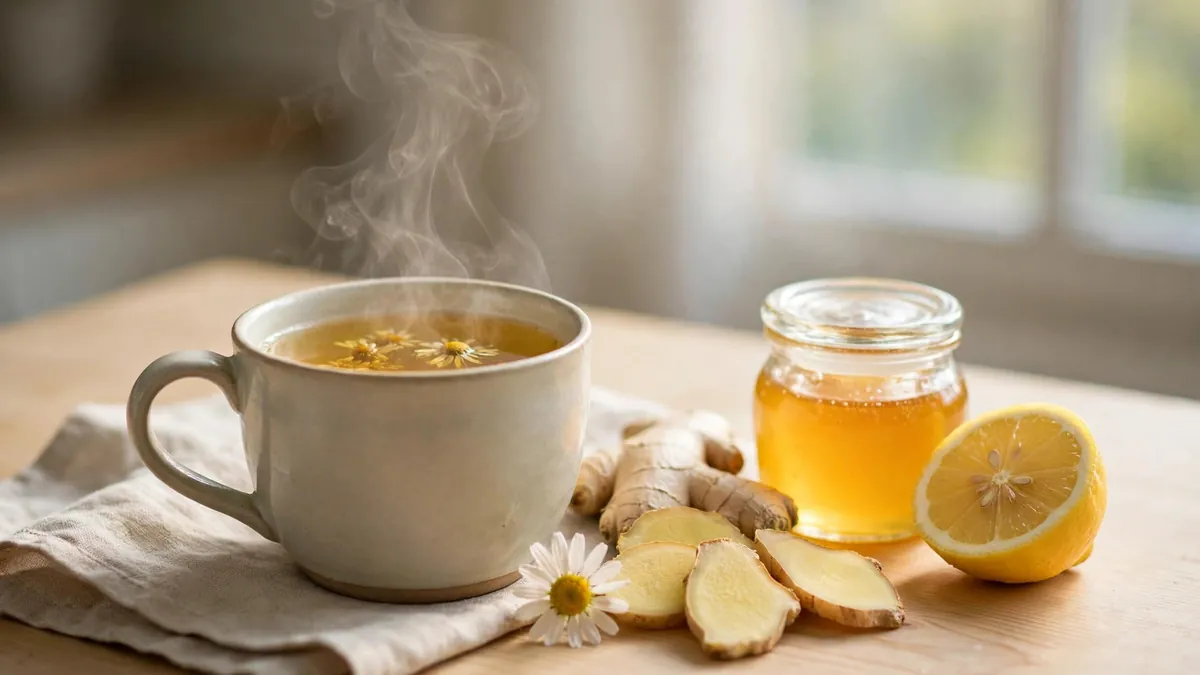
Ginger tea is the warming pick, and the best choice when a sore throat arrives with a cold or a blocked nose. Fresh ginger makes a spicy, fragrant infusion that pairs well with honey and lemon.
Slice a thumb-sized piece of ginger, steep it in hot water for about ten minutes, then strain and add honey to taste. The warmth and spice feel bracing rather than harsh.
Best for: a sore throat that comes with a cold or congestion.
4. Peppermint Tea
Peppermint tea is the cooling pick. Its menthol gives a fresh, tingling sensation that many people find soothing, and the steam can feel clearing when your nose is blocked. The flavour is bright and clean, without sweetness or spice.
Steep a bag for five to seven minutes, and breathe in the steam before you sip. Peppermint may aggravate heartburn or reflux, so if you have reflux, chamomile is the gentler option.
Best for: a sore throat with a stuffy nose and a blocked head.
5. Green Tea with Honey
Green tea with honey is the lightest pick on this list. It offers warm hydration with a fresh, grassy flavour, and honey adds sweetness and a coating feel. It suits anyone who finds herbal blends too soft or too sweet.
Green tea does contain caffeine, so choose a decaffeinated version in the evening, or save this pick for the daytime. Brew it with water below boiling, and stir in honey once the cup has cooled; our guide to the best green tea compares the main types.
Best for: daytime sipping, when you want a lighter, fresher cup.
6. Licorice Root Tea
Plain licorice root tea is the sweetest pick here, and the simplest way to enjoy the herb at the heart of most throat blends. It brews into a naturally sweet, smooth cup with a warm, earthy flavour.
Licorice root is the main ingredient in Throat Coat. It is not recommended for everyone, especially during pregnancy or with high blood pressure, kidney trouble, heart trouble, or certain medicines.
Best for: anyone who loves the sweet, soothing flavour of licorice.
7. Yogi Throat Comfort
Yogi Throat Comfort is a ready-made alternative to Throat Coat, built around slippery elm and licorice root. It suits anyone who wants a throat blend from a different brand.
Slippery elm gives the cup its silky texture, while licorice root brings the sweetness. The blend is caffeine-free. Slippery elm may affect how other medicines are absorbed, so leave an hour or two between your tea and your tablets.
Best for: a raw, scratchy throat, when you want a ready-made slippery elm blend.
8. Marshmallow Root Tea
Marshmallow root tea is the quietest pick on this list, and one of the most soothing in texture. Marshmallow root, the plant rather than the sweet, contains mucilage, which gives the cup a soft, silky feel on a dry throat. The flavour is mild, earthy, and faintly sweet.
You will most often meet marshmallow root inside throat blends such as Throat Coat. A plain cup suits anyone who wants that silky texture without the strong licorice flavour. Steep it longer than a leaf tea, covered, and add honey if you like.
Best for: a very dry throat that wants a soft, silky cup.
9. Honey and Lemon Tea
Honey and lemon tea is the simplest pick on this list. Warm water with honey and a squeeze of lemon is a time-tested combination, and you can build it on any tea base you like.
Honey coats the throat and adds sweetness. Lemon adds brightness, though its acidity can sting a very raw throat, so leave it out if it bothers you. Honey should not be given to children under one year old, because of the risk of infant botulism.
Best for: a quick, simple remedy from ingredients already in the kitchen.
10. Turmeric Tea
Turmeric tea is the golden pick, warm and earthy, with a gentle spice that suits a cold evening. It is usually brewed from ground turmeric or fresh turmeric root, with a little black pepper and honey.
Turmeric has a long history in traditional cooking and remedies. Keep the cup mild, and let it cool to a comfortable warmth before you drink it.
Best for: a warming evening cup with a golden, earthy flavour.
How to Brew a Soothing Cup

Use fresh water, and let it sit for a minute before pouring over green tea, which tastes bitter in boiling water. For herbal and root teas, a covered steep of five to ten minutes gives a fuller flavour.
Let the cup cool until it is comfortably warm, because very hot liquid can irritate sensitive tissue. Sip slowly through the day to keep your throat moist. Honey is the most useful addition, stirred in once the tea has cooled a little. Our guide on how to make tea covers the full routine.
The 10 Teas at a Glance
| Tea | Caffeine | Flavour | Best for |
|---|---|---|---|
| Throat Coat | None | Sweet, silky, licorice | Dry, hoarse throat |
| Chamomile | None | Mild, floral, gentle | Evenings and bedtime |
| Ginger | None | Warm, spicy, bright | Colds and congestion |
| Peppermint | None | Cool, fresh, tingling | Stuffy nose |
| Green tea with honey | Yes, unless decaf | Light, fresh, grassy | Daytime sipping |
| Licorice root | None | Naturally sweet, earthy | Licorice lovers |
| Yogi Throat Comfort | None | Sweet, herbal, silky | Raw, scratchy throat |
| Marshmallow root | None | Mild, earthy, silky | Very dry throat |
| Honey and lemon | Depends on base tea | Sweet, bright, simple | Quick home remedy |
| Turmeric | None | Warm, earthy, golden | Warming evening cup |
Nine of the ten picks are naturally caffeine-free, so you can drink them through the day and before bed. Green tea is the exception.
What to Check Before You Buy
Read the ingredient list before you buy a blend, and look for licorice root, which needs care for some people. If you are pregnant, breastfeeding, or taking regular medicine, check with your doctor or pharmacist before trying a new herbal tea.
Choose tea bags for convenience and loose leaf for flavour. Buy small amounts and store them well: herbal tea fades with time, light, and damp, so keep packets sealed in a cool, dark cupboard.
Keep expectations modest: a good tea can make a sore throat feel more comfortable and keep you hydrated, but it is not a treatment for an infection. If your throat is very painful, if symptoms last more than a few days, or if you have trouble swallowing or breathing, speak to a doctor.
Your Sore-Throat Tea Checklist
- Match the tea to your symptom: coating blends for dryness, peppermint or ginger for congestion, chamomile for bedtime.
- Choose caffeine-free teas in the evening, and decaffeinated green tea after dark.
- Read the label for licorice root, and check with your doctor or pharmacist if you are pregnant or take medicine.
- Brew with fresh water, steep covered, and let the cup cool to a comfortable warmth.
- Add honey if you like, skip lemon if it stings, and never give honey to a child under one year old.
- Keep packets sealed, cool, and dark.
Frequently Asked Questions
What is the best tea for a sore throat?
A licorice-root blend such as Throat Coat is the best overall pick for a dry, hoarse throat. Chamomile is the best evening pick, and ginger is the best pick when a sore throat comes with a cold.
Does tea actually help a sore throat?
Warm tea can feel soothing on an irritated throat and helps you stay hydrated. It does not treat the infection behind a sore throat, so it is best seen as comfort rather than a cure. If symptoms last more than a few days, speak to a doctor.
Should I add honey to tea for a sore throat?
Honey coats the throat and adds sweetness, and many people find it kinder. Honey should not be given to children under one year old, because of the risk of infant botulism.
What tea should I avoid with a sore throat?
Very hot tea can irritate a sore throat, so let every cup cool to a comfortable warmth. Strong, bitter tea can also feel harsh. Lemon can sting a raw throat, so leave it out if it bothers you.
The Bottom Line
The best tea for a sore throat is a warm, gentle cup you enjoy drinking: a licorice-root blend for a dry throat, chamomile for the evening, ginger for a cold, and peppermint for congestion.
Buy a small box of one or two blends that match your symptoms, and let the cup cool before you drink it. If your throat does not improve, speak to your doctor or pharmacist. This article is general information, not medical advice.