Topaz is the sensible choice in the gemstone world, and that is exactly why it works so well on the wrist. It is hard, bright, and available in colours that range from the palest sky blue to deep London blue, warm imperial orange, and clear white. A topaz bracelet gives you the sparkle of a fine gemstone without the fragility of opal or the price of sapphire, and it survives daily wear far better than most stones at its price.
The problem is not topaz itself. It is that most blue topaz is treated, most cheap topaz is pale to the point of looking washed out, and topaz has a hidden weakness that its hardness rating does not show. Topaz scores 8 on the Mohs scale, which sounds tough, but it has perfect cleavage, which means a sharp knock in the wrong direction can split the stone cleanly. A bracelet is the one place in a jewellery box where sharp knocks happen every day, so the setting matters even for a hard stone.
Below are nine topaz bracelets worth considering in 2027, from classic tennis lines to sculptural cuffs and simple chains with a single stone. Each one is described by what it is good at, what to watch for, and who it suits best, so you can choose with your wrist in mind, not just a photograph.
Key takeaways
- Topaz is an aluminium silicate at 8 on the Mohs scale, hard enough for daily wear and bright enough to read as a fine gemstone.
- Most blue topaz is irradiated and heat-treated to create its colour, which is standard practice but must be disclosed by the seller.
- Topaz has perfect cleavage, so a sharp knock can split it despite its hardness, and a bezel or channel setting protects it best.
- London blue is the deepest and most expensive blue, Swiss blue is brighter and lighter, and sky blue is the palest and cheapest.
- No topaz bracelet is an investment, and very cheap blue topaz is often pale, poorly cut, or set in thin metal that will not last.
What topaz actually is
Topaz is an aluminium silicate mineral, and its natural colours are usually colourless, pale yellow, or pale brown. The vivid blues that most people associate with topaz do not occur in nature in that strength. Almost all blue topaz starts as colourless topaz that is irradiated and then heat-treated to produce a stable blue. That treatment is standard, permanent, and widely accepted in the trade, but a seller should still tell you it has been done, because an untreated natural blue topaz is rare and priced very differently.
The three blues have their own characters. Sky blue is pale and icy, the cheapest of the three, and pretty in a delicate bracelet. Swiss blue is brighter and more saturated, and the best balance of colour and price. London blue is deep, almost teal, the most expensive blue topaz, and the one that reads as a serious gemstone rather than a fashion stone. Imperial topaz, which is orange-pink to peach, is the rarest and most valuable topaz of all,.
Topaz is also often confused with other stones. Clear white topaz is sold as a diamond alternative, and it does sparkle, but it is softer than diamond and will dull over time if worn daily. Citrine is sometimes sold as topaz, and the two are different stones entirely, so check the name on the certificate, not just the colour.
How we chose these bracelets and what to look for
Look first at the colour. A good blue topaz should have an even, saturated colour with no grey or washed-out patches, and the stones in a tennis bracelet should match each other closely. Hold the bracelet up to the light and look through the stones. A stone that looks lively and clear is well cut. A stone that looks dull or cloudy is either poorly cut or of low quality, and no setting will fix that.
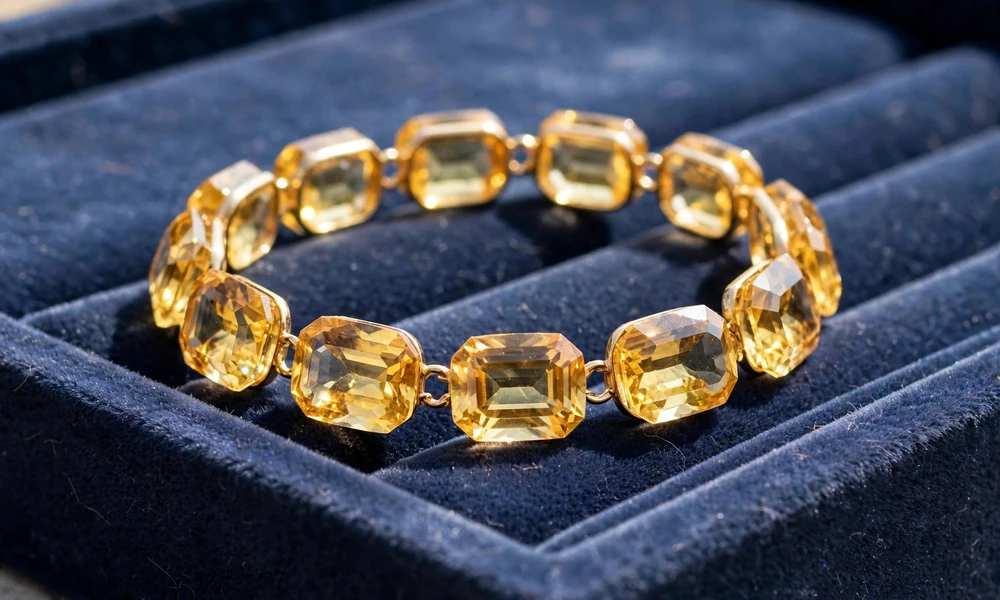
Look next at the setting. Topaz is hard, but its cleavage means a sharp knock can split it, so a bezel or channel setting is still the safest choice. A tennis bracelet protects each stone with its neighbours and with the metal around it, which is why it is the best design for a stone you plan to wear every day. A prong setting shows more of the stone, but it leaves the corners exposed, and topaz corners are where cleavage damage usually starts. Our guide to the best topaz necklaces explains the same stone in a safer place, because a pendant hangs away from knocks while a bracelet meets them all day.
Finally, look at the metal and the clasp. Topaz suits white gold and platinum, which keep the focus on the blue, and yellow gold, which warms it and suits the deeper London blue particularly well. A box clasp with a safety catch is worth having on any bracelet with real stones, because a bracelet that slips off unnoticed is gone. Check that the stones are securely set, with no movement when you press them gently, and that the bracelet sits flat on the wrist without twisting.
The 9 best topaz bracelets of 2027
Tiffany & Co. Topaz Tennis
What we like: A classic tennis line in 18-karat gold with matched Swiss blue topaz, each one bezel-set, with a secure box clasp and safety catch, and the kind of aftercare service that makes a treated stone easy to own with confidence.
What to consider: Premium price, and Swiss blue is brighter than London blue, so it reads as cheerful rather than deep. Stone: Swiss blue topaz, treated. Setting: Bezel-set tennis line. Best for: Everyday luxury with real colour. Price range: £2,500 to £5,000.
Cartier Topaz Line
What we like: A refined line bracelet in 18-karat gold with small, evenly matched London blue topaz, a discreet box clasp, and a slim profile that sits flat on the wrist and slips easily under a cuff.
What to consider: The stones are small, so the colour is subtle rather than dramatic, and the price reflects the name as much as the stones. Stone: London blue topaz, treated. Setting: Bezel-set line. Best for: Quiet, everyday elegance. Price range: £2,000 to £4,500.
David Yurman Topaz Cable
What we like: A cable bangle in sterling silver with a single blue topaz cabochon at each end, a sculptural shape that is instantly recognisable, and a stone that is set low in its bezel so it does not catch on sleeves.
What to consider: A bangle slides on and off the wrist, so the stones meet more knocks than a fitted bracelet, and silver needs regular polishing. Stone: Swiss blue topaz, treated. Setting: Bezel-set cable ends. Best for: Statement styling with a hard stone. Price range: £700 to £1,500.
Mejuri Topaz Tennis
What we like: A fine tennis bracelet in 14-karat gold vermeil with small blue topaz, a light feel on the wrist, a price that makes topaz accessible, and a design that layers well with a plain gold chain.
What to consider: Vermeil is gold over silver, so it will wear over time, and the stones are small, so the colour is gentle. Stone: Sky blue topaz, treated. Setting: Prong-set tennis line. Best for: A first topaz bracelet. Price range: £120 to £300.
Monica Vinader Topaz Tennis
What we like: A tennis bracelet in 18-karat gold vermeil with matched blue topaz, a neat box clasp, and a clean, modern line that works from day to evening without trying too hard.
What to consider: Vermeil wears over time, and the stones are small, so this is a subtle bracelet rather than a showpiece. Stone: Swiss blue topaz, treated. Setting: Bezel-set tennis line. Best for: Everyday wear on a budget. Price range: £180 to £400.
Missoma Topaz Chain
What we like: A fine gold chain bracelet with a single blue topaz drop, a light and easy feel, and a design that pairs well with other bracelets without competing with them.
What to consider: A single exposed stone is the most vulnerable design here, so this is an occasional-wear bracelet, not a daily one. Stone: Swiss blue topaz, treated. Setting: Bezel-set drop. Best for: Layering and evenings out. Price range: £100 to £280.
Maria Black Topaz Sculptural
What we like: A sculptural cuff in sterling silver with a bold blue topaz, a strong design-led look, and a stone that is set deep in the metal so it is better protected than it first appears.
What to consider: A cuff is rigid, so it takes knocks directly, and the stone is large and exposed, so this is a bracelet for occasions, not for the office. Stone: London blue topaz, treated. Setting: Deep bezel-set cuff. Best for: Bold, design-led styling. Price range: £350 to £800.
Astrid & Miyu Topaz Tennis
What we like: A delicate tennis bracelet in gold vermeil with small blue topaz, a light and comfortable fit, and a price that makes it easy to try topaz without a big commitment.
What to consider: Vermeil wears over time, the stones are small, and the prongs are low but not as protective as a bezel. Stone: Sky blue topaz, treated. Setting: Prong-set tennis line. Best for: Everyday sparkle on a budget. Price range: £90 to £220.
Thomas Sabo Topaz Link
What we like: A link bracelet in sterling silver with blue topaz set into chunky links, a substantial feel on the wrist, and a design that hides the stones well inside the metalwork.
What to consider: Silver tarnishes and needs cleaning, and the links make this a heavier bracelet than the tennis styles here. Stone: Swiss blue topaz, treated. Setting: Bezel-set links. Best for: A bolder, everyday topaz bracelet. Price range: £180 to £450.
Which topaz bracelet is right for you
If you want topaz every day, choose a tennis bracelet with bezel-set stones and a secure clasp. The Tiffany & Co. and Cartier lines are the safest versions of that idea, and the Monica Vinader tennis is the most affordable one that still gives the stones real protection.
If you want topaz for evenings and occasions, a single-stone chain or a sculptural cuff is a better choice, because you get a bigger, more dramatic stone without paying for nine of them. The Missoma chain and the Maria Black cuff both do this well, but they still need to come off before you wash your hands, cook, or do anything that involves knocking your wrist. Our guide to the best topaz jewellery covers the same stone in earrings and pendants, which are safer places for it, and it is worth reading before you decide where your topaz budget goes.
If you are buying your first topaz bracelet, decide on the colour before the brand. London blue is the deepest and most serious, Swiss blue is the brightest and most versatile, and sky blue is the palest and most delicate. A well-cut Swiss blue in a bezel is a better buy than a washed-out London blue in a tall prong setting,
The caveats that matter
Topaz is hard, but it is not indestructible, and the two facts that matter most are the ones that do not show up in a hardness number. The first is cleavage: topaz splits cleanly along one plane, so a sharp knock in the wrong direction can crack a stone that would have survived a much harder blow from another angle. The second is treatment: almost all blue topaz is irradiated and heat-treated, which is standard and permanent, but it means the stone you are buying is not the colour nature made it.
| Detail | What is known |
|---|---|
| Best topaz for a bracelet | Swiss or London blue topaz, well cut, evenly matched, bezel or channel set |
| Treatment | Most blue topaz is irradiated and heat-treated, standard, permanent, must be disclosed |
| Safest setting | Bezel or channel setting, with the corners of each stone protected by metal |
| Hardness | 8 on the Mohs scale, hard, but perfect cleavage means a sharp knock can split it |
| Cleaning | Warm soapy water and a soft brush, never steam, and ultrasonic only with care |
| What to avoid | Sharp knocks, steam cleaning, and storing it loose with harder stones like diamonds |
| Colour guide | London blue is deepest and dearest, Swiss blue is brightest, sky blue is palest |
| What it does not do | Topaz has no proven healing properties and is not an investment stone |
If your bracelet gets knocked hard, check the stones for chips at the corners and for any stone that has moved in its setting.
Checklist: choosing a topaz bracelet honestly
Use these checks before you buy, and again after two weeks of wear.
- Check the colour: it should be even and saturated, with no grey or washed-out patches.
- Check the treatment: ask whether the blue topaz is irradiated and heat-treated, and get it in writing.
- Check the setting: a bezel or channel setting protects topaz corners far better than tall prongs.
- Check the clasp: a box clasp with a safety catch stops a bracelet slipping off unnoticed.
- Check the stones: they should be evenly matched, bright, and free of chips or cracks at the corners.
- Check the care: clean with warm soapy water, never steam, and store separately from harder stones.
Frequently asked questions
Is blue topaz natural?
Almost never in the deep blues sold in shops. Natural blue topaz is very pale, and almost all blue topaz is colourless topaz that has been irradiated and heat-treated to create a stable blue. The treatment is standard, permanent, and widely accepted, but a good seller discloses it, because an untreated natural blue topaz is rare and priced very differently.
What is the difference between Swiss blue and London blue topaz?
Swiss blue is brighter, lighter, and more vivid, and it is the most popular blue for everyday jewellery. London blue is deeper, darker, and almost teal, and it is the most expensive blue topaz because the colour is rarer and reads as more serious. Sky blue is the palest of the three and the cheapest. Choose the colour you like looking at, not the one with the highest price.
Can I wear a topaz bracelet every day?
Yes, if it is a bezel-set tennis bracelet and you take it off for heavy work, sport, and anything that involves sharp knocks. Topaz is hard at 8 on the Mohs scale, but its perfect cleavage means a sharp knock can split it, so a bracelet you wear daily needs a protective setting and a secure clasp.
How do I clean a topaz bracelet?
With warm soapy water and a soft brush, gently, then rinse and dry with a soft cloth. Never use a steam cleaner, which can damage topaz through its cleavage, and use an ultrasonic cleaner only with care and never on a stone that is already chipped. Store it separately from diamonds and sapphires, which are harder and can scratch it.
Is white topaz a good diamond alternative?
It sparkles, but it is not a diamond. White topaz is much softer than diamond at 8 on the Mohs scale, so it will dull and scratch over time if worn daily, and it has less brilliance. It works well as an occasional-wear stone or in earrings and pendants, where it meets fewer knocks, but a diamond bracelet is the honest choice if you want a stone that stays bright under daily wear.
Is topaz a good investment?
No. Topaz is bought for its colour and its price, not for its resale value, and most topaz jewellery sells for far less second-hand than it cost new. Imperial topaz is the exception in that it holds value better than blue topaz, but it is still a purchase to enjoy rather than an asset. Buy topaz because you love the colour, not because you expect it to appreciate.
The bottom line
The best topaz bracelet in 2027 is not the biggest stone or the most expensive name. It is a well-cut stone in an honest colour, set in a way that protects its corners, on a bracelet you will actually wear. For everyday wear, a bezel-set tennis bracelet in Swiss or London blue is the honest choice. For evenings, a single-stone chain or a sculptural cuff gives you more drama for less money, as long as you take it off before your hands get busy.
Decide on the colour first, ask whether the stone has been treated, and buy from a seller who answers clearly. Topaz rewards a careful owner with colour that no other stone offers at its price, and it asks very little in return beyond a protective setting and a little respect for its cleavage.