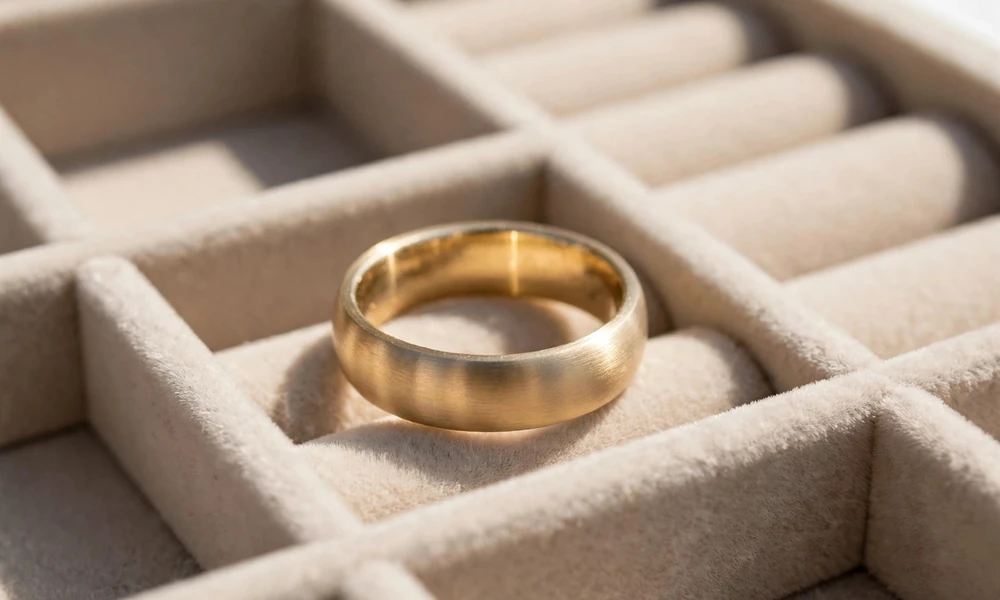
A wedding band for a man is a ring that will be worn every day, through work, sport, travel, and everything else a hand gets put through.
The choice comes down to metal, width, and profile. A 6 millimetre band in 14k gold is the classic choice: warm, comfortable, and easy to live with. Platinum is heavier and more durable, and it never needs re-plating. Tungsten and titanium are modern, affordable, and extremely hard, but they cannot be resized and they can be difficult to remove in an emergency. The right choice depends on how you work, how active you are, and whether you have ever worn a ring before.
Below are nine wedding bands worth considering in 2027, from classic gold and platinum to modern tungsten, titanium, and carbon fibre. Each one is described by what it is good at, what to watch for, and who it suits best, so you can choose a band that works with your life, not just with a photograph.
Key takeaways
- A men’s wedding band is worn every day, so comfort, durability and ease of removal matter more than decoration.
- Most men choose a band between 5 and 7 millimetres wide, with a comfort-fit profile that is domed on the inside.
- Gold and platinum can be resized and repaired; tungsten, ceramic and carbon fibre cannot, and need a correct first fit.
- Tungsten and ceramic are extremely scratch-resistant but brittle, and can crack or shatter under a hard impact.
- No wedding band holds its full purchase price on resale, and a band in an unusual metal can be harder to sell or repair later.
What a wedding band for men actually is
A men’s wedding band is usually wider and heavier than a women’s band, with a simpler design. Most are between 5 and 8 millimetres wide, and most are plain or lightly textured, with no stones or with a single small diamond at most. The band is worn on the ring finger of the left hand in most Western traditions, and it is exchanged during the wedding ceremony.
That first-ring point matters. If you have never worn a ring, a wide, flat band can feel strange for the first week. A comfort-fit band, which is slightly domed on the inside and rounded at the edges, slides on more easily and feels less intrusive.
The metal is the biggest decision, and it is worth understanding before you shop. Gold is the traditional choice, available in yellow, white, and rose, in 10k, 14k, and 18k. The higher the karat, the softer and more yellow the gold. 14k is the best balance for most men: strong, warm in colour, and not too expensive. Platinum is denser, heavier, and more durable than gold, and it is naturally white, so it never needs re-plating. Tungsten carbide is extremely hard and scratch-resistant, and it is affordable, but it is brittle and cannot be resized. Titanium is light, strong, and hypoallergenic, but it is difficult to resize and to engrave.
How we chose these bands and what to look for
Look first at the width and the profile. A 5 millimetre band is slim and discreet. A 6 millimetre band is the classic choice. A 7 to 8 millimetre band is bold and modern, but it can feel bulky if you have slim fingers or work with your hands. A comfort-fit profile is worth choosing even if it costs a little more, because it is the difference between a ring you forget and a ring you notice all day. Try the band on at the end of the day, when your fingers are at their largest, and wear it for an hour before deciding.
Look next at the metal and how you work. If you work with your hands, in a trade, in a workshop, or in a job where a ring could catch, a plain band in a metal that can be cut off easily is the safest choice. Gold and platinum can be cut quickly in an emergency. Tungsten can be cracked off with special tools, but it is harder to remove. Silicone bands exist for exactly this reason, and many men wear one for work and keep the metal band for everything else. Our guide to the best engagement rings covers the same metal questions from the other side, and the advice on honest pricing and metal choice applies just as much to a wedding band.
Finally, look at the finish and the engraving. A polished finish is shiny and classic, but it shows scratches quickly, especially on gold. A brushed or matte finish hides scratches better and looks more modern, though it will slowly polish itself shiny where it rubs against other fingers. A hammered or textured finish hides marks well and suits a more relaxed style. Engraving on the inside of the band is a personal touch that costs little and is almost always worth doing, but check that the metal you choose can be engraved, because tungsten and ceramic cannot be engraved in the usual way.
The 9 best wedding bands for men of 2027
Tiffany & Co. Classic Gold Wedding Band
What we like: A classic 6 millimetre band in 18k gold or platinum, beautifully finished, with a comfort-fit profile and Tiffany’s lifetime service. What to consider: Premium price for a plain band, and the name adds cost without adding durability. Metal: 18k yellow gold or platinum. Setting: Plain polished band. Best for: A timeless, classic band that will never look dated. Price range: $1,150 to $4,200.
Cartier 1895 Wedding Band
What we like: A refined 5.5 millimetre band in 18k gold or platinum, with Cartier’s clean proportions and a smooth, comfortable fit. What to consider: Luxury pricing, and white gold versions need regular rhodium re-plating. Metal: 18k yellow, rose or white gold, or platinum. Setting: Plain polished band. Best for: A classic luxury band that matches a Cartier engagement ring. Price range: $1,100 to $3,600.
David Yurman Streamline Wedding Band
What we like: A clean, modern 6 millimetre band in 18k gold or platinum, with a smooth streamlined profile and a distinctive but understated design. What to consider: Premium pricing for a plain band, and the polished finish shows scratches quickly. Metal: 18k gold or platinum. Setting: Plain polished band. Best for: A modern, designer band with a clean look. Price range: $950 to $3,800.
Mejuri Gold Wedding Band
What we like: A 5 millimetre band in solid 14k gold at a fair price, with a comfort-fit profile and a straightforward return policy. What to consider: A simple design with no stones, so it relies entirely on the metal and finish. Metal: 14k yellow, rose or white gold. Setting: Plain polished band. Best for: A well-made gold band without a luxury price. Price range: $395 to $795.
Brilliant Earth Platinum Wedding Band
What we like: A 6 millimetre band in platinum, naturally white and extremely durable, with a comfort-fit profile and ethically sourced metal. What to consider: Platinum is heavier than gold and costs more, and it develops a soft patina over time that some men dislike. Metal: Platinum. Setting: Plain polished band. Best for: A heavy, durable band that never needs re-plating. Price range: $1,450 to $2,900.
James Allen Tungsten Wedding Band
What we like: A 6 millimetre tungsten carbide band that is almost impossible to scratch, with a clean modern look and a very affordable price. What to consider: Tungsten cannot be resized, it is brittle and can crack under a hard impact, and it cannot be engraved in the usual way. Metal: Tungsten carbide. Setting: Plain polished band. Best for: A scratch-proof, affordable band for a man who knows his size. Price range: $95 to $250.
Blue Nile Titanium Wedding Band
What we like: A lightweight 6 millimetre titanium band, strong, hypoallergenic, and comfortable, with a modern brushed finish. What to consider: Titanium is difficult to resize and to engrave, and it can be hard to remove in an emergency. Metal: Titanium. Setting: Plain brushed band. Best for: A light, hypoallergenic band for sensitive skin. Price range: $150 to $400.
Manly Bands Carbon Fibre Wedding Band
What we like: A modern 7 millimetre band with a carbon fibre inlay, lightweight and distinctive, with a bold, contemporary look. What to consider: Carbon fibre cannot be resized or repaired in the usual way, and the inlay can be damaged by a hard knock. Metal: Tungsten carbide with carbon fibre inlay. Setting: Plain band with inlay. Best for: A modern, bold band for a man who wants something different. Price range: $120 to $350.
Thomas Sabo Classic Gold Wedding Band
What we like: A plain, well-made 6 millimetre band in 14k gold at an accessible price, with a comfortable profile and a clean, timeless finish. What to consider: No stones and no decoration, so it relies entirely on the metal and finish for its look. Metal: 14k yellow or white gold. Setting: Plain polished band. Best for: A simple, affordable gold band that will last. Price range: $350 to $750.
Which wedding band is right for you
Start with how you live. If you work with your hands, a plain band in gold or platinum is the safest choice, because it can be resized, repaired, and cut off quickly in an emergency. If you work in an office, almost any band will work, and the choice is mostly about width and finish. If you play sport, a low-profile band with no stones is less likely to catch or to injure another player. If you have never worn a ring, start with a 6 millimetre comfort-fit band, which is the most popular width for a reason.
Then think about the metal. Gold is the traditional choice, and 14k is the best balance of strength, colour, and price. Platinum is heavier and more durable, and it never needs re-plating, but it costs more. Tungsten and ceramic are extremely scratch-resistant and affordable, but they cannot be resized, so you must be certain of your size. Titanium is light and hypoallergenic, but it is difficult to resize and to engrave. A guide to gold rings is useful here, because the same questions about karat, colour, and durability apply to a wedding band as to any gold ring.
Finally, think about your partner’s ring. The bands do not have to match, and many couples choose different metals and widths, but it is worth looking at the two together. A slim, delicate band beside a wide, bold band can look unbalanced in photographs, even if each ring is perfect on its own. If you are choosing together, try both bands on at the same time and look at them side by side.
The caveats that matter
Men’s wedding bands are simple, but there are still mistakes worth avoiding. The most common is buying the wrong size. Fingers change size through the day, with heat, exercise, and weight changes, so a band that fits in the morning may feel tight in the afternoon. Buy the size that fits comfortably at the end of the day, and remember that a wide band feels tighter than a slim band in the same size, so you may need to go up a quarter or half size. If you are buying a tungsten, ceramic, or carbon fibre band, which cannot be resized, this matters even more.
| Detail | What is known |
|---|---|
| Best all-round metal | 14k gold for strength and price; platinum for durability and hypoallergenic wear |
| Best width for most men | 5 to 7 millimetres; wider bands feel tighter and need a larger size |
| Comfort-fit profile | Domed inside, so the band slides on easily and does not dig in |
| Tungsten and ceramic | Almost impossible to scratch, but brittle, cannot be resized, and hard to engrave |
| Titanium | Light and hypoallergenic, but difficult to resize and to remove in an emergency |
| White gold | Needs rhodium re-plating every one to two years to stay bright white |
| Sizing | Try on at the end of the day; wide bands need a quarter to half size larger |
| What a band does not do | It does not hold resale value like a single high-quality diamond, and unusual metals can be harder to repair or sell |
Safety is another point that matters more for men than for women, because men are more likely to work with machinery or to play contact sport. A ring that catches on machinery can cause a serious injury, and many workplaces ask men to remove rings or to wear a silicone band instead. A silicone band is not a replacement for a wedding band, but it is a sensible option for work, and it costs very little. If your job involves machinery, talk to your employer about the rules before the wedding, not after.
Checklist: choosing a wedding band honestly
Use these checks before you buy, and again when the band arrives.
- Try it on at the end of the day, and wear it for at least an hour before deciding.
- Check the width and profile: a 6 millimetre comfort-fit band is the safest first choice for most men.
- Check the metal: gold or platinum if you want a band that can be resized and repaired.
- Check the resizing policy before you buy, because tungsten, ceramic and carbon fibre cannot be resized.
- Check the finish: brushed and matte finishes hide scratches better than polished finishes.
- Check the safety rules for your work, and consider a silicone band for the workshop, the gym, or the building site.
Frequently asked questions
How wide should a men’s wedding band be?
Most men choose 5 to 7 millimetres. A 6 millimetre band is the classic choice, wide enough to feel like a wedding ring but not so wide that it interferes with gripping or typing. Men with slim fingers often prefer 5 millimetres, and men with large hands often prefer 7 or 8 millimetres.
Is gold or platinum better for a men’s wedding band?
Platinum is more durable and heavier, and it never needs re-plating, but it costs more. 14k gold is strong, warm in colour, and more affordable, and it can be resized and repaired easily. For most men, 14k gold is the best balance, and platinum is worth the extra cost if you want the most durable band available.
Can a tungsten wedding band be resized?
No. Tungsten carbide is too hard to cut and rejoin in the usual way, so a tungsten band must fit correctly from the start. The same is true of ceramic and carbon fibre bands. If your size may change, choose gold or platinum instead. A diamond versus moissanite comparison is a useful reminder that the honest trade-offs matter more than the headline price, and the same is true of wedding band metals.
Should my wedding band match my partner’s?
It does not have to match, and many couples choose different metals and widths. The bands should look good together in photographs, so try them on at the same time and look at them side by side, but each person should choose the band that suits their own hand and lifestyle.
Is a silicone wedding band a good idea?
For work, sport, and the gym, yes. Silicone bands are cheap, comfortable, and safe, because they break or stretch if they catch on something. They are a practical addition to a metal band, not a replacement for one, and many men wear silicone during the day and metal in the evening.
How often should I have my wedding band checked?
Once a year is enough for a plain band. A jeweller can check the shape, clean it properly, and re-polish it if the finish has dulled. If your band has stones, have it checked once a year as well, because even a single small stone can loosen with daily wear.
The bottom line
The best wedding band for men in 2027 is not the most expensive or the most unusual. It is the one that fits comfortably, that you can wear all day without noticing it, and that will still look good in thirty years. For most men, that means a 6 millimetre band in 14k gold or platinum, with a comfort-fit profile and a plain or brushed finish.
Try bands on at the end of the day, wear them for an hour, check the sizing and the resizing policy, and choose the metal that suits your life, not just the one that looks best in a photograph. A wedding band is a daily companion, and the right one is the one you forget you are wearing.