

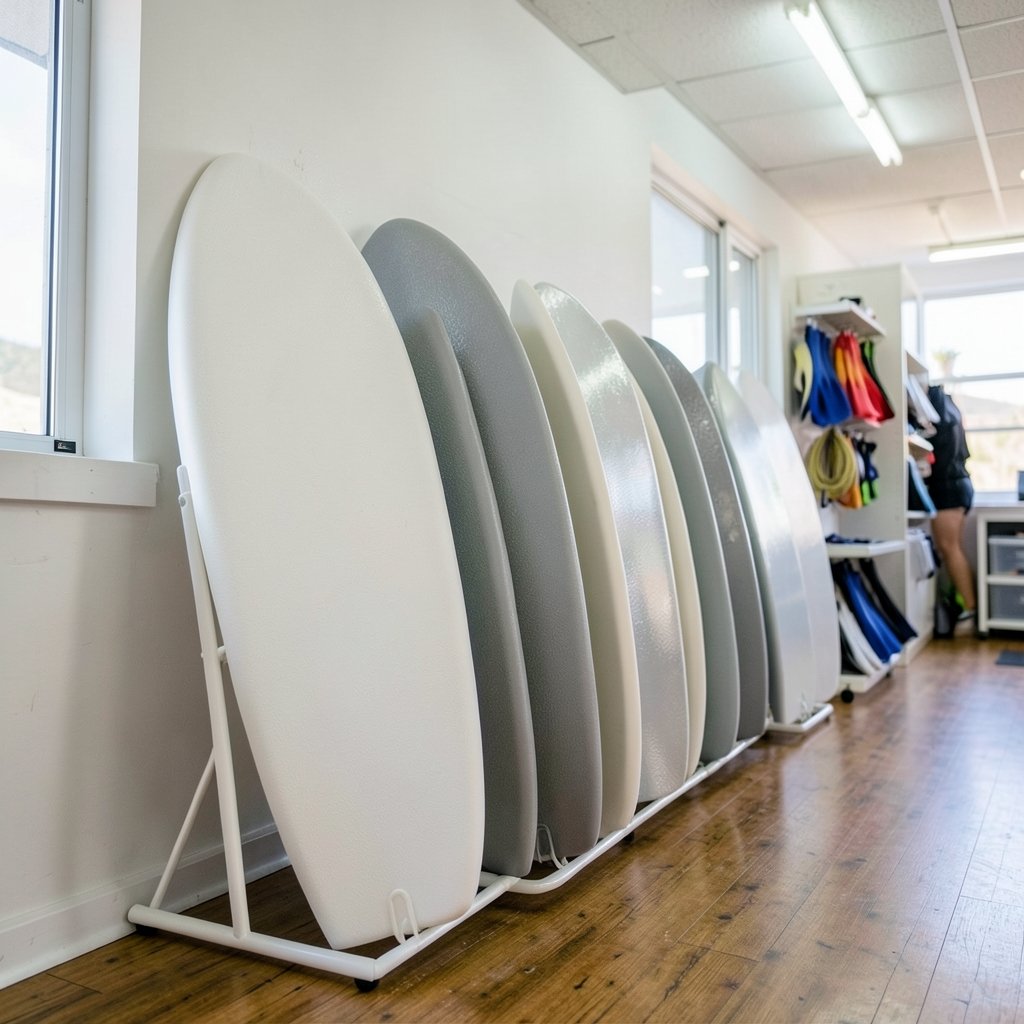
What do you call a short, soft foam board that lets almost anyone catch a wave on the very first try? Most people say boogie board. Surfers and shapers usually say bodyboard. Same object, two names, and a surprising amount of confusion in between. If you have ever stood in a beach rental shop wondering whether you were about to buy a toy, a serious piece of wave-riding gear, or something in the middle, this guide sorts it out. It covers where the board came from, how it is built, how it differs from a surfboard, how to pick the right size, and the safety rules that matter more than any spec sheet.
Where the name comes from
The story starts with Tom Morey, a California surfer and inventor who shaped a short, rounded foam board and called it the Morey Boogie. The commonly cited year is 1971, though the exact date and the details of that first board are repeated more often than they are firmly documented, so treat the timeline as widely accepted rather than settled.
The name stuck hard. “Boogie board” became a genericized trademark, the same way “kleenex” became a word for any tissue. That is why you will hear the phrase used for cheap supermarket foam boards and for competition-grade equipment costing several hundred dollars. Neither usage is wrong, but the two products are not the same thing. The neutral, industry-standard term is bodyboard, and it is the word you will see in competition rules and equipment reviews.
What a boogie board actually is
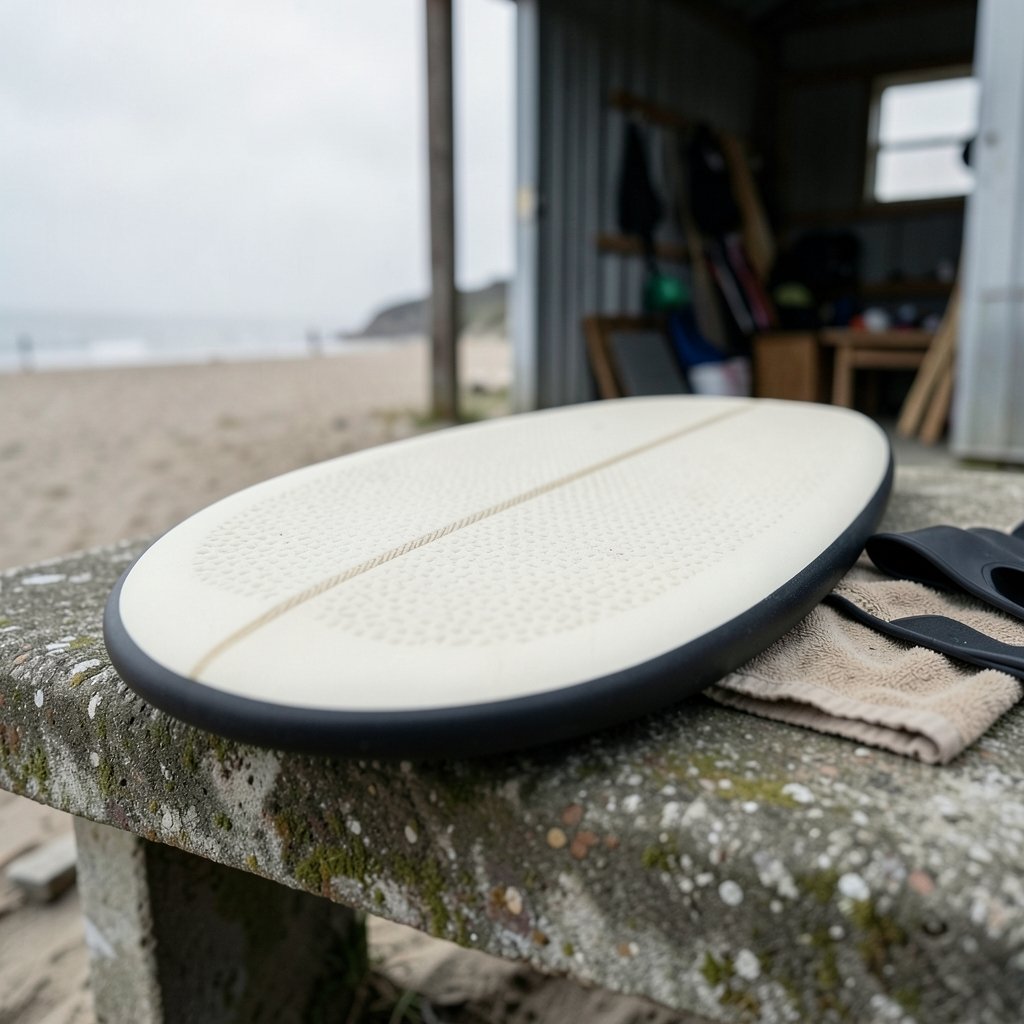
A bodyboard is a short, roughly rectangular board, typically somewhere between 0.9 and 1.2 meters long. You ride it lying prone, chest down, or sometimes kneeling. Unlike surfing, you do not paddle with your arms to catch waves. You wear swim fins and kick. That single difference is why bodyboarding has such a short learning curve: your legs are far stronger than your arms, so you get into waves quickly and spend less energy doing it.
The deck is textured so your body and hands can grip it. The bottom is slick, which reduces drag and lets the board plane across the water. Most boards are built around a closed-cell foam core, usually polyethylene or polypropylene, with a slick bottom skin bonded to it. Higher-end boards add a stringer, a stiff rod running through the core, to stop the board flexing too much in large waves.
The parts of a bodyboard
| Part | What it does |
|---|---|
| Deck | Textured top surface that grips your body and hands |
| Slick bottom | Smooth skin that reduces drag and adds speed |
| Core | Closed-cell foam that provides flotation and flex |
| Stringer | Stiffening rod in better boards for control in big surf |
| Channels | Grooves near the tail that direct water flow for hold |
| Leash plug | Attachment point for the wrist or bicep leash |
| Nose bulbs | Raised grips that make holding the front edge easier |
If you are shopping, the deck and slick matter most at the entry level. A board with a decent slick and a firm core will outperform a floppy one every time, regardless of graphics.
Boogie board vs. surfboard: the real differences
People ask constantly whether they should learn on a boogie board or go straight to surfing. The honest answer depends on what you want out of the water.
| Feature | Boogie board | Surfboard |
|---|---|---|
| Position | Lying prone or kneeling | Standing |
| Propulsion | Swim fins and kicking | Arm paddling |
| Typical length | 0.9 to 1.2 m | 1.8 m and up for beginners |
| Learning curve | Minutes to catch a small wave | Days to weeks to stand reliably |
| Cost of entry | Low | Higher |
| Best conditions | Shorebreak, small to medium waves | Open faces, longer walls |
| Injury profile | Higher risk in shallow shorebreak | Higher risk from the board itself |
The two are governed by separate competition formats, and the sport’s international governing body recognizes bodyboarding as its own discipline. That is a useful signal: this is not a beginner stage you graduate out of. Plenty of riders never switch, because bodyboarding lets them sit deeper in the pocket and take off later than most surfers can.
How to size a boogie board
Sizing is where most first-time buyers get it wrong. They pick a board by color and price, then wonder why it sinks or slides out from under them. Bodyboard sizing works off your body, not your age.
- Measure your height and weight. Weight matters more than height for flotation.
- Match the board length to your torso. A common starting point is a board that reaches roughly from the top of your knee to just above your belly button when stood on end, but weight should override this if the two disagree.
- Go slightly longer if you are heavier or riding weak waves. More length means more planing surface.
- Go shorter if you are light or riding steep, fast waves. Short boards fit into the pocket better.
- Check the width and nose shape. Wider noses are more forgiving; narrower noses suit riders chasing speed.
A board that is too small for your weight will sit low in the water and feel sluggish. A board that is too big will feel buoyant but hard to control on a steep drop. Getting this right is worth more than any upgrade in construction.
Riding basics that actually work
The technique gap between flailing and gliding is smaller than most people expect. A handful of habits do most of the work.
Kick hard and early. Fins are your engine. Most beginners start kicking too late, after the wave has already passed. Start kicking as the wave approaches and commit.
Keep your weight forward on takeoff. Lifting your chest too early stalls the board. Stay low, then shift your weight once you are planing.
Use the rails, not your arms, to turn. Bodyboard turns come from leaning and from dragging a hand or fin. Yanking the nose with your arms kills speed.
Kick out before the wave closes out. Trying to ride whitewater all the way to the sand is how people get hurt in shallow water.
Learn to read the shorebreak. Watch a break for ten minutes before entering. Count how many waves break in sets, and note where the water gets shallow.
Common mistakes to avoid
First-time buyers and riders repeat the same handful of errors. Here are the ones worth knowing before you spend money or paddle out.
- Buying a toy-grade board for real waves. Thin, cheap foam boards are fine for a toddler in ankle-deep water. They fold under an adult in any real surf.
- Skipping the fins. Without swim fins you cannot catch much, and you will tire out fast.
- Forgetting the leash. A loose board in the lineup is a hazard to everyone around you.
- Riding shallow shorebreak on a big day. This is the single most important safety point in the sport.
- Diving headfirst into a wave. Never do it on a bodyboard. Protect your head and neck by riding with your arms forward and keeping your head up.
- Ignoring the fin tether. Losing a fin in the surf is annoying; losing it in cold water is worse.
Safety: the part that deserves your attention
Bodyboarding is accessible, but it is not risk-free. The most serious injuries in the sport happen in shallow shorebreak, where a rider gets driven into sand or reef, and in spinal injuries from going headfirst or getting dumped on the bottom in low water.
The practical rules are simple. Never bodyboard in water so shallow that you can touch the bottom while riding. Never dive headfirst. Keep your head up and your arms in front of you when you are being pushed toward the sand. Get out of the water when you are tired, because most accidents happen on the last wave of a long session. If you are new to a break, ask a local or a lifeguard where the deep channels are.
Cold water adds its own risks. A wetsuit is not optional in many regions, and neither is knowing the signs of cold-water shock. If you cannot control your breathing after entering the water, get out.
Who should ride one
Bodyboarding suits a wide range of people, which is exactly why it has stayed popular for more than fifty years. It is a genuinely good first board sport for kids and adults who want to catch waves without a long learning curve. It is a serious competitive discipline for riders chasing world titles. It is also a practical choice for travel, because a bodyboard packs flat and weighs almost nothing compared with a surfboard.
Hair type has nothing to do with riding, but it does come up in beach communities: readers with 4c hair often ask about protective styles for salt water and sun, and the same care applies whether you are on a bodyboard or a longboard. Loose waves and textured hair behave differently in the surf, and a swim cap or braided style saves a lot of post-session detangling.
How bodyboarding fits into the wider surf world
Bodyboarding sits inside a broader culture of wave riding that includes longboarding, shortboarding, and everything between. The lineup is usually more welcoming than its reputation suggests, and most breaks have a regular crew of bodyboarders who know the reef better than anyone. If you spend time around surf media, you will notice the same pattern: the row of boards lined up on the sand, fins drying in the sun, and riders comparing notes on the day’s swell.
Different waves reward different equipment. A soft, rolling beach break is forgiving and great for learning. A steep reef pass demands a shorter, stiffer board with channels. And just as hair typing helps people choose the right care routine, wave typing helps riders choose the right board: 2b hair and a mushy wave both respond well to a gentler, more forgiving approach, while a strong curl rewards a board built for control.
Buying checklist
Before you hand over money, run through this list.
- Confirm the core material. Closed-cell foam, not open-cell packing foam.
- Check the slick. It should be smooth and bonded, not peeling at the edges.
- Test the flex. Press the nose and tail; the board should bend and spring back, not crease.
- Buy fins that fit. Too tight cuts off circulation; too loose means blisters and lost fins.
- Add a leash. Wrist or bicep, whichever suits your style.
- Consider a board bag. Sun and heat warp foam boards faster than anything else.
Conclusion
The boogie board is one of the most misunderstood pieces of beach equipment around, dismissed as a toy by people who have never ridden one and overpriced by brands that slap a logo on cheap foam. The truth sits in the middle. It is a purpose-built wave-riding craft with a real history, a real competitive scene, and a learning curve short enough that almost anyone can catch a wave on day one. Get the size right, wear fins, respect shallow water, and keep your head up. Do those four things and the board will do the rest.
FAQ
Is a boogie board the same as a bodyboard?
Yes. “Boogie board” is a genericized trademark that came from the original Morey Boogie, and “bodyboard” is the neutral industry term for the same equipment. Regional usage varies, but the boards are identical in function.
What size boogie board should a beginner buy?
Start with your weight, then check length against your torso. A board that reaches roughly from your knee to just above your belly button is a common starting point, but a heavier rider should size up for more flotation. When in doubt, go slightly longer for weak waves.
Do you need fins to ride a boogie board?
You do not strictly need them, but you will catch far fewer waves without them. Swim fins give you the propulsion to paddle into waves and to get out of the impact zone quickly. They are standard equipment in the sport.
Can you stand up on a boogie board?
Some riders can, and it is fun in small surf, but the board is designed to be ridden prone or kneeling. Standing on a bodyboard is unstable and not how the equipment is meant to perform.
Is bodyboarding dangerous?
It carries real risks, mainly spinal and neck injuries in shallow shorebreak. Most of that risk drops sharply if you avoid shallow water, never dive headfirst, keep your head up, and get out when you are tired.
How much should a first boogie board cost?
Entry-level boards with a proper closed-cell core and a decent slick sit in the lower price range, while competition boards with stringers and channels cost considerably more. Avoid the cheapest foam boards sold as beach toys if you plan to ride real waves.









