

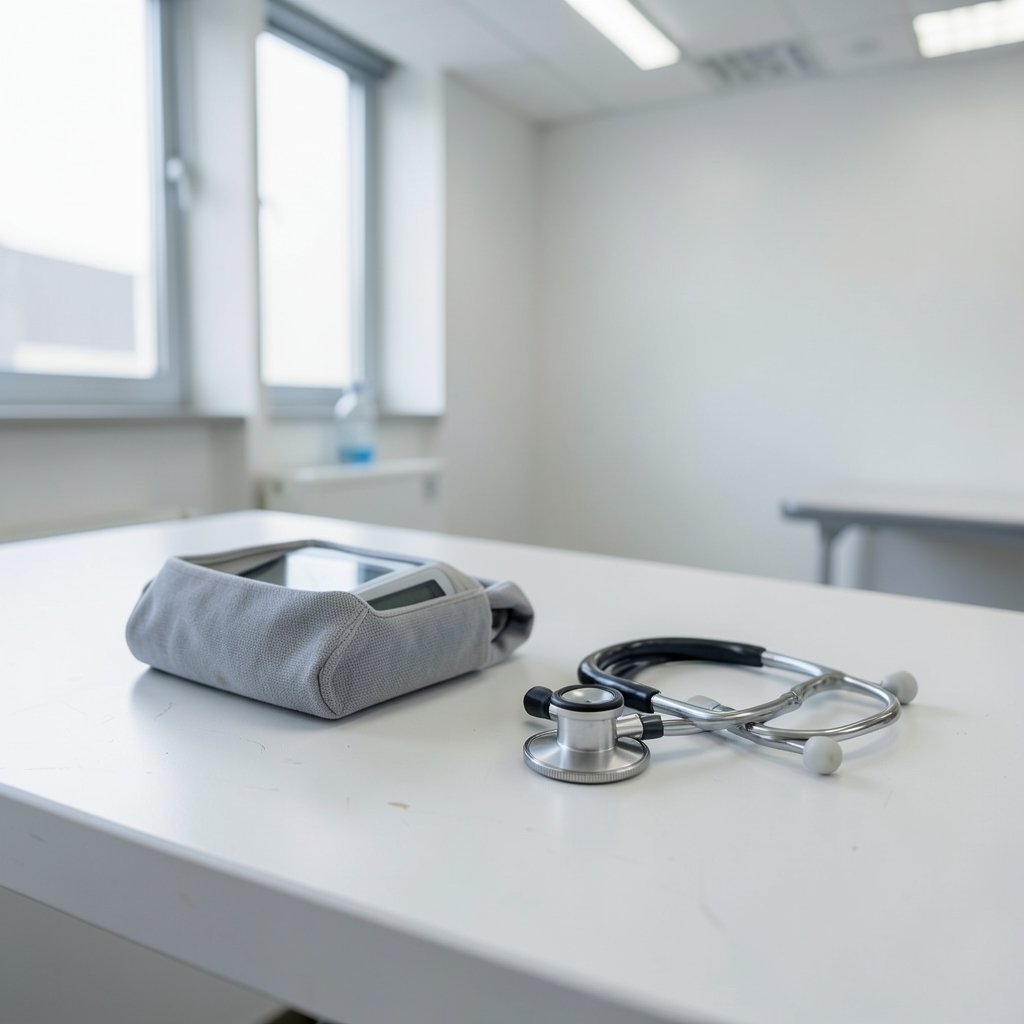
What if the most dangerous number in your life is one you never feel? That is the strange reality of hypertension, the medical name for high blood pressure. It usually causes no pain, no dizziness, and no obvious warning. Yet it quietly raises the risk of heart attack, stroke, kidney damage, and heart failure over years. This article explains what hypertension actually is, how it is measured, why experts disagree about the exact cutoff, and what genuinely helps in everyday life.
What Is Hypertension?
Hypertension is a condition in which the pressure inside your arteries stays persistently too high. Arteries are the muscular tubes that carry blood away from the heart. Every heartbeat pushes blood through them, and the force of that push against the artery walls is your blood pressure.
Blood pressure is written as two numbers, such as 120/80 mmHg:
| Number | Name | What It Measures |
|---|---|---|
| Top number | Systolic pressure | The force when the heart squeezes and pushes blood out |
| Bottom number | Diastolic pressure | The pressure that remains while the heart relaxes between beats |
The unit, mmHg, stands for millimeters of mercury, a leftover from the glass-tube gauges of the past. A reading of 120/80 means 120 systolic and 80 diastolic.
The World Health Organization defines hypertension as a systolic pressure of 140 mmHg or higher and/or a diastolic pressure of 90 mmHg or higher. That “and/or” matters. A person with 150/85 has hypertension because of the top number. A person with 130/95 has it because of the bottom number.
Why It Is Called the Silent Killer
Most people with high blood pressure feel completely normal. There is no reliable symptom to watch for. Headaches, nosebleeds, and feeling tense are not dependable signs, and waiting for symptoms is a common and serious mistake.
The damage happens silently. Constantly high pressure stiffens artery walls and forces the heart to pump against extra resistance. Over time this can lead to:
- Heart attack and heart failure, because the heart muscle thickens and weakens
- Stroke, when a blood vessel in the brain bursts or becomes blocked
- Kidney disease, since the kidneys depend on delicate filtering blood vessels
- Vision loss from damage to blood vessels in the eyes
The scale of this is enormous. The World Health Organization estimates that hypertension affects about 1.28 billion adults aged 30 to 79 worldwide, with roughly two-thirds of them living in low- and middle-income countries. It is linked to an estimated 10.8 million deaths a year. That makes it one of the largest single contributors to death and disability on the planet.
The Awareness Gap Nobody Talks About
Here is the part that surprises most people. Having hypertension is not the same as knowing you have it.
According to WHO figures, about 46% of adults with hypertension are unaware of their condition. Fewer than half, around 42%, are diagnosed and treated. Only about one in five, roughly 21%, have it under control. (4c hair)
In practice, this means the single most useful thing most adults can do is buy a home monitor or ask for a reading at a routine appointment. A blood pressure check takes about a minute. It is one of the cheapest, fastest health screens available, and it catches a condition that otherwise stays invisible.
The 130/80 vs. 140/90 Debate
If you have read about hypertension in different places, you may have noticed conflicting numbers. This is not a mistake in the reporting. It is a real disagreement between major guidelines.
The 2017 guideline from the American College of Cardiology and American Heart Association lowered the US threshold to 130/80 mmHg. The World Health Organization and the 2018 European guidelines kept 140/90 mmHg.
The American categories look like this:
| Category | Systolic | Diastolic | |
|---|---|---|---|
| Normal | below 120 | and | below 80 |
| Elevated | 120 to 129 | and | below 80 |
| Stage 1 hypertension | 130 to 139 | or | 80 to 89 |
| Stage 2 hypertension | 140 or higher | or | 90 or higher |
Why the split? The US guideline argues that risk starts rising earlier than 140/90, and that labeling people at 130/80 helps them act sooner. Critics worry about overdiagnosis and unnecessary medication. Both positions are defensible, and the honest answer is that the “right” cutoff depends on which guideline your doctor follows and on your personal risk profile.
Primary vs. Secondary Hypertension
Doctors sort hypertension into two broad types.
Primary hypertension, also called essential hypertension, has no single identifiable cause. It develops gradually over years and accounts for the large majority of cases. It reflects a mix of genetics, age, diet, weight, activity level, and other long-term factors.
Secondary hypertension has a specific, identifiable cause. Examples include kidney disease, certain endocrine disorders, and some medications. It is less common but important to rule out, especially in younger people or in cases that appear suddenly or resist treatment.
Knowing which type you have changes the plan. Primary hypertension is usually managed with lifestyle changes and medication. Secondary hypertension may improve dramatically when the underlying cause is treated.
What Raises Your Risk
Risk factors split into two groups: the ones you can change and the ones you cannot.
Modifiable risk factors include:
- High salt intake, which is the biggest dietary lever for many people
- Obesity, especially excess weight around the waist
- Physical inactivity
- Alcohol consumed heavily or regularly
- Tobacco use, which damages blood vessels directly
Non-modifiable risk factors include age, family history, and genetics. Risk climbs steadily with age, and hypertension runs in families.
One practical tip: most salt in a typical diet does not come from the salt shaker. It hides in bread, processed meats, canned soups, sauces, and restaurant food. Reading labels and cooking more meals at home usually cuts sodium more effectively than simply putting the shaker away.
How Hypertension Is Diagnosed
A single high reading does not mean you have hypertension. Blood pressure fluctuates with stress, caffeine, a full bladder, talking during the test, and even the setting. Diagnosis relies on repeated measurements taken on separate occasions. (The row)
Doctors increasingly use home monitoring or ambulatory monitoring, where a cuff worn for 24 hours records pressure during normal life, including sleep. These methods catch patterns that a single clinic reading misses, such as white-coat hypertension (high only at the doctor’s office) and masked hypertension (normal at the office but high at home).
If you measure at home, a few habits make a real difference:
- Sit quietly for five minutes first, with your back supported and feet flat.
- Rest your arm on a table so the cuff sits at heart level.
- Avoid caffeine, exercise, and smoking for 30 minutes beforehand.
- Take two readings a minute apart, morning and evening, and record them.
- Bring the log to your appointment rather than relying on memory.
Common mistakes include measuring over a sleeve, using a cuff that is the wrong size, and taking one reading and panicking. A too-small cuff is a frequent culprit behind falsely high numbers.
How Hypertension Is Managed
Treatment follows a stepwise approach, and lifestyle change sits at the base for nearly everyone.
Lifestyle measures with the strongest evidence include reducing sodium, losing excess weight, regular aerobic activity, limiting alcohol, quitting smoking, and eating a pattern rich in vegetables, fruit, and potassium. The DASH eating plan is the best-studied dietary approach.
Medication is added when lifestyle alone is not enough, or immediately when readings are very high or risk is elevated. Common classes include diuretics, ACE inhibitors, angiotensin receptor blockers, calcium channel blockers, and beta-blockers. Many people need two medicines, and taking them consistently matters more than which one is chosen.
A practical point that trips people up: blood pressure medication usually works best taken every day at the same time, and it should not be stopped because readings look normal. Normal readings are often the proof that the medicine is doing its job.
Conclusion
Hypertension is a persistent rise in the pressure inside your arteries, usually defined as 140/90 mmHg or higher, though US guidelines use 130/80. It affects more than a billion adults, causes no reliable symptoms, and remains undiagnosed in nearly half of the people who have it. The good news is that it is one of the most measurable and manageable conditions in medicine. A one-minute check, a home log, and a few consistent habits can change the trajectory of your heart and brain health for decades.
Frequently Asked Questions
What is hypertension in simple terms?
Hypertension means your blood pressure stays too high over time. Blood pressure is the force of blood pushing against your artery walls. When that force remains elevated, it strains the heart, blood vessels, kidneys, and brain, even if you feel perfectly fine.
What is the difference between hypertension and high blood pressure?
There is no difference. Hypertension is simply the medical term for high blood pressure. Both describe the same condition, and doctors use the words interchangeably.
Can hypertension be cured?
Primary hypertension is usually managed rather than cured. Lifestyle changes and medication can bring it under control, but stopping treatment often lets pressure rise again. Secondary hypertension, caused by another condition, can sometimes resolve completely once that underlying cause is treated. (2b hair)
Does hypertension always cause symptoms?
No. Most people with hypertension have no symptoms at all, which is why it is called the silent killer. Headaches and nosebleeds are not reliable warning signs. The only dependable way to know your blood pressure is to measure it.
At what age should you start checking blood pressure?
Adults should have it checked at least once a year from around age 18 to 20, or more often if readings have been borderline or there is a family history. Children and teens are screened during routine pediatric visits, especially if they have risk factors such as obesity.
Can lifestyle changes alone lower blood pressure?
Often, yes, especially for people in the elevated or stage 1 range. Cutting sodium, losing weight, exercising regularly, and limiting alcohol can lower readings meaningfully. Anyone with stage 2 hypertension or additional cardiovascular risk usually needs medication alongside those changes, so discuss the plan with a clinician rather than deciding alone.
When to Seek Help Immediately
Most hypertension management happens gradually, over months and years. But certain readings and symptoms demand urgent attention rather than a routine follow-up. Seek emergency care if a reading is 180/120 mmHg or higher and is accompanied by chest pain, shortness of breath, severe headache, weakness or numbness on one side, difficulty speaking, or vision changes. These can signal a hypertensive crisis or an evolving stroke, and minutes matter.
Call a clinician promptly, rather than waiting for a scheduled visit, if home readings are consistently above your target, if you develop new swelling in the legs, or if side effects from medication make daily adherence difficult. Never stop a blood pressure medicine abruptly on your own, since rebound spikes can occur.
A Final Word on Consistency
No single reading defines you, and no single change fixes hypertension. What works is the unglamorous combination: measuring regularly, writing the numbers down, keeping appointments, and sticking with small habits long enough for them to compound. Hypertension rewards patience more than heroics, and the people who do best are rarely the ones who overhaul everything at once. They are the ones who check, adjust, and keep going.









