

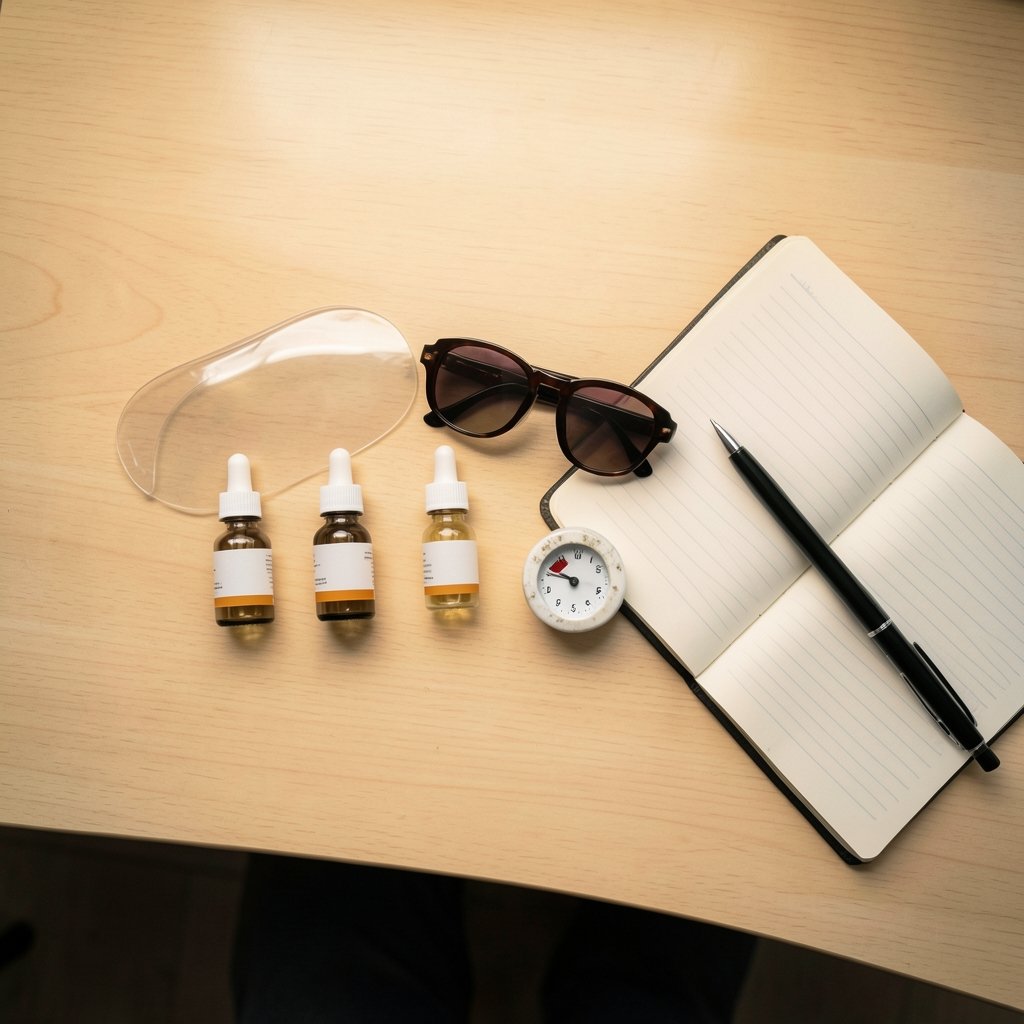
How long does it really take to see clearly again after cataract surgery? Ask ten people and you may get ten different answers. One person says they could read a newspaper the next morning; another says their vision wobbled for weeks. Both can be right. Recovery is not a single fixed schedule — it is a series of stages, and knowing what belongs in each stage is the best way to avoid panic, unnecessary worry, and a few very common mistakes.
This guide walks through the whole arc: the first 24 hours, the first week, the first month, and the months beyond. It covers eye drops, restrictions, warning signs, driving, flying, and the strange but normal things nobody warns you about.
The First 24 Hours: Blurry, Watery, and Totally Normal
Most people expect to open their eye and see the world in high definition. Reality is usually fuzzier. Right after surgery, vision is often cloudy or filmy, partly from the dilating drops still wearing off and partly from mild swelling in the cornea. Many patients describe it as looking through a smudged window.
Watering, grittiness, and light sensitivity are all common in the first day. So is a slight pinkish tint in the eye. These are expected, not alarming.
A few practical points that genuinely matter in the first 24 hours:
- Do not drive yourself home. Arrange a ride in advance — this is non-negotiable and most surgical centers will insist on it.
- Keep the protective shield on as instructed, especially for sleeping. The shield stops you from rubbing or pressing the eye while you are unconscious of doing it.
- Start the prescribed drops exactly when told, and wash your hands before every dose.
- Skip the cooking, cleaning, and bending over. Rest, but you do not need to lie perfectly still.
One common mistake: people peek under the shield repeatedly to “check progress.” Every extra touch is a small infection risk. Leave it alone.
The First Week: Drops, Restrictions, and Small Wins

By day two or three, most people notice a real improvement. Reading a large-print book or watching television is usually comfortable within a day or two. Vision may still fluctuate — sharp in the morning, softer in the afternoon — and that is normal.
The eye drop routine is the real work
Antibiotic and anti-inflammatory drops are typically prescribed for several weeks. The schedule can feel relentless, especially when several different bottles are involved. What actually works in practice:
- Write the schedule on paper and stick it on the fridge. Apps help, but a visible note beats a notification you swipe away.
- Space drops at least five minutes apart so the second one does not wash out the first.
- Keep bottles clean and capped, and never let the tip touch your eye or eyelashes.
- Finish the full course. Stopping early because the eye “feels fine” is one of the most common recovery mistakes.
What to avoid
Heavy lifting, strenuous exercise, and swimming are usually off the table for roughly one to four weeks, though exact limits vary by surgeon. Bending over to tie shoes is fine; deadlifting is not. Dusty environments, gardening, and anything that could get grit or water in the eye deserve caution.
A note on hair washing: many surgeons allow it within a few days if you lean back and keep water and shampoo out of the eye. If you have tightly coiled or 4c hair, the washing and styling routine can be trickier — braiding, twisting, and heavy product use often involve pulling, bending, and prolonged time near the face. Plan ahead, ask your surgeon what is realistic, and consider having hair done before surgery so you are not managing a complicated routine during the first week. Practical planning like this is discussed in resources on 4c hair care.
Weeks Two to Four: Settling In
This is when life starts to feel normal again. Light sensitivity fades, the gritty sensation eases, and vision becomes more consistent. Many people return to desk work within a week or two, depending on the job and their surgeon’s advice.
Reading, screens, and driving may all be back on the table — but driving depends on meeting the vision standard, not on a calendar date. In the UK, drivers must tell the licensing authority if their vision does not meet the required standard. Elsewhere, rules differ. The safe approach: do not drive until your vision feels reliable and your surgeon confirms it is acceptable.
Some people find that near vision is blurry at this stage. That is often because the artificial lens corrects distance vision but not close-up focus. Reading glasses may be needed, and it is worth waiting until vision stabilizes before ordering an expensive pair.
One to Three Months: When Vision Truly Stabilizes
Full stabilization usually takes about one to three months. Vision can still shift slightly during this window, which is why prescriptions for new glasses are typically left until the eye has settled.
This is also the point where many people notice something odd: a gradual return of blurriness months or even years after surgery. This is often posterior capsule opacification, sometimes called a secondary cataract. It is not the cataract coming back. The capsule that held the lens becomes cloudy over time. It is common, it is treatable, and the fix is a quick laser procedure called a YAG capsulotomy.
If you are also recovering from a hair transplant in the same season of life, you may be juggling two sets of restrictions at once. Both procedures reward patience and penalize premature intensity, and guidance on hair transplant recovery can help you plan around overlapping downtime.
Warning Signs That Need Same-Day Attention
Most recoveries are uneventful. A small number are not, and the difference matters enormously.
Seek urgent review if you experience:
- Severe or worsening pain in the eye
- Marked loss of vision after initial improvement
- A very red, painful eye
- Increasing sensitivity to light combined with pain
- Flashes, a sudden shower of floaters, or a curtain across your vision
- Nausea or vomiting alongside eye pain
Infection inside the eye, known as endophthalmitis, is rare but serious. National surveillance in the UK during the mid-2000s reported post-cataract endophthalmitis rates of roughly 0.02 to 0.05 percent. Rare is not the same as impossible. Fast treatment is what protects sight, so never wait until morning to make the call.
Driving, Flying, and Getting Back to Real Life
Travel and driving questions come up constantly. Here is a practical comparison of typical guidance, with the caveat that individual surgeons differ.
| Activity | Typical guidance | Notes |
|---|---|---|
| Driving | Not until vision meets the legal standard and the surgeon agrees | Never drive home on surgery day |
| Flying | Often about one week after surgery | Evidence is limited; advice varies |
| Swimming | Usually avoided for roughly one to four weeks | Pools and open water both carry infection risk |
| Heavy lifting | Avoided for roughly one to four weeks | Includes gym weights and heavy housework |
| Screens and reading | Usually fine within a day or two | Take breaks if the eye feels tired |
| Eye makeup | Often a week or more | Throw out old products first |
One detail people underestimate: the eye shield at night. Many surgeons advise wearing it for the first few days or weeks to prevent rubbing during sleep. It is uncomfortable and easy to abandon. Keep using it anyway.
The Recovery Timeline at a Glance
| Stage | What is typical | What to watch |
|---|---|---|
| Day 1 | Blurry, watery, gritty, light-sensitive | Shield on, no driving, drops started |
| Days 2 to 7 | Clearer vision, some fluctuation | Full drop routine, no heavy activity |
| Weeks 2 to 4 | Vision more consistent, comfort improves | Return to light work, avoid swimming |
| Months 1 to 3 | Vision stabilizes | Wait before ordering new glasses |
| Months to years | Possible secondary cataract | Quick laser fix if blur returns |
Mistakes That Slow Recovery Down
Recovery advice is simple but easy to bend. The most frequent slips:
- Rubbing the eye. It feels instinctive and it is the single worst habit. The shield and sunglasses help.
- Skipping drops once things feel fine. Inflammation can smolder quietly.
- Doing too much too soon. A heavy gym session in week one is not worth a setback.
- Ignoring a red, painful eye. Pain that gets worse rather than better is a red flag, not a phase.
- Cleaning the house. Dust, sprays, and bending all work against a healing eye.
- Comparing yourself to others. Two people can have identical surgery and very different recovery speeds. The row of patients in a waiting room all heal on their own schedule, and so does the row of internet stories you will read at midnight. Take the accounts on the row with the same calm you would apply to any anecdote — useful context, not a personal prognosis.
Conclusion
Cataract surgery recovery is less about a strict timetable and more about respecting a few firm rules while everything else settles. Expect blurriness and watering on day one, a steady improvement over the first week, growing consistency by the first month, and full stabilization around one to three months. Use the drops exactly as prescribed, keep the shield on at night, hold off on heavy lifting and swimming, and do not drive until your vision genuinely meets the standard.
Above all, treat severe pain, sudden vision loss, or a red painful eye as an emergency rather than a wait-and-see. The overwhelming majority of recoveries are smooth and uneventful. The people who do best are rarely the ones who heal fastest — they are the ones who follow the boring instructions carefully and call for help the moment something feels wrong.
FAQ
How long does it take to see clearly after cataract surgery?
Many people notice clearer vision within a few days, but it can fluctuate. Full stabilization usually takes about one to three months. Do not judge the final result by what you see in week one.
Is it normal for vision to be blurry the day after surgery?
Yes. Blurriness, watering, grittiness, and light sensitivity are all common in the first days and usually settle. Blur that steadily improves is expected; sudden worsening is not, and should be checked urgently.
Can I drive myself home after cataract surgery?
No. Arrange a ride in advance. You also should not drive until your vision meets the legal standard and your surgeon confirms it is safe. In the UK, you must inform the licensing authority if your vision falls below the required standard.
When can I fly or swim after cataract surgery?
Many surgeons advise waiting about a week before flying, though evidence is limited and advice varies. Swimming is usually avoided for roughly one to four weeks because of infection risk. Always follow your own surgeon’s instructions.
What are the signs of a serious complication?
Severe or worsening pain, marked vision loss after improvement, a very red painful eye, increasing light sensitivity with pain, or a sudden shower of floaters all warrant urgent review. Infection inside the eye is rare, at roughly 0.02 to 0.05 percent in UK surveillance data, but it needs fast treatment.
Why is my vision blurry again months after surgery?
It may be a secondary cataract, where the capsule behind the lens becomes cloudy. It is common and treatable with a quick laser procedure called a YAG capsulotomy. It is not the original cataract returning.














