


What happens when a bag labeled “chlor calcium” shows up in your pool shed, on a translated product listing, or in a water-treatment manual? Most of the time, the answer is simpler than the confusing name suggests. The phrase is not standard English. It is almost always a word-order translation of calcium chloride (CaCl₂), the salt used to melt ice, dry gases, and suppress dust. A smaller share of cases refers to calcium hypochlorite (Ca(OCl)₂), a chlorine-releasing disinfectant used in pools and drinking water.
Getting the two straight matters. One is a de-icer that can burn skin in concentrated form. The other is a powerful oxidizer that can release chlorine gas if mishandled. This guide sorts out the naming confusion, walks through what each compound does, and covers the practical mistakes people make when they assume the label tells the whole story.
What “Chlor Calcium” Actually Means
The term is a calque, meaning a literal word-for-word carryover from another language. German builds the compound as Kalziumchlorid, French as chlorure de calcium, and several other languages follow the same “chlorine-calcium” order. When that gets run through a translation tool, “chlor calcium” pops out.
In English chemistry, the correct names are:
| Label seen | Likely compound | Formula | Typical use |
|---|---|---|---|
| Chlor calcium | Calcium chloride | CaCl₂ | De-icing, drying, dust control |
| Calcium chlorine | Calcium hypochlorite | Ca(OCl)₂ | Pool and water disinfection |
| Calcium chloride | Calcium chloride | CaCl₂ | Same as above |
| Bleaching powder | Calcium hypochlorite (impure) | Ca(OCl)₂ | Sanitizing, bleaching |
A third possibility exists: a plain misspelling of chloride or chlorine. Product listings, customs forms, and translated safety sheets are full of these slips. Before buying or handling anything labeled this way, check the formula on the container. If it says CaCl₂, you have a salt. If it says Ca(OCl)₂ or lists “available chlorine,” you have a disinfectant. The handling rules are completely different.
Calcium Chloride: The Salt Behind Most “Chlor Calcium” Searches
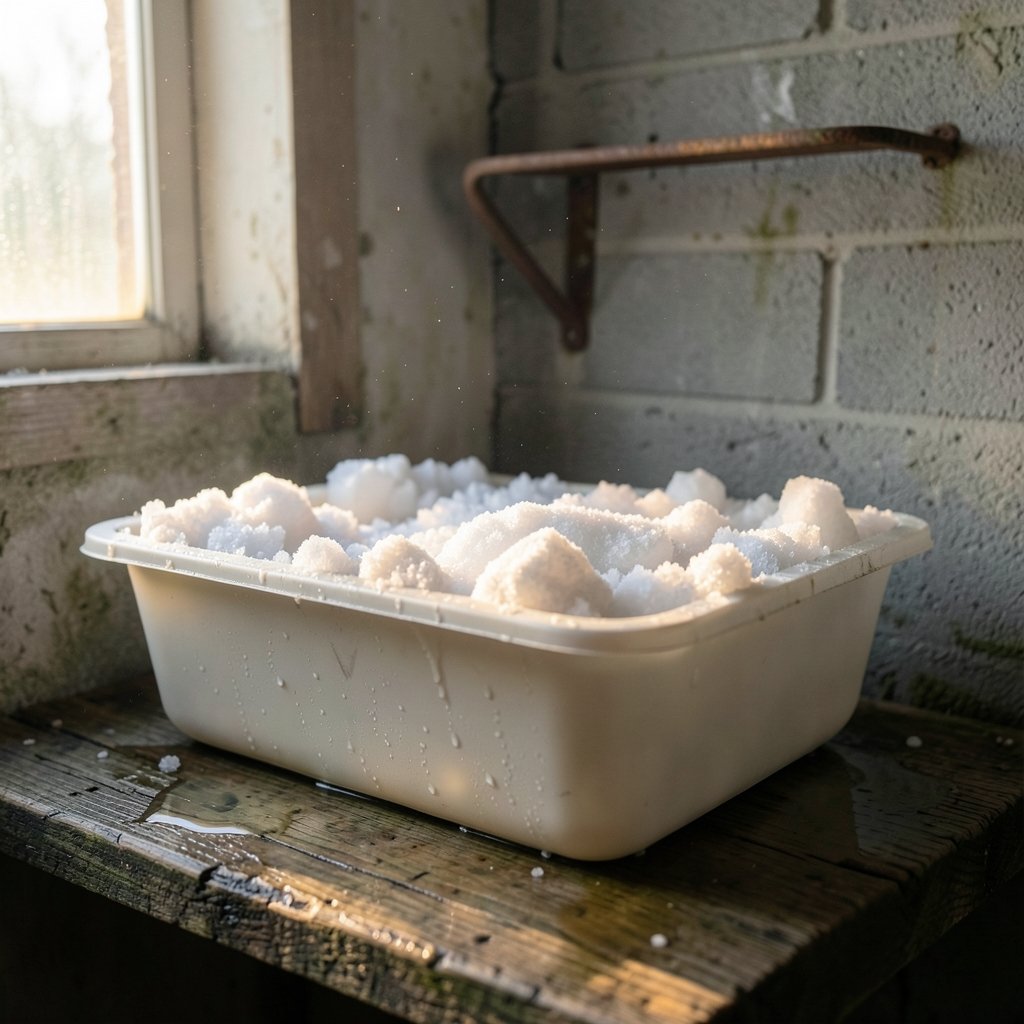
Calcium chloride is a white, crystalline salt that dissolves readily in water and pulls moisture out of the air. That last property, called being hygroscopic, explains most of its industrial life. Leave an open container in a damp room and it will turn into a puddle within days. This is a normal, expected behavior, not a sign of a spoiled product.
Where calcium chloride is used
- De-icing. It melts ice at temperatures down to roughly minus 25 degrees Celsius, well below what sodium chloride can manage. Highway departments and property managers favor it for bridges and walkways in hard winters.
- Dust suppression. Spread on unpaved roads, it holds moisture in the surface layer and keeps gravel from billowing into the air.
- Desiccation. Sealed canisters of the salt keep moisture out of shipping containers, toolboxes, and storage vaults.
- Concrete acceleration. A small dose speeds up the curing of concrete in cold weather, though the dose has to be watched because chloride attacks reinforcing steel.
- Food and water. Food-grade calcium chloride firms up canned vegetables and is used in some bottled waters and sports drinks as a calcium source.
What it does to your body and your surroundings
Concentrated calcium chloride is not gentle. It is exothermic, meaning it releases heat when it dissolves, so a dry pellet landing on damp skin can cause a thermal burn on top of a chemical irritation. The dust irritates eyes and airways. Swallowing it in quantity upsets the stomach and, in extreme cases, disturbs the body’s electrolyte balance.
On the environmental side, the picture is mixed. The salt is not classified as a persistent toxin, but repeated heavy application along roadsides can raise chloride levels in soil and nearby streams. Vegetation close to treated surfaces often shows browning and dieback. Pet owners should rinse paws after walks on treated pavement, since the pellets lodge between toes and cause irritation.
Practical tips that actually work
Store calcium chloride in a sealed, rigid container away from metal tools, because the damp salt accelerates rust. Wear gloves when spreading it, and sweep up stray pellets rather than hosing them into a drain. If you are using it as a desiccant, check the catch tray regularly, since a saturated canister stops working and can leak brine onto whatever it was meant to protect.
A common mistake is treating calcium chloride as interchangeable with rock salt. It is not. It works at lower temperatures and is more aggressive toward metal and concrete, so it belongs on walkways and driveways, not as a general substitute everywhere. Another frequent error is over-applying. A thin, even scatter does the job; heaping it on wastes money and increases runoff.
Calcium Hypochlorite: When “Chlor” Really Means Chlorine
If the product smells sharply of chlorine and the label mentions “available chlorine,” you are dealing with calcium hypochlorite. This is a genuine disinfectant, sold as granules or tablets for pools, spas, and emergency water treatment. It kills bacteria and viruses by releasing hypochlorous acid when it dissolves.
How it differs from calcium chloride
| Feature | Calcium chloride (CaCl₂) | Calcium hypochlorite (Ca(OCl)₂) |
|---|---|---|
| Smell | None | Strong chlorine odor |
| Main job | Melting ice, drying, dust control | Killing germs |
| Reaction with acid | Mild | Releases chlorine gas |
| Reaction with ammonia | None significant | Can form dangerous compounds |
| Storage | Sealed and dry | Cool, dark, away from organics |
| Skin contact | Irritation, possible heat burn | Chemical burn and bleaching |
That table is the heart of the naming problem. Two calcium compounds, both white solids, both sold in buckets, behaving nothing alike. A person who buys the wrong one based on a translated label can create a real hazard.
Safe handling in practice
Always add the product to water, never water to the product. Mixing a small amount of water into a pile of hypochlorite granules can generate heat and chlorine gas in a confined space. Keep it away from acids, ammonia, and any organic material such as leaves or pool debris. Store it in a cool, dry place, never in a shed that bakes in summer sun.
For drinking-water treatment in emergencies, the dose is tiny and must be measured carefully. Guessing at the amount is the most common mistake, and it either leaves the water under-treated or makes it undrinkable. Follow the instructions on the package exactly, and if there are none, use a different product.
Why the Naming Confusion Persists
Translation tools are only part of the story. Chemistry itself is full of near-misses. Chlorine is the element, a greenish gas. Chloride is the ion, a stable component of table salt. Hypochlorite is the reactive form used for disinfection. Add calcium to any of them and you get a different compound with a different hazard profile. (The row)
Hair care offers a parallel lesson in how much a single label detail matters. Products marketed for different curl patterns behave differently, and a routine built for 4c hair will not suit someone with 2b hair, even though both are “curly hair.” The same principle applies here: “chlor calcium” is a category label, not a specification. You have to read the fine print.
Language also drifts in everyday use. Pool owners often say “chlorine” when they mean the compound that carries it. Water-treatment operators say “hypo” for hypochlorite. Road crews say “calcium” for the de-icer. Each shorthand works inside its own trade and confuses everyone outside it. When a translated document lands in the wrong context, the shorthand becomes a genuine safety question.
How to Tell Them Apart Before You Buy
A short checklist prevents most problems:
- Read the formula. CaCl₂ is calcium chloride. Ca(OCl)₂ is calcium hypochlorite. No formula, no purchase.
- Smell the container from a distance. A chlorine odor means hypochlorite. No odor means chloride.
- Check the intended use on the label. Ice melting, drying, and dust control point to chloride. Disinfection, pools, and water treatment point to hypochlorite.
- Look at the hazard pictograms. Oxidizer symbols and “corrosive” warnings suggest hypochlorite. Irritant warnings suggest chloride.
- Ask the seller for the safety data sheet. A legitimate supplier will provide one without hesitation.
If a listing is translated and the formula is missing, treat that as a red flag. Buying an unidentified white powder in a bucket is never worth the small savings.
Regulation and Quality Signals
Both compounds are regulated, though in different ways. Calcium chloride used in food carries a purity grade, and industrial grades are not meant for consumption. Calcium hypochlorite used for drinking water must meet strength and impurity limits, because the by-products of chlorine disinfection are themselves monitored. Pool-grade and water-treatment-grade products are not identical, and swapping them is unwise.
For buyers, the practical takeaway is to match the grade to the job. Food-grade calcium chloride belongs in a kitchen. Technical-grade belongs on a driveway. Water-treatment hypochlorite belongs in a treatment system, not a garden sprayer. Grades exist because the impurities differ, and the label on a correctly sourced product will state the grade plainly.
Cost, Storage, and Shelf Life
Calcium chloride keeps well if it stays sealed. Once it absorbs moisture it becomes a brine, which still works for de-icing but is messy to store. Buying in bulk saves money only if you can keep the container closed between uses; otherwise the savings evaporate along with the product’s usefulness.
Calcium hypochlorite is the opposite. It loses strength over time, especially in heat, and its shelf life is measured in months rather than years. Buy only what you will use in a season, and date the container when you open it. A batch that has been sitting in a hot garage since last summer may test weak, which leads people to overdose it and create a new set of problems.
Conclusion
“Chlor calcium” is a translation artifact, not a chemical name. In nearly every case it points to calcium chloride, the hygroscopic salt that de-ices roads, dries cargo, and holds down dust. A smaller but more dangerous share of cases points to calcium hypochlorite, the chlorine-releasing disinfectant that demands careful storage and dosing. The two look alike in a bucket and behave nothing alike in the real world.
The fix is simple and worth repeating: check the formula before you buy, store each compound according to its own rules, and never trust a translated label over a safety data sheet. Whether you are clearing a frozen walkway or shocking a pool, the name on the package is the least reliable part of the product. The formula is what matters.
FAQ
Is chlor calcium the same as calcium chloride?
In almost all cases, yes. “Chlor calcium” is a word-order translation of the compound’s name in several European languages, and it refers to calcium chloride, formula CaCl₂. The exception is when the label mentions available chlorine or smells strongly of chlorine, which points to calcium hypochlorite instead. Always confirm with the formula printed on the container.
Can I use calcium chloride for pool water?
No. Calcium chloride is sometimes added to pool water in small amounts to raise calcium hardness, but it is not a disinfectant and will not sanitize the water. Using it in place of a chlorine product leaves the pool untreated. If you need to raise hardness, measure first and add only the amount your test results call for.
What happens if calcium hypochlorite gets wet?
It reacts, and not gently. Moisture triggers decomposition that releases heat and chlorine gas, especially in a closed container where the gas cannot escape. Never add water directly to the granules, and never store a damp container in a sealed cabinet. Add the product to a full volume of water instead, following the label.
Is calcium chloride safe around pets?
It is a skin and paw irritant rather than a poison, but the pellets lodge between toes and cause real discomfort. Rinse paws with cool water after walks on treated pavement, and keep pets away from freshly spread areas until the surface has dried. Store the container where animals cannot knock it over, since a spilled pile attracts licking.
Why does my calcium chloride turn to liquid in storage?
Because it is hygroscopic. The salt pulls moisture out of the air until it dissolves into a brine. This is normal behavior, not spoilage. To slow it down, keep the container tightly sealed, store it in a dry place, and consider buying smaller quantities if you only use it occasionally.
How do I dispose of leftover product safely?
Follow the label instructions first, since disposal rules vary by grade and local regulation. Small amounts of calcium chloride can usually be dissolved in plenty of water and poured down a drain that leads to a treatment plant, but never into a storm drain or onto garden beds. Calcium hypochlorite needs more care: let it fully dissolve in water, never mix it with other chemicals, and check with your local waste facility for household hazardous waste collection.














