


What if the bottle sitting in your shower right now is quietly working against your skin? It sounds dramatic, but it happens all the time. Someone steps out of the shower feeling clean for about ten minutes, then tight, itchy, and reaching for lotion. The culprit is often not the weather or the water. It is the cleanser.
Body wash is one of those purchases people make on autopilot. You grab what smells good, what is on sale, or what the person in the next aisle picked up. But the “best” body wash is not a single product. It is the one that matches your skin, your routine, and how much time you actually spend rinsing.
This guide breaks down what separates a great body wash from a mediocre one, how to read a label without a chemistry degree, and which formulas tend to suit which skin types. No miracle claims, no brand worship, just practical guidance that holds up in a real bathroom.
What Actually Makes a Body Wash Good?
A body wash has one core job: remove oil, sweat, and daily grime without stripping the skin barrier. Everything else is a bonus.
The skin’s outer layer works like a brick wall, with skin cells stacked in a matrix of ceramides, cholesterol, and fatty acids. That matrix keeps water in and irritants out. Harsh cleansers can break down that matrix, which is why skin feels tight or dry after a long, hot shower with a strong soap. The fix is not to stop washing. It is to choose a formula that cleans gently and rinses clean.
Most body washes rely on surfactants, the molecules that grab oil so water can carry it away. Common ones include sodium laureth sulfate and sodium lauryl sulfate. These are effective and well studied, but they can be drying at high concentrations or with long contact time. “Sulfate-free” versions swap in milder or non-ionic surfactants, which often feel creamier and less stripping.
Two practical rules matter more than any ingredient list:
- Contact time counts. Rinse-off products are formulated to be gentler than leave-on ones, but a five-minute shower with a heavy lather still exposes skin to more surfactant than a quick wash.
- Concentration matters. A little product goes a long way. Most people use two to three times more body wash than they need, which is both wasteful and harder on skin.
The best body wash, then, is not the most expensive or the most fragrant. It is the one that leaves skin comfortable after toweling off, with no tightness, no film, and no urge to scratch.
Match the Formula to Your Skin Type
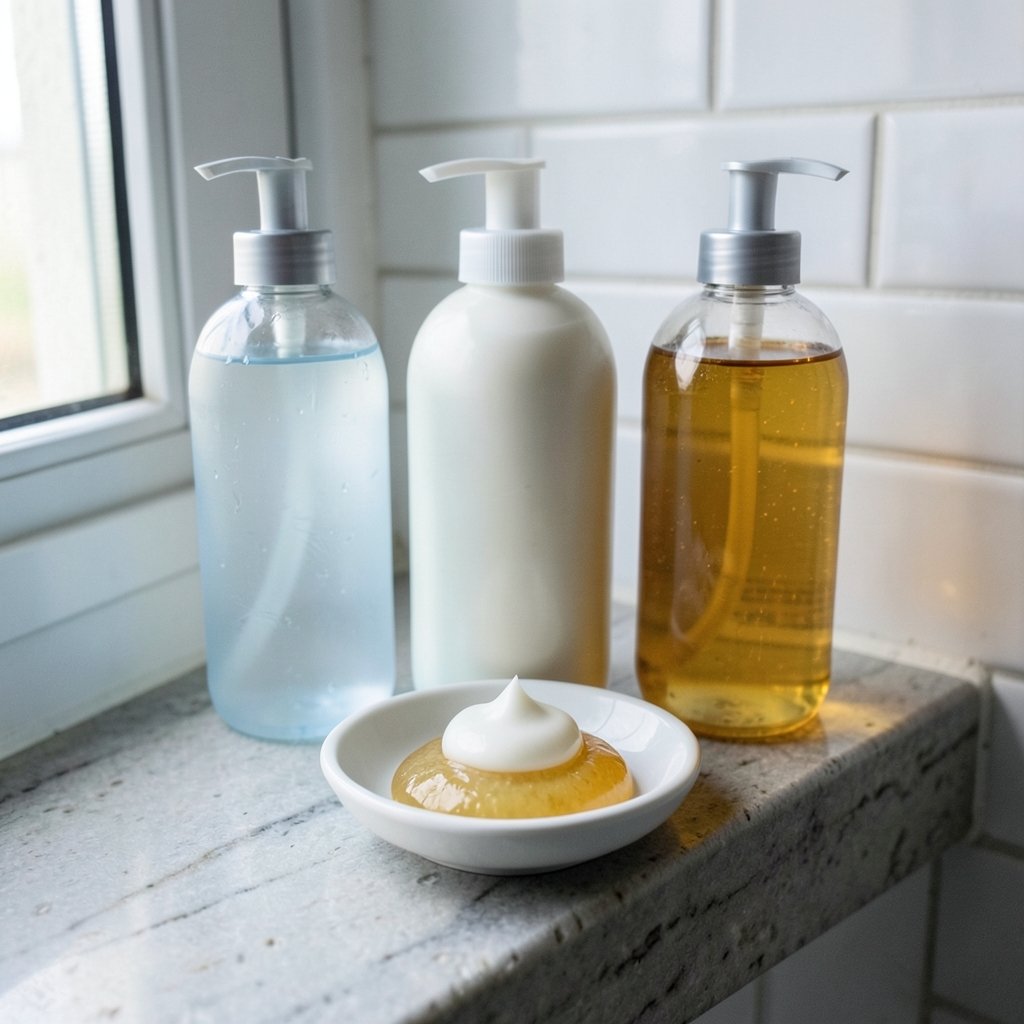
Skin type drives everything. A formula that feels luxurious on oily skin can feel like sandpaper on eczema-prone skin. Here is how the main categories shake out.
Normal to combination skin
This group has the most freedom. A mid-range gel or cream wash with a mild surfactant base will usually do the job. Look for a short ingredient list, a pleasant but not overpowering scent, and a texture you enjoy using. Enjoyment matters more than people admit; a body wash you like means you will actually use it consistently.
Dry and sensitive skin
Dry skin benefits from cream or oil-based washes with fewer surfactants and added emollients such as glycerin or plant oils. These formulas feel slippery rather than bubbly, which is normal. Less lather is not a sign of less cleaning.
Sensitive skin should lean toward fragrance-free formulas. This is where labeling gets tricky. Fragrance-free means no added fragrance. Unscented does not always mean the same thing, because some unscented products contain masking fragrances to cover the smell of raw ingredients. If your skin reacts easily, read the full ingredient list rather than trusting the front of the bottle.
Fragrance is among the most common causes of allergic contact dermatitis from cosmetics, and it is a frequent trigger for people who react to scented products. If you have had a reaction and want to know exactly what caused it, a dermatologist can run patch testing to identify specific allergens.
Eczema-prone skin
Eczema guidance consistently favors gentle, fragrance-free cleansers and short, lukewarm showers. Products carrying a recognized sensitive-skin seal have met ingredient criteria set by a nonprofit standards body, which can save you some label-squinting. Even so, skin is individual. A product that works for one person with eczema may still sting another.
Oily and acne-prone skin
Oily skin on the back and chest can benefit from a slightly more cleansing formula, but harsh is not better. Over-stripping triggers rebound oil production and irritation. A mild gel wash used once daily, with a gentle rinse on other days, is usually enough. If body acne is persistent, a wash containing salicylic acid can help, though it works best when left on the skin briefly before rinsing.
Body composition and lifestyle factors
Skin needs shift with age, climate, activity level, and health status. Someone preparing for surgery may be advised on specific pre-op cleansing routines, and understanding what a body composition scan can tell you about your baseline health is a useful companion piece to any skin routine. Similarly, seasonal shifts matter: a body winter seasonal health trend really means you should reassess your cleanser when the air turns cold and dry, because the gel that felt great in July can feel harsh in January.
The Antibacterial Question
Walk down any drugstore aisle and you will find “antibacterial” body washes promising extra protection. It sounds sensible. It usually is not necessary.
Concerns about long-term daily use of certain antibacterial ingredients led regulators to remove several of them, including triclosan and triclocarban, from consumer antiseptic washes after manufacturers failed to show they were both safe and effective for everyday use. For most people, plain soap and water, or a standard body wash, cleans adequately. Antibacterial formulas still have a place in clinical and care settings, but a daily shower is not one of them.
There is also a bigger-picture issue: overusing antibacterial products can upset the skin’s normal microbial community, which is part of how skin defends itself. Unless a doctor recommends otherwise, skip the antibacterial label.
How to Read a Body Wash Label Without Getting Lost
Labels are written to sell, not to inform. Still, a few habits make shopping faster and smarter.
- Check the first five ingredients. Ingredients are listed in descending order by weight. If the first few are surfactants and water, you are looking at a standard wash. If glycerin or an oil appears early, expect a creamier feel.
- Look for the fragrance position. If fragrance sits near the top and your skin is reactive, put the bottle back.
- Ignore “chemical-free” and “natural.” These are marketing terms, not regulated safety claims. Everything, including water, is a chemical. What matters is the specific formulation and how your skin responds.
- Treat “dermatologist-tested” as a starting point, not a guarantee. It means the product was tested on people, not that it will suit your particular skin.
- Check for a pH claim if you can find one. Healthy skin surface pH is mildly acidic, commonly cited around 4.5 to 5.5, though it varies by body site. Alkaline soaps can raise skin pH temporarily. Many quality body washes are formulated closer to skin’s natural range.
A useful shortcut: buy the smallest size first. A travel bottle costs little and tells you more about compatibility than any review ever will.
Bar Soap vs. Body Wash: An Honest Comparison
The bar-versus-bottle debate gets heated, but the answer is boringly practical. Both can be excellent. Both can be terrible. Formulation beats format.
| Factor | Bar soap | Body wash |
|---|---|---|
| Typical pH | Often higher (more alkaline) | Often closer to skin pH |
| Feel after rinsing | Can feel squeaky or tight | Usually creamier, less tight |
| Packaging | Minimal, often plastic-free | Plastic bottle, pump, or pouch |
| Mess factor | Can get slimy in a dish | Easy to dispense |
| Cost per wash | Usually lower | Usually higher |
| Best for | People who like a stripped-clean feel | Dry, sensitive, or comfort-seeking skin |
Modern syndet bars, made with synthetic surfactants rather than traditional saponified oils, behave much more like a good body wash. If you love bar soap but hate the tight feeling, a syndet bar is the middle ground. Conversely, if you love a rich lather but have reactive skin, a fragrance-free cream wash will likely serve you better than any bar.
Practical Tips That Actually Work
These are the habits that separate people with comfortable skin from people who moisturize in a panic every night.
- Turn down the temperature. Hot water strips lipids faster than warm water. A lukewarm shower is the single easiest upgrade.
- Shorten the shower. Ten minutes is plenty. Twenty is a soak, and your skin pays for it.
- Use a washcloth sparingly. Loofahs and brushes feel exfoliating but can irritate skin and harbor bacteria if not cleaned regularly. Hands work fine for most people.
- Apply moisturizer within a few minutes of toweling off. Damp skin absorbs product better. This matters more than which body wash you choose.
- Wash your shower tools. If you use a loofah or sponge, replace or sanitize it regularly. A dirty tool undoes a good cleanser.
- Do not over-buy. Body wash has a shelf life, and a cabinet full of half-used bottles is money down the drain.
One more habit worth building: pay attention to how your skin feels an hour after showering, not five minutes after. Immediate squeaky-clean is a poor signal. Comfort at the one-hour mark is the real test.
Where Trends Fit In (and Where They Don’t)
Wellness trends love to colonize the shower. Some are harmless fun. Some are worth a second look.
The cowboy colostrum trend, for example, has people adding bovine colostrum to everything from coffee to skincare routines. It is worth understanding what the cowboy colostrum trend actually delivers for your body before assuming a body wash version will transform your skin. Most of the evidence around colostrum centers on ingestion, not topical use, and a rinse-off product has limited contact time anyway.
Fashion and body trends follow similar patterns. A celebrity bodysuit moment, like the conversation around the Laquan Smith bodysuit and how it makes a body-con piece feel like fashion, can shape what people want to feel confident in. That confidence is worth pursuing. It just does not come from a bottle of body wash.
The more useful trend is the shift toward simpler formulas. Fewer ingredients, clearer labeling, and refillable packaging are genuine improvements. Brands have also rethought their retail and product strategies in recent years, and the way Bath Body Works changes actually shifted after its 2021 spin-off is a good case study in how a legacy mall brand adapted its product mix for a new era.
Conclusion
The best body wash is not a trophy product. It is the one that leaves your skin comfortable, fits your routine, and does not require a chemistry degree to understand. Start with your skin type, favor gentle surfactants, treat fragrance with suspicion if your skin is reactive, and skip the antibacterial marketing unless a doctor tells you otherwise.
Then test. Buy small, pay attention to how your skin feels an hour later, and adjust. Skin changes with seasons, age, and lifestyle, so the bottle that worked last winter may need replacing this summer. That is not failure. That is just how skin works.
And if you take nothing else from this guide, take this: a lukewarm shower, a mild cleanser, and moisturizer applied to damp skin will outperform almost any fancy formula on the shelf.
Frequently Asked Questions
Is expensive body wash actually better than drugstore brands?
Not automatically. Price often reflects fragrance quality, packaging, and marketing rather than cleansing performance. Many affordable drugstore washes use the same surfactant systems as premium ones. The better question is whether a formula suits your skin type. A ten-dollar fragrance-free cream wash can outperform a forty-dollar scented gel on dry, reactive skin.
How often should I use body wash?
Once daily is enough for most people, and every other day works fine for many, especially in cooler weather. Focus on areas that produce odor and oil, like underarms, groin, and feet, and let water do the rest elsewhere. Over-washing, not under-washing, is the more common mistake among people with dry skin.
Is sulfate-free body wash better for sensitive skin?
Often, yes, but not universally. Sulfate-free formulas tend to be milder and less stripping, which helps dry or reactive skin. However, some people tolerate sulfates without any issue, and a sulfate-free product can still contain fragrance or preservatives that trigger reactions. Judge the whole formula, not one ingredient.
Can body wash cause body acne?
It can contribute. Heavy, creamy formulas with lots of emollients can clog pores on the back and chest in some people. So can harsh formulas that irritate skin and trigger inflammation. If you are prone to body acne, choose a mild gel wash, rinse thoroughly, and consider a salicylic acid wash a few times a week.
What is the difference between fragrance-free and unscented?
Fragrance-free means no fragrance has been added. Unscented means the product has no noticeable scent, but it may contain a masking fragrance to neutralize the smell of other ingredients. For reactive skin, fragrance-free is the safer label to look for, and reading the full ingredient list settles the question.
Do I need a separate body wash for different seasons?
Many people benefit from it. Skin tends to be oilier and more sweat-prone in summer, when a lighter gel wash feels better. Winter air is drier, and a cream or oil-based wash helps preserve moisture. If you would rather keep one bottle, choose a gentle, fragrance-free cream formula that works reasonably well year-round.














