

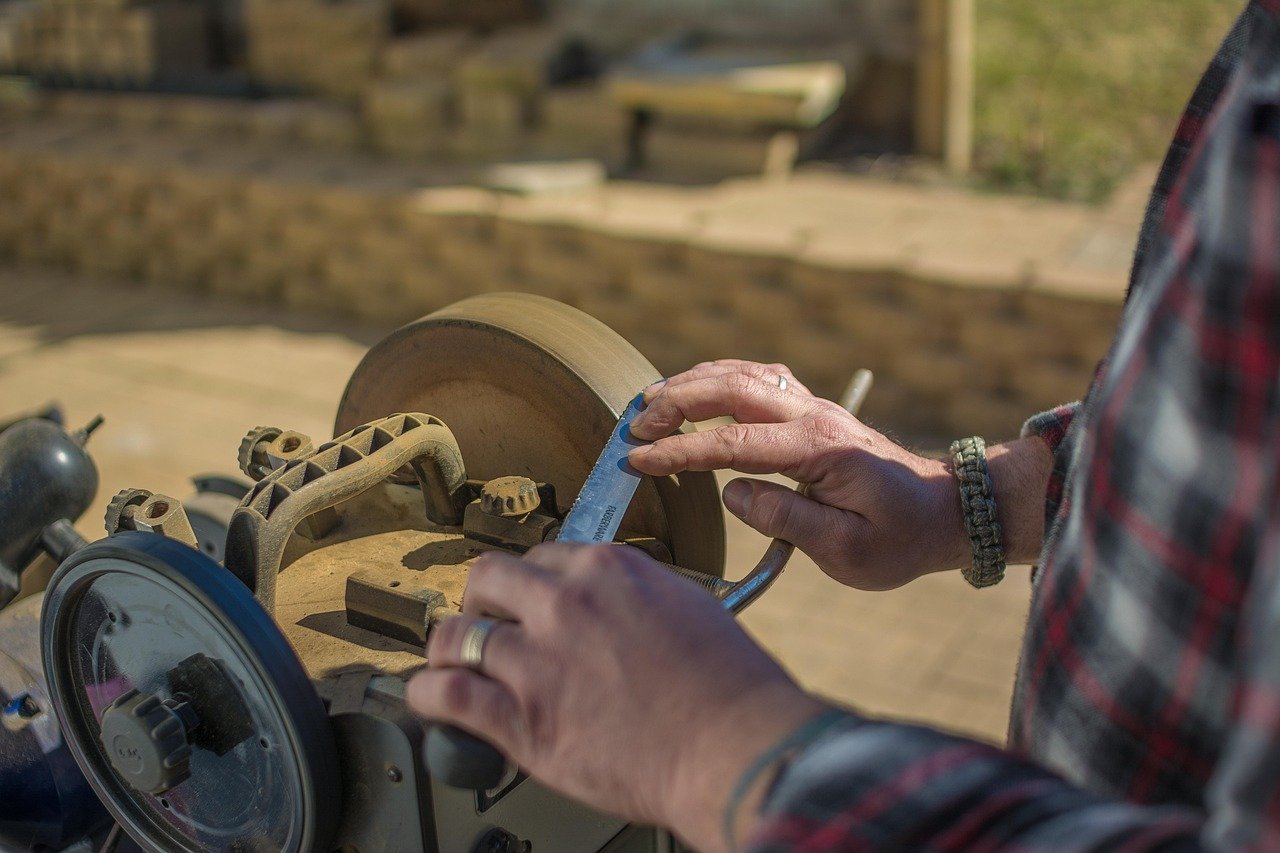

What if the biggest reason your knife feels dull has nothing to do with the knife at all? Most home cooks blame the blade when the real problem is the tool and technique used to maintain it. A drawer full of gadgets, a steel rod used once a month, and a vague memory of a sharpening demo at a farmers market are not a system. Choosing the best knife sharpener starts with admitting that “best” is a moving target: the right pick for a $200 Japanese gyuto is not the right pick for a $15 beater you use to hack through squash.
This guide cuts through the marketing claims and looks at what each sharpener family actually does to your edge, how much steel it removes, and which one matches your knives, your patience, and your counter space. (All black summer outfits that actually stay cool sharp)
Why “Best” Depends on the Blade in Your Hand
Walk into any kitchen store and you will see pull-through sharpeners, electric machines, whetstones, honing rods, and diamond plates, all claiming to restore a razor edge. They are not doing the same job.
A honing steel is the most misunderstood tool in the block. It realigns a rolled edge; it does not remove enough metal to restore a genuinely dull edge. Honing is maintenance, not sharpening, and treating the two as the same thing is one of the most common mistakes home cooks make. If your tomato skins tear instead of splitting, you are past the point where a steel will help.
The other big split is between manual and powered sharpeners. Manual tools give you control and remove less metal. Powered machines trade finesse for speed. Neither is universally better; they suit different people.
Match the tool to the knife
Most Western kitchen knives are ground to roughly 15 to 20 degrees per side, while Asian-style knives often sit at 10 to 15 degrees per side. Those numbers matter because a fixed-angle pull-through sharpener set for 20 degrees will chew up a thin, hard Japanese blade. Manufacturers publish their own recommended angles, so there is no single universal figure. Check the maker’s care guide before you buy anything with a fixed slot.
Steel hardness matters too. Very hard, brittle blades chip rather than roll, and aggressive carbide sharpeners can do real damage. Softer European steel is more forgiving.
The Main Sharpener Types, Compared

Here is the honest breakdown of what each family does well and where it falls short.
| Type | Speed | Metal removed | Skill needed | Best for |
|---|---|---|---|---|
| Pull-through (carbide) | Very fast | A lot | None | Cheap knives, quick fixes |
| Pull-through (ceramic) | Fast | Moderate | None | Light touch-ups |
| Honing rod/steel | Fast | Almost none | Low | Weekly maintenance |
| Whetstone (water stone) | Slow | Controlled | Moderate to high | Enthusiasts, fine knives |
| Diamond plate | Medium | Moderate | Moderate | Coarse work, flattening stones |
| Electric (fixed-angle wheels) | Fast | Varies | None | Convenience-focused kitchens |
| Electric (belt) | Fast | A lot | None | Heavy restoration |
Pull-through sharpeners: convenient, but read the fine print
Pull-through carbide sharpeners remove a lot of metal quickly and are widely criticized by knife enthusiasts for shortening blade life. That criticism is a common claim in enthusiast and manufacturer literature rather than a formal standard, but the logic is sound: carbide cutters scrape metal away, and every pass takes some with it. For a $20 knife you replace every few years, that trade is fine. For a knife you plan to keep for decades, it is a slow death.
Ceramic pull-throughs are gentler and work well for light touch-ups. If you want one tool and zero learning curve, a ceramic pull-through is a reasonable compromise.
Whetstones: the steep curve with the best payoff
Water stones are where control lives. Japanese water stones are often graded by grit, with 1000 grit for shaping and 3000 to 6000 grit for polishing. The Japanese Industrial Standards (JIS) system is one commonly cited grit scale, though grit numbering is not universal. Coated abrasives are specified under FEPA or ANSI/CAMI standards, which use different numbering, so “1000 grit” means different things across systems. A stone labeled 1000 in one system is not the same abrasive as 1000 in another.
The practical takeaway: buy a combination stone (roughly 1000 on one side, 3000 to 6000 on the other), keep it soaked, and practice on a cheap knife first. Angle consistency matters more than the tool. A $40 stone in steady hands beats a $200 system used at a wobbling angle.
Diamond plates: flat, fast, and honest
Diamond plates are flat steel plates with embedded diamond abrasive, used for flattening stones and coarse sharpening. They are graded by mesh or grit. They stay flat, cut fast, and handle hard steels that clog water stones. They are less ideal for final polishing because they leave a coarser scratch pattern. Many serious sharpeners keep one plate for flattening and a stone for finishing.
Electric sharpeners: speed with a catch
Electric sharpeners vary widely in aggressiveness. Some use fixed-angle abrasive wheels; belt-based models remove more metal. Consumer-product testing organizations periodically test sharpeners, but results are paywalled and methodology varies, so cross-source comparisons are unreliable. That means you should read electric sharpener reviews as opinion unless the tester discloses how it measured sharpness and how much metal was removed.
In the EU and UK, powered sharpeners fall under electrical safety rules, including the Low Voltage Directive 2014/35/EU and the UK’s Electrical Equipment (Safety) Regulations 2016. That covers safety, not sharpening quality, but it is worth knowing that a cheap imported machine may not meet the same standards as a name brand.
Practical Tips That Actually Work
These are the habits that separate people with genuinely sharp knives from people who own sharpeners.
- Find your angle and keep it. Use a matchbook or a coin under the spine as a rough guide, or mark the bevel with a marker and check your stroke. Consistency beats pressure.
- Sharpen less often, hone more. A few light passes on a steel each week keeps an edge going. Save the stones for when honing stops working.
- Don’t skip the burr. On a stone, work one side until you feel a slight burr along the opposite edge, then switch. Skipping this step is why many home sharpeners end up with a polished but dull knife.
- Clean and dry your tools. Water stones need soaking and drying; diamond plates need rinsing. Rust and clogged abrasive ruin edges.
- Practice on a cheap knife. The first few sessions on a good blade are where damage happens. A $10 knife from a thrift store is a fine training ground.
- Store knives properly. A crowded drawer dulls an edge as fast as a bad sharpener. A magnetic strip or blade guard solves this for free.
Common mistakes to avoid
The single biggest mistake is using a pull-through carbide sharpener on a good knife every week. The second is confusing honing with sharpening. The third is buying a complicated system before learning basic angle control. A simple stone and steady hands will outperform an expensive gadget in unpracticed hands.
If you are also managing the small indignities of daily life, like the sudden jolt of round-ligament pain during pregnancy, you already know that the right tool for a specific job beats a general-purpose one. The same logic applies here: a dedicated stone for shaping and a ceramic rod for maintenance beats one gadget that claims to do everything. (Lightning crotch that sudden sharp pain happens pregnancy)
Building a Simple Sharpening Kit
You do not need much. A practical starter kit looks like this:
- One combination water stone (1000/3000 or 1000/6000)
- One honing steel or ceramic rod for weekly maintenance
- One diamond plate if you plan to keep stones flat or sharpen very hard steel
- A stone holder or a damp towel to keep things stable
- A marker pen for checking your angle
That kit costs less than many electric machines and will outlast most of them. If you prefer speed and simplicity, a quality electric sharpener with fixed-angle wheels is a legitimate choice, especially for a household where nobody wants to learn stone work.
What about serrated and specialty blades?
Serrated knives need a tapered rod or a dedicated serrated sharpener; a flat stone will flatten the teeth. Scissors and garden tools can usually be handled with a diamond plate or a coarse stone. Do not run them through a kitchen pull-through.
How to Judge a Sharpener Before You Buy
Ask three questions. First, what angle does it set, and can it be adjusted? Fixed-angle tools are fine if the angle matches your knives. Second, how much metal does it remove per use? More removal means a shorter blade life. Third, can you replace the abrasive? Stones wear; wheels wear. A tool with no replacement parts is disposable.
Also check the grit or mesh rating and which standard it uses. A sharpener advertising “1000 grit” without naming the standard is telling you less than it seems. And be skeptical of any “best” list that does not disclose its test method. No single independent body ranks sharpeners universally, so treat rankings as opinion. (4c hair)
Conclusion
The best knife sharpener is the one that matches your knives, your patience, and your willingness to learn. If you want zero fuss and own inexpensive blades, a ceramic pull-through or a good electric machine will serve you. If you own quality knives and want them to last, a combination water stone plus a honing rod is the honest answer, and the learning curve is shorter than most people fear. Whatever you choose, stop treating honing as sharpening, keep your angle steady, and practice on a knife you do not love. Your edge, and your tomato slices, will thank you.
Frequently Asked Questions
Is a pull-through sharpener bad for my knives?
It depends on the knife. Carbide pull-through sharpeners remove a lot of metal quickly, which shortens blade life, especially on hard, thin blades. Ceramic pull-throughs are gentler. For cheap knives, the convenience is a fair trade. For expensive knives, use a stone or a guided system.
How often should I sharpen my kitchen knives?
Most home cooks need a full sharpening every two to six months, depending on use. Between sharpenings, hone lightly once a week. If your knife tears tomato skins or slides off onion skin, it is time to sharpen, not hone.
Can I sharpen a knife without a stone?
Yes. A honing rod maintains an edge but will not restore a dull one. Ceramic rods, diamond plates, and electric sharpeners can all restore an edge without a water stone. A coffee mug’s unglazed bottom can even work in a pinch, though results are rough.
What angle should I sharpen my knives at?
Most Western kitchen knives are ground to roughly 15 to 20 degrees per side, and Asian-style knives often 10 to 15 degrees per side. Check the manufacturer’s care guide, because there is no single universal figure. Consistency matters more than the exact number.
Do electric sharpeners ruin knives?
Not necessarily, but aggressiveness varies widely. Belt-based models remove more metal than fixed-angle wheel models. Read reviews carefully and prefer machines with replaceable abrasives and adjustable or clearly stated angles. Treat any ranking as opinion unless the tester discloses its method.
What is the difference between honing and sharpening?
Honing realigns a rolled edge with a steel or ceramic rod and removes almost no metal. Sharpening removes metal to create a fresh edge, using a stone, plate, or powered abrasive. Honing is weekly maintenance; sharpening is periodic restoration. Mixing them up is the most common home knife-care mistake.














