

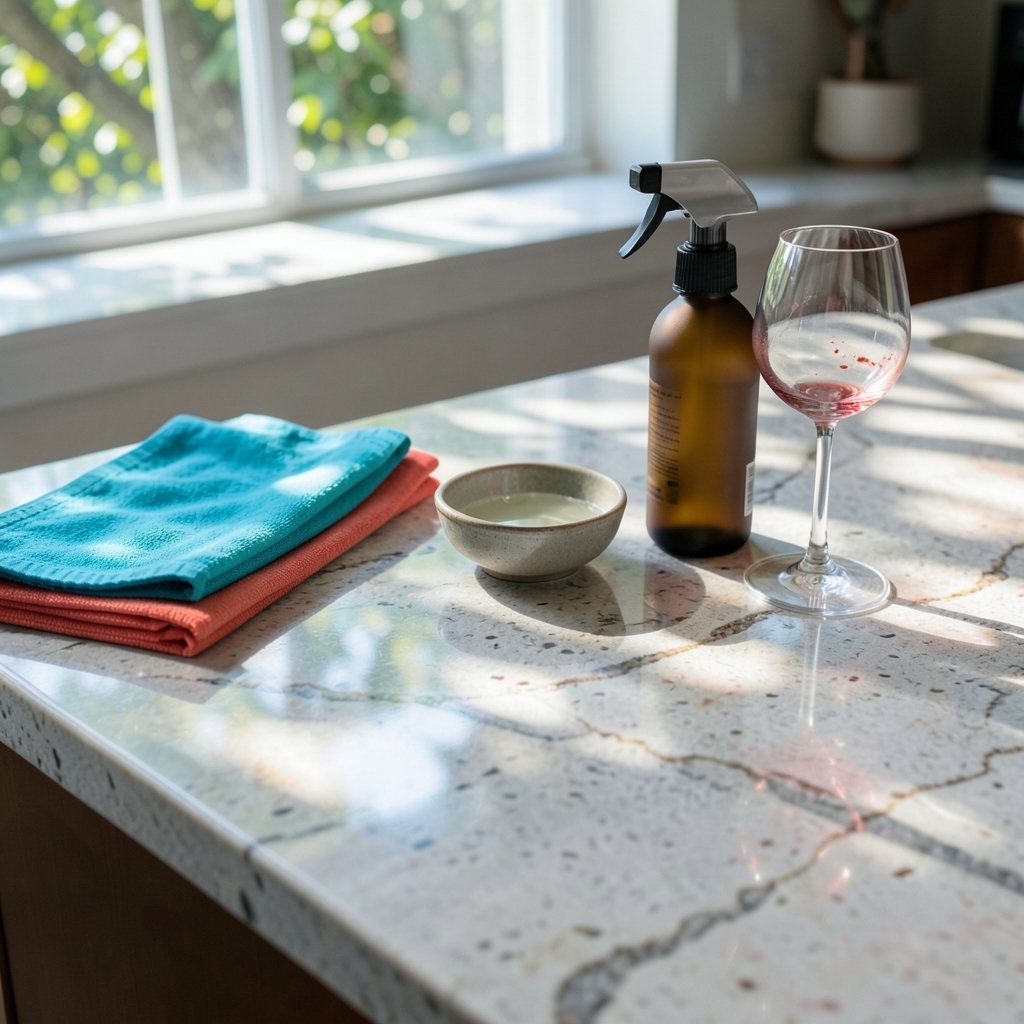
What if the fanciest stone in your kitchen could be ruined by the wrong bottle under the sink? Quartzite countertops look like marble but behave more like granite, and that mismatch is where most cleaning mistakes begin. A homeowner scrubs a wine spill with vinegar, wipes up, and notices a dull patch a week later. Or someone sprays a bathroom descaler on hard-water spots and watches the polish fade. The stone itself is tough. The trouble usually comes from the products people reach for out of habit.
This guide covers what actually works: which cleaners are safe, which ones quietly do damage, how often to seal, and how to handle the spills that make people panic. It also covers the one thing most guides skip, which is that not every slab sold as quartzite behaves the same way.
What Quartzite Actually Is and Why It Matters for Cleaning
Quartzite is a metamorphic rock. It forms when sandstone gets buried and cooked under intense heat and pressure, and the quartz grains fuse together into a dense, hard material. That background matters because it explains the stone’s personality: it is hard, it resists scratches better than marble or limestone, and it generally holds up well against mild cleaning agents.
The catch is that “quartzite” is a trade term, not a strict scientific label. Stone yards apply it loosely, and some slabs sold under that name are quartz-rich schist or material with carbonate content that behaves much more like marble. Those stones etch. They react to acid and leave a pale, dull mark that no amount of wiping will fix.
That single fact reshapes the whole cleaning conversation. You cannot assume a countertop is acid-proof just because the label said quartzite. A quick test settles it: ask a fabricator for a scrap piece, or place a single drop of mild acid on an inconspicuous spot and watch for fizzing or a dull ring. If nothing happens, the stone is likely genuinely quartz-based. If it reacts, treat it like marble from that day forward.
The Everyday Routine That Keeps Quartzite Looking New
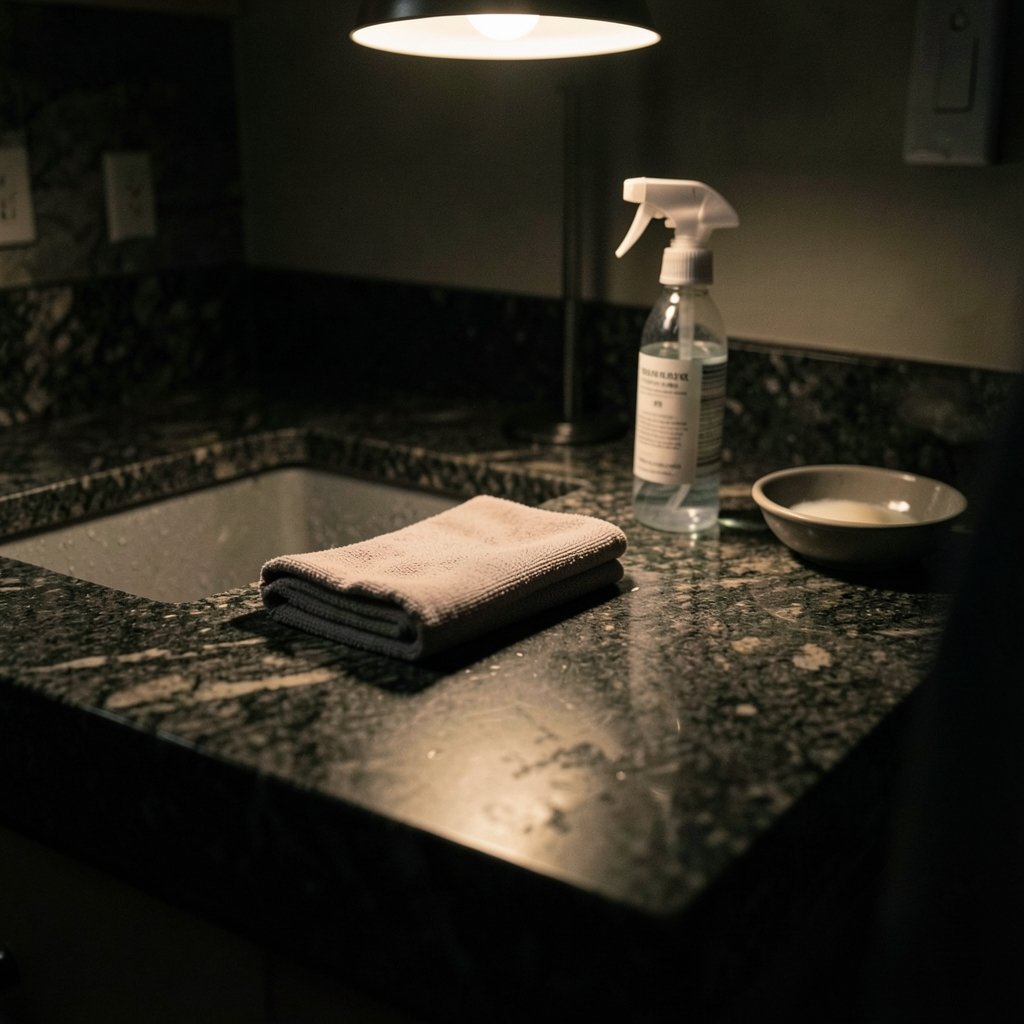
Daily care on quartzite is refreshingly simple. The goal is to remove mess without leaving residue or abrading the surface.
- Wipe crumbs and loose debris with a soft, dry microfiber cloth.
- Spray a pH-neutral stone cleaner or a diluted mild dish soap solution across the surface.
- Wipe with a clean, damp microfiber cloth, working in overlapping passes.
- Rinse the cloth and go over the counter once more to lift soap film.
- Dry thoroughly with a fresh cloth so no water sits and pools.
That last step gets skipped constantly, and it matters. Standing water can work its way into seams, around sink cutouts, and into any unsealed pores. Overnight puddles near the faucet are a common cause of dark spots and dull patches.
For most kitchens, a once-daily wipe-down plus an immediate response to spills is enough. Deep cleaning once a week with the same neutral cleaner handles the rest. There is no need for a cabinet full of specialty products. In practice, the simpler the routine, the more likely it gets followed, and consistency beats intensity with natural stone.
Cleaners to Avoid on Quartzite
Most quartzite damage comes from a short list of products people already own. Knowing them by name prevents the most common accidents.
| Product | What it does to quartzite | Safer swap |
|---|---|---|
| Vinegar and water | Can etch carbonate-bearing stone and dull polish over time | pH-neutral stone cleaner |
| Lemon juice and citrus sprays | Acidic; same dulling risk | Diluted mild dish soap |
| Bleach | Can break down sealer and stain some stones | Diluted dish soap for sanitizing |
| Ammonia-based glass cleaners | Strips sealer; leaves streaks | Water with a drop of dish soap |
| Baking soda paste | Mildly abrasive; can scratch polished finishes | Soft cloth with neutral cleaner |
| Scouring pads and powders | Micro-scratches that trap dirt and dull shine | Non-scratch sponge or microfiber |
| Descalers and bathroom lime removers | Strong acids that etch stone | Prompt wiping of water spots |
A few of these deserve extra emphasis. Vinegar is the internet’s favorite cleaning ingredient, and it is genuinely excellent on glass and tile. On quartzite, especially any slab with carbonate content, it is a slow-acting hazard. One wipe does nothing visible. Repeated use dulls the shine in a way that only re-polishing fixes.
Bleach is another frequent offender. People reach for it after raw meat touches the counter, which is understandable. Diluted dish soap handles routine sanitizing without attacking the sealer. If a stronger disinfecting step is truly needed, wipe it up promptly and rinse thoroughly rather than letting it sit.
Abrasive pads are the quiet culprit. A green scouring pad can leave hairline scratches that look invisible on a busy countertop but scatter light and make the finish look cloudy over months of use. Microfiber does the job with zero risk.
How to Handle Spills Before They Set
Speed is the whole game with natural stone. Quartzite is not highly porous compared with some materials, but liquids left standing can still leave marks, especially oils, red wine, and anything acidic.
Blot, do not wipe, when a colored liquid spills. Wiping spreads the stain across a wider area. Press a clean cloth onto the spill and let it absorb, then follow with a damp cloth and a neutral cleaner. For oil-based messes, a small amount of dish soap breaks down the grease so the cloth can lift it. (Clean jokes for kids)
If a stain has already set, a poultice is the standard approach. Mix an absorbent powder with just enough liquid to make a paste, spread it over the stain, cover with plastic wrap, tape the edges, and leave it for a day or two. As the paste dries, it pulls the stain out of the stone. Lift the paste, rinse, and dry. This method is slow but gentle, and it works on stains that surface cleaners cannot touch. The exact powder and liquid depend on the stain type, so it is worth asking a fabricator which combination suits the specific mark.
For the less glamorous side of kitchen upkeep, the same principle applies as with clean girl nails: maintenance done in small, regular steps looks effortless, while neglect shows up fast.
Sealing: When, How Often, and How to Tell
Many quartzite slabs arrive sealed by the fabricator. Sealer does not make stone invincible, but it buys time on spills by slowing absorption.
Frequency is where people get confused. “Reseal every year” circulates as a rule of thumb, and it is exactly that: a rough guide. Porosity varies between slabs, and sealers vary in durability. Some counters need attention annually; others go far longer.
The water-bead test is a simple check. Place a few drops of water on the surface and wait about fifteen minutes. If the water beads up and sits on top, the sealer is still working. If it darkens the stone or soaks in, it is time to reseal. Do this in a few spots, since wear is uneven and concentrates near the sink and prep areas.
When resealing, clean and dry the surface completely first, apply the sealer according to its instructions, let it dwell for the specified time, then buff off the excess. Leaving sealer to dry on the surface creates a hazy film that looks like damage but usually buffs away. Always follow the specific product’s directions over generic advice, since formulations differ.
The same patience applies to the broader project of keeping natural surfaces healthy, much like the approach in this guide to natural nails: care, growth, and the clean look: gentle products, regular attention, and no harsh shortcuts.
Heat, Scratches, and Other Physical Risks
Cleaning products get all the attention, but physical habits cause plenty of damage too.
Thermal shock is real. A hot pan straight from the stove can crack stone. Trivets and cooling racks are not optional. The same goes for setting a slow cooker or air fryer directly on the counter for hours; sustained heat from below can cause problems even without a visible crack.
Cutting directly on the counter dulls knives and can leave fine scratches. A cutting board costs less than re-polishing a slab.
Heavy impacts are the other risk. A dropped cast-iron skillet can chip an edge or crack the surface. Quartzite is hard, but hard is not the same as unbreakable. Chips at edges can often be repaired by a fabricator, so it is worth calling one rather than living with a rough spot that catches cloths.
Matching the Method to the Stone
The single most useful habit is to stop treating “quartzite” as one uniform material. Ask questions at purchase. Which quarry did the slab come from? Does the fabricator know whether it is genuinely quartz-based or a quartz-rich stone with carbonate content? What sealer was applied, and what does the maker recommend?
Those answers determine whether you can relax with a pH-neutral cleaner and a microfiber cloth, or whether you need to treat the surface with marble-level caution. A fabricator who cannot answer is a reason to slow down before buying.
A quick sense of humor helps too. Living with natural stone means accepting that it will not stay showroom-perfect forever, and that the occasional mark is part of the deal. Keeping things light, the way you would with a round of clean jokes for kids, makes the maintenance routine easier to stick with. And if there are children in the house helping with chores, a few puns for kids about sparkling counters can turn wiping duty into something they actually volunteer for.
Common Mistakes That Cause Real Damage
A short list of habits worth breaking, gathered from the patterns that show up again and again:
- Using whatever spray is closest, without checking whether it is acidic.
- Letting water pool around the sink and seams overnight.
- Scrubbing a stubborn spot with an abrasive pad instead of using a poultice.
- Skipping the drying step and leaving streaks and film.
- Assuming the label “quartzite” guarantees acid resistance.
- Resealing on a fixed schedule instead of testing whether it is needed.
- Setting hot cookware down without a trivet.
None of these require special equipment to fix. They require a small shift in habit, which is far cheaper than re-polishing a countertop.
Conclusion
Cleaning quartzite countertops comes down to a few durable principles. Use a pH-neutral cleaner or diluted mild dish soap, wipe with soft microfiber, rinse, and dry completely. Skip vinegar, bleach, ammonia, descalers, and anything abrasive. Blot spills fast, poultice the ones that set, and use trivets religiously. Test the sealer with a water droplet instead of resealing on autopilot.
Above all, confirm what your specific slab actually is. Genuine quartzite is forgiving. Quartzite in name only may behave like marble and need gentler care. Once you know which one sits in your kitchen, the routine becomes simple, fast, and nearly foolproof.
Frequently Asked Questions
Can I use vinegar to clean quartzite countertops?
Vinegar is acidic, and acid is the main enemy of carbonate-bearing stone. On genuine quartz-based quartzite it may do limited harm, but on slabs mislabeled as quartzite it can etch and dull the finish. Since it is hard to know which you have without testing, it is safer to skip vinegar entirely and use a pH-neutral stone cleaner instead.
How often should quartzite countertops be sealed?
There is no fixed schedule. Porosity and sealer durability vary between slabs, so the reliable method is the water-bead test. Place a few drops of water on the surface and wait about fifteen minutes. If the water beads and sits on top, the sealer is holding. If it soaks in or darkens the stone, it is time to reseal.
Is bleach safe on quartzite?
Bleach is not a good choice. It can break down sealer and cause discoloration on some stones, and the risk is not worth it for routine cleaning. Diluted mild dish soap handles everyday sanitizing. If a stronger disinfectant is genuinely needed, apply it briefly, rinse thoroughly, and dry the surface right away.
What should I do about a stain that will not come out?
Use a poultice. Mix an absorbent powder with enough liquid to form a paste, spread it over the stain, cover with plastic wrap, and tape the edges down. Leave it for a day or two as it dries and draws the stain out, then lift the paste, rinse, and dry. Ask a fabricator which powder and liquid suit the specific stain.
Can hot pots go directly on quartzite?
No. Thermal shock from a hot pan can crack stone, and sustained heat from appliances like slow cookers can cause problems too. Always use trivets or cooling racks. It is one of the simplest habits to build and one of the most effective ways to protect the surface.
How can I tell if my countertop is really quartzite?
Ask your fabricator about the slab’s origin and composition, and request a scrap piece if possible. A simple acid test on an inconspicuous spot helps: genuine quartz-based stone generally will not react, while carbonate-bearing material may fizz or leave a dull ring. If it reacts, clean it like marble from that point on.














