
A cap looks simple until you have to choose one. Cotton and wool are the two materials you will see most often, and they behave very differently once you wear them for a full day. Cotton is light, breathable and easy to wash, while wool is warmer, holds its shape better and suits cooler weather. The wrong choice is rarely a disaster, but it is the difference between a cap you reach for every day and one that sits in a drawer.
The confusion usually starts in the shop. Both materials come in the same styles, the same colours and often the same price range, so the label is the only clue. A cotton twill cap and a wool felt cap can look identical on a shelf, yet one will keep you cool on a warm afternoon and the other will keep you warm on a cold morning. Knowing what each material does well, and where each one falls short, makes the choice straightforward.
Below are nine comparisons that matter in 2027, covering comfort, weather, care, durability and value. Each one looks at cotton and wool side by side, so you can see which material suits the way you actually wear a cap, not just the way it looks in a photograph.
Key takeaways
- Cotton caps are lighter and more breathable, which makes them the better choice for warm weather and everyday wear.
- Wool caps are warmer and hold their shape better, which makes them the better choice for cold weather and smarter outfits.
- Cotton is easier to wash at home, while wool needs gentler care and can shrink if it is washed carelessly.
- Wool handles light rain better than cotton, but neither material is waterproof and both need drying properly.
- No cap material suits every season, so the honest answer is often one of each rather than a single perfect cap.
What cotton and wool caps actually are
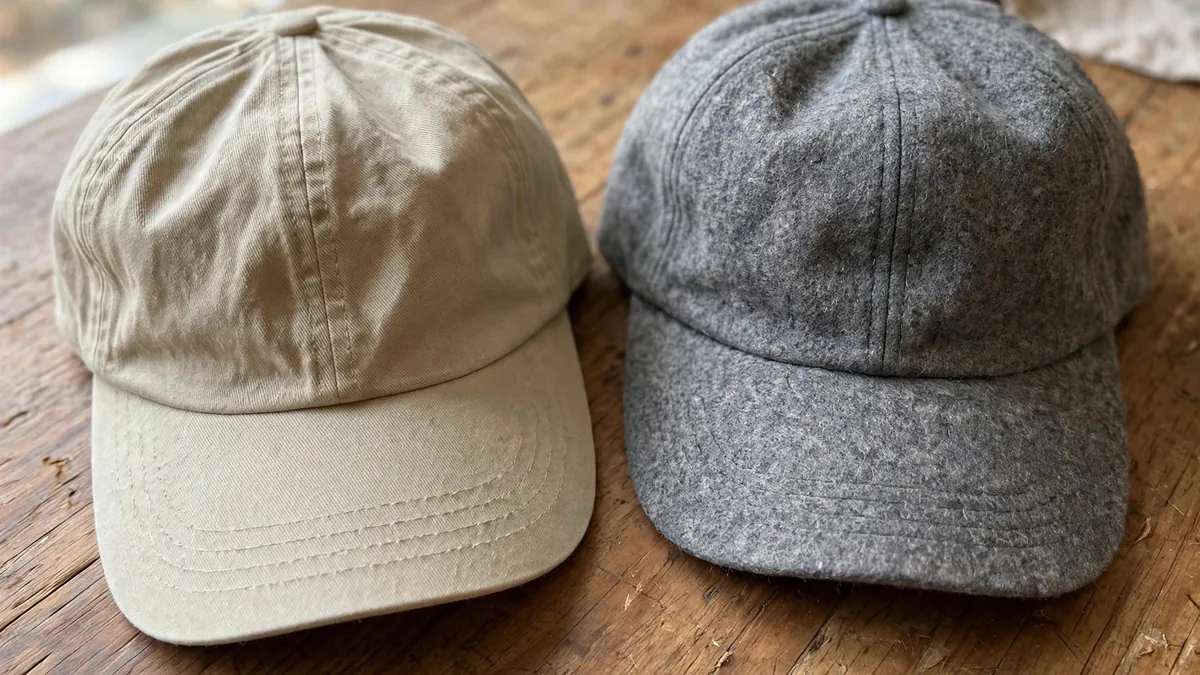
A cotton cap is usually made from cotton twill, canvas or jersey. Twill is the most common, with a fine diagonal weave that feels smooth and holds a structured shape. Canvas is heavier and stiffer, often used for workwear-style caps, while jersey is soft and stretchy, closer to a T-shirt in feel. Most cotton caps have a fabric sweatband, an adjustable strap at the back and a pre-curved or flat brim.
A wool cap is usually made from wool felt, wool tweed or a wool blend. Felt is smooth, dense and holds a firm shape, which is why it is used for smarter caps and flat caps. Tweed is woven with flecks of colour and feels textured, which suits autumn and winter outfits. Wool blends, often mixed with polyester or acrylic, are cheaper and easier to care for, but they do not breathe or age quite like pure wool.
The two materials also feel different on the head. Cotton is soft from the first wear and gets softer with use, while wool can feel slightly firm at first and then moulds to your head over time. Neither is better in every situation, which is why the comparisons below look at each one in the conditions where it is actually worn.
How we chose these comparisons and what to look for
We looked at the things that decide whether a cap gets worn or forgotten: how it feels after a few hours, how it handles heat and rain, how easy it is to clean, and how it looks after a season of use. Price mattered too, but only alongside durability, because a cheap cap that loses its shape in a month is not good value.

When you are choosing, look first at the material label and the weave. A tightly woven cotton twill will hold its shape better than a loose jersey, and a pure wool felt will feel warmer and smarter than a thin wool blend. Check the sweatband, too, because a good cotton or leather sweatband makes a real difference on a long day. Our guide to the best luxury fashion brands is a useful starting point if you want to see which labels are known for well-made caps.
Finally, think about when you will wear the cap. A cap bought for summer walks needs breathability above all, while a cap bought for winter needs warmth and wind resistance. If you want one cap for everything, a mid-weight cotton twill is the safest single choice, but it will never be as warm as wool in January or as cool as cotton in July.
The 9 comparisons that matter in 2027
Breathability and heat
What we like: Cotton lets air through easily, so your head stays cooler on warm days and the cap does not feel stuffy after an hour. Wool, especially a loose tweed weave, can breathe reasonably well, but dense felt traps heat. What to consider: Cotton can feel thin and flimsy in very hot sun, and a dark cotton cap still absorbs heat. Best For: Warm days, walking, travel. Material: Cotton twill or canvas. Price Range: Around £20 to £60 for a good cotton cap. Standout Feature: Cotton stays comfortable in heat where wool feels heavy.
Warmth and cold weather
What we like: Wool is naturally insulating, so a wool cap keeps your head warm even when the temperature drops, and it keeps working when it gets damp. Cotton offers almost no insulation and feels cold quickly. What to consider: A thin wool blend may not be much warmer than cotton, so check the material content before you buy. Best For: Autumn and winter, cold mornings, outdoor work. Material: Wool felt or tweed. Price Range: Around £30 to £90 for a good wool cap. Standout Feature: Wool keeps you warm in weather where cotton feels useless.
Warmth is wool’s strongest advantage and the main reason to own one. A wool cap on a frosty morning feels like a proper layer, while a cotton cap feels like decoration. If you live somewhere with real winters, this comparison alone justifies a wool cap.
Comfort and softness
What we like: Cotton is soft against the skin from the first wear and causes almost no irritation, which suits sensitive skin. Good wool is smooth too, but cheaper wool can feel scratchy around the forehead. What to consider: Wool softens with wear, so a cap that feels firm on day one may feel fine after a week. Best For: All-day wear, sensitive skin, anyone who dislikes itchy fabrics. Material: Brushed cotton or merino wool. Price Range: Around £25 to £70 for either material. Standout Feature: Cotton is comfortable immediately, while wool comfort improves over time.
Sweat and moisture
What we like: Cotton absorbs sweat quickly, which keeps it off your forehead, though the fabric can stay damp. Wool absorbs moisture too, but it wicks it away from the skin and still feels dry, which is why it works well in changeable weather. What to consider: A soaked cotton cap takes a long time to dry and can feel heavy, while wool dries more slowly than synthetics. Best For: Active days, walking, light rain. Material: Wool for damp weather, cotton for dry heat. Price Range: Around £20 to £80 for either material. Standout Feature: Wool manages moisture better when the weather turns.
Durability and everyday wear
What we like: Cotton is tough and forgiving, and a well-made cotton twill cap can last years of daily wear. Wool is strong too, but it can pill where it rubs against hair and bag straps. What to consider: Cotton fades in strong sun over time, especially dark colours, while wool can attract moths if it is stored badly. Best For: Daily wear, travel, rough use. Material: Heavy cotton twill or canvas. Price Range: Around £20 to £60 for a durable cotton cap. Standout Feature: Cotton survives daily knocks with less fuss than wool.
For a cap that gets thrown in a bag and worn every day, cotton is the more forgiving choice. Wool lasts just as long with a little care, but it asks more of you, and pilling on the crown is a common complaint after a season of hard wear.
How each cap ages
What we like: Cotton softens and fades gently, which gives it a relaxed, lived-in look that suits casual outfits. Wool keeps its shape and colour for longer, and a good tweed cap looks better after a year than it did new. What to consider: Cotton can lose its structure and go floppy, while wool can develop a shiny patch where it is handled most. Best For: Anyone who likes a cap that improves with age. Material: Wool tweed or heavy cotton canvas. Price Range: Around £30 to £90 for a cap that ages well. Standout Feature: Wool holds its shape, while cotton softens into a comfortable favourite.
Care and cleaning
What we like: Cotton caps can usually be hand-washed or machine-washed on a gentle cycle, which makes them easy to live with. Wool needs hand-washing in cool water or dry cleaning, and it can shrink badly in a hot wash. What to consider: Always check the label, since some cotton caps have cardboard in the brim that cannot be washed at all. Best For: Anyone who wants low-maintenance headwear. Material: Cotton twill. Price Range: Around £20 to £50 for an easy-care cotton cap. Standout Feature: Cotton is the clear winner for easy washing.
Style and versatility
What we like: Cotton suits casual outfits, from jeans and a T-shirt to a linen shirt on holiday. Wool suits smarter outfits, from a wool coat to a jacket and shirt, and it looks at home in autumn and winter. What to consider: A wool cap can look too formal with shorts and trainers, while a cotton cap can look too casual with a tailored coat. Best For: Casual days for cotton, smarter days for wool. Material: Cotton for summer, wool for winter. Price Range: Around £20 to £90 for either material. Standout Feature: Each material has a season where it looks exactly right.
Style is where owning both materials makes sense. Cotton covers the casual half of the year and wool covers the smart half, and neither one stretches comfortably across the whole wardrobe. One cap can do a lot, but two caps do it better.
Price and value
What we like: Cotton caps are usually cheaper, with good ones starting around £20, while wool caps usually start around £30 and climb higher for pure wool or tweed. What to consider: A cheap wool blend is often worse value than a good cotton cap, since it has the drawbacks of both materials and the benefits of neither. Best For: Tight budgets for cotton, long-term investment for wool. Material: Cotton twill for value, pure wool for longevity. Price Range: Cotton around £20 to £60, wool around £30 to £120. Standout Feature: Cotton gives better value at the low end, while good wool justifies its price over years.
Which cap is right for you
If you want one cap for warm weather, daily errands and holidays, buy cotton. It is lighter, cooler, easier to wash and cheaper, and it goes with almost everything you already own in summer. A mid-weight cotton twill in a neutral colour is the hardest-working single cap most people will own.
If you want a cap for cold weather, smarter outfits or long walks in autumn and winter, buy wool. It is warmer, holds its shape better and looks more considered with a coat. Our roundup of the best hats for men shows how wool caps sit alongside other cold-weather headwear.
If you wear a cap most days of the year, buy one of each. A cotton cap for spring and summer and a wool cap for autumn and winter covers every season properly, and each one lasts longer because it is not being worn all year round. That is the honest answer for most people, even though it costs more up front.
The caveats that matter
Neither material is waterproof, and neither should be treated as rainwear. Wool handles a light shower better because it sheds water at first and keeps insulating when damp, but a heavy downpour will soak both materials. If you need real rain protection, a waxed or waterproof cap is a different purchase entirely.
| Detail | What is known |
|---|---|
| Best for warm weather | Cotton, because it breathes and stays cool |
| Best for cold weather | Wool, because it insulates even when damp |
| Easiest to wash | Cotton, usually machine-washable on gentle |
| Best shape retention | Wool felt, which holds its structure for years |
| Most likely to irritate skin | Cheaper wool, which can feel scratchy on the forehead |
| Worst enemy | Hot water for wool, strong sun fading for cotton |
| Best value at low prices | Cotton, with good caps from around £20 |
| What neither material does | Neither is waterproof, and neither suits every season |
Fit matters as much as material. A cap that is too tight will give you a headache whatever it is made from, and a cap that is too loose will blow off in the first gust of wind. Measure your head before ordering online, and remember that wool can feel tighter at first and ease with wear.
Checklist: choosing between cotton and wool caps
Use these checks before you buy, and again after a week of wear.
- Check the season you will wear it most: cotton for warm months, wool for cold months.
- Check the label: pure wool or pure cotton beats a cheap blend for most people.
- Check the sweatband: a cotton or leather band is more comfortable than a synthetic one.
- Check the brim: make sure it is not cardboard if you plan to wash the cap.
- Try it on for a few minutes: wool should not itch and cotton should not pinch.
- Check the care label: if you will not hand-wash, do not buy a wool cap that needs it.
Frequently asked questions
Can I wear a wool cap in summer?
You can, but it will feel warm. A light wool tweed is wearable on a cool summer evening, but a dense wool felt cap is uncomfortable in real heat. Cotton is the better choice for most summer days.
Can I machine-wash a cotton cap?
Often yes, on a gentle cycle in cold water, but check the label first. Some cotton caps have a cardboard brim that will warp if it gets wet, so hand-washing or spot-cleaning is safer for those.
Will a wool cap shrink in the wash?
Yes, easily, if it is washed in hot water or tumble-dried. Hand-wash wool caps in cool water with a gentle detergent, reshape them while damp, and let them air-dry away from direct heat.
Which material lasts longer?
Both can last years with the right care. Cotton survives rough daily use better, while wool keeps its shape and colour longer. The cap that lasts longest is usually the one that suits its season, because it is not being worn in conditions it was not made for.
Do wool caps attract moths?
They can, especially if they are stored dirty or in a damp place for months. Clean a wool cap before storing it for the summer, and keep it in a dry place with cedar or lavender if moths are a problem where you live. A cap bought as a gift, like the ideas in our luxury gifts under £1,000 guide, deserves the same care as one you bought for yourself.
Is a wool blend as good as pure wool?
Not quite. A blend is usually cheaper and easier to care for, but it does not breathe or insulate as well as pure wool, and it can pill more. A good cotton cap is often better value than a cheap wool blend.
The bottom line
The best cap material in 2027 depends on when you will wear it. Cotton is the right choice for warm weather, everyday use and easy care, while wool is the right choice for cold weather, smarter outfits and long-term shape. Neither one is better in every situation, and the comparisons above show why.
If you can only buy one, choose by season: cotton for spring and summer, wool for autumn and winter. If you wear a cap all year, buy one of each and let each material do what it does best. That is the simplest way to end up with caps you actually wear.