

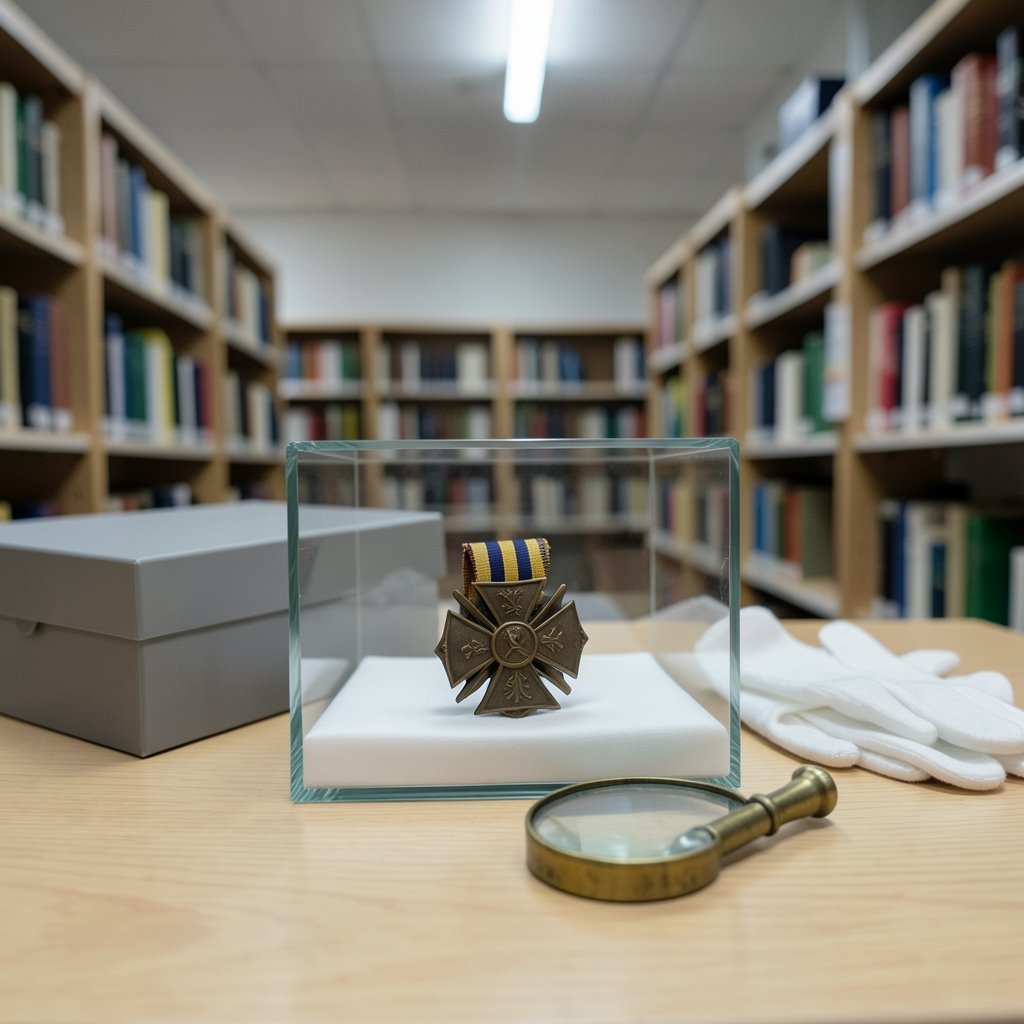
What medal does a soldier receive for heroism so extreme that it almost, but not quite, rises to the level of the Medal of Honor? The answer is the Distinguished Service Cross, and it is one of the most consequential awards in American military history. Established during World War I, the DSC has been pinned to the chests of soldiers who charged machine-gun nests, shielded comrades from grenades, and held ground against impossible odds. Yet outside military circles, it remains far less understood than the Medal of Honor it sits beneath.
This article breaks down what the DSC is, how it fits into the military’s ranking of awards, who has earned it, and how it differs from the honors handed out by other branches. It also covers the practical details that often confuse people, from how the medal is worn to why some recipients are later upgraded to a higher award.
What Is the Distinguished Service Cross?
The Distinguished Service Cross is the U.S. Army’s second-highest decoration for valor. It is awarded for extraordinary heroism in action against an armed enemy — courage so notable that it clearly exceeds what is required by duty, but that falls short of the standard for the Medal of Honor.
Congress established the award on 2 January 1918, in the final year of World War I, when the scale and ferocity of combat in Europe created a need for a valor decoration below the Medal of Honor but above existing recognition. It was intended specifically for the Army, and it remains an Army award today.
The key phrase in the criteria is “extraordinary heroism.” That is a deliberately high bar. The DSC is not a service or campaign medal, and it is not given for general good performance. It recognizes a specific act — or a sustained period of acts — performed under fire, usually at grave personal risk.
Where the DSC Sits in the Order of Precedence
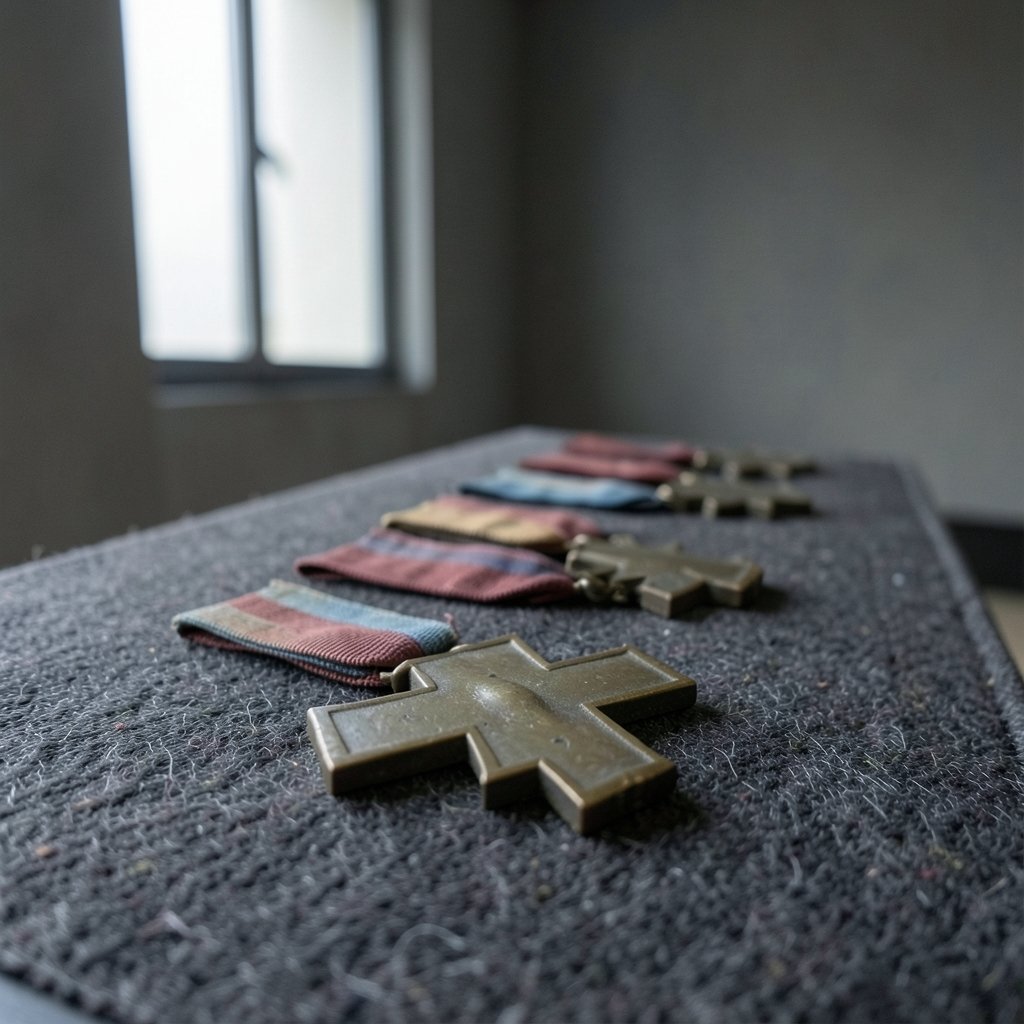
Understanding the DSC means understanding the ladder it sits on. In the U.S. military’s order of precedence for decorations, awards are ranked by significance, and the DSC occupies a very specific rung.
| Decoration | Branch | Rank |
|---|---|---|
| Medal of Honor | All services | Highest valor award |
| Distinguished Service Cross | Army | Second-highest, Army valor |
| Navy Cross | Navy and Marine Corps | Second-highest, naval valor |
| Air Force Cross | Air Force | Second-highest, Air Force valor |
| Silver Star | All services | Third-highest valor award |
The pattern is clear once you see it. Each service has its own “cross” that ranks just below the Medal of Honor. The DSC is the Army’s version. The Navy Cross fills that role for the Navy and Marine Corps, and the Air Force Cross does the same for the Air Force. All three crosses sit above the Silver Star, which is a cross-service valor award ranked third. (Depop customer service)
This structure matters because people often assume the DSC is a single, universal medal. It is not. A sailor who performs the same act of heroism a soldier does would typically be recognized with the Navy Cross, not the DSC. The branch determines which cross applies.
The Criteria: What Actually Earns a DSC
The phrase “extraordinary heroism” is easy to say and hard to define. In practice, the standard is demanding and case-by-case. Reviewers look at the risk involved, the soldier’s voluntary decision to accept that risk, and whether the action stood out even among other acts of courage in the same engagement.
A few practical points help clarify what the DSC is and is not:
- It requires action against an armed enemy. The heroism must occur in combat or under conditions of actual hostility, not in training or peacetime service.
- It must exceed the call of duty. Doing one’s job bravely is not enough; the act must go beyond what the situation required.
- It must fall short of the Medal of Honor standard. If the action is judged to meet the higher bar, the recommendation is typically elevated to the Medal of Honor instead.
- It can be awarded posthumously. Many DSCs have been presented to families after the recipient was killed in action.
- It can, in rare cases, be awarded more than once. A small number of individuals have received the DSC on multiple occasions.
One common mistake people make is assuming the DSC is automatic for anyone wounded while doing something brave. It is not. The award is about the nature of the act, not the outcome. A soldier can be gravely wounded without earning a DSC, and a soldier can earn one for an action that left them physically unharmed.
A Short History of the Award
The DSC arrived at a moment when the U.S. Army was expanding rapidly and fighting a brutal war in Europe. The scale of World War I combat produced a large number of awards, and the DSC quickly became a recognized mark of exceptional courage.
The decoration carried through World War II, the Korean War, the Vietnam War, and later conflicts. In each era, the DSC recognized soldiers whose actions became part of unit legend — the soldier who stayed behind to cover a withdrawal, the medic who crossed open ground under fire, the officer who led a counterattack after being wounded.
The award’s history also includes a quirk that surprises many readers: some recipients were later upgraded to the Medal of Honor. The most famous example is Alvin York, whose actions in World War I were initially recognized with the DSC and later elevated to the Medal of Honor. Upgrades happen when a review determines that the original act met the higher standard. This is one reason precise total counts of DSC awards are difficult to pin down — figures vary depending on whether upgrades and posthumous awards are counted.
Because the DSC spans more than a century of conflict, its recipient list reads like a cross-section of American military history. It includes career officers, draftees, medics, and ordinary soldiers who did something extraordinary once and never sought attention for it.
DSC vs. Other Valor Awards: A Clear Comparison
People frequently mix up the various valor decorations. The table below lays out the practical differences.
| Award | Who Can Receive It | Typical Standard | Relative Rarity |
|---|---|---|---|
| Medal of Honor | Any service member | Risk of life above and beyond the call of duty | Rarest |
| Distinguished Service Cross | Army personnel | Extraordinary heroism, below MOH standard | Very rare |
| Navy Cross | Navy and Marine Corps | Extraordinary heroism, below MOH standard | Very rare |
| Air Force Cross | Air Force personnel | Extraordinary heroism, below MOH standard | Very rare |
| Silver Star | Any service member | Gallantry in action | Less rare than the crosses |
The simplest way to remember it: the three crosses are siblings, each tied to a branch, and all of them outrank the Silver Star. The Medal of Honor outranks them all.
How the Medal Is Worn and Recognized
The DSC is a physical decoration with a distinctive design, and its wear is governed by military regulations. Recipients wear it on the left chest in the position dictated by the order of precedence. When a service member has earned multiple awards, the DSC is positioned above the Silver Star and below the Medal of Honor.
There is also a subtle but important point about how the award is referenced. In written and spoken military contexts, the DSC is often abbreviated, and recipients are sometimes addressed with a post-nominal designation. Families researching a relative’s service record should look for the full name of the award as well as its abbreviation, since older documents may use either.
For people tracing a family member’s military history, the DSC is one of the most meaningful entries to find. It signals that the person did something genuinely exceptional, and it often comes with a citation describing the action in detail. Those citations are frequently the best surviving account of what happened.
Practical Tips for Researchers and Families
Anyone digging into a DSC record — whether for genealogy, a museum project, or personal interest — will find that the process rewards patience. A few practical habits make the work easier.
First, start with the citation, not the medal. The official citation describes the act, the date, and the unit, and it is usually the most reliable anchor for further research. Second, cross-check the branch. Because the DSC is an Army award, a record showing a Navy recipient with an equivalent honor is likely referring to the Navy Cross, not the DSC. Third, expect naming variations. Older records may spell names differently or use initials, so search broadly before concluding a record does not exist.
A common mistake is assuming that a missing DSC in a personnel file means no award was given. Awards were sometimes processed slowly, and documentation can be incomplete or held in separate archives. Patience and multiple sources matter more than a single search.
Why the DSC Still Matters
The Distinguished Service Cross is more than a piece of metal. It is a formal, institutional acknowledgment that a person made a choice most of us will never have to face. The award’s endurance — from 1918 to the present — reflects a lasting belief that extraordinary courage deserves extraordinary recognition. (Luxury remodeling services)
It also serves a practical purpose. By ranking valor awards in a clear hierarchy, the military creates a shared language for courage. A DSC tells a story instantly: this soldier did something remarkable, and the Army wanted it remembered. For families, historians, and service members alike, that story is worth preserving.
Conclusion
The Distinguished Service Cross occupies a unique place in American military tradition. It is the Army’s second-highest valor award, established on 2 January 1918, and it ranks just below the Medal of Honor and just above the Silver Star. Its counterparts in other branches — the Navy Cross and the Air Force Cross — share its standard, and together the three crosses form the top tier of valor recognition below the nation’s highest honor.
The DSC matters for its meaning as much as its rank. It marks the line between doing one’s duty and going far beyond it. A student of military history, a family member tracing a relative’s service, or anyone curious about how courage is formally recognized will find a clear and lasting answer in the DSC. The medal is for the soldier who did the extraordinary thing — and made it home, or did not — and whose action the Army decided the country should never forget.
Frequently Asked Questions
What is the Distinguished Service Cross awarded for?
The Distinguished Service Cross is awarded for extraordinary heroism in action against an armed enemy. It recognizes courage that clearly exceeds the call of duty but falls short of the standard required for the Medal of Honor. It is an Army award and is not given for peacetime service or general performance. (Concierge service)
Is the Distinguished Service Cross higher than the Silver Star?
Yes. In the U.S. order of precedence, the Distinguished Service Cross ranks above the Silver Star and immediately below the Medal of Honor. The Silver Star is the third-highest valor award, while the DSC is second-highest for the Army.
What is the Navy equivalent of the Distinguished Service Cross?
The Navy Cross is the Department of the Navy’s counterpart to the Army’s Distinguished Service Cross. It is awarded to Navy and Marine Corps personnel for extraordinary heroism. The Air Force Cross serves the same role for the Air Force. All three crosses rank below the Medal of Honor and above the Silver Star.
When was the Distinguished Service Cross established?
Congress established the Distinguished Service Cross on 2 January 1918, during World War I. It was created to recognize the exceptional courage of soldiers fighting in Europe, at a time when the scale of combat produced many acts of heroism that deserved formal recognition below the Medal of Honor.
Can the Distinguished Service Cross be awarded posthumously?
Yes. The DSC can be awarded posthumously, and many have been presented to the families of soldiers killed in action. In rare cases, the award has also been given more than once to the same individual for separate acts of heroism.
Why do some Distinguished Service Cross awards get upgraded to the Medal of Honor?
Some DSC recipients are later upgraded to the Medal of Honor when a review determines that the original action actually met the higher standard. Alvin York is a well-known example from World War I. Because upgrades occur, precise total counts of DSC awards vary depending on how they are tallied.














