


What comes to mind when someone says “spotted cow”? If you live in Wisconsin, it’s probably a cold bottle of pale farmhouse ale. If you live anywhere else, it’s probably a black-and-white Holstein standing in a pasture. And that split is exactly why the phrase causes so much confusion online.
Search for “spotted cow” and you’ll get beer reviews, dairy breeding pages, and nursery rhyme lyrics all jumbled together. They have almost nothing to do with each other. This article untangles the three main meanings, explains why the beer is famous for being hard to find, and gives you practical ways to tell which “spotted cow” someone actually means.
Why “Spotted Cow” Means Different Things to Different People
The phrase is a classic case of a common noun colliding with a brand name. On one side sits the literal description: a cow with spots. On the other sits a specific product that borrowed that image for its label.
The gap between those two meanings is regional. In Wisconsin, Spotted Cow is shorthand for a specific beer from a specific brewery, and most adults recognize it instantly. Outside the state, the same words read as plain description. A dairy farmer in Ireland and a college student in Madison can say “spotted cow” in the same sentence and mean completely different things.
There’s a third, smaller meaning too: the phrase shows up in old folk songs, counting rhymes, and children’s verse. It’s the least common use today, but it’s part of why the words feel familiar even to people who can’t place them.
The Spotted Cow as an Animal: Holsteins and Coat Patterns
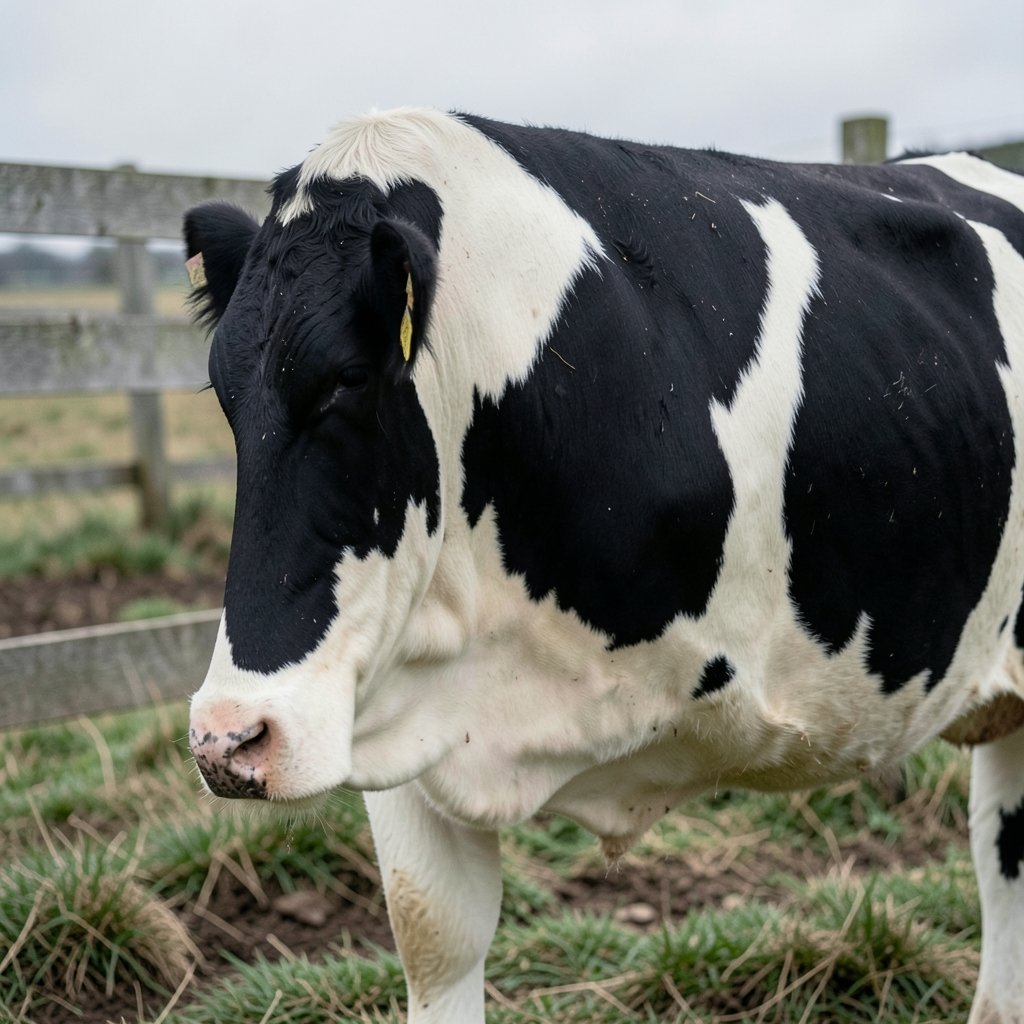
Start with the literal meaning, because it’s the older one.
Why Holsteins became the default spotted cow
The Holstein-Friesian is the world’s highest-producing dairy breed, and it’s the breed most people picture when they imagine a dairy cow. Its coat is the giveaway: bold black-and-white markings, or the less common red-and-white version. Holstein Association USA, the breed registry, has represented the breed since the late nineteenth century.
That dominance in dairy production is why the spotted cow became the default image of a cow in English-speaking popular culture. Children’s books, milk cartons, and farm toys almost always show a Holstein pattern. The spotted cow isn’t just one breed among many in the public imagination; it’s the template.
Spots are not a single fixed pattern
Here’s where casual assumptions go wrong. “Spotted” isn’t one look. Holsteins range across a wide spectrum:
| Pattern | What it looks like | Notes |
|---|---|---|
| Nearly solid black | Small white patches on the belly, legs, or switch | Still registered as Holstein |
| Classic piebald | Large, irregular black and white patches | The textbook “spotted cow” look |
| Nearly solid white | Small black markings only | Uncommon but legitimate |
| Red and white | Same pattern, different pigment | A genetic variant, not a separate breed |
The genetics behind these patterns are studied in the literature on piebaldism and the KIT gene, which affects how pigment cells migrate during development. In practical breeding terms, “spotted” is also distinct from roan (a fine intermix of colored and white hairs), brindle (striped), and solid. Breed standards define which patterns are acceptable, and two spotted parents can produce a calf with far more or far less white than either of them.
A practical tip for reading cattle photos
If you’re trying to identify a breed from a photo, don’t stop at the spots. Coat pattern alone won’t tell you whether an animal is a Holstein, a Simmental, or a crossbreed. Look instead at body shape, size, and the head. Holsteins are large-framed with a distinctive angular dairy build. The spots are a hint, not a diagnosis.
Spotted Cow the Beer: A Wisconsin Farmhouse Ale
Now for the meaning that dominates search traffic.
Spotted Cow is a farmhouse ale brewed by New Glarus Brewing Company in New Glarus, Wisconsin. It’s a pale, easy-drinking beer with a gentle yeast character, and it has become one of the most recognizable beers in the American Midwest.
The crucial detail is distribution. The brewery sells Spotted Cow only in Wisconsin. It is not distributed to other states, and it isn’t available for shipping to customers elsewhere. That single decision turned a solid local beer into a cultural marker.
Why a beer stays in one state
This isn’t an accident or a marketing stunt alone. Beer distribution in the United States runs through a three-tier system in which producers, distributors, and retailers are kept legally separate, and each state regulates alcohol within its own borders. Building a distribution network across state lines means new licenses, new partners, and new logistics. A brewery can choose to stay home and grow there instead, which is exactly what New Glarus did.
The result is a product that behaves less like a commodity and more like a local institution. Wisconsin residents treat Spotted Cow as a point of state pride. Visitors are often told they have to cross the border to try it. Whether that reputation is fully earned or partly a product of scarcity is a fair debate, but the scarcity itself is real.
What it actually tastes like
Setting the hype aside, Spotted Cow is a restrained beer. It’s light-bodied, mildly fruity from the yeast, and low in bitterness. It’s built to be drinkable in quantity rather than to impress a tasting panel. That’s consistent with the farmhouse ale tradition, which historically meant sessionable beer brewed for farm workers rather than special-occasion sipping.
If you go in expecting a bold, hoppy craft beer, you’ll be confused. If you go in expecting a clean, friendly pale ale with a little yeast character, you’ll understand the appeal immediately.
Common Mistakes People Make With “Spotted Cow”
A few mix-ups come up again and again, and each one is easy to avoid once you know the pattern.
Assuming the beer is available everywhere. People outside Wisconsin regularly search for Spotted Cow near them and come up empty. No national retailer stocks it, and the brewery does not ship out of state. If you see it listed for sale online from a third party, treat that listing with suspicion.
Confusing the beer with the animal in conversation. This sounds trivial, but it derails real discussions. If someone asks whether Spotted Cow is a lager, don’t answer with breed genetics. Ask which one they mean.
Assuming all spotted cattle are Holsteins. Plenty of breeds carry spotting, and crossbred animals are common on working farms. The spotted pattern is widespread; the Holstein association is specific.
Believing spots determine milk quality. Coat color has no bearing on milk composition or yield. It’s a visual trait, and treating it as a quality signal is a persistent myth in casual cattle talk.
Expecting a folk song to be about either one. Traditional rhymes and songs use “spotted cow” as a simple image or a counting device. They predate the beer by a very long margin and have no connection to it.
How to Tell Which “Spotted Cow” Someone Means
Context does almost all the work, but a few signals make it fast.
| Clue | Likely meaning |
|---|---|
| Words like draft, bottle, brewery, ale, tap | The beer |
| Words like pasture, herd, dairy, calf, breed | The animal |
| Mention of Wisconsin, Madison, or road trips | Almost certainly the beer |
| Mention of milk production, farming, or agriculture | Almost certainly the animal |
| Rhyme, song, nursery, or children’s verse | The folk phrase |
If you’re still unsure, just ask. The question takes two seconds and saves a confusing conversation. This is especially worth doing in writing, where tone and setting are missing.
Where the Phrase Comes From
The literal sense is the oldest. English speakers have described cattle by their markings for centuries, and “spotted cow” is about as plain a description as language allows. Folk material picked up the phrase because it’s rhythmic and easy to remember, which is why it survives in rhymes and songs long after the specific animals are forgotten.
The beer is a much more recent borrowing. Naming a farmhouse ale after a spotted cow fits the style: farmhouse ales are traditionally rural, unpretentious beers, and the name signals exactly that. The brewery didn’t invent a new phrase; it attached an old image to a new product.
That layering is why the phrase feels so familiar. It’s an ordinary description, a brand, and a scrap of folk memory all stacked on top of each other.
Hair, Patterns, and the Spotted Aesthetic
There’s a broader point buried in all this. Spotted patterns show up everywhere in nature and in style, and people respond to them strongly. Animal spotting is one of the most recognizable visual motifs in the world, from cattle to big cats to dalmatians.
The same instinct drives how people describe human hair patterns. Curl and texture typing uses a similar shorthand, and readers often look up terms like 4c hair or 2b hair to find their own pattern in a system. The logic is familiar: a simple label helps you sort through a huge range of natural variation. It’s imperfect, just like cattle coat categories, but it’s useful as a starting point.
Pattern language also shows up in how people describe rows of things, whether that’s a row of crops in a field or a row of bottles on a shelf. The vocabulary of pattern and arrangement is shared across very different topics, which is part of why a phrase like “spotted cow” can travel so far from its origin.
Practical Guide: Buying, Tasting, and Seeing
If your interest is the beer, the practical reality is simple. You need to be in Wisconsin, or know someone who is making the trip. Buy it from a licensed retailer in the state. Drink it fresh, since it’s a low-bitterness beer that doesn’t benefit from long aging. Serve it cold but not ice-cold, around cellar-to-fridge temperature, so the yeast character comes through.
If your interest is the animal, the path is easier. Dairy farms, county fairs, and agricultural shows are the best places to see Holsteins up close. Look at the variation across a single herd and the “one pattern” idea falls apart fast. You’ll see animals with heavy black, animals that are nearly white, and everything between.
If your interest is the folk phrase, old song collections and children’s verse anthologies are the place to look. Expect simple imagery and repetition rather than hidden meaning.
Conclusion
“Spotted Cow” is three things wearing one name: a description of a Holstein’s coat, a Wisconsin-only farmhouse ale, and a phrase from old folk verse. The confusion is understandable, because the beer borrowed the animal’s image and the folk phrase borrowed the animal’s plainness. Once you know which sense you’re dealing with, everything else falls into place.
The practical takeaway is simple. Read the context, ask if you’re unsure, and don’t assume a spotted cow is a Holstein just because the pattern looks right. And if you’re hunting for the beer, plan a trip to Wisconsin rather than a search for a retailer near you.
FAQ
Is Spotted Cow beer available outside Wisconsin?
No. New Glarus Brewing Company sells Spotted Cow only within Wisconsin and does not distribute it to other states. The brewery has kept that limit in place deliberately, which is a large part of why the beer has its reputation.
Is Spotted Cow a lager or an ale?
It’s an ale, specifically a farmhouse ale. That means it’s brewed with a top-fermenting yeast that contributes mild fruity notes. It’s pale, light-bodied, and low in bitterness rather than bold or hoppy.
Are all spotted cows Holsteins?
No. Holsteins are the most famous spotted dairy breed and the one most people picture, but spotting appears in many breeds and in crossbred animals. Coat pattern alone is not enough to identify a breed.
Why do Holsteins have spots?
The pattern comes from genetics that affect how pigment cells spread during development, studied in relation to piebaldism and the KIT gene. The result is a wide range of patterns, from nearly solid black to nearly solid white, all within the same breed.
Does a cow’s coat color affect its milk?
No. Coat color and pattern are visual traits and have no bearing on milk yield or milk composition. Claims linking spots to milk quality are a common myth with no basis in breeding science.
Where does the phrase “spotted cow” come from?
The literal description is the oldest use, referring simply to cattle with spotted coats. The phrase also appears in English folk songs and nursery rhymes, and much more recently it became the name of a Wisconsin farmhouse ale. The three uses are unrelated in origin.









