

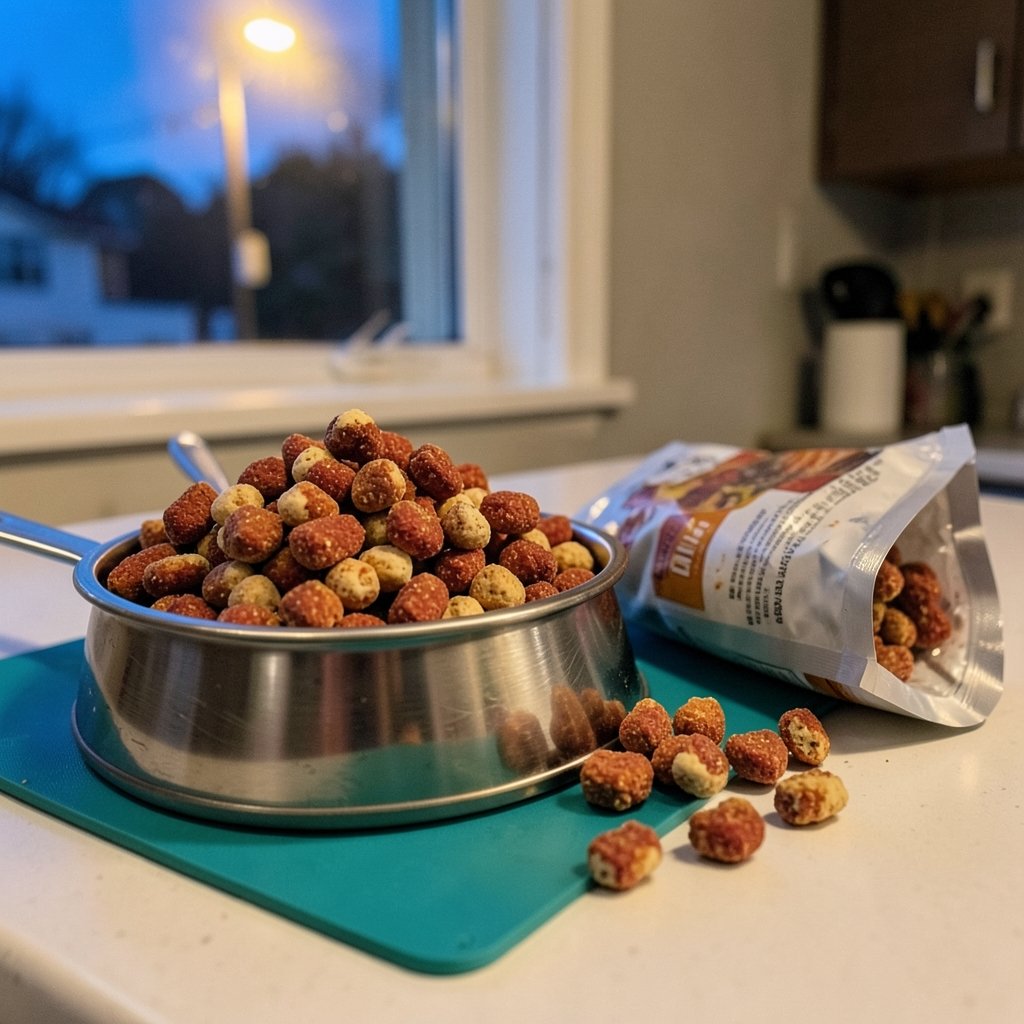
Can a bag of freeze-dried nuggets really replace a bowl of kibble and still keep a dog healthy? That question sits at the center of the Dr. Marty dog food conversation, and the honest answer is more layered than the brand’s marketing suggests. Dr. Marty Pets built a following on a simple pitch: raw nutrition, shelf-stable convenience, and a veterinarian’s name on the label. Whether that pitch holds up depends on what a buyer understands about labeling rules, feeding costs, and how freeze-dried raw food fits into a real household routine.
What Is Dr. Marty Dog Food?
Dr. Marty Pets is a pet food company founded by Dr. Martin Goldstein, a veterinarian who became known to a wide audience through media appearances and books on pet health. The brand’s flagship line is Nature’s Blend, a freeze-dried raw dog food sold as small, soft nuggets rather than loose powder or frozen patties.
The core idea behind freeze-dried raw is straightforward. Raw meat, organs, and produce are frozen quickly and then put under a vacuum so the ice turns directly into vapor. What’s left is a lightweight, shelf-stable product that keeps much of the nutritional profile of the original ingredients without requiring refrigeration until the bag is opened. For people who like the concept of raw feeding but not the freezer space or the handling of raw meat, that trade-off is the main draw.
Dr. Marty’s lineup has expanded over time to include a puppy formula, a grain-free option, treats, and supplements. The company sells primarily through its own website and subscription model, which is worth noting because it shapes both pricing and how easy it is to comparison shop.
How Freeze-Dried Raw Compares to Other Dog Foods

It helps to see freeze-dried raw next to the formats most dog owners already know. Each has real strengths and real costs.
| Format | Moisture | Convenience | Typical Cost | Handling |
|---|---|---|---|---|
| Dry kibble | About 10% | Very high, scoop and serve | Low to moderate | None special |
| Canned wet food | About 75-80% | High, but heavy and bulky | Moderate | Refrigerate leftovers |
| Frozen raw | About 65-70% | Low, needs freezer space | High | Thaw, handle carefully, clean surfaces |
| Freeze-dried raw | Low, usually under 5% | High, shelf-stable until opened | High per calorie | Rehydrate optional, wash bowls |
The pattern is consistent: the more a food resembles fresh raw ingredients, the more it costs per calorie and the more attention it asks of the owner. Freeze-dried raw sits in an unusual spot because it delivers raw-style ingredients with kibble-level convenience, but at a price that often surprises first-time buyers.
Reading the Label Like a Skeptic
The single most useful skill for evaluating any premium dog food, including this one, is knowing what a label can and cannot tell you.
The nutritional adequacy statement
Every complete dog food should carry a statement about nutritional adequacy. It usually reads something like “formulated to meet the nutritional levels established by the AAFCO Dog Food Nutrient Profiles for all life stages.” That sentence is the closest thing the industry has to a guarantee that the food meets recognized nutrient standards. A food that carries only a “for intermittent or supplemental feeding” statement is a treat or topper, not a complete diet. Buyers should check which statement appears on the specific formula they’re considering, because it varies across product lines.
Guaranteed analysis versus actual nutrition
The guaranteed analysis on the back of the bag lists minimum protein and fat and maximum fiber and moisture. It is not a full nutritional breakdown, and it does not tell you about ingredient quality or digestibility. Treat it as a starting point, not a verdict.
Ingredient splitting
One common trick in pet food formulation is splitting an ingredient into components so none of them appears high on the list. If a label lists peas, pea protein, and pea fiber separately, the combined weight may be significant even though no single entry looks large. This is legal and widespread, and it’s a good reason to read the whole list rather than the first three items.
“Veterinarian-formulated” claims
A veterinarian’s name on a bag is a marketing asset, not a regulatory category. Pet food claims are governed by labeling rules enforced largely at the state level, and terms like “natural” and “holistic” have narrow or no formal definitions. A formulation credit tells you who was involved in creating the recipe; it does not substitute for the nutritional adequacy statement.
What Freeze-Dried Raw Does Well
There are genuine reasons dog owners gravitate toward this format, and they aren’t all hype.
Convenience without a freezer. A bag of freeze-dried nuggets lives in the pantry. For apartment dwellers, travelers, or anyone who has cleaned up after a thawed raw meal gone wrong, that matters.
High palatability. Freeze-drying preserves aroma compounds, and many dogs find the result highly motivating. Owners of picky eaters frequently report better acceptance than with kibble, which is one reason the format shows up as a topper even when it isn’t the main diet.
Cleaner handling than frozen raw. There’s no thawing, no raw meat juices on the counter, and no defrost schedule to manage. Pathogen risk doesn’t disappear, but the day-to-day handling burden drops sharply.
Portability. The nuggets travel well. A weekend trip doesn’t require a cooler.
Where the Format Falls Short
Balance matters, so here’s the other side.
Cost per calorie is high. Freeze-dried raw is one of the most expensive ways to feed a dog. For a large-breed dog, the monthly bill can be several times that of a quality kibble. Owners often stretch the food by using it as a topper or mixer rather than a sole diet, which is a reasonable compromise but changes the value calculation.
Portion discipline is essential. Because the food is calorie-dense and light, it’s easy to overfeed. A kitchen scale is more reliable than a scoop, especially during the transition period when a dog’s weight can drift without anyone noticing.
Transition needs patience. Moving a dog onto a richer, higher-fat food too quickly commonly causes loose stools. A gradual shift over seven to ten days, mixing increasing proportions of the new food, is the standard approach and prevents most problems.
Subscription friction. Buying direct means navigating auto-ship terms. Readers who have compared notes on subscription boxes know the pattern: the first order is discounted, later orders renew automatically, and canceling requires a phone call or a form. It’s worth reading the terms before the trial converts.
Not a fix for every dog. Dogs with pancreatitis, kidney disease, or other conditions requiring controlled fat or protein levels should not switch to a rich raw-style diet without veterinary guidance. The same goes for immunocompromised dogs and households with very young children or immunocompromised adults, where raw-style pathogen exposure deserves a conversation with a vet.
Common Mistakes Owners Make
A few missteps come up again and again with freeze-dried raw feeding, and most are easy to avoid.
- Treating it as a topper while feeding a full meal. Adding nuggets on top of a complete kibble ration without reducing the kibble leads to weight gain. Adjust the base meal downward.
- Skipping rehydration. Many dogs do fine with dry nuggets, but adding warm water improves texture and supports hydration. It also slows fast eaters.
- Eyeballing portions. Nugget size varies. Weigh the food for a week until the portion becomes second nature.
- Ignoring the transition. A sudden switch is the most common cause of digestive upset in the first week.
- Assuming “raw” means “complete.” Some products in the category are toppers, not complete diets. Check the adequacy statement every time, including on repeat orders, since formulas change.
- Storing it wrong. Once opened, freeze-dried food absorbs moisture and loses quality. Keep the bag sealed, store it cool and dry, and use it within the recommended window.
Practical Tips That Actually Work
For anyone committed to trying the brand, a few habits make the experience smoother. Start with the smallest bag available rather than the subscription bundle, because acceptance and digestion are unknown until the dog tries it. Weigh the dog at the start and again after two weeks to catch drift early. Keep a small amount of the previous food on hand in case the transition needs to slow down. And set a calendar reminder before any trial period ends, so the renewal decision is deliberate rather than automatic.
It also helps to think of the food as one tool rather than an identity. Plenty of owners rotate between a quality kibble base and freeze-dried toppers, which spreads cost, hedges against picky phases, and still delivers the palatability benefits. If the goal is a happier eater rather than a fully raw diet, that middle path often delivers most of the value.
For readers who enjoy the lighter side of pet ownership, the same instincts that make food shopping fun apply here. The internet has no shortage of food puns for naming a picky dog’s dinner routine, and browsing food gift baskets is a reminder of how much presentation shapes our own eating habits. Dogs, it turns out, are not so different. And just as grooming routines vary wildly by coat type, from a quick wipe-down to a full routine for 4c hair, feeding routines vary by dog, budget, and household. There is no single correct answer, only the one that fits.
Who Should Consider It
The format suits specific situations better than others. It’s a strong fit for small-breed owners who want raw-style ingredients without freezer logistics, for households that travel with their dogs, and for owners of picky eaters who need a reliable high-value topper. It’s a weaker fit for large-breed households on a tight budget, for dogs with medical conditions requiring controlled fat intake, and for anyone who wants to compare prices across brands in a store aisle rather than on a single website.
A useful test before committing: calculate the cost per day for the dog’s weight, then compare it to the cost per day of the kibble currently in the bowl. That number, more than any marketing claim, tells you whether the switch makes sense.
Conclusion
Dr. Marty dog food occupies a real niche. Freeze-dried raw is a legitimate format with genuine advantages in convenience, palatability, and handling, and the brand has built a recognizable identity around it. But the veterinarian’s name on the bag is not a nutritional guarantee, and the premium price buys convenience and ingredient style rather than proven superiority over every other complete diet. The practical move is unglamorous: read the adequacy statement, weigh the portions, transition slowly, watch the renewal terms, and let the dog’s condition and the household budget make the final call. Owners who do that tend to end up satisfied, whether they stay with the brand or use it as one part of a broader feeding plan.
Frequently Asked Questions
Is Dr. Marty dog food a complete diet?
It depends on the specific formula. Some products are formulated to meet recognized nutrient profiles for all life stages, while others are intended as toppers or supplemental feeding. Always check the nutritional adequacy statement on the exact bag you’re buying, and recheck it on repeat orders since recipes can change.
Is freeze-dried raw food safe for dogs?
Freeze-drying removes moisture but does not sterilize the food, so the same pathogen-handling precautions that apply to raw meat apply here. Wash hands, bowls, and surfaces after handling, and store the bag sealed and dry. Dogs with compromised immune systems, and households with immunocompromised people, should consult a veterinarian before feeding raw-style diets.
How much does Dr. Marty dog food cost compared to kibble?
It is significantly more expensive per calorie than standard kibble, often several times the daily cost for a medium or large dog. Many owners manage the expense by using it as a topper mixed with a complete kibble rather than as the sole diet. Calculating cost per day for your dog’s weight is the clearest way to compare.
How do you transition a dog to freeze-dried raw food?
Switch gradually over seven to ten days, mixing increasing proportions of the new food into the old. A slow transition prevents the loose stools that commonly follow a sudden switch to a richer, higher-fat diet. Weigh the dog before and after the transition to catch weight changes early.
Can puppies eat Dr. Marty dog food?
The brand offers a puppy-specific formula, and puppy foods should carry an adequacy statement for growth or all life stages. Puppies have different nutrient needs than adults, particularly for calcium and phosphorus, so matching the formula to the life stage on the label matters more than the brand name.
Does a veterinarian’s name on the bag mean the food is better?
Not on its own. A formulation credit indicates who helped create the recipe, but it is a marketing and formulation detail rather than a regulatory standard. The meaningful signals are the nutritional adequacy statement, the full ingredient list, and how the dog actually does on the food over several weeks.









