

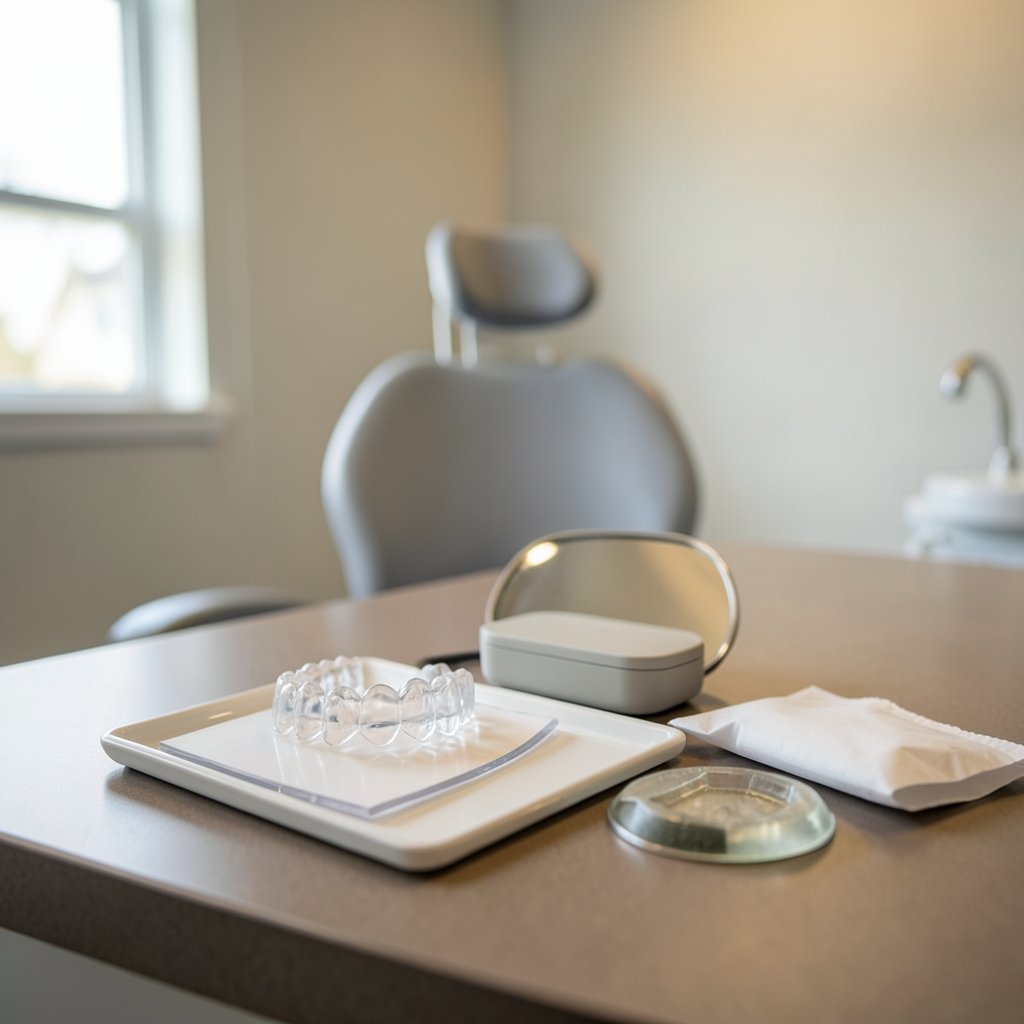
Quick Answer: How much is invisalign?
A full course of Invisalign typically costs between $3,000 and $8,000 in the United States, while UK private treatment commonly runs from about £2,500 to £5,500. The final figure depends on how complex the case is, which treatment tier the provider uses, and what the quote actually includes.
Generic clear aligners and fixed metal braces usually cost less than the branded Invisalign system, but they come with different supervision and risk profiles. Shorter cases handled with Invisalign Express or Lite tiers sit at the bottom of the range, while long, complex cases land at the top.
Before committing, compare the quoted fee against retainers, refinement aligners, X-rays and records, extractions, consultations, insurance coverage, and tax treatment, since these extras often decide the real total.
Why the Price Tag Never Seems to Match What People Hear

Ask ten people what Invisalign costs and you will get ten different numbers. One friend paid £2,800. Another swears it was $7,500. A colleague says insurance covered half. None of them are lying, and that is exactly the problem.
Invisalign is not a single product with a single price. It is a brand of clear aligner made by Align Technology, and the company sells treatment kits in tiers that track case complexity. Providers then add their own margin, their location costs, and their clinical judgment. The result is a price landscape that looks chaotic from the outside but follows a fairly predictable logic once you know where to look.
Here is the honest version: most quotes fall inside a broad band, and the outliers usually reflect either a very simple case or a very complicated one. Understanding which band you sit in is the whole game.
The Typical Price Range, Broken Down
Prices are the least stable part of this topic. They shift by country, region, provider, and year, so treat every figure as an approximate reference point rather than a quote.
| Market | Typical full-treatment range | Notes |
|---|---|---|
| United States | $3,000–$8,000 | Simple cases at the low end, complex or long cases at the high end |
| United Kingdom (private) | £2,500–£5,500 | Lite and Express tiers sit lower; the NHS does not routinely fund adult Invisalign |
Those ranges have been widely cited from roughly the mid-2010s into the early 2020s. Anyone quoting you a firm number for a specific year should be able to show you where it comes from.
The tier system explains much of the spread. Align Technology has sold provider kits under names like Express, Lite, Moderate, and Comprehensive, and tier names and contents have changed over time. A provider pays more for the top tier than for an Express kit, and that difference gets passed to you. If your teeth need minor crowding fixed, you are buying a smaller kit. If you have significant bite issues, extractions, or rotation problems, you are buying the big one.
What the Quote Usually Leaves Out
This is where budgets quietly fall apart. The headline fee is rarely the all-in number, and the gap between the two can run into four figures.
Common exclusions include:
- Retainers after treatment. You will need them, often for years, and they are frequently billed separately.
- Refinement aligners beyond the sets included in your tier. Many cases need a second round.
- X-rays and records. Some clinics bundle these; many do not.
- Extractions and other preparatory dental work.
- Consultation fees, which may or may not be credited against treatment.
The single most useful question you can ask a provider is blunt: is this quote all-in, and if not, what is missing? Ask for it in writing. A practice that cannot produce an itemised breakdown is telling you something.
In the UK, VAT treatment of dental care depends on whether the provider is registered with a regulator such as the General Dental Council, and that can affect the final price you see. It is worth asking directly how tax is handled rather than assuming.
Why Braces and Generic Aligners Cost Less
Fixed metal braces are often cheaper than Invisalign in many markets. Generic and direct-to-consumer aligners are usually cheaper still, but they carry different supervision and risk profiles, and that difference matters more than the savings.
The premium you pay for Invisalign buys a specific brand, a digital treatment-planning system, and a network of trained providers. Whether that premium is worth it depends on your case. For straightforward crowding, a cheaper option may deliver a comparable result. For complex movement involving bite correction, the planning and supervision behind a branded system earn their keep.
There is a practical angle here too. If your hair or styling routine already demands careful product choices, you will recognise the logic of paying for something that fits your life rather than fighting it. People with 4c hair often talk about this in terms of moisture and patience, and orthodontics works the same way: the cheap option that you abandon halfway through costs more than the expensive one you finish.
Does Insurance Help?
Usually not much. Dental insurance often covers little or none of adult orthodontics, and coverage varies widely by plan and country. In the United States, some plans include an orthodontic lifetime maximum; many exclude adults entirely.
Before you assume you are paying the full sticker price, do three things. First, check your plan documents for an orthodontic lifetime maximum and any age restrictions. Second, ask whether the provider is in-network, because out-of-network reimbursement is often lower. Third, ask the practice to submit a pre-treatment estimate, which gives you the insurer’s answer in writing before you commit. (The row)
For teenagers, coverage is more common than for adults, but waiting periods and exclusions still apply. Read the fine print rather than trusting a receptionist’s summary.
The Practical Checklist Before You Sign
Cost questions are really comparison questions. Run through this list before handing over a deposit.
- Confirm the tier. Ask which Invisalign tier your case falls into and what happens if your case turns out more complex than planned.
- Request an itemised quote. Retainers, refinements, records, and extractions should each appear as a line item or an explicit exclusion.
- Check the provider’s registration. In the UK, treatment should be provided under a registered professional. In the US, Invisalign is cleared by the FDA as a Class II device, which affects who may supply and supervise treatment.
- Ask about refinements. How many sets are included, and what does an extra round cost?
- Price the retainer separately. This is the most commonly forgotten cost.
- Get two or three quotes. Geography and provider type move the number more than most people expect.
- Ask about payment plans. Many practices spread the cost interest-free; ask what happens if you miss a payment.
What Actually Works in Practice
The people who end up happiest with their Invisalign spend are rarely the ones who found the cheapest quote. They are the ones who asked uncomfortable questions early.
A few field-tested habits make a real difference. Get the quote in writing and read the exclusions before the consultation ends, not after. Photograph the treatment plan screen if the practice allows it, because comparing plans across providers is far easier with the numbers in front of you. Ask what happens if you lose an aligner, since replacement costs are a recurring surprise. And ask how long the provider has been doing this, because experience with complex cases shows up in outcomes more than in marketing.
One more thing worth saying plainly: the cheapest quote is often cheap because something is missing. Sometimes that missing thing is a retainer. Sometimes it is a refinement round. Occasionally it is proper supervision. Paying a little more for a complete, transparent package is usually the better financial decision, even if it stings at the outset.
There is a styling parallel that readers of beauty and grooming content will recognise. Choosing a regimen for 2b hair is not about buying the most expensive product; it is about buying the right one and using it consistently. Orthodontic treatment rewards the same discipline. The aligners only work if you wear them, and no price bracket changes that.
How to Compare Quotes Without Getting Fooled
“Average” prices are weak statistics. They mix case complexity, region, and inclusions into a single number that describes almost nobody. A $4,000 quote in one city and a $6,500 quote in another may represent identical value once you account for what each includes.
The fix is to normalise the comparison. Build a simple table with the same rows for every provider: total fee, tier, retainers included, refinements included, records included, extractions included, consultation fee, payment plan terms, and insurance accepted. Fill it in during or immediately after each consultation. The provider that looks cheapest on the headline number frequently loses once the rows are complete.
Currency and tax treatment make cross-country comparison especially misleading. A UK quote that includes VAT and a US quote that excludes sales tax are not the same number, and neither tells you what a clinic in another country would charge. Compare like with like, or do not compare at all.
Conclusion
So, how much is Invisalign? Somewhere between $3,000 and $8,000 in the US, or roughly £2,500 to £5,500 privately in the UK, with your actual figure shaped by case complexity, treatment tier, provider location, and what the quote quietly leaves out. Those ranges are dated reference points, not promises, and they will keep moving.
The smarter move is to stop hunting for a single number and start hunting for a complete quote. Ask what is included. Ask what is not. Ask what happens if your case needs more work than expected. Ask in writing. The patients who do this end up paying a fair price for a clear plan rather than a low price for a vague one, and that distinction is worth more than any discount.
Treatment is a financial decision and a clinical one at the same time. Treat it that way, and the number stops being mysterious.
FAQ
Is Invisalign more expensive than traditional braces?
In most markets, yes. Fixed metal braces are often cheaper than Invisalign. The gap varies by provider and case complexity, so it is worth getting quotes for both before deciding. For simple cases the difference can be modest; for complex cases it can be substantial.
Can I get Invisalign on the NHS?
Not routinely. The NHS does not commonly fund Invisalign for adults, and eligibility for orthodontic treatment generally depends on clinical need rather than preference. Most adult Invisalign in the UK is private treatment, which is why the £2,500 to £5,500 range reflects private pricing.
Do I have to pay for retainers separately?
Often, yes. Retainers after treatment are one of the most commonly excluded items, and they are not optional if you want to keep your results. Ask explicitly whether retainers are included in the quoted fee and how many replacements are covered.
What happens if my teeth need more aligners than planned?
This depends on your tier and your provider’s terms. Some packages include a set number of refinement aligners; others charge per additional round. Ask before you start what a second round would cost, because a meaningful share of cases need one.
Does dental insurance cover adult Invisalign?
Rarely in full. Some US plans include an orthodontic lifetime maximum that covers part of the cost, while many exclude adults entirely. Coverage varies widely by plan and country, so check your plan documents and request a pre-treatment estimate rather than relying on a verbal summary.
Is it worth paying more for a branded aligner?
It depends on your case. For straightforward crowding, a cheaper generic option may deliver a similar result. For complex movement involving bite correction, the planning and supervision behind a branded system tend to earn their premium. The right answer comes from a clinical assessment, not a price list.









