



What makes a sushi roll look like a dragon? It is not a secret ingredient or a special technique passed down through centuries. It is avocado, sliced thin and fanned out across the top of a rolled sushi, arranged to look like scales. Add a piece of grilled eel at one end and a strip of cucumber or eel tail at the other, and suddenly you have a creature on your plate.
The dragon roll is one of the most recognizable items on Western sushi menus. It is also one of the most misunderstood. People often assume it is a traditional Japanese dish, but its story is more recent and more North American than most diners realize. This article breaks down what a dragon roll actually is, how it differs from other rolls, what goes into making one, and what to watch for when you order it.
What Is a Dragon Roll?
A dragon roll is a type of rolled sushi, or maki, that is usually made as an inside-out roll (called uramaki). That means the rice sits on the outside of the roll and the nori seaweed sits on the inside, wrapped around the filling. The roll is then topped with overlapping slices of avocado and often grilled eel, which together create the look of a dragon’s scales and body.
The name refers to how the roll looks, not to what is in it. There is no “dragon” ingredient. The visual presentation is the whole point: the avocado slices mimic scales, and the eel or shrimp at one end suggests a head or tail. It is a piece of food styling as much as a recipe.
It is worth saying plainly that the dragon roll is generally described as a Western-style invention rather than a traditional Japanese dish. It belongs to the same broad family as the California roll and other modern rolls developed for North American diners in the mid-to-late twentieth century. Specific claims about who invented it, at which restaurant, or in what year are poorly documented and often anecdotal, so it is safer to treat those stories as folklore than as fact.
What Goes Into a Dragon Roll?
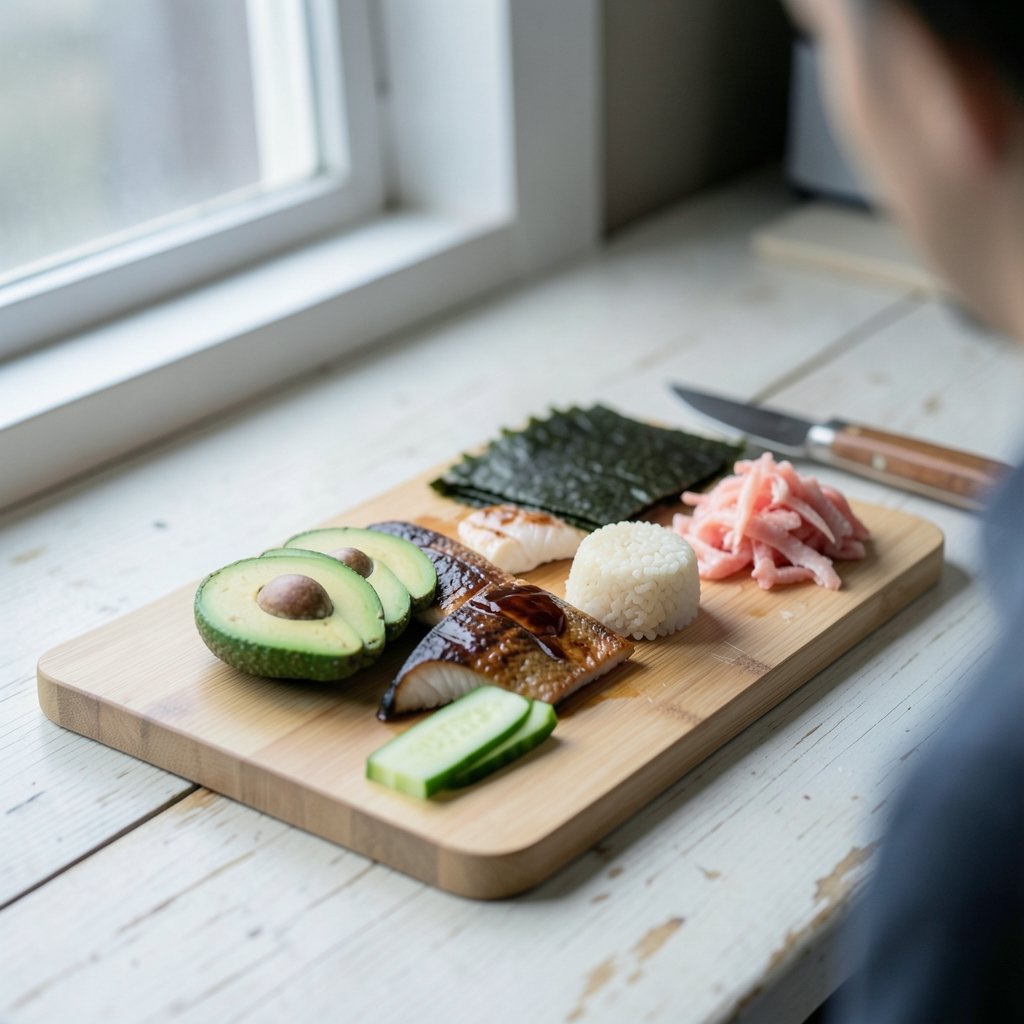
There is no single standard recipe. Ingredient conventions vary widely from restaurant to restaurant, and that flexibility is part of why the roll shows up in so many different forms. That said, most versions share a common structure.
| Component | Typical Role | Common Variations |
|---|---|---|
| Nori | Wraps the filling inside the roll | Sometimes omitted in loose or “naruto” styles |
| Sushi rice | Forms the outer layer of the roll | Seasoned with vinegar, sugar, and salt |
| Filling | The core of the roll | Cucumber, crab salad, shrimp, avocado |
| Top layer | Creates the dragon look | Sliced avocado, grilled eel, or shrimp |
| Sauce | Finish and flavor | Sweet soy glaze (unagi sauce), spicy mayo |
The filling is usually light and crunchy, often cucumber with crab or shrimp. The topping does the heavy lifting. Unagi, which is freshwater eel, is the classic choice. It is typically grilled and brushed with a sweet soy-based glaze, a preparation style known as kabayaki. Some kitchens swap in tempura shrimp or plain shrimp, and some use both.
A practical note for anyone trying to make one at home: the avocado is the hard part. The slices need to be thin, even, and fanned in a single overlapping row so they drape over the roll without tearing. A very sharp knife and a slightly underripe avocado work better than a soft, ripe one. If the avocado is too mushy, the slices collapse and the “scales” turn into green smears. Many home cooks also find that wrapping the bamboo mat in plastic film before rolling keeps the outside layer of rice from sticking.
How a Dragon Roll Differs From Other Sushi Rolls
The dragon roll sits in a crowded field, and the differences are mostly about construction and topping rather than exotic ingredients.
Dragon Roll vs. California Roll
The California roll is the ancestor of the modern inside-out style. It typically contains crab, cucumber, and avocado, with rice on the outside. The dragon roll takes that same basic idea and adds a decorative top layer. In many restaurants, a dragon roll is essentially a California roll with avocado and eel laid over the top. If you like one, you will probably like the other.
Dragon Roll vs. Rainbow Roll
A rainbow roll is also an inside-out roll with a California-style filling, but the topping is a mix of different fish, such as tuna, salmon, and yellowtail, arranged in stripes. The dragon roll’s topping is more uniform and more thematic. The rainbow roll is about variety; the dragon roll is about a single visual idea.
Dragon Roll vs. Caterpillar Roll
The caterpillar roll is the dragon roll’s closest cousin. It is also topped with fanned avocado, but it usually skips the eel on top and may use eel inside instead. The two names are sometimes used interchangeably, which can be confusing. If the exact composition matters to you, ask before ordering.
Dragon Roll vs. Traditional Maki
Traditional maki tends to be simpler: nori on the outside, rice and a small amount of filling inside. The dragon roll is a more elaborate, sauce-forward, presentation-driven roll. It belongs to the modern, Western-facing side of sushi menus rather than the traditional side.
The Role of Uramaki and Why It Matters
Understanding uramaki helps explain why the dragon roll looks the way it does. In an inside-out roll, the rice is on the outside. That outer layer of rice gives the chef a surface to press toppings onto, which is exactly what makes the avocado-scale effect possible. A traditional nori-outside roll does not offer the same canvas.
This is also why the dragon roll tends to be a bit more fragile than a simple maki. The rice on the outside is sticky but soft, and the avocado on top adds weight and moisture. Good sushi chefs press the roll firmly and cut with a wet, sharp knife to keep the slices clean. If you have ever had a dragon roll arrive looking like it was assembled in a hurry, you have seen what happens when that step is rushed.
For anyone exploring different textures and styles, the contrast between a rice-outside roll and a nori-outside roll is a useful thing to notice. It also connects to broader hair-typing debates in a strange way: just as people compare 4c hair with looser patterns to understand texture, sushi fans compare roll styles to understand structure. The comparison is loose, but the principle is the same: the outside layer changes everything about how the thing behaves. (2b hair)
What a Dragon Roll Tastes Like
The flavor profile is rich and sweet-savory. The avocado brings a cool, buttery texture. The eel brings a deep, grilled sweetness from the glaze. The rice adds mild vinegar tang, and the cucumber or crab inside adds a fresh crunch and a touch of salinity. The overall effect is softer and sweeter than a traditional nigiri or a simple cucumber roll.
That sweetness is a big part of why the dragon roll is popular with people who are new to sushi. It is approachable. It does not rely on the clean, subtle flavor of raw fish. In fact, many versions use cooked eel and cooked crab, which makes them an easy entry point for diners who are hesitant about raw seafood.
The trade-off is that the roll can be heavy. Between the rice, the avocado, the eel glaze, and any spicy mayo, a full dragon roll is a substantial plate. It works well as a shared item or as part of a larger order rather than as a light starter.
Ordering and Making a Dragon Roll: Practical Tips
A few habits make the dragon roll experience better, whether you are ordering at a restaurant or assembling one at home.
- Ask what is on top. Some kitchens use eel, some use shrimp, and some use both. The topping changes the flavor and the price significantly.
- Check whether the eel is cooked. Unagi is normally grilled and glazed, so it is cooked. If a menu lists raw fish on top, that is a different roll.
- Watch the sauce. Unagi sauce is sweet and can overwhelm the roll if poured on heavily. Ask for it on the side if you prefer a lighter finish.
- Eat it promptly. The avocado browns and softens quickly. A dragon roll is at its best in the first few minutes.
- Pair it simply. A plain green tea or a crisp, dry drink works better than something sweet, which would double down on the glaze.
A common mistake at home is overfilling the roll. The dragon roll already carries a lot of topping, so a heavy filling makes it impossible to cut cleanly. Keep the center modest and let the avocado do the work. Another frequent error is using warm rice straight from the pot. The rice needs to cool to room temperature so the nori does not steam and turn chewy.
If you are comparing roll styles and want a sense of how presentation shapes perception, the same logic shows up in food media all the time. The way a dish is styled and framed changes how people judge it, much like the way the row of images in a magazine spread shapes what readers notice first. A dragon roll is, in a real sense, a styled dish: the arrangement is the message.
Food Safety and Sourcing Considerations
Two practical concerns come up with dragon rolls more than with simpler sushi.
The first is raw fish safety. Many dragon rolls use cooked eel and cooked crab, which lowers the risk. But some versions include raw fish or raw shellfish, and those carry food-safety risks. Public-health agencies publish guidance on selecting and handling fish intended for raw consumption, including freezing requirements in many jurisdictions. If you are pregnant, immunocompromised, or simply cautious, ask whether the fish in a given roll is raw or cooked before you order.
The second is eel sourcing. Eel populations have been a conservation concern, and the sustainability picture varies by species and fishery. If sourcing matters to you, ask the restaurant where its eel comes from, or look for establishments that publish their sourcing. It is a reasonable question, and good sushi bars tend to have an answer.
Neither concern should scare anyone away from the roll entirely. They are simply reasons to ask a question or two rather than assume.
Conclusion
The dragon roll is a modern, Western-style uramaki built around a visual idea: avocado scales and an eel body, arranged to look like a dragon. It is not a traditional Japanese dish, and claims about its exact origin are weakly documented, so it is best described rather than mythologized. What it is, reliably, is a sweet-savory, texture-rich roll that has become a menu staple because it is approachable, photogenic, and satisfying.
If you order one, ask what is on top and whether the fish is cooked. If you make one, keep the filling light and the avocado slices thin. And if you are comparing it to a California, rainbow, or caterpillar roll, remember that the differences are mostly about construction and topping, not about secret ingredients. The dragon roll is a small piece of food design, and once you see the logic behind it, every version on every menu starts to make sense.
Frequently Asked Questions
What is a dragon roll made of?
A dragon roll is typically made with nori, sushi rice, and a filling of cucumber and crab or shrimp, then topped with fanned avocado slices and often grilled eel. The exact ingredients vary by restaurant, and some versions use tempura shrimp or other toppings instead of eel.
Is a dragon roll cooked or raw?
It depends on the version. Classic dragon rolls use grilled eel and cooked crab, so they are largely cooked. Some restaurants include raw fish or raw shellfish, so it is worth asking before you order, especially if you have health concerns.
Why is it called a dragon roll?
The name comes from the presentation, not an ingredient. The overlapping avocado slices look like scales, and the eel or shrimp at one end suggests a head or tail. The roll is styled to resemble a dragon.
Is a dragon roll the same as a California roll?
No, but they are closely related. A California roll is a simpler inside-out roll with crab, cucumber, and avocado. A dragon roll usually starts with a similar filling and adds a decorative top layer of avocado and eel.
Is a dragon roll traditional Japanese sushi?
It is generally described as a Western-style invention rather than a traditional Japanese dish. It belongs to the same modern family as the California roll and other inside-out rolls developed for North American diners. Specific origin claims are poorly documented.
Is a dragon roll healthy?
It can be part of a balanced meal, but it is not a light dish. The rice, avocado, eel glaze, and any mayonnaise-based sauces add up in calories and sugar. It works best as a shared item or as part of a varied order rather than as a low-calorie choice.









