

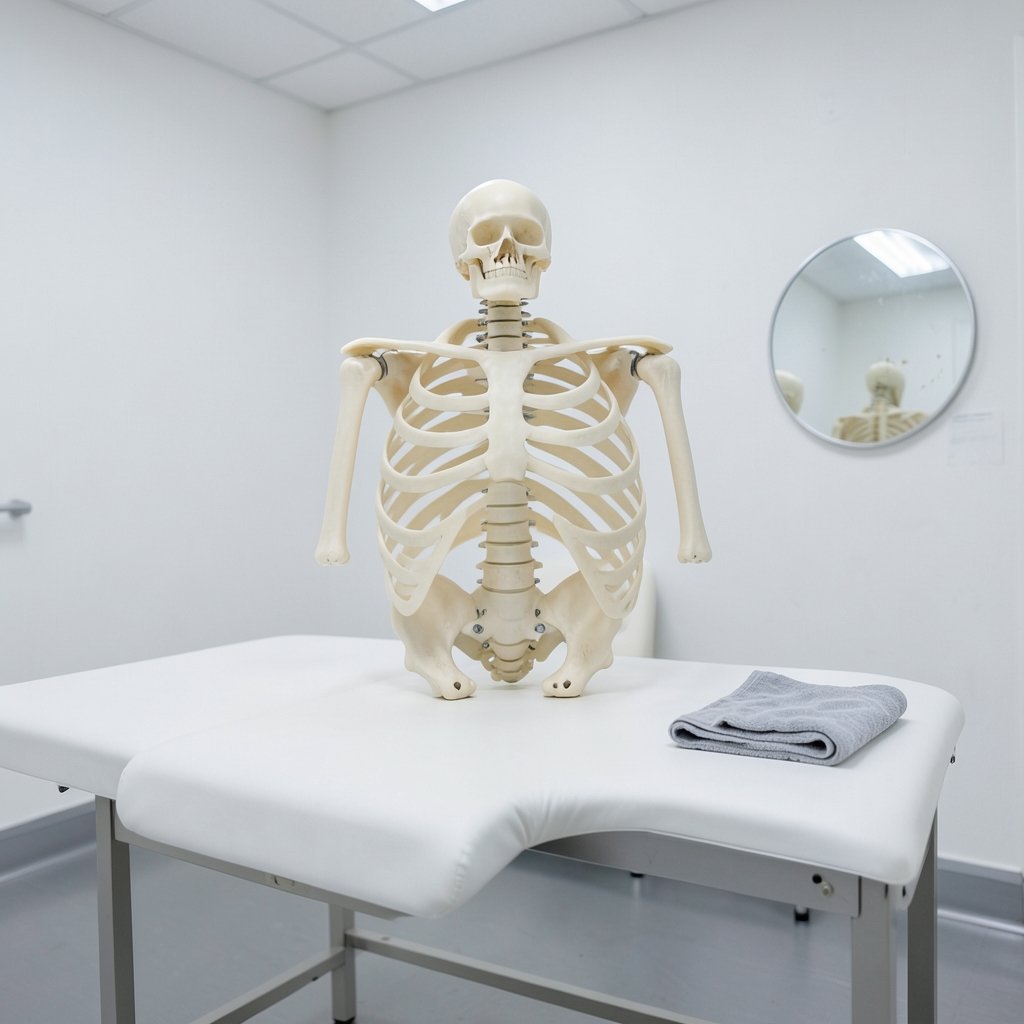
Have you ever looked in the mirror, twisted slightly, and noticed the bottom of your ribcage jutting forward more than you expected? Maybe a shirt fits differently than it used to, or a photo caught an angle you never noticed before. That visible ridge along the lower ribs is what most people call rib flare, and it sends a surprising number of people searching for answers.
Here is the good news up front: in the vast majority of cases, rib flare is harmless. It is not a disease, and it is not a formal medical diagnosis. It is a descriptive term for lower ribs that appear more prominent than usual. Still, “harmless” does not mean “uninteresting.” Understanding what drives that prominence, when it is purely cosmetic, and when it deserves a closer look can save you a lot of unnecessary worry, or point you toward help you actually need.
What Rib Flare Actually Means
The term rib flare describes the lower ribs, usually ribs seven through ten, sitting or appearing more forward and outward than the rest of the ribcage. These are sometimes called the false ribs because they do not attach directly to the sternum the way the upper ribs do. Their greater mobility is part of why they can shift position more noticeably.
It is worth clearing up one common mix-up immediately. Rib flare is not the same as flail chest, a serious traumatic injury in which a segment of the ribcage moves paradoxically during breathing after multiple rib fractures. The two terms sound similar and get confused in casual conversation, but they describe completely different situations. Flail chest is a medical emergency. Rib flare is, almost always, a cosmetic or postural observation.
It is also not a recognized diagnostic category in standard medical classification. You will find it discussed widely in fitness, physiotherapy, and body-image circles, but you will not find a single agreed-upon clinical definition. That matters, because it means much of what circulates online is observation and opinion rather than hard evidence.
Why Do the Lower Ribs Stick Out?

There is no single cause. In practice, rib prominence usually comes from a combination of factors, and figuring out which ones apply to you is the whole game.
Posture and Spinal Position
The most frequently discussed driver is posture. When the lower back arches into an exaggerated curve, a position often called anterior pelvic tilt, the ribcage tends to tilt back and the lower ribs push forward. The same happens with excessive thoracic extension, where the mid-back arches more than it should. Stand with your back over-arched and your ribs will visibly lift. It is simple mechanics.
Breathing Patterns
Breathing style gets a lot of attention here, and for reasonable cause. People who breathe mostly into their upper chest, sometimes called apical breathing, tend to use the neck and shoulder muscles rather than the diaphragm. Over time, this pattern can change how the ribcage sits and moves. Diaphragmatic breathing, where the belly and lower ribs expand, is generally considered the more efficient pattern. Whether correcting breathing “fixes” rib flare is less certain, but the connection between breath and rib position is real.
Structural Factors
Sometimes the answer is structural. Scoliosis, a sideways curvature of the spine, can make ribs on one side more prominent. This is one reason clinicians look at rib asymmetry carefully during scoliosis screening. Rib anomalies and differences in spinal alignment fall into this bucket too. These are the cases where a professional assessment genuinely matters, because the visible rib prominence is a symptom of something else.
Body Composition and Genetics
Here is the unglamorous truth many people miss: low body fat makes ribs more visible. So does the natural shape of your ribcage, which is largely genetic. Some people have a wider, more forward-set lower ribcage from birth. No amount of breathing exercise changes bone shape. If you are lean and your ribs show, that may simply be your anatomy doing its thing.
Pregnancy and Postpartum Changes
Pregnancy stretches and shifts the abdominal wall, and the ribs can move outward to accommodate a growing uterus. Many people notice more prominent ribs during pregnancy and in the months after. This is a normal mechanical response, and the body often settles over time, though not always back to exactly where it started.
When Rib Flare Is Purely Cosmetic
For most people, rib flare is a body-shape observation with no symptoms attached. There is no pain, no breathing difficulty, no functional limitation. In these cases, the honest answer is that nothing needs fixing. Bodies come in shapes, and a visible lower ribcage is one of them.
This is where a lot of online content goes wrong. Search “rib flare” and you will find confident promises that a specific exercise routine will “fix” it in weeks. Be skeptical. The evidence base for correcting rib flare specifically is thin and mostly observational. That does not mean exercise is useless, but it does mean anyone selling a guaranteed cure is overselling.
If the appearance bothers you, that is a valid feeling and worth acknowledging. But it is worth separating “this bothers me aesthetically” from “this is a problem with my body.” Those are different conversations.
When to Get It Checked
There are situations where prominent lower ribs deserve a professional look. Watch for these signals:
- Asymmetry, where one side is noticeably more prominent than the other, especially if it is new
- Pain in the ribs, mid-back, or along the spine
- Breathing difficulties or a feeling of breathlessness during mild activity
- Recent changes in rib position without an obvious explanation
- A visible spinal curve or uneven shoulders and hips alongside the rib prominence
In these cases, a clinician can distinguish benign prominence from something that needs attention, such as scoliosis or a rib anomaly. A physiotherapist or doctor can assess posture, spinal alignment, and breathing mechanics in a way that no article, including this one, can replicate.
What Actually Helps in Practice
If you have decided to work on rib position, whether for comfort, appearance, or movement quality, here is what tends to be useful in practice, along with the mistakes that trip people up. (The row)
Start With Breathing, Not Crunches
The most common mistake is jumping straight to abdominal exercises. Crunches and sit-ups done with a flared ribcage often reinforce the very pattern you are trying to change, because people brace hard and push the ribs further out. Instead, start with diaphragmatic breathing. Lie on your back with your knees bent, place a hand on your lower ribs, and breathe so the ribs expand sideways and the belly rises. Slow, low breaths. This is the foundation, and it is genuinely harder than it sounds for people who have breathed high in the chest for years.
Train the Core to Hold, Not Only to Crunch
Once breathing feels natural, the goal is teaching the trunk to maintain a neutral rib position under load. Exercises like dead bugs, bird dogs, and carries with a braced but not overextended trunk are practical choices. The cue that helps most people: keep the ribs stacked over the pelvis rather than letting them lift toward the ceiling. Think “ribs down,” not “chest up.”
Address the Pelvis Too
Rib position and pelvic position are linked. If the lower back is deeply arched, the ribs will follow. Gentle work on pelvic control, including exercises that teach you to find a neutral pelvis, often makes rib position easier to manage. This is why posture work that only targets the ribs tends to disappoint.
Mind Your Standing Posture
In daily life, the habit that matters most is not over-arching the lower back when standing. People often “stand tall” by thrusting the chest and arching, which pushes the ribs forward. A better mental image is stacking: ribs over pelvis, weight through the whole foot, no exaggerated arch. It feels less impressive but looks more balanced.
Be Patient and Realistic
Change in posture and movement habits takes months, not days. And remember the ceiling on results: if your rib shape is genetic or your body fat is low, exercises will change how you control your trunk but not the underlying bone structure. Setting realistic expectations prevents the frustration that makes people quit.
Rib Flare and Hair, Skin, and Self-Image
It might seem like an odd connection, but the conversation around rib flare overlaps heavily with broader body-image discussions. People who notice their ribs often notice other features too, and the same internet that offers rib-flare advice also serves up endless commentary on appearance. If you have textured hair and have spent time in spaces discussing everything from 4c hair care to looser patterns like 2b hair, you already know how quickly a neutral physical trait can become something people feel pressured to “fix.” The pattern is familiar: a normal variation gets framed as a flaw, and a market appears to correct it.
The healthier approach is the same in both cases. Learn what is actually within your control, do the work that genuinely serves you, and let go of the rest. A visible ribcage is not a character flaw, and neither is any particular hair texture. If you are going to spend energy on self-improvement, spend it on things that improve how you feel and function, rather than only how you photograph.
A Quick Comparison: Cosmetic vs. Structural Rib Flare
| Feature | Cosmetic or Postural | Structural or Medical |
|---|---|---|
| Symmetry | Usually even on both sides | Often uneven, one side more prominent |
| Pain | None | Possible rib, back, or spine pain |
| Breathing | Normal | May feel restricted or labored |
| Change over time | Shifts with posture and position | May progress or appear suddenly |
| Best response | Posture and breathing work, or nothing at all | Professional assessment first |
This table is a rough guide, not a diagnostic tool. The line between the two categories is not always clean, and only a clinician can tell them apart in an individual case.
Common Mistakes People Make
A few pitfalls come up again and again. People self-diagnose from a single photo taken at a flattering or unflattering angle, then build an entire routine around it. People overcorrect, forcefully pulling the ribs down and creating tension in the process. People ignore sleep, stress, and general activity levels, which affect posture far more than any single exercise. And people compare themselves to filtered images of strangers, which is a game nobody wins.
The practical fix is simple: assess your posture in a mirror from multiple angles, notice whether there is pain or asymmetry, and if anything feels off, get a professional opinion before committing to a program.
Conclusion
Rib flare is one of those topics where the honest answer is more reassuring than the internet suggests. For most people, prominent lower ribs are a normal variation in body shape, shaped by posture, breathing habits, genetics, and body composition. It is not a diagnosis, it is not dangerous, and it does not require a fix unless it comes with pain, asymmetry, or breathing changes. Where it does bother you, the sensible path is unglamorous: breathe low, stack your ribs over your pelvis, train your trunk to hold position under load, and give it months rather than days. And if something feels genuinely wrong, let a professional look at it. Your ribcage has been doing its job since the day you were born. Treat it with a little patience.
Frequently Asked Questions
Is rib flare a real medical condition?
No. Rib flare is a descriptive term rather than a formal diagnosis. It is used in fitness, physiotherapy, and body-image contexts to describe lower ribs that appear more prominent than usual. It does not appear in standard diagnostic classifications as a condition in its own right.
Can rib flare be fixed with exercise?
Exercise can change posture, breathing patterns, and how you control your trunk, and many people find that their ribs sit differently as a result. However, the evidence for specifically “correcting” rib flare is thin and mostly observational. Exercise will not change the underlying shape of your bones, so results vary from person to person.
Is rib flare dangerous?
In the vast majority of cases, no. It is usually harmless and cosmetic. That said, prominent lower ribs can occasionally accompany structural issues such as scoliosis, so asymmetry, pain, or breathing changes are worth having assessed by a clinician.
What is the difference between rib flare and flail chest?
They are completely unrelated. Flail chest is a serious traumatic injury involving multiple rib fractures, where part of the chest wall moves paradoxically during breathing. Rib flare is a cosmetic or postural observation about rib prominence. The similar names cause frequent confusion.
Does breathing through my chest cause rib flare?
Chest-dominant breathing, sometimes called apical breathing, is often discussed as a contributing factor because it changes how the ribcage moves. Diaphragmatic breathing, which expands the belly and lower ribs, is generally considered more efficient. The connection is real, though whether correcting breathing alone resolves rib prominence is not firmly established.
When should I see a professional about my ribs?
See a doctor or physiotherapist if you notice new or worsening asymmetry, pain in the ribs or spine, breathing difficulties, or a visible spinal curve alongside the rib prominence. A professional can assess posture, spinal alignment, and breathing mechanics in ways that self-assessment cannot.









