

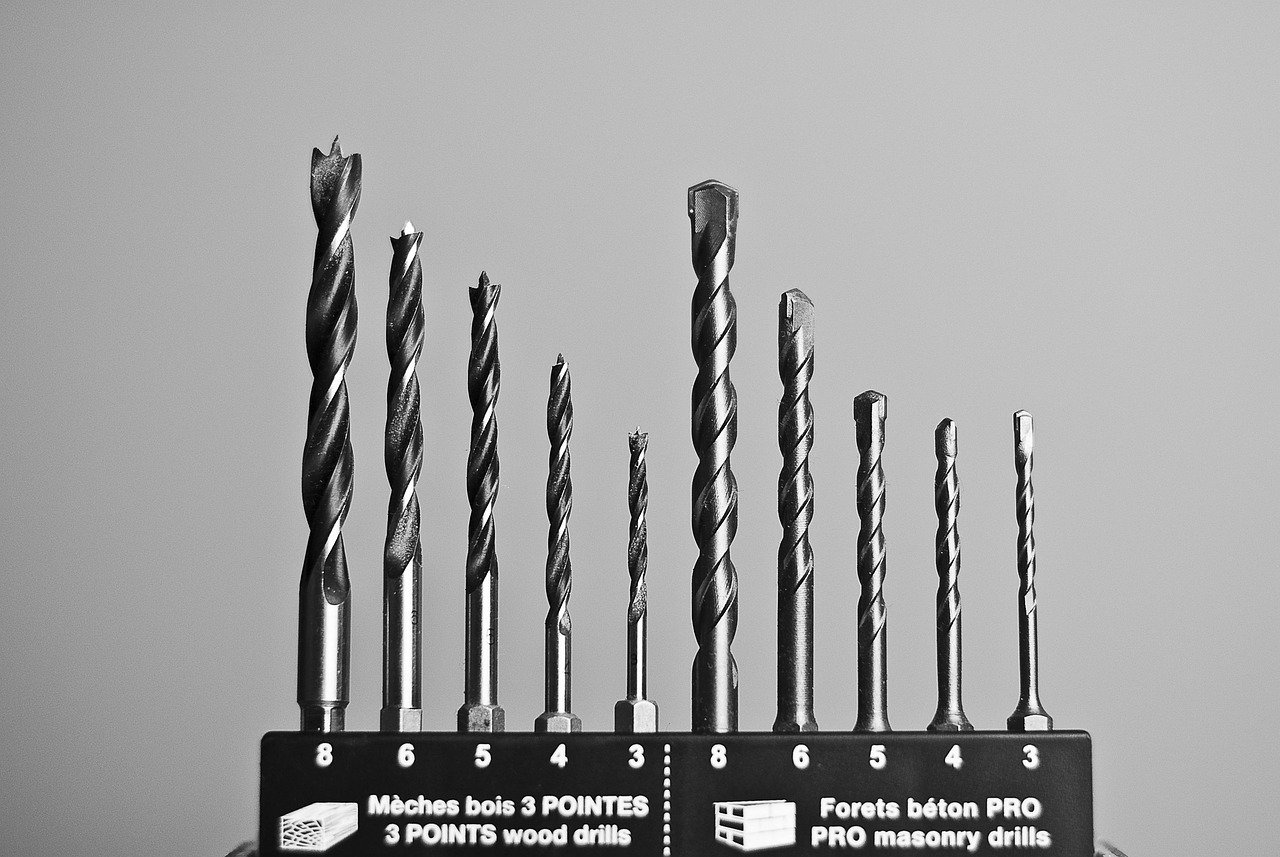

What do a wobbly shelf bracket, a concrete anchor, and a two-mile-deep oil well have in common? Each one depends on a drill bit doing its job. The bit is the small, cheap-looking part that decides whether a hole comes out clean or the whole job turns into a mess. Yet most people grab whatever is rattling around in the toolbox and hope for the best.
That habit costs money. A wood bit spun into concrete is ruined in seconds. A dull bit overheats, smears the material, and can crack a workpiece. This guide covers what a drill bit actually is, how the main types differ, how sizes are labeled, and which mistakes are worth avoiding before the drill switch flips.
What a Drill Bit Actually Does
A drill bit is the cutting tool that makes a cylindrical hole in solid material. It sits in a drill chuck or drill press, spins, and gets pushed into the work. The cutting edges shave material away, and the flutes, the spiral grooves running up the shaft, carry the debris out of the hole.
That chip removal matters more than most people realize. A bit that cuts well but clears chips poorly will jam, overheat, and dull fast, especially in deep holes. The twist drill, with its helical flutes, is the design that solved this problem, and it is generally credited to Stephen A. Morse, who patented it in 1861. More than 160 years later, that basic shape still dominates workshops.
The Main Drill Bit Types and What They’re For
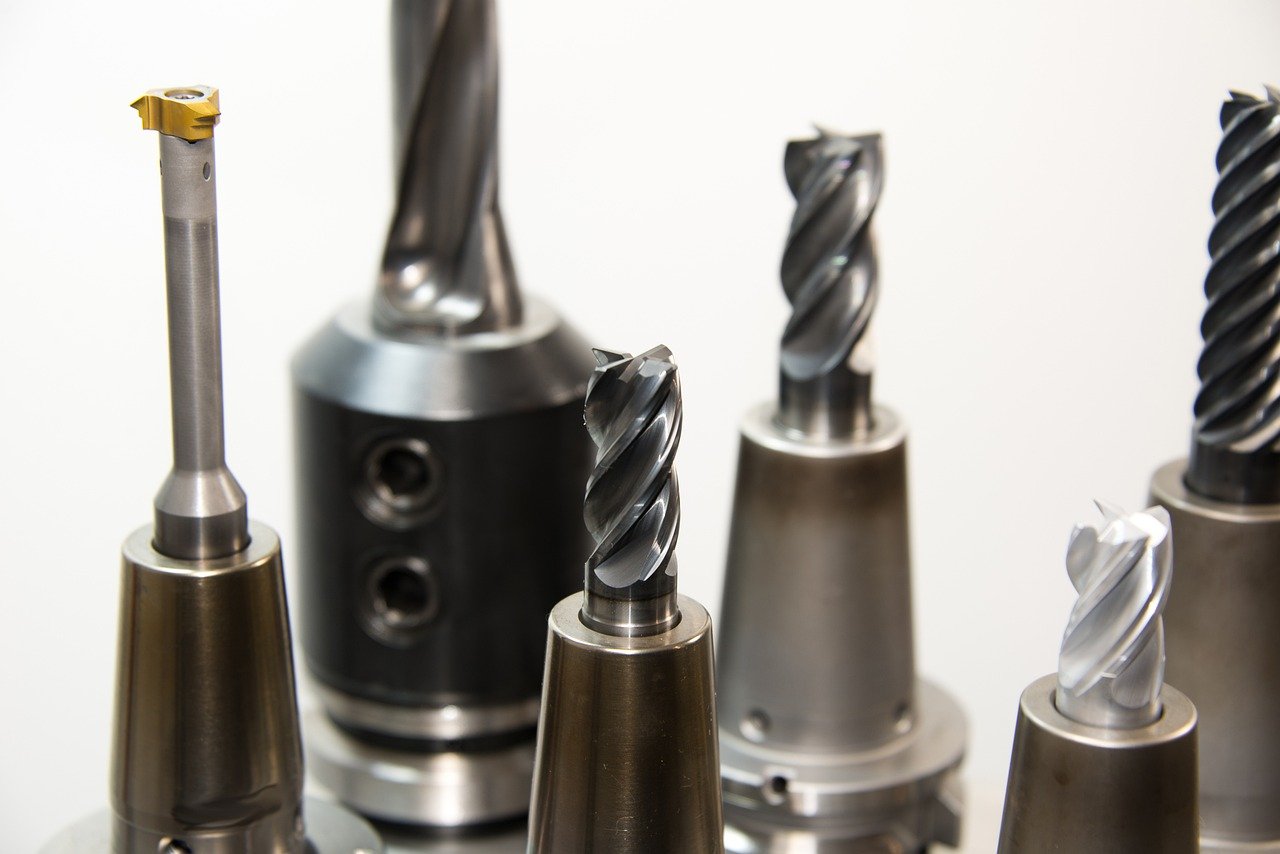
Walk into any hardware store and you’ll see dozens of bits that look similar. They are not interchangeable. The tip geometry and flute design tell you what a bit can safely cut.
| Bit type | Best for | Tip design | Key limitation |
|---|---|---|---|
| Twist bit (HSS) | Metal, plastic, wood | 118° point, or 135° split point | Burns wood, dulls on masonry |
| Brad-point bit | Clean holes in wood | Centering spur | Poor in metal |
| Masonry bit | Concrete, brick, block | Carbide tip, no sharp helix | Needs hammer mode |
| Spade bit | Fast rough holes in wood | Flat paddle | Splinters exit holes |
| Hole saw | Large-diameter holes | Ring of teeth | Slow, needs pilot bit |
| Auger bit | Deep, precise wood holes | Screw point, deep flutes | Not for metal |
| Step bit | Enlarging holes in sheet metal | Cone of stepped sizes | Limited depth |
| Forstner bit | Flat-bottomed wood holes | Rim cutter | Clogs in wet wood |
Twist bits: the generalist
The standard twist drill carries a 118° point angle for everyday metal drilling. A 135° split-point version cuts harder materials and wanders less when it first touches the surface. If you buy one set for general repair work, this is it.
Masonry bits: a different animal
Masonry bits use a carbide tip and rely on hammering action rather than a sharp helical cutting edge. They are not wood or metal bits with a different label. Spinning one in a standard drill without hammer mode polishes the tip instead of cutting, and the bit is finished.
Bits for wood
Brad-point bits leave clean, splinter-free holes because the center spur grabs the wood first. Spade bits are faster and rougher. Forstner bits cut flat-bottomed holes for hinges and plugs. Wood is forgiving, but the wrong bit still tears out the surface.
Oil and gas bits
In petroleum drilling, the “drill bit” is the cutting element at the bottom of the drill string, sometimes thousands of feet down. Roller-cone (tri-cone) bits and polycrystalline diamond compact (PDC) bits are the main types. PDC bits became dominant in many applications from the 1980s onward because they cut faster and last longer in many formations.
Drill Bit Sizes: Fractional, Number, Letter, and Metric
Size labels confuse beginners more than anything else. Four systems coexist, and they overlap in ways that aren’t obvious.
- Fractional inches: 1/16″, 1/4″, 3/8″, and so on, common in home and woodworking sets.
- Number sizes (#1–#80): used for small holes. The numbers run backwards, so #1 is large and #80 is tiny.
- Letter sizes (A–Z): sit between fractional and number sizes, common in machining for tapping.
- Metric diameters: standard everywhere outside the U.S. and growing in workshops worldwide.
A 1/4″ bit and a 6.5 mm bit are close but not identical. For hanging a picture, nobody cares. For tapping a thread or fitting a bearing, the difference decides whether the fastener holds. Drill-bit terminology and dimensions are standardized, and in the U.S., ANSI/ASME B94.11M covers twist drills. When precision matters, check a drill-size chart rather than eyeballing the shank.
Materials and Coatings: What You’re Paying For
Bit material drives price, and price drives the temptation to buy the cheapest set on the shelf. Here’s what the money buys. (The row)
High-speed steel (HSS) is the baseline. It handles wood, plastic, and most metals at reasonable speeds and is the sensible default for home use.
Cobalt steel holds up to heat and hard metals better than plain HSS. It costs more and is brittle, so it rewards a steady hand.
Solid carbide stays sharp longest and cuts the hardest materials, but it chips if you side-load it. It belongs in a drill press or a careful hand, not a wobbling cordless drill.
Carbide-tipped bits dominate masonry work, where the carbide insert takes the hammering impact.
Coatings such as titanium nitride (TiN) extend bit life, mostly by reducing friction and wear. A coating is not a substitute for the right bit. A coated wood bit still won’t drill concrete.
How to Choose the Right Bit for the Job
Matching bit to material is the whole game. The rules are simple once you know them.
- Identify the material. Metal, wood, masonry, tile, and plastic each have a dedicated bit family.
- Check the drill’s mode. Hammer mode is for masonry only. Using it on metal or wood damages the bit and the work.
- Match the size to the fastener, not to the nearest bit in the case. Anchors and plugs specify a hole diameter.
- Start with a pilot hole for large diameters, especially in metal and hardwood.
- Use cutting fluid or a slow speed on metal to control heat.
- Let the bit cut. Pressing hard dulls edges and overheats the tip.
Common Mistakes That Ruin Bits and Workpieces
Most drill-bit failures trace back to a handful of habits. Each one is easy to fix.
Spinning too fast. Heat is the enemy. In metal, high speed without lubrication burns up edges. In wood, it scorches and glazes the hole.
Pressing too hard. Extra force doesn’t make a bit cut faster. It makes it wander, snap, or overheat. Let the flutes do the work.
Skipping the pilot hole. Big bits in small drills grab and jerk. A pilot hole keeps the cut on track and saves your wrist.
Drilling without marking. A punch mark or a piece of tape stops the bit from skating across a smooth surface. This one trick prevents more scratched workpieces than any other.
Storing bits loose in a drawer. Bits bang against each other and dull their edges. A case or a bit index keeps them sharp.
Forcing a dull bit. A dull bit needs more pressure, which generates more heat, which dulls it further. Sharpening or replacing is cheaper than fighting it.
Bit Shank Types: What Fits Your Drill
The shank is the end that goes into the chuck, and it has to match the tool.
Round shanks fit standard three-jaw chucks and cover most bits.
Hex shanks lock into quick-change chucks and impact drivers without slipping.
SDS and SDS-Plus shanks have grooves that lock into rotary hammers. They transfer hammer energy far better than a smooth shank, which is why masonry work often calls for them.
Taper shanks appear on large bits for drill presses and industrial machines.
Buying a bit with the wrong shank is a common and annoying mistake. Check the chuck before checkout.
Specialty Bits Worth Knowing
Some bits solve one narrow problem so well that they earn a place in the box.
Step bits cut a cone of increasing diameters, perfect for enlarging holes in sheet metal and plastic enclosures.
Countersink bits create the angled seat that lets a screw head sit flush.
Plug cutters make wooden plugs to hide screw holes, a favorite for furniture repair.
Tile bits have a pointed, carbide-grit tip that scratches through glaze without cracking it.
Auger bits bore deep, straight holes in timber for bolts and wiring runs.
For anyone working with textured or curly hair, the styling world has its own vocabulary, and the same “match the tool to the material” logic applies to curl patterns like 4c hair and looser 2b hair. Different material, same principle.
Drill Bit Care and Sharpening
Bits last longer with a little attention. Wipe them down after use, especially after metal or masonry work, and store them dry to prevent rust. A light oil film helps.
Sharpening is possible for HSS bits with a bench grinder or a dedicated sharpening jig, but the angles must stay consistent. A badly sharpened bit cuts worse than a dull one. For most home users, replacing a worn bit is simpler and cheaper than learning to sharpen well.
Watch the tip. A shiny, rounded edge means the bit is dull. A blue or straw-colored tip means it overheated. Both are signals to slow down and add lubrication next time.
Conclusion
The drill bit is the cheapest part of the drilling setup and the one that decides the outcome. Match the bit to the material, respect the size system, control heat, and let the cutting edges do the work. A modest set of quality HSS twist bits, a few masonry bits, and one or two wood-specific bits will handle almost everything a home workshop throws at it. The rest is patience and a steady hand.
FAQ
What is the difference between a drill bit and a driver bit?
A drill bit removes material to create a hole. A driver bit has a shaped tip, such as Phillips or Torx, that turns a screw. They look similar at the shank but do opposite jobs, and using one in place of the other damages the tool and the fastener.
Can I use a wood bit on metal?
No. Wood bits have a sharp center point and aggressive edges designed for soft material. On metal they grab, overheat, and dull almost immediately. Use an HSS twist bit for metal.
Why does my drill bit keep wandering?
The bit is skating because the surface is smooth and the tip has nothing to bite. Mark the spot with a center punch or an awl, or apply a piece of tape. A 135° split-point bit also wanders far less than a standard 118° point.
What size drill bit do I need for a wall anchor?
Match the anchor’s stated diameter exactly. Most plastic wall anchors list a required hole size on the package, often 1/4″ or 5/16″. Going one size up weakens the grip, and one size down means the anchor won’t seat.
How do I know when a drill bit is dull?
The bit needs noticeably more pressure, the hole takes much longer, and the tip looks shiny or rounded instead of sharp. In metal, a dull bit also squeals and produces fine dust rather than proper chips.
Are expensive drill bits worth it?
For occasional home repairs, a mid-priced HSS set is fine. For repeated metalwork or hard materials, cobalt or carbide bits pay for themselves through longer life and cleaner holes. The cheapest sets often dull before the first project ends.









