

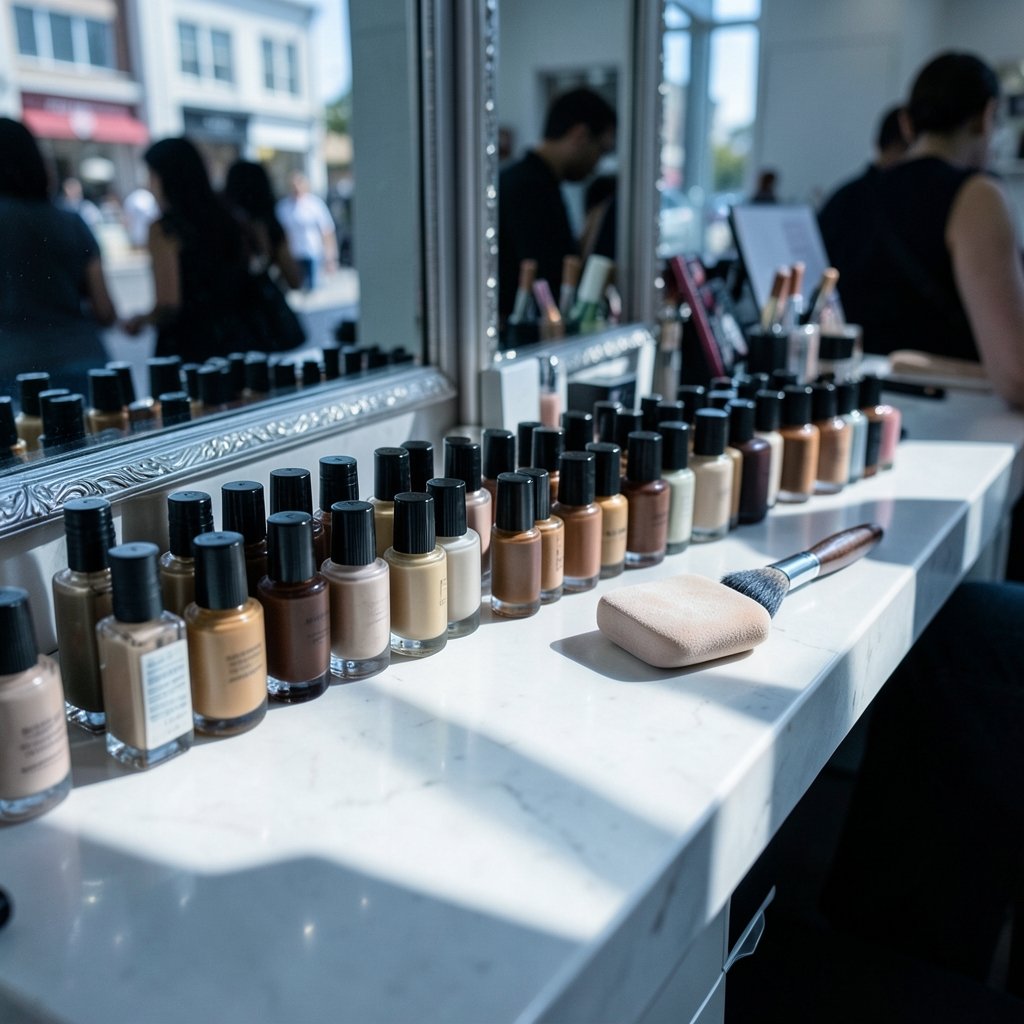
What happens when the makeup counter simply doesn’t have your shade? For decades, that was the reality for Black women in America, and one brand built an empire by answering the question. Fashion Fair is a name that carries two lives: a pioneering cosmetics company born from a traveling fashion show, and a phrase that still describes the trade fairs where the apparel industry does business. Understanding both matters, because the brand’s story is one of the most consequential in beauty and fashion history, and the generic sense of the term is what most people encounter when they search for it today.
This article untangles the brand from the phrase, traces the rise and pause of Fashion Fair Cosmetics, and explains why its legacy still shapes how we talk about shade ranges and inclusivity.
What Does “Fashion Fair” Actually Mean?
The term splits into two distinct meanings, and mixing them up is the most common mistake readers make.
| Meaning | What It Refers To | Typical Context |
|---|---|---|
| Fashion Fair Cosmetics | A makeup brand founded in 1973 for Black women | Beauty retail, brand history, shade ranges |
| A fashion fair | A trade fair or consumer exhibition for apparel | Industry events, wholesale buying, trade show calendars |
The first is a proper noun, a specific company. The second is a generic category, the same way “book fair” describes an event rather than a publisher. If you are researching the brand, search for “Fashion Fair Cosmetics” to avoid landing on trade show listings. If you are planning a buying trip or a booth visit, add “trade show” or “apparel” to your query.
The Show Before the Brand: Ebony Fashion Fair
You cannot tell the Fashion Fair story without starting in 1958, fifteen years before the cosmetics line existed. That year, Ebony Fashion Fair launched as a traveling charity fashion show. It toured cities across the United States, staged runway presentations, and raised money for charitable causes, including Black hospitals and scholarship funds.
The show was produced by Eunice Johnson, who with her husband John H. Johnson ran Johnson Publishing Company, the publisher of Ebony and Jet magazines. Eunice Johnson did not simply license other people’s clothes. She traveled to European couture houses and bought garments directly, then brought them back for Black American audiences who had rarely been invited into high fashion’s front row. In an era when mainstream fashion media treated Black style as an afterthought, the Ebony Fashion Fair put couture on a stage in front of people who had been told it was not for them.
That curatorial instinct is the same energy that now drives independent fashion commentary, from illustrators who capture runway moments to the writers behind the best fashion substacks worth following. The impulse to translate high fashion for a specific audience has a long, distinguished lineage.
Why the Models Could Not Find Makeup
Here is where the two stories collide. The models walking in Ebony Fashion Fair had a practical problem: the makeup available in mainstream stores did not match their skin tones. Shades were too light, too ashy, or simply nonexistent. Rather than accept the gap, Eunice Johnson created products to fill it.
In 1973, Fashion Fair Cosmetics launched as a brand built specifically to serve Black women. This was not a marketing gesture or a token extension of an existing line. It was a full range designed from the ground up, and it arrived at a time when the beauty industry’s default assumption was that “flesh tone” meant one narrow band of beige.
Why Fashion Fair Cosmetics Mattered
The brand’s significance goes beyond product. It changed what was possible to ask for.
It Proved a Market Existed
Before Fashion Fair, the industry’s conventional wisdom held that deeper shade ranges were too expensive, too niche, or too complicated to stock. Fashion Fair demonstrated the opposite. It built a customer base, sold through department stores, and became a fixture in Black households. The lesson was blunt: the demand had always been there. The supply had simply refused to show up.
That proof of concept matters because it set the stage for everything that followed, including the shade-range expansions of the 2010s and the current expectation that a foundation launch will include dozens of tones rather than a handful.
It Tied Beauty to Cultural Visibility
Fashion Fair was not sold as a corrective to mainstream beauty. It was sold as its own standard of glamour, connected to the prestige of the Ebony Fashion Fair and the cultural weight of Johnson Publishing. Wearing the brand was a statement of belonging as much as a cosmetic choice.
It Set a Pattern Others Followed
The brand’s structure—a cosmetics line grown from a media and events platform—anticipated the modern brand model. Today a fashion house launches a beauty line and a content channel at once. Fashion Fair did that decades earlier, with a magazine empire behind it.
The broader story of how image-making reshaped the industry is worth revisiting, particularly in accounts of how 2010s athleisure and Instagram rewrote the rules of who gets seen. Fashion Fair was making that argument long before the algorithm got involved.
The End of the Show and a Brand in Transition
The Ebony Fashion Fair toured until 2009. After the 2009 run, the show ended as Johnson Publishing confronted financial difficulties. Eunice Johnson died in 2010, closing a chapter that had spanned more than five decades of fashion production.
Fashion Fair Cosmetics continued, but the brand changed hands over the years. Reports of a sale and later relaunch efforts circulated in the late 2010s and early 2020s, though the exact timeline and ownership details are genuinely murky and worth verifying against current trade coverage before you cite them. This is the part of the story where readers should be careful: heritage brands often pass through several owners, and press releases do not always match what happens on the shelf.
A Practical Warning About Heritage Brand Research
If you are writing about or researching Fashion Fair, three traps catch people repeatedly.
- Confusing the brand with the show. They share a name and an origin, but they are separate entities with separate timelines. The show ended in 2009; the cosmetics brand did not.
- Trusting undated sources. Ownership changes and relaunches generate a lot of enthusiastic coverage that ages badly. Check the publication date on anything you read.
- Assuming a relaunch equals a revival. A brand can be acquired, rebranded, and relaunched without regaining its original distribution or customer base. Availability tells you more than announcements do.
Fashion Fair in the Wider Fashion Conversation
The brand’s legacy sits inside a larger shift in how fashion is documented and who gets to document it. The runway used to be a closed room. Now it is a feed, a newsletter, a sketch posted within minutes of a look leaving the catwalk. That shift has made fashion more democratic and more chaotic at once.
Consider the work of Angelica Hicks, the fashion illustrator who turns runway moments into sharp, funny drawings. Her appeal rests on the same instinct Eunice Johnson had: take something rarefied and make it legible to an audience that was never invited. The tools changed. The impulse did not.
The same is true of the current appetite for Italian luxury fashion, which draws readers who want craft and context rather than a price tag. Fashion Fair built its reputation on exactly that combination, prestige plus access.
Looking ahead, the 2026 fashion trends guide and the broader conversation around fashion trends 2026 keep circling back to inclusivity as a baseline rather than a novelty. That baseline exists partly because a cosmetics brand refused to accept the shade gap in 1973. Readers tracking 2026 fashion trends for women will notice that beauty and apparel now move together, with shade ranges and size ranges treated as part of the design brief.
Even the marketing machinery has changed shape. The Barbie world tour book that delivered the fashion a movie only hinted at shows how a brand can extend a story across products, publishing, and events. Fashion Fair did the same with a magazine, a runway show, and a lipstick line, long before anyone called it a brand system.
How to Evaluate a “Fashion Fair” Today
If you are heading to an actual fashion fair, the trade show kind, the practical advice is straightforward and the mistakes are predictable.
Check the exhibitor list before you go. A fair’s value is its roster. If the brands you want to meet are not listed, the trip is a gamble. Organizers usually publish a floor plan and a searchable directory in advance.
Know the difference between trade and consumer days. Many fairs open to buyers first and the public later. Walking in on a consumer day expecting wholesale terms wastes everyone’s time.
Bring a way to capture details. Cards get lost. Photograph booth signage and note the rep’s name next to it. This single habit saves hours of follow-up confusion.
Ask about minimum order quantities early. Nothing derails a promising conversation faster than discovering the minimums after you have fallen in love with a collection.
Verify the fair’s longevity. First-year fairs sometimes cancel or shrink. A track record is not a guarantee, but it is a signal.
For the brand, the equivalent advice is simpler: read the label, check the shade match in person when possible, and treat any heritage brand’s current status as something to confirm rather than assume.
Conclusion
Fashion Fair is two things at once, and both deserve attention. As a phrase, it describes the trade fairs where the apparel business meets. As a name, it belongs to a cosmetics company that grew out of a traveling fashion show and forced an industry to acknowledge customers it had spent decades ignoring. Eunice Johnson built the Ebony Fashion Fair in 1958, launched Fashion Fair Cosmetics in 1973, and spent her career buying couture for audiences who were never expected to see it. The show ended in 2009. The brand changed hands. The argument it made, that shade ranges are not a niche, won. That is the part worth carrying forward, whether you are shopping a fair floor or reading a label’s history.
Frequently Asked Questions
What is Fashion Fair?
Fashion Fair most commonly refers to Fashion Fair Cosmetics, a makeup brand founded in 1973 by Eunice Johnson of Johnson Publishing Company to serve Black women whose skin tones were not matched by mainstream makeup lines. The phrase can also mean a trade fair or exhibition for apparel, which is a separate, generic use of the term.
Who founded Fashion Fair Cosmetics?
Eunice Johnson founded the brand in 1973. She was the producer of the Ebony Fashion Fair, a traveling charity fashion show that began in 1958, and she created the cosmetics line after the show’s models struggled to find suitable makeup shades.
When did the Ebony Fashion Fair end?
The Ebony Fashion Fair toured until 2009. The show ended after its 2009 run as Johnson Publishing faced financial difficulties. Eunice Johnson died in 2010, closing a chapter that had run for more than fifty years.
Is Fashion Fair still in business?
The brand has changed ownership over the years, with reports of a sale and relaunch efforts in the late 2010s and early 2020s. Because heritage brands often pass through multiple owners, the safest approach is to check current availability and retail listings rather than rely on older announcements.
What is the difference between Fashion Fair and a fashion fair?
Fashion Fair with capital letters is a specific cosmetics brand with a documented history. A fashion fair in lowercase is a general term for an industry trade show or consumer exhibition where apparel is bought, sold, and displayed. The context of the sentence usually makes clear which one is meant.
Why was Fashion Fair Cosmetics important?
It proved that a market for deeper foundation and makeup shades existed at a time when the industry claimed otherwise. By building a full product range for Black women and tying it to the cultural prestige of Ebony and the Ebony Fashion Fair, the brand helped establish the expectation that shade inclusivity is a baseline requirement rather than an optional extra.














