

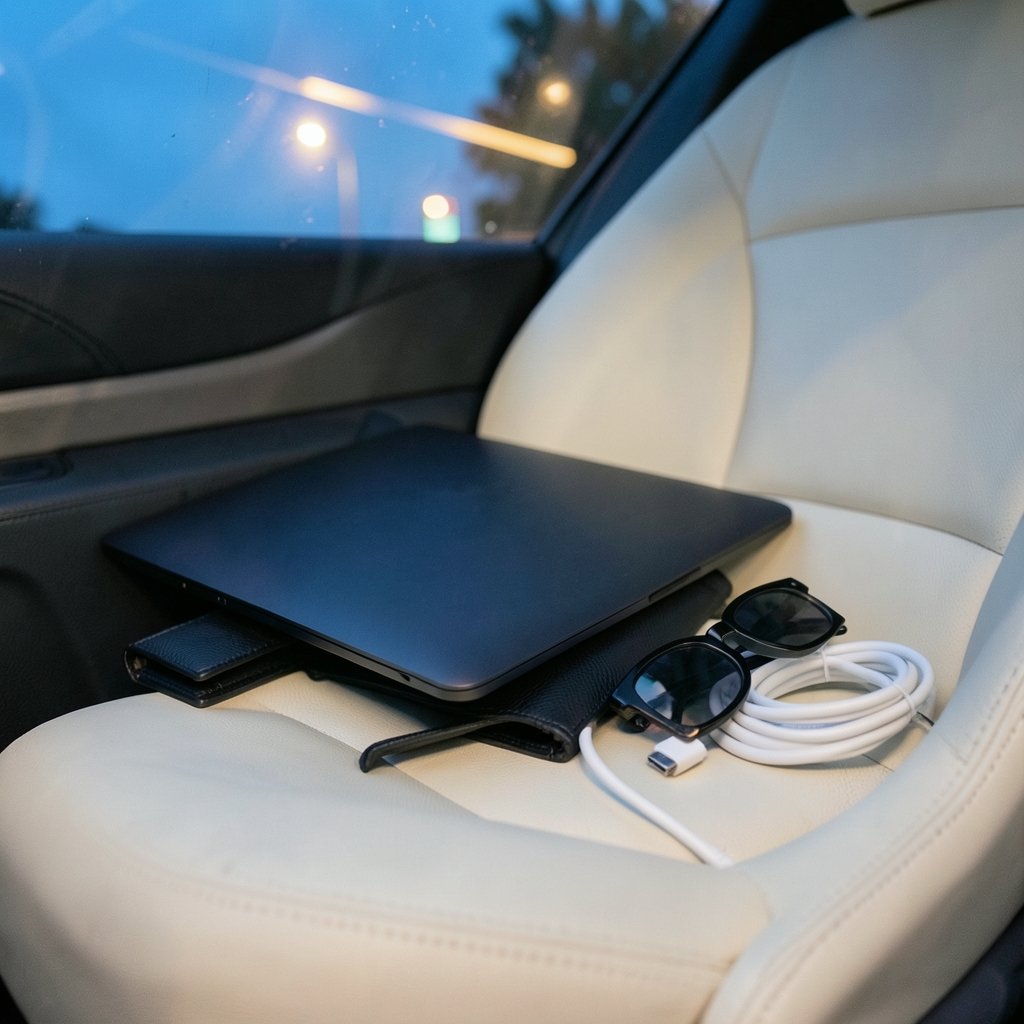
What exactly is a “fashion laptop”? If you picture a slim, rose-gold machine sliding out of a designer sleeve, you are halfway there. But the term is murkier than it looks, and that murkiness costs buyers real money. People walk into stores expecting a laptop that looks like it walked off a runway, then discover it cannot handle a video call without sounding like a jet engine.
This piece unpacks what the label actually describes, where it came from, what you give up when you buy on looks alone, and how to choose a stylish machine that still earns its keep. Think of it as a buying guide for people who care how their desk looks but refuse to sacrifice function for it.
What does “fashion laptop” actually mean?
Here is the first thing to know: “fashion laptop” is not an official industry category. No standards body defines it. No manufacturer files it as a spec. It is a loose marketing and journalistic label for laptops sold primarily on design, materials, color, or brand collaboration rather than on raw performance.
That ambiguity matters because the term gets used in at least three different ways:
| Usage | What it describes | Typical example |
|---|---|---|
| Aesthetic sense | Any laptop marketed on looks, finish, or color | A thin machine in a pastel finish |
| Brand-collaboration sense | A laptop co-branded with a fashion or design house | Designer editions of mainstream models |
| Fashion-industry sense | The laptop a stylist, editor, or illustrator actually carries | A light machine that fits a work bag |
A stylist covering shows and an illustrator sketching backstage need different things from a buyer who simply wants a pretty desk setup. Before you shop, decide which sense you mean. That single decision filters out half the market.
The broader fashion world has its own vocabulary, and it helps to borrow from it. If you follow Italian luxury fashion, you already know that materials and finish do the heavy lifting in how a product is perceived. Laptop makers lean on exactly the same playbook: brushed aluminum instead of matte plastic, a milled hinge instead of a snap-fit seam, a color name borrowed from a paint palette rather than a Pantone code.
How the design-first laptop became a mainstream idea

The category has a clear origin point. Apple’s MacBook Air, first shown in January 2008, is widely credited with making thin, design-led laptops mainstream. The famous reveal pulled the machine from a manila envelope, and that image did more for the “laptop as object of desire” idea than any spec sheet ever could.
The 2015 12-inch MacBook pushed the concept further, with a fanless design and a single USB-C port. It became the standard example of form winning over connectivity. One port meant one cable, a clean desk, and a very pretty silhouette. It also meant dongles. Lots of dongles.
That trade-off is the heart of the fashion laptop story. Every millimeter shaved off the chassis has to come from somewhere: battery capacity, port selection, cooling headroom, or repairability. Design-led machines are exercises in deciding which of those to sacrifice.
Fashion-brand collaborations exist too, though they are niche and poorly documented. Design-studio editions of mainstream laptops have appeared over the years, usually in limited regions and limited runs. Treat any specific collaboration claim with caution unless you can verify it against the manufacturer’s own announcement.
The engineering cost of thin and beautiful
Thinness is not free. It is paid for in thermal headroom and sustained performance. Fanless designs typically rely on lower-power processors, which trade long-run speed for portability. For email, browsing, writing, and video calls, that trade is invisible. For video editing, gaming, or heavy spreadsheets, it becomes very visible, very fast.
Here is a practical way to think about it. A laptop marketed on design usually optimizes for burst performance: it feels snappy for a few minutes, then slows down as heat builds. A laptop marketed on performance optimizes for sustained performance: it stays fast but may be thicker, heavier, and louder.
Neither is wrong. They are different products for different jobs. The mistake is buying one and expecting the other.
There is also a materials trap. Soft-touch coatings feel wonderful in a showroom and look tired after eighteen months of daily handling. High-gloss finishes show every fingerprint. Pale colors hide scratches poorly. If you want a laptop that still looks good in year three, choose a finish you can actually maintain. Matte anodized aluminum and textured plastics age far better than piano-black gloss.
One-cable design and the standards behind it
The clean-desk aesthetic that fashion laptops sell depends on a technical standard most buyers never think about: USB Power Delivery. The USB Implementers Forum maintains the specification, and USB PD 3.1 raised the standard’s ceiling to 240 watts. That is why a single slim cable can now charge a machine that would have needed a brick the size of a paperback a decade ago.
Standardization is genuinely good news for design-led buyers. It means the pretty laptop can share a charger with a phone and a tablet. It means fewer cables, fewer adapters, and a desk that looks like the marketing photo.
But check the details before you commit. A laptop with one port is a laptop with one port, no matter how elegant the cable. If you regularly connect a monitor, a card reader, and a charger at the same time, budget for a dock and factor its cost into the purchase. The dock is part of the real price.
Repairability rules are changing the design brief
For years, the fashion laptop playbook was simple: seal the chassis, glue the battery, solder the memory, and call it minimalism. That playbook is now under real pressure.
The EU Ecodesign Regulation for computers and computer servers, Regulation (EU) 2023/1670, applies from 20 June 2025, with some provisions phased in later. It covers repairability, spare parts availability, and energy efficiency. A companion regulation, Regulation (EU) 2023/1669, governs energy labelling for computers and applies from the same date. Together they push against the thinnest, most sealed designs.
Right-to-repair legislation is spreading in the United States as well. State-level laws have been signed in recent years, with effective dates that vary by state. The direction of travel is consistent: products are expected to be openable, serviceable, and documented.
What does this mean in practice? A laptop that cannot be opened is increasingly a laptop that cannot be sold in some of the world’s largest markets. Designers are adapting. Expect to see more screwed chassis, more user-replaceable batteries, and more published service documentation, even on machines sold on looks.
For buyers, the practical takeaway is simple. Ask three questions before you buy: Can the battery be replaced? Is the storage accessible? Are spare parts available for a reasonable number of years? If the answer to all three is no, you are buying a disposable object with a premium price tag.
What actually works when you shop in practice
Plenty of advice on this topic is vague. Here is what holds up in real use, based on how these machines behave after the honeymoon period.
Prioritize the keyboard and screen over the finish. You will touch the keyboard every day and look at the screen every day. You will admire the lid color roughly never after month two. A gorgeous chassis with a mushy keyboard is a bad laptop.
Weigh the machine with its charger. Manufacturers quote laptop weight. Real bag weight includes the power adapter, the cable, and the sleeve. A 1.1 kg laptop with a 300 g brick is not a 1.1 kg laptop.
Check the port count against your actual week, not your ideal week. Write down every device you connected in the last seven days. If the list is longer than the port count, you need a dock or a different machine.
Look at the hinge and the feet. These are the parts that fail first on slim designs. A hinge that wobbles in the store will wobble more in a year. Feet that peel off take the finish with them.
Test the fan noise, or its absence. A fanless machine is silent, which is lovely in a meeting and less lovely when a long video call throttles the processor. Know which trade you are making.
Buy for the software you actually run. A design-led laptop with 8 GB of memory will feel fine for a year and cramped by year three. Memory soldered to the board cannot be upgraded later, so buy above your current needs.
If you enjoy following how runway aesthetics filter into everyday products, the crossover is well documented. The 2026 fashion trends female conversation, for instance, shapes color palettes that show up in electronics a season or two later. There is a genuine feedback loop between what people wear and what they want on their desks.
Common mistakes that cost fashion-laptop buyers money
The most expensive error is buying on aesthetics alone and discovering the performance gap later. The second most expensive is overcorrecting: buying a heavy performance machine and then leaving it at home because it is a chore to carry.
Other frequent missteps:
- Assuming a high price means high durability. Premium finishes can be more fragile than plain ones.
- Ignoring the webcam and microphone. If you spend your day on calls, these matter more than the lid.
- Skipping the warranty terms on battery degradation. Battery health is the single biggest driver of how long a slim laptop stays useful.
- Buying a limited collaboration edition as a daily driver. Replacement parts for limited runs can be scarce and expensive.
- Forgetting that resale value tracks demand, and demand tracks reputation, not looks.
A useful sanity check: read reviews written six months after launch, not on day one. Early reviews describe the machine as new. Long-term reviews describe the machine as owned.
Where style and substance actually meet
The good news is that the gap between beautiful and capable has narrowed. Efficient processors now deliver real workday performance in fanless chassis. Standardized charging has killed most of the cable clutter. Repairability rules are pushing manufacturers back toward serviceable designs.
The buyers who end up happiest are the ones who treat the laptop as a tool with a visual dimension, not as an accessory with a processor. They pick a machine that fits their bag, their ports, and their software, then choose the finish they like best within that shortlist. Style becomes the tiebreaker, not the whole decision.
That framing also keeps you sane in the store. Salespeople sell the finish because the finish is what you can see. Your job is to interrogate everything you cannot see: the memory, the battery, the hinge, the service documentation, the sustained performance under load.
For a wider view of how aesthetics and function are converging across the industry, the 2026 fashion trends guide is a useful read on how design language moves between sectors. The same forces that shape a season’s silhouettes shape the objects people carry. And if you like seeing how runway moments get translated into illustrations and products, this piece on how Angelica Hicks turns runway moments into illustrations shows the translation process up close. For buyers who want to keep tracking the fashion trends 2026 cycle, the through-line is consistent: materials and restraint beat decoration.
Conclusion
The “fashion laptop” label is a shortcut, not a specification. It describes a family of machines sold on design, materials, and brand story, and it hides a set of trade-offs in cooling, ports, repairability, and upgradeability. None of those trade-offs is disqualifying. They just need to be chosen on purpose.
So buy the pretty laptop if the pretty laptop fits your week. Check the ports against your real devices, weigh the bag not the spec sheet, buy memory above your current needs, and ask whether the battery can be replaced. Do that, and you get a machine that looks good on the desk and still earns its place there in year three. Skip it, and you get a very expensive object that spends its life in a drawer.
Frequently asked questions
Is a fashion laptop a real product category?
No. There is no official definition or standards category for it. The phrase is a marketing and journalistic label for laptops sold primarily on design, materials, color, or brand collaboration rather than performance. Different people use it to mean different things, so clarify which sense you mean before shopping.
Are fashion laptops worse than performance laptops?
Not inherently. They are optimized for different things. Design-led machines usually prioritize portability and burst performance, while performance machines prioritize sustained speed and cooling. A slim laptop is excellent for writing, browsing, and calls, and a poor choice for long video renders or gaming.
Do designer collaborations cost more for the same hardware?
Often yes. Limited editions and co-branded models frequently carry a premium for design and scarcity rather than better components. Before paying extra, compare the specifications against the standard model. If the internals match, you are paying for the finish and the badge, which is fine as long as you know it.
How long should a stylish laptop last?
With current repairability rules pushing toward serviceable designs, five years of useful life is a reasonable target for a well-chosen machine. Battery health is the main limiting factor. Check whether the battery is user-replaceable and whether spare parts are available before you buy.
What should I check first in the store?
The keyboard, the screen, and the hinge. You will use the first two daily and the third determines how the machine ages. Then check the port count against the devices you connected in the past week, and weigh the laptop together with its charger.
Does the EU repairability regulation affect laptops sold outside Europe?
Indirectly, yes. Manufacturers build global product lines, so designs created to satisfy European repairability and energy rules tend to appear in other markets too. Buyers elsewhere benefit from easier battery access and published service documentation, even where local law does not require it.














