



What makes one pair of shoes feel like a fashion statement while another, nearly identical pair just feels like footwear? The answer rarely comes down to price or brand. It comes down to shape, proportion, context, and a little bit of knowing how shoes actually work. Fashion shoes are one of the few purchases people make that affect how they look, how they walk, and how long they can stand at a party. That makes them worth thinking about properly.
This guide looks at fashion shoes from the practical side: what the categories really mean, where the big silhouettes came from, how to choose a pair that survives more than one season, and which mistakes trip up even careful shoppers. It also covers sizing, materials, and the health trade-offs that come with certain styles.
What counts as a fashion shoe?
There is no formal definition. Trade bodies, museums, and retailers split footwear into athletic, casual, dress, and couture categories, and the lines blur constantly. A running shoe worn with tailoring is a fashion choice. A stiletto worn to the office is a dress shoe doing everyday work. The label depends on how and where the shoe is worn, not on a fixed taxonomy.
What separates a fashion shoe from plain footwear is intent. A fashion shoe is designed to be seen as part of an outfit rather than only to protect the foot. That can mean an unusual heel shape, an exaggerated sole, a distinctive color, or a material that would never survive a hiking trail. Function still matters, but it is no longer the only job.
The sneaker is the clearest example of how this works. The Converse Chuck Taylor All Star began as a basketball shoe in the early 20th century, with the Chuck Taylor endorsement starting in 1921 and the name added to the shoe in 1932. Decades later it became a wardrobe staple worn with almost anything. Nothing about the shoe changed as much as the way people used it.
The silhouettes that shaped the category
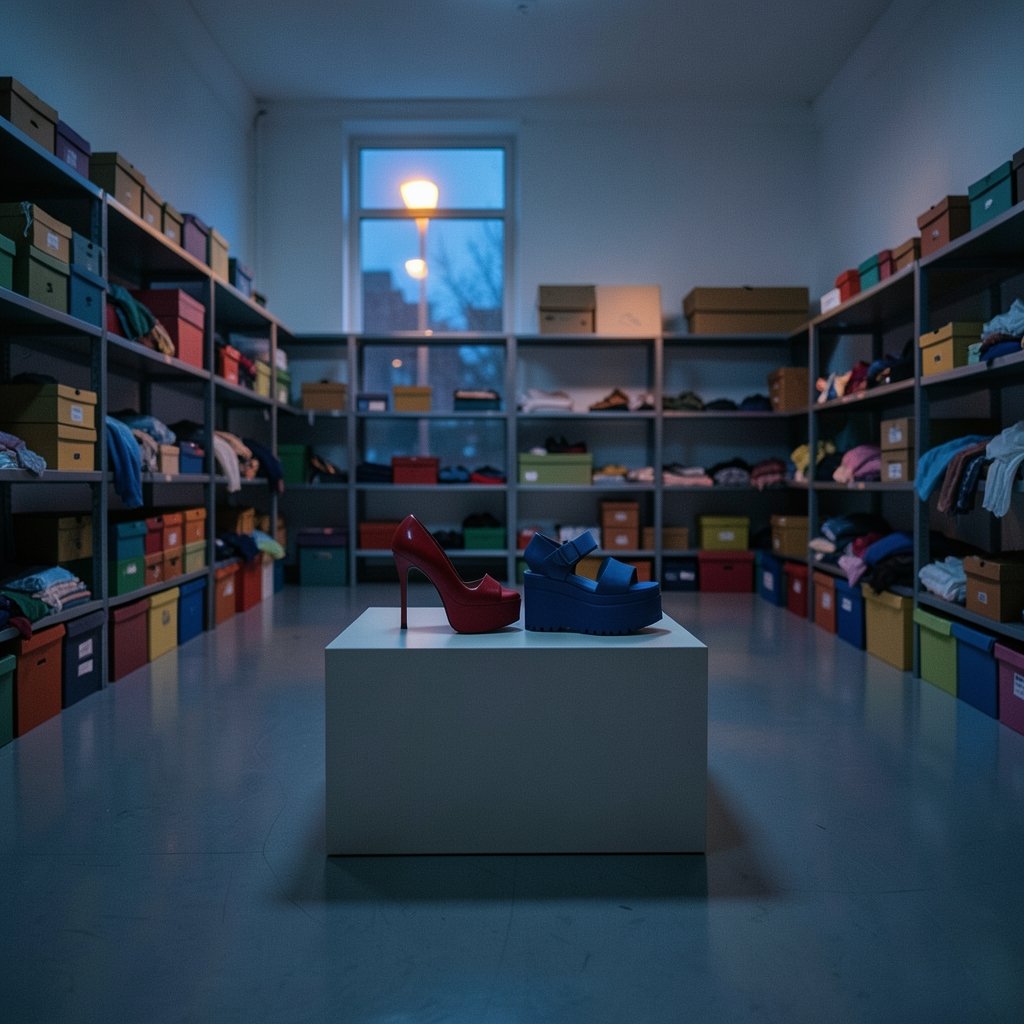
A handful of shoe shapes have done most of the heavy lifting in fashion history. Knowing them makes it easier to spot when a new trend is genuinely new and when it is a revival.
The stiletto heel
The thin high heel became widespread in the 1950s, and the name comes from the Italian word for a small dagger. The naming story is debated, but the effect is not: a narrow heel changes posture, lengthens the leg line, and instantly reads as formal. Stilettos remain the reference point for dress shoes, even in seasons when chunky heels dominate.
Platforms and flatforms
Platform soles were a defining look of the 1970s and returned with force in the 1990s. Elevated footwear has much older precedents in ancient Greek and Chinese dress, so the platform is less a novelty than a recurring idea. The modern version trades the stiletto’s instability for height without an extreme arch, which is part of why it keeps coming back.
Sneakers and the casual takeover
Sneakers moved from sport to street to formal wear over roughly a century. The shift accelerated in the 2010s, when athleisure and streetwear rewrote the rules of what counted as dressed up, a change documented in the way Instagram-era style blurred the line between gym clothes and going-out clothes. That legacy still shapes 2010s fashion athleisure streetwear Instagram rewrote rules and explains why a clean white sneaker now sits comfortably next to a blazer.
Loafers, mules, and the in-between shoe
Backless and slip-on styles sit in a useful middle ground. They read more polished than a sneaker and more relaxed than a heel, which is why they appear so often in transitional outfits. If you want one pair that covers offices, dinners, and travel, this is usually the category to look at first.
How to choose fashion shoes that last more than a season
The single biggest mistake shoppers make is buying for the outfit in front of them rather than the wardrobe they actually own. A pair that only works with one dress is a pair that gets worn three times. The better approach is to check a new shoe against at least five outfits already in the closet before buying.
Here is a practical sequence that works in real stores and online:
- Start with the outfits, not the shoe. Pick three looks you wear often and ask whether the shoe finishes them. If you cannot name them, walk away.
- Check the heel-to-toe drop. A shoe that tilts you forward will feel fine for ten minutes and painful after two hours. Stand and walk for at least a few minutes before deciding.
- Look at the sole construction. A stitched or cemented sole can usually be repaired. A molded sole bonded to the upper often cannot, which shortens the shoe’s life.
- Test the upper material. Leather softens and molds to the foot. Cheap synthetic leather tends to crease sharply and trap heat. Textiles breathe but show wear faster.
- Buy for your larger foot. Almost everyone has one foot slightly bigger. Sizing to the smaller foot is a common and avoidable error.
- Consider the season you will actually wear it. A suede sandal bought in September is a purchase for next year.
A second common mistake is assuming a higher price guarantees comfort. It does not. Price tends to reflect materials, construction, and brand positioning, not fit. A mid-priced pair that matches your foot shape will outperform an expensive pair that does not.
Fashion shoes and the wider trend cycle
Shoe trends move on a different rhythm from clothing. A silhouette can sit in the background for years, then reappear almost unchanged. This is why the current season’s shoe floor often looks like a conversation with the past.
For anyone planning a wardrobe, it helps to separate short-lived details from durable shapes. Color, hardware, and sole thickness change quickly. The overall proportion of a shoe, meaning how much of the foot it covers and how high it lifts, tends to move slowly. Buying the durable shape in a neutral finish is the safer bet; buying the trend detail is the fun part you do with a smaller budget.
The broader direction of the season matters too. If you want a wider view of what is shifting in clothing and accessories, a structured overview like this 2026 fashion trends guide is more useful than a feed full of single-product posts. For readers tracking specific silhouettes, the running fashion trends 2026 coverage collects the recurring themes, and the 2026 fashion trends female tag narrows it to womenswear.
It also pays to watch how trends are documented. Illustrators and photographers often capture a runway shoe’s real character better than a product shot, which is part of why work like Angelica Hicks fashion illustrator turns runway moments into drawings is worth following. The exaggeration in a sketch often reveals what a shoe is actually doing to the body.
Materials, sustainability, and what the rules are changing
Footwear materials have very different environmental profiles. Leather, synthetic leather made from polyurethane or PVC, and textiles each carry trade-offs in durability, breathability, and end-of-life handling. There is no universally “best” material, only better and worse choices for a given use.
Regulation is starting to shape this. The European Union has been phasing in digital product passports and ecodesign rules for textiles and footwear under its sustainable-products framework, with the proposal published in 2022 and the rollout ongoing. Timelines have shifted more than once, so shoppers should treat any specific compliance date as provisional. The practical effect for buyers is more information on where a shoe came from and what it is made of, which makes comparisons easier.
Production itself is concentrated. Footwear manufacturing clusters heavily in Asia, particularly China, Vietnam, and Indonesia, and labor-rights bodies have documented wage and safety issues across those supply chains for years. Buyers who care about this usually get further by asking brands specific questions about factory audits than by scanning for a vague “ethical” label.
Sizing, fit, and the health trade-off
Shoe sizing is not standardized internationally. The UK, US, EU (Paris point), and Mondopoint systems use different scales, so the same foot can be a different “size” in each. Conversion charts are approximations, and they vary by brand and by last shape. The reliable method is to measure your foot in centimeters and compare that to a brand’s own size guide rather than trusting a generic chart.
| System | What it measures | Practical note |
|---|---|---|
| UK | Barleycorn units | Common in British brands; runs differently for men and women |
| US | Barleycorn units, offset from UK | Women’s and men’s scales diverge; children’s adds further offsets |
| EU (Paris point) | Two-thirds of a centimeter | Often the most consistent across continental brands |
| Mondopoint | Foot length and width in millimeters | The international standard; rarely printed on fashion shoes |
Fit matters beyond size. High heels alter gait and increase pressure on the forefoot, and public-health guidance generally advises limiting both heel height and wear time. That does not mean giving up dress shoes. It means rotating them, choosing a lower or wider heel for long days, and saving the extreme pair for short occasions.
Counterfeits, resale, and buying secondhand
Fashion footwear is a major target for counterfeiting, and brand protection leans heavily on trademark law. The practical warning signs are consistent: prices far below market, stitching that wanders, hardware that feels light, and packaging that gets small details wrong. If a deal looks implausible, it usually is.
The resale market for sneakers and designer shoes has grown steadily since the 2010s, with dedicated platforms and authentication services emerging to support it. Market-size figures change every year and mostly come from commercial reports, so treat any headline number with caution. What is more useful is knowing the return policy and authentication process of whichever platform you use.
Secondhand is also one of the more sensible routes into fashion shoes for anyone experimenting with a bold silhouette. Buying a trend-forward pair used limits both the financial risk and the waste if the style does not suit you.
A short note on the Italian tradition
Italy’s footwear industry has shaped global taste for decades, particularly in leather construction and dress shoes. The country’s workshops are known for lasting techniques and for treating a shoe as an object worth repairing. That tradition still influences how luxury footwear is judged, and it is a useful benchmark even for buyers shopping well below that price point. The wider Italian luxury fashion conversation covers how that reputation is built and maintained.
Conclusion
Fashion shoes reward a bit of clear thinking. Know the handful of silhouettes that matter, buy the durable shape rather than the fleeting detail, check a new pair against outfits you already own, and measure your foot instead of trusting a conversion chart. Treat comfort and construction as part of style rather than the opposite of it. Do that, and the shoes you choose will keep earning their place in the rotation long after the season that sold them has moved on.
Frequently asked questions
What are fashion shoes?
There is no formal definition. The term generally covers footwear designed to be seen as part of an outfit rather than purely for protection or sport. That includes dress shoes, statement sneakers, heels, platforms, loafers, and couture pieces. The label depends on how a shoe is worn and styled, not on a fixed industry category.
How do I know if a pair of shoes will be comfortable before buying?
Walk in them for several minutes on a hard surface, not carpet. Check that your heel does not slip and that your toes have room to spread. Look at whether the sole can be repaired, since resoleable shoes last longer. If you are shopping online, measure your foot in centimeters and compare it to the brand’s own size guide rather than a generic conversion chart.
Are expensive fashion shoes always better made?
No. Price reflects materials, construction, brand positioning, and marketing as much as quality. A mid-priced pair with a stitched sole and real leather upper will often outlast an expensive pair with a molded sole. Fit matters more than price tag: a shoe that matches your foot shape will feel and perform better regardless of cost.
How often do shoe trends actually change?
Silhouettes move slowly. A shape can sit in the background for years and then return almost unchanged, which is why platforms and stilettos keep reappearing. Details like color, hardware, and sole thickness change much faster. Buying the durable shape in a neutral finish and experimenting with trend details on a smaller budget is the safer approach.
Are high heels bad for your feet?
High heels alter gait and increase pressure on the forefoot, and public-health guidance generally advises limiting heel height and wear time. That does not mean avoiding them entirely. Rotating heels with flatter shoes, choosing a lower or wider heel for long days, and saving the highest pair for short occasions reduces the strain.
Is it worth buying fashion shoes secondhand?
Often, yes. Resale platforms have grown since the 2010s and many now offer authentication services. Secondhand is a low-risk way to try a bold silhouette you are unsure about, and it limits waste if the style does not suit you. Check the platform’s return policy and authentication process before buying, and be wary of prices far below market.














