

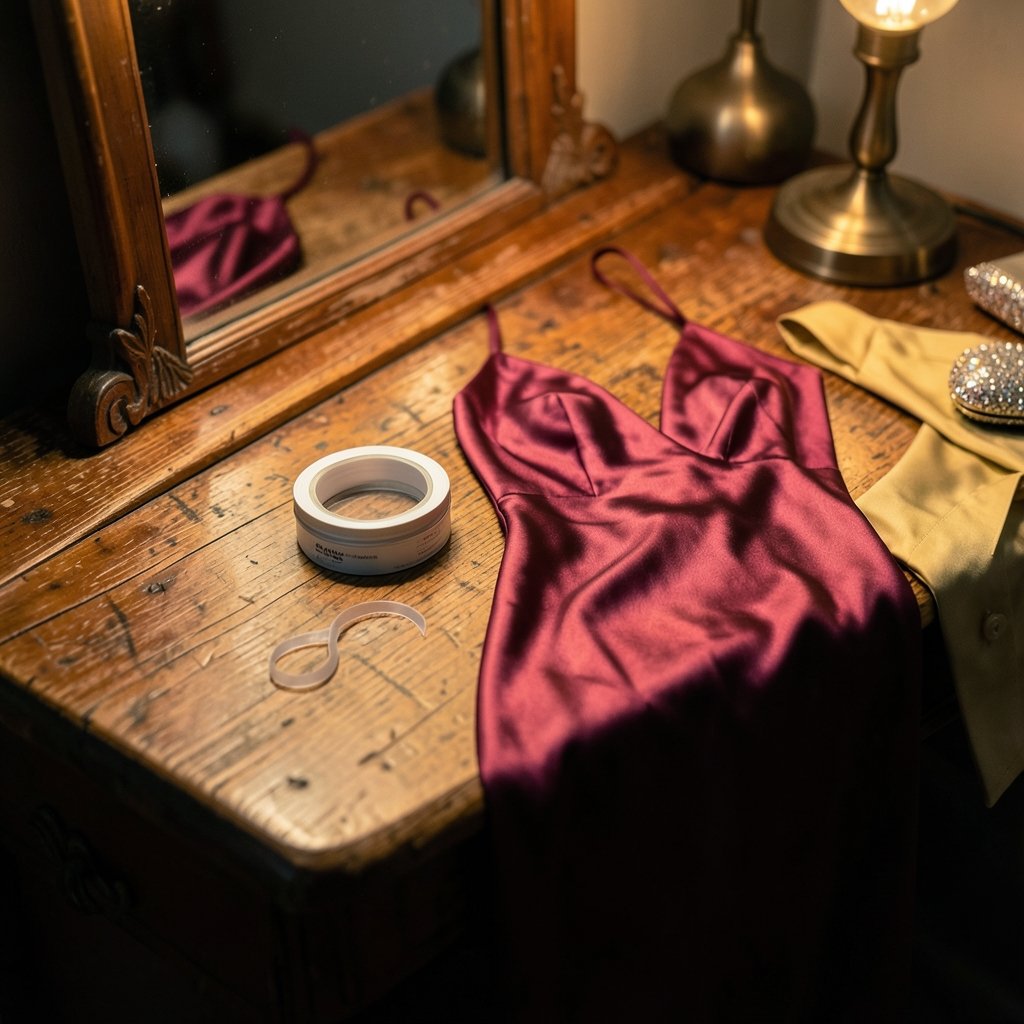
What do you do when a neckline plunges lower than planned, a strap slides off your shoulder mid-wedding, or a wrap dress decides to unwrap itself at the worst possible moment? For a growing number of people, the answer lives in a tiny box in a handbag: fashion tape. This double-sided skin-safe adhesive has quietly become one of the most practical tools in getting dressed, and it costs less than a coffee in most cities. Yet plenty of people still buy the wrong kind, apply it badly, or expect it to do jobs it was never built for. Here’s what actually works, what doesn’t, and how to use it without wrecking your skin or your clothes.
What Is Fashion Tape, Exactly?
Fashion tape is a thin strip of double-sided adhesive designed to bond fabric to fabric, or fabric to skin, temporarily. It is sometimes called body tape, clothing tape, hem tape (though true hem tape is usually iron-on and permanent), or wardrobe tape. The version most people mean is a narrow roll or pre-cut strip with a peel-off backing, coated with a medical-grade or skin-safe acrylic adhesive on both sides.
The concept is simple: one side grips the garment, the other grips your skin or a second layer of fabric. When you’re done, you peel it off. Nothing is sewn, pinned, or glued permanently. It’s the same basic idea as double-sided office tape, refined for something far more delicate than paper: human skin and expensive fabric.
Fashion tape sits in a category of wardrobe problem-solvers that also includes silicone nipple covers, strap clips, and anti-slip shoulder pads. What sets it apart is versatility. A single roll can fix a gaping button placket, hold a sock-free trouser hem through a long evening, and keep a wrap top closed through dinner. That range is why it survives year after year while trendier gadgets fade. Even as silhouettes shift, as covered in the 2026 fashion trends guide, the underlying need for hidden structural help never goes away.
The Real-World Jobs Fashion Tape Does Well

Fashion tape shines in specific, predictable situations. It is not a miracle product, and treating it like one leads to disappointment. Here is where it genuinely earns its place.
Closing gaps and necklines
A plunging neckline that gaps when you lean forward, a button-down that pulls open across the chest, or a blazer lapel that won’t lie flat. A short strip on the inside edge, pressed to skin, holds the line. This is the single most common use and the one people report the most success with.
Keeping straps and shoulders in place
Boat necks, off-shoulder tops, and slippery satin straps love to migrate. A small piece of tape under the strap, anchored to the shoulder, stops the slide. It works best on skin that is clean and dry, not on top of lotion or deodorant.
Temporary hems and quick fixes
A fallen hem before an event, a too-long sleeve, or a skirt that needs an inch taken up for one night. Tape can hold a folded hem for hours, though it is a stopgap, not a repair. Anyone who has watched a hem drop mid-reception knows the difference.
Holding wrap tops and overlapping layers
Wrap dresses and tops depend on tension to stay closed, and tension fails when you sit, move, or dance. A few discreet strips along the overlap keep everything where it belongs.
What Fashion Tape Cannot Do
Honest expectations matter more than marketing claims. Fashion tape fails, or should never be used, in several clear cases.
- Heavy fabrics under strain. Tape holds light to medium fabrics. A thick wool coat or a heavy beaded gown needs tailoring, not adhesive.
- Damp or oily skin. Sweat, lotion, and body oil break the bond. If you’re dancing hard or in heat, expect shorter wear time.
- Delicate or antique textiles. Silk, lace, and loosely woven vintage pieces can be damaged when tape is removed, especially if the adhesive grabs fibers.
- Long-term structural fixes. Tape is temporary by design. It is not a substitute for a tailor.
There is also the skin question. Adhesive allergies are real, and repeated use on the same spot can irritate. Sensitive-skin users should patch-test on the inner arm first, and nobody should leave tape on for a full day and night. If a garment needs serious structural help, the honest answer is often a tailor, not a strip of tape.
How to Apply Fashion Tape So It Actually Sticks
Most complaints about fashion tape trace back to application, not the product. A few habits separate a tape that holds all night from one that gives up in twenty minutes.
- Start with clean, dry skin. Apply after showering but before moisturizer, deodorant, or body oil. If you must use product, tape first, then apply around it.
- Prep the fabric. Smooth the garment flat. Wrinkles and folds create air pockets that weaken the bond.
- Cut to size. Longer isn’t better. A strip slightly shorter than the gap you’re closing holds better than an oversized piece that bunches.
- Press and hold. Apply one side to the fabric, peel the backing, then press the garment to skin and hold for several seconds. Friction and body heat activate the adhesive.
- Test the range of motion. Sit, bend, and reach before you leave the house. If it pulls or lifts, redo it now, not in the bathroom at the venue.
- Remove slowly and gently. Peel parallel to the skin, not straight up, and support the skin with your other hand. Warm water helps loosen stubborn adhesive.
A common mistake is applying tape to the outside of a garment by accident, or sticking both sides to fabric and wondering why nothing holds. Another is reusing a strip. Once peeled, the adhesive is spent. Treat tape as single-use.
Choosing the Right Tape: A Practical Comparison
Not all fashion tape is the same. The differences matter more than the packaging suggests, and price is a weak guide to quality.
| Feature | What to look for | Why it matters |
|---|---|---|
| Adhesive type | Skin-safe, medical-grade acrylic | Lower irritation risk; holds through movement |
| Width | Narrow strips for straps, wider for necklines | Right size means less bunching and better grip |
| Backing | Easy-peel paper backing | Saves time and prevents accidental sticking |
| Format | Pre-cut strips or a roll with a cutter | Strips for travel, rolls for regular use |
| Residue | Low-residue, water-soluble | Easier removal, less fabric damage |
| Skin suitability | Labeled sensitive-skin or hypoallergenic | Fewer reactions on delicate areas |
For occasional users, pre-cut strips are the friendlier buy. For people who dress up often, a roll with a built-in cutter is more economical and lets you size each piece. Either way, check the label for skin-safety claims and test on a hidden patch of fabric before trusting a new brand on a favorite dress.
Fashion Tape, Fast Fashion, and the Styling Economy
Fashion tape’s rise tracks a broader shift in how people dress. As Italian luxury fashion and high-street labels alike push more dramatic necklines, cutouts, and slip silhouettes, the gap between a runway look and a wearable one widens. Tape closes that gap cheaply. It lets a bold design work in real life without alterations that cost more than the garment.
The same logic applies to the resale and rental boom. When you borrow or buy secondhand, fit is rarely perfect. Tape is a low-risk way to make a borrowed dress behave. It also fits the broader mood of fashion trends 2026, where personal styling and adaptability matter more than rigid rules. People want clothes that work for their bodies and their plans, and small tools like tape make that possible.
There’s a cultural layer, too. The way runway moments get translated for everyday wear has always involved invisible helpers, from pins to tape. Illustrators and stylists who document that translation, like the work of Angelica Hicks turning runway moments into illustrations, capture the fantasy. Tape is part of the unglamorous reality behind it. The 2026 fashion trends for women lean toward layered, body-conscious shapes, which means more demand for discreet fixes. And the 2010s athleisure and streetwear wave that Instagram rewrote taught a generation to style for the camera. Tape is the backstage tool that makes the photo work.
Common Mistakes and Smart Habits
Beyond application errors, a few habits trip people up repeatedly.
Buying on price alone. Cheap tape often uses weaker adhesive that fails fast. A mid-priced, skin-safe brand usually outperforms the bargain bin.
Ignoring fabric type. Tape behaves differently on cotton, satin, chiffon, and knit. Test on an inside seam first, especially with anything delicate or dark-colored, where residue shows.
Over-taping. More strips don’t mean more hold. Too much tape can bunch, pull, and become visible. Use the minimum that does the job.
Forgetting removal. Leaving tape on overnight or through a long, sweaty day raises irritation risk. Remove it when the event ends.
Skipping the patch test. A tiny test on the inner arm or a hidden hem takes seconds and prevents a red, itchy surprise.
Not carrying spares. Tape fails under heat and movement. A small backup strip in a bag has saved more evenings than most people admit.
When to Skip Tape and See a Tailor
Tape is a bridge, not a foundation. If a garment gaps every time you wear it, the fit is wrong. If a hem falls repeatedly, the stitching is failing. If a neckline needs tape every single outing, the piece likely needs an alteration. A tailor can fix these issues permanently for a modest cost, and the result is more comfortable and more reliable than any adhesive.
The smart approach is to treat tape as part of a wardrobe toolkit alongside safety pins, a lint roller, and a sewing kit. It handles the temporary, the unexpected, and the borrowed. It doesn’t replace good fit. Knowing the difference is what separates people who love fashion tape from people who curse it.
Conclusion
Fashion tape is one of those small, unglamorous products that quietly solves a real problem. It won’t rescue a badly fitting gown or survive a mosh pit, but used with clean skin, the right strip size, and realistic expectations, it holds necklines, straps, hems, and wraps through long days and late nights. The rules are simple: prep the skin, test the fabric, press firmly, carry a spare, and remove gently. Buy skin-safe tape, skip the bargain bin, and know when the honest answer is a tailor instead. Master those basics and the tiny box in your bag becomes one of the most useful things you own.
Frequently Asked Questions
How long does fashion tape last?
Most skin-safe fashion tape holds for several hours under normal conditions, roughly four to eight depending on heat, sweat, and fabric weight. Movement and humidity shorten wear time. Carry a spare strip for long events.
Is fashion tape safe for sensitive skin?
Skin-safe, medical-grade adhesive tape is designed to be gentle, but reactions can still happen. Patch-test on the inner arm first, avoid broken or irritated skin, and never leave tape on overnight. Anyone with known adhesive allergies should skip it.
Can fashion tape damage clothes?
It can, particularly on delicate silks, lace, and loosely woven or vintage fabrics. Residue and adhesive grip can pull fibers. Always test on a hidden inside seam first, and remove tape slowly and parallel to the fabric.
What’s the difference between fashion tape and hem tape?
Fashion tape is temporary double-sided adhesive for skin and fabric. Hem tape is usually iron-on and permanent, used for actual hemming. Don’t confuse the two; iron-on tape can leave stiff residue and isn’t meant for skin contact.
Does fashion tape work on all fabrics?
It works best on light to medium-weight fabrics like cotton, satin, and blends. Heavy fabrics, thick knits, and heavily textured materials resist adhesion. Very slippery synthetics may need extra prep or a different fix.
Can I make fashion tape at home?
Some people use double-sided garment tape or medical tape as a substitute, but household options aren’t formulated for skin and may irritate or fail. Purpose-made fashion tape is inexpensive and safer, so it’s worth buying the real thing.














