

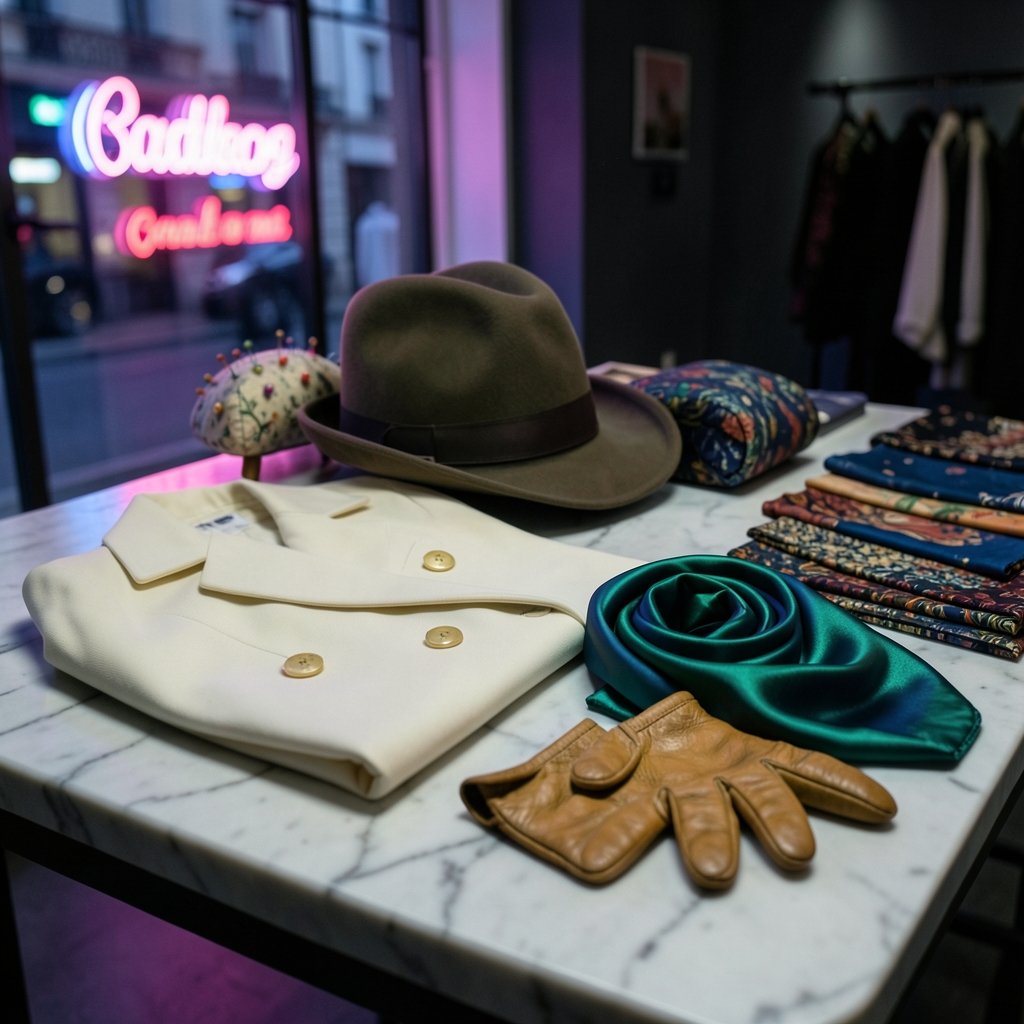
What makes a garment feel unmistakably French? Is it the cut of a blazer, the way a silk scarf sits at the neck, or something less tangible — a certain refusal to try too hard? French fashion has shaped how the world dresses for more than 150 years, and it remains one of the few national styles that people recognize before they can name what they are looking at. This article looks at where that style came from, how the industry is actually structured, and what anyone can borrow from it without a Paris budget.
The Birth of an Industry, More Than a Look
French fashion did not begin as a matter of taste. It began as a legal and commercial system. The Chambre Syndicale de la Couture Parisienne was founded in 1868 to organize and regulate the city’s couture houses, and it still exists today as part of the Fédération de la Haute Couture et de la Mode. That body decides which houses appear on the official show calendar — a gatekeeping role that has no real equivalent in most other fashion capitals.
The man often credited with inventing the modern couture model was not French at all. Charles Frederick Worth, an Englishman working in Paris, established his house in 1858. He is widely credited with the practice of showing designs on live models and letting clients choose from a collection rather than dictating a single made-to-measure garment. In other words, the fashion show and the seasonal collection — two ideas the whole industry now runs on — took shape in Paris.
The term haute couture itself is legally protected in France. A 1945 decree, updated since, sets out criteria that houses must meet to use the label, including making garments to order for private clients and maintaining a minimum staff. The exact thresholds have shifted over time, so treat any specific number you read online with caution. What matters is the principle: in France, couture is a regulated designation, not a marketing word.
Why the French Wardrobe Feels Effortless

Ask people what they admire about French style and the word that comes up most is “effortless.” That reputation is partly myth, but it is built on a few practical habits that are genuinely easy to copy.
The first is restraint in color. A French wardrobe tends to run on navy, black, cream, camel, and grey, with one accent color doing the emotional work. This is not a rule anyone wrote down, but it explains why so many French outfits photograph well: there is nothing competing for attention.
The second is fit over trend. A well-cut coat in a plain fabric will outlast three trend pieces. French shoppers tend to spend more per item and buy fewer items, which is why the same silhouettes — the trench, the straight-leg jean, the ballet flat, the structured bag — keep reappearing decade after decade.
The third is one deliberate imperfection. A shirt half-tucked, a sleeve pushed up, hair that looks unstyled. The goal is to look like you dressed quickly and well, not like you were styled by a team. That single detail is often what separates a French look from a costume version of one.
If you want a modern reference point for how these habits translate into current collections, the shift toward quieter, better-made pieces is one of the clearest signals in the 2026 fashion trends guide, which tracks what is actually being worn rather than what is only on the runway.
The Moments That Changed the Silhouette
French fashion history is usually told through a handful of turning points, and each one changed what ordinary people wore as well as what models wore.
| Year | Moment | Why It Mattered |
|---|---|---|
| 1858 | Worth opens in Paris | Established the designer house and the seasonal collection |
| 1868 | Chambre Syndicale founded | Turned couture into a regulated profession |
| 1947 | Dior’s New Look | Nipped waist and full skirt reset postwar proportions |
| 1966 | Saint Laurent’s Le Smoking | A tuxedo tailored for women; blurred gendered dress codes |
| 1973 | Fédération formed | Merged couture and ready-to-wear under one body |
Christian Dior’s New Look, shown in February 1947, is the most cited collection in French fashion history. After years of wartime fabric rationing and boxy shoulders, Dior sent out jackets with a nipped waist and skirts using yards of material. The reaction was immediate and polarizing — some women protested the amount of fabric, others queued to order it. Either way, the silhouette of the 1950s was set in Paris.
Nearly twenty years later, Yves Saint Laurent’s Le Smoking (generally dated to 1966) put a woman in a tailored tuxedo. It was not the first time menswear had been adapted for women, but it was the version that stuck, and it turned a garment into an argument about who gets to wear what.
The 1973 merger that created the modern Fédération de la Haute Couture et de la Mode tells its own story. By combining the couture body with the ready-to-wear designers’ chamber, the French industry formally acknowledged that commercial power had moved from made-to-measure to off-the-rack. Couture became the laboratory; ready-to-wear paid the bills.
Paris Fashion Week and the “Big Four” Framing
Paris Fashion Week runs under the Fédération’s official calendar, which lists couture and ready-to-wear shows separately. Paris is routinely grouped with New York, London, and Milan as one of the “Big Four” fashion weeks. That label is an industry convention rather than an official classification — nobody governs it — but it reflects a real hierarchy in press attention and buyer attendance.
What distinguishes Paris from the other three is the presence of couture on the schedule. Milan and New York are commercial powerhouses; Paris is where the craft showcase sits alongside the business. That combination is why so many designers still treat a Paris slot as the definitive validation of a career.
The city’s influence also runs through image-making. Illustrators and photographers have long translated runway moments into a visual language that travels further than the clothes themselves — a process explored in this look at how Angelica Hicks turns runway moments into drawings that reach people who will never attend a show.
Luxury, Law, and the Business of Looking French
France protects its fashion industry in ways that are easy to overlook. Designs and trademarks fall under the French intellectual property code and EU-wide trademark and design law, which is why counterfeiting a French luxury logo is treated as a serious commercial offense rather than a minor nuisance. The system exists because the value of a French brand sits largely in its name and its recognizable shapes.
That legal armor matters more than it might seem. A trench coat is a trench coat, but a specific checked lining, a particular clasp, or a registered silhouette can be protected. This is also why French houses guard their archives so carefully: the archive is the legal and creative asset.
It is worth being precise about economics here. The French fashion and luxury sector is unquestionably a major export industry, but reliable, current figures for its share of GDP or exports should always be traced to a named statistical source and a stated reference year. Numbers circulate widely online without either. If a statistic matters to your argument, check where it came from before repeating it.
Beauty and fragrance sit inside the same ecosystem. French perfumery has its own regulatory and craft traditions, and the way a house builds a scent — high concentration, slow development, a story attached — mirrors how it builds a garment. For a sense of how that world operates, this piece on a French house’s high-concentration perfume approach is a useful window into the logic.
What People Get Wrong About French Style
A few persistent mistakes show up whenever someone tries to adopt a French look and ends up with something closer to a costume.
Buying the symbols instead of the structure. A beret, a striped shirt, and a red lip do not make an outfit French. The foundation is a good coat, well-fitting trousers, and shoes you can actually walk in. Accessories come last, not first.
Confusing minimal with plain. French minimalism is not an absence of detail. It is one excellent detail — a strong shoulder, a contrast stitch, a slightly oversized cuff — allowed to be the only thing happening.
Ignoring maintenance. Tailoring, shoe repair, and careful washing are not glamorous, but they are why French wardrobes look expensive for years. A cheap coat that fits perfectly beats an expensive one that does not.
Over-accessorizing. The instinct when dressing up is to add. The French instinct is usually to remove one thing before leaving the house.
Assuming it requires money. The habits — fewer pieces, better fit, restrained color — cost nothing extra. They simply require deciding before you shop.
How French Codes Travel Into Nails, Makeup, and Detail
French style has always exported its details as effectively as its garments, and the modern version of that is the manicure. The French tip — a nude or sheer base with a crisp white edge — is arguably the most recognized beauty export in the world, and it keeps being reinvented. The current iteration is thinner and subtler than the 1990s version, and it works precisely because it looks deliberate but not labored. If you want to try it, these pink French tip nail designs and DIY tips show how the color swap changes the whole effect, while the micro version is covered in this guide to micro French tips for anyone who prefers a hairline edge.
The same logic applies to language and beauty. The phrase “French girl” has become shorthand for a whole aesthetic, and it is worth knowing that the term is slippery — a point made well in this piece on what “French-looking” really means, which unpacks how the phrase gets used and misused.
And for the broader context of how French and Italian houses are shaping the current season, this collection of coverage on Italian luxury fashion is a useful counterpoint. The two industries compete, borrow from each other, and define themselves in opposition — French restraint against Italian exuberance is a simplification, but a revealing one. For a wider view of where womenswear is heading, the 2026 fashion trends female roundup covers the silhouettes and colors gaining ground.
Conclusion
French fashion endures because it is a system as much as a style. A regulatory body founded in 1868 still decides who shows in Paris. A 1945 decree still governs who may call a garment haute couture. A handful of postwar collections — the New Look, Le Smoking — reset the silhouette for everyone else. And underneath all of that sits a set of habits anyone can adopt: buy fewer things, buy them well, keep the colors quiet, and let one detail do the talking.
You do not need a Paris address to dress this way. You need a good coat, a tailor you trust, and the discipline to take one thing off before you walk out the door.
Frequently Asked Questions
What exactly is haute couture?
Haute couture is a legally protected designation in France, not a general term for expensive clothing. A 1945 decree, updated since, sets criteria that houses must meet to use the label, including making garments to order for private clients and maintaining a minimum staff. The Chambre Syndicale de la Haute Couture, founded in 1868, governs which houses qualify. Because the specific thresholds have changed over time, any exact staff number should be checked against a current official source.
Who founded French fashion as we know it?
Charles Frederick Worth, an Englishman working in Paris, is widely credited with establishing the modern couture system. He opened his Paris house in 1858 and popularized showing designs on live models so clients could choose from a collection. The Chambre Syndicale de la Couture Parisienne was founded a decade later, in 1868, to organize and regulate the city’s couture houses.
What is the difference between couture and ready-to-wear?
Couture is made to order for a private client, largely by hand, and is regulated by French law. Ready-to-wear is produced in standardized sizes for general sale. The commercial balance shifted decisively toward ready-to-wear in the twentieth century, and the 1973 creation of the Fédération de la Haute Couture et de la Mode formally merged the couture and ready-to-wear bodies under one organization.
Why is Paris considered one of the “Big Four” fashion weeks?
Paris is grouped with New York, London, and Milan as one of the four most important fashion weeks, a framing widely used across the industry. It is a convention rather than an official classification. What sets Paris apart is that its official calendar, published by the Fédération, includes couture shows alongside ready-to-wear, making it both a craft showcase and a commercial marketplace.
What was the New Look and why does it matter?
The New Look was Christian Dior’s February 1947 collection, defined by a nipped waist and a full skirt. It arrived after years of wartime fabric rationing and immediately reset the proportions of womenswear. The collection was controversial at the time — some women objected to the volume of fabric required — but it became the defining silhouette of the 1950s and remains a standard reference point in fashion history.
Can you dress in a French style on a normal budget?
Yes, because the defining habits are about selection rather than price. Buying fewer pieces, choosing restrained colors, prioritizing fit, and maintaining what you own all cost nothing extra. The common mistake is buying the symbols — a beret, a striped shirt — instead of building the foundation: a well-fitting coat, trousers that break correctly, and shoes you can walk in. A cheap coat that fits perfectly will always outperform an expensive one that does not.














