

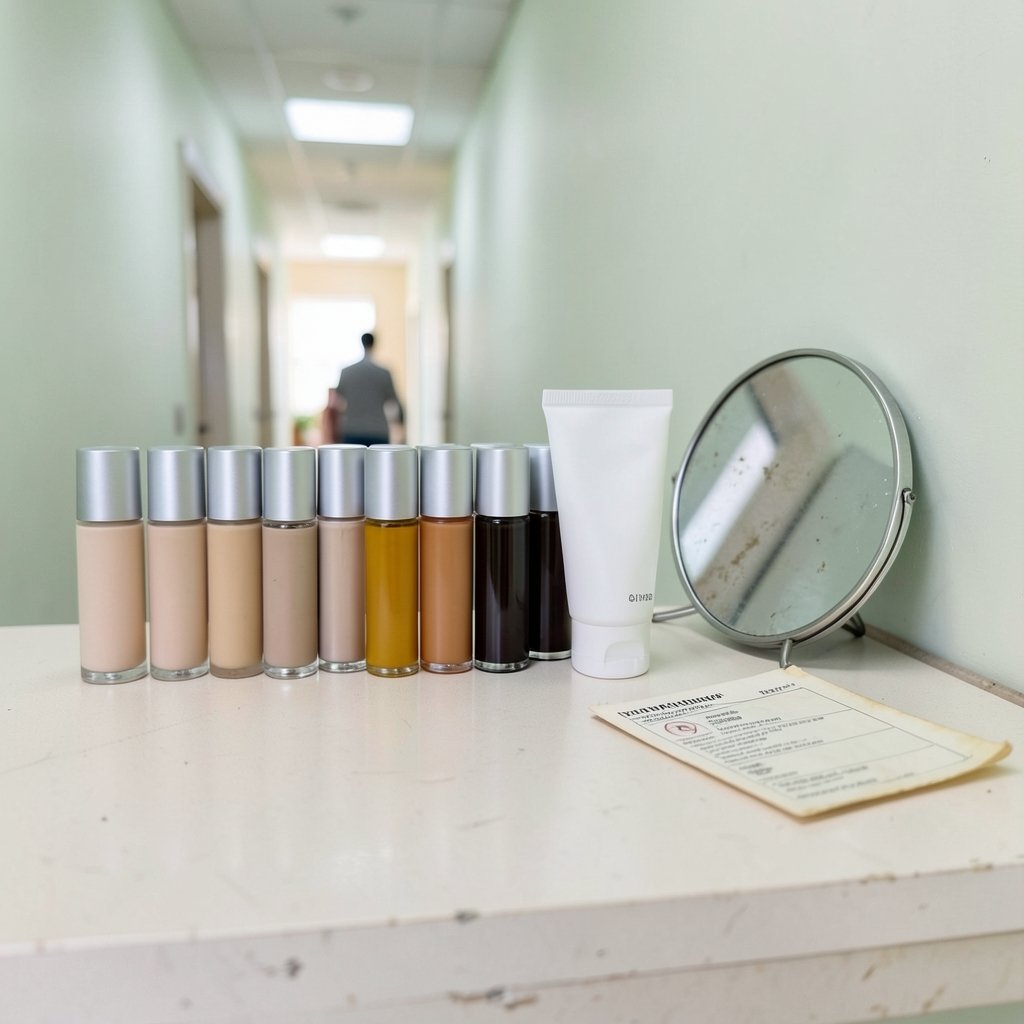
What does someone mean when they say “French skin tone“? Do they mean the foundation shades sold in Paris pharmacies? A dermatology chart used in French clinics? Or a demographic idea about what French people look like? The truth is that the phrase carries at least three different meanings, and mixing them up leads to bad beauty advice and shaky assumptions. This guide untangles the term, explains the science behind it, and gives practical guidance for anyone shopping, matching, or protecting skin in a French context.
Why “French Skin Tone” Is a Confusing Phrase
The phrase is ambiguous, and it helps to say so up front. In everyday beauty conversation, it usually refers to the shade ranges sold in France and the way French brands describe undertones. In a clinical setting, it points to the Fitzpatrick scale, known in French as the phototype de Fitzpatrick, which dermatologists use to estimate how skin reacts to the sun. In public health, it connects to skin cancer risk data collected in France.
There is also a caution worth stating plainly: no single authoritative French source defines “French skin tone” as an official concept. France does not classify people by skin color in official statistics, and French law places strict limits on collecting ethnic or racial data. So when a brand or a magazine talks about “French skin,” it is describing a market or a look, not a scientific category. Keep that distinction in mind, and most of the confusion disappears.
The Fitzpatrick Scale: The Real Scientific Framework

The most useful way to talk about skin tone in any country is the Fitzpatrick scale. Proposed in 1975 by dermatologist Thomas B. Fitzpatrick, it sorts skin into six phototypes, from I to VI, based on two questions: how easily do you burn, and how well do you tan? It was originally designed to guide dosing for light therapy, not to describe beauty or ethnicity.
| Phototype | Typical sun response | Burn risk |
|---|---|---|
| I | Always burns, never tans | Very high |
| II | Usually burns, tans poorly | High |
| III | Sometimes burns, tans gradually | Moderate |
| IV | Rarely burns, tans easily | Low |
| V | Very rarely burns, tans deeply | Very low |
| VI | Almost never burns | Lowest |
Two things about this scale matter for anyone using the phrase “French skin tone.” First, phototype is about sun response, not about how light or dark someone looks. A person can have a deeper complexion and still burn easily. Second, the scale has a known weakness: it was developed with lighter-skinned patients in mind, and dermatology literature widely notes that it under-represents darker skin. That limitation matters because skin cancer can look different on deeper skin tones, and delayed diagnosis is a real risk.
In French clinics, the phototype is a routine part of sun-protection advice. If you know your phototype, you know roughly how much caution you need: phototypes I and II need the most vigilance, while V and VI need less concern about burning but still need attention for pigmentation issues and other skin conditions.
What French Beauty Counters Actually Sell
Walk into a French pharmacy and you will see a shade range that reflects the country’s population: plenty of light and medium tones, a growing but still limited selection of deeper shades, and a strong tradition of products built around undertone rather than depth alone. French brands often describe skin as having a cool, neutral, or warm undertone, and they lean heavily on words like clair (light), médium, and foncé (dark).
Here is the honest part: shade availability is a commercial decision, not a legal one. Cosmetics sold in France fall under EU Regulation 1223/2009, which has applied since July 2013 and governs safety, labeling, and claims. It says nothing about how many shades a foundation must offer. So when a French brand launches twelve shades instead of forty, that is a business choice, and consumers are free to vote with their wallets. French media have periodically discussed limited shade ranges and the push for more inclusive beauty, but those are journalistic debates, not official standards.
A practical tip from experience: French foundations are often formulated with a slightly neutral-to-warm lean, which suits many Mediterranean and mixed-heritage complexions but can look ashy on very cool undertones. If you are matching a foundation in a French pharmacy, test on the jawline in daylight, not under the store’s warm bulbs. Ask for a sample. Counter lighting flatters everything and lies about most things.
Skin Tone and Sun Protection in France
France takes sun protection seriously, and for good reason. Skin cancer incidence, including melanoma, has been rising in the country, and risk is strongly tied to fair phototypes. Public health messaging keyed to phototype is standard: shade, clothing, hats, and sunscreen with high SPF, reapplied through the day.
If you want the full playbook on enjoying the sun without paying for it later, the guidance on sun protection and tanning without wrecking your skin covers timing, SPF levels, and the mistakes people make on holiday. Sensitive or reactive skin needs an extra layer of thought, and a gentle daily formula such as the one reviewed in this piece on EltaMD UV Clear SPF 46 for sensitive skin is worth understanding before you commit.
One common mistake deserves a direct callout: people with deeper phototypes often skip sunscreen because they believe they cannot burn. They can, and more importantly, UV exposure drives hyperpigmentation and uneven tone, which is a top concern in dermatology for darker skin. The French clinical literature on dermatologie sur peau noire is clear that scarring, pigmentation disorders, and skin cancer presentation differ on deeper skin, which is exactly why “I don’t burn” is not a sun-care plan.
Matching Makeup to French Skin Tone Descriptions
If you are trying to decode French beauty language, a few translations help. Beige rosé suggests cool pink undertones. Beige doré points warm and golden. Sable sits neutral. These are not precise scientific terms, but they are consistent enough to shop by once you know your own undertone.
Here is a process that works better than guessing:
- Determine your undertone in indirect daylight by looking at the veins on your wrist and the overall cast of your bare face.
- Decide your depth category first, then your undertone. Most matching errors happen because people pick the right depth but the wrong undertone.
- Test three shades along the jaw and let them sit for ten minutes. Oxidation changes everything.
- Check the match in natural light before buying, and always ask for a sample in a French pharmacy. Staff expect it.
The same undertone logic applies to color choices elsewhere. If you are experimenting with polish, the shade principles in this green nails guide with shades and skin tone advice translate directly to how colors read against warm, cool, and neutral complexions. Hair follows the same rules: the breakdown of auburn hair shades and which skin tones they suit is a useful model for thinking about warmth and contrast.
Common Mistakes People Make With Skin Tone Labels
A few habits cause most of the trouble. The first is treating “French skin tone” as if it describes one look. France is one of the most diverse countries in Europe, and its beauty market reflects that more every year. The second is confusing phototype with complexion. Sun response and skin depth are related but not the same thing, and conflating them leads people to underestimate their burn risk or overestimate how much pigment protection they have.
The third mistake is trusting store lighting. The fourth is assuming a higher SPF means you can skip reapplication, which it does not. And the fifth is buying into the idea that French pharmacy brands are automatically gentler. They are regulated to the same EU standard as everything else sold in Europe, no more and no less.
A quieter mistake is ignoring how much skin tone shifts across the year. A shade that matches in February can be two steps off by August. If you spend time outdoors, re-check your base shade seasonally rather than assuming last year’s bottle still works.
Practical Takeaways for Shopping and Skin Care
For anyone navigating French beauty counters or French dermatology advice, a simple framework helps. Know your phototype for sun protection. Know your undertone for color matching. Treat shade ranges as a market signal, not a verdict on your worth or your options. And remember that official French data does not sort people by skin tone, so any claim that “the French” have a particular skin tone is a generalization, not a fact.
If you are building a routine around your complexion, start with sun protection, because it protects everything else you are trying to achieve. Then get the base right. Then have fun with color, whether that is a soft milky white French tip or a bolder pink French tip design with DIY tips for doing it at home. The micro versions of the classic manicure, covered in this collection of micro French tip ideas, are a good example of a trend that flatters nearly every skin tone because the line is thin and the contrast is low.
Conclusion
“French skin tone” is not a scientific term, and treating it like one causes real problems: mismatched foundation, skipped sunscreen, and lazy assumptions about who lives in France. The useful version of the concept is narrower. Use the Fitzpatrick scale to understand your sun response. Use undertone language to shop smarter at French counters. Use public health guidance to protect your skin, whatever your phototype. And keep a healthy skepticism about any phrase that claims to describe a whole nation’s skin in one breath. France is diverse, its beauty market is changing, and your own skin deserves advice built around it specifically, not around a label.
Frequently Asked Questions
What is the Fitzpatrick scale and why does it matter?
The Fitzpatrick scale is a six-type classification of skin phototype created in 1975 by dermatologist Thomas B. Fitzpatrick. It sorts skin by how it responds to sun exposure, from type I (always burns) to type VI (almost never burns). It matters because it guides sun-protection advice and helps people understand their personal burn risk, though it was designed with lighter skin in mind and is known to under-represent darker complexions.
Is there an official definition of “French skin tone”?
No. No single authoritative French source defines “French skin tone” as a formal concept. France does not classify people by skin color in official statistics, and French law strictly limits the collection of ethnic and racial data. When the phrase appears, it usually refers to cosmetic shade ranges, dermatology phototypes, or general commentary, not an official category.
Does French law require makeup brands to offer a wide range of shades?
No. Cosmetics sold in France fall under EU Regulation 1223/2009, which covers safety, labeling, and product claims. It does not set any requirement for how many shades a foundation or concealer line must include. Shade range is a commercial decision made by each brand, which is why ranges vary so much between companies.
Why do people with darker skin still need sunscreen in France?
Because UV exposure causes damage regardless of melanin levels. While deeper phototypes burn less easily, UV still drives hyperpigmentation, uneven tone, and skin aging, and skin cancer can present differently and later on darker skin. French clinical literature on dermatology for darker skin emphasizes these differences, which is why daily sun protection remains important for everyone.
How do I match foundation at a French pharmacy?
Match depth first, then undertone. Test three shades along your jawline in indirect daylight, not under store bulbs, and let them sit for about ten minutes to see how they oxidize. Ask for samples, since pharmacy staff expect it, and recheck your shade seasonally because skin tone shifts with sun exposure across the year.
What do French makeup terms like beige rosé and beige doré mean?
They describe undertone. Beige rosé suggests a cool, pink-leaning undertone, while beige doré points to a warm, golden one. Neutral descriptors like sable sit in between. These are marketing terms rather than scientific labels, but they are used consistently enough that knowing your own undertone makes them genuinely useful when shopping.









