

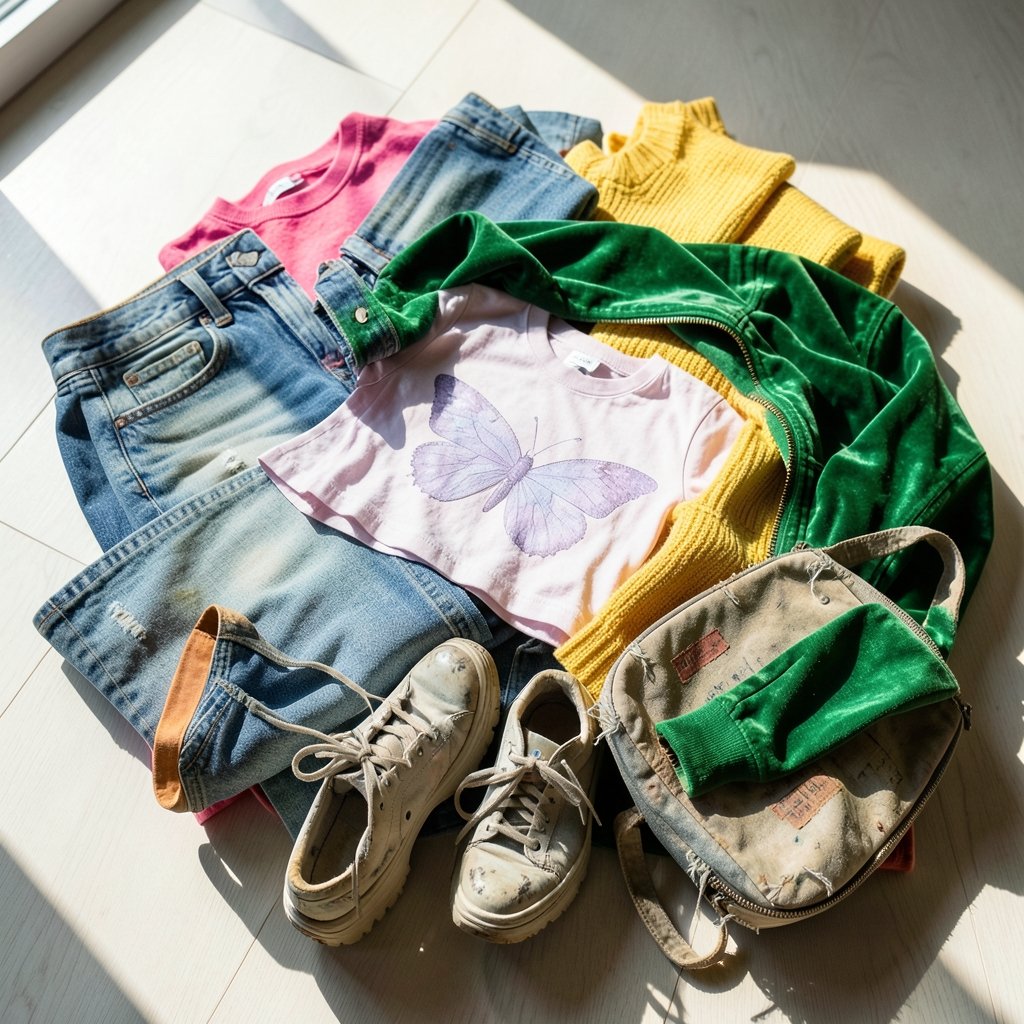
What happens when a generation grows up with a phone in one hand and a thrift bag in the other? That is the story of Gen Z fashion, and it looks nothing like the runway-to-mall pipeline that shaped their parents’ wardrobes. Born roughly between 1997 and 2012, this cohort came of age during a financial crash, a climate conversation, and a pandemic. Every one of those forces left a mark on how they dress.
The result is a style culture that moves faster than any trend cycle before it, borrows freely from decades it never lived through, and argues constantly with itself about whether buying more clothes is even acceptable. Here is what actually defines it, what drives it, and where the real tension sits.
What Counts as Gen Z Fashion?
Start with the boundaries. Generational labels are conventions, not official categories, and the 1997 to 2012 window is a working definition rather than a rule set in stone. What matters more is the shared experience: smartphones arriving in childhood, social media as the default social space, and an economy that made home ownership feel distant.
That context produces a distinct fashion identity. Gen Z style tends to be:
- Fast-moving. Trends can rise and die within weeks rather than seasons.
- Reference-heavy. Y2K, 90s minimalism, and 2010s athleisure all get recycled and remixed.
- Peer-curated. Discovery happens through feeds and group chats, not magazine spreads.
- Values-aware. Sustainability gets talked about constantly, even when behavior lags behind.
- Fluid. Rigid menswear and womenswear divisions matter far less than they did a decade ago.
The look itself is hard to pin down because it is deliberately plural. A single Gen Z wardrobe might hold low-rise jeans, an oversized gorpcore shell, a cropped baby tee, and a secondhand blazer. That mix is not indecision. It is the point.
The Y2K Revival and the Rise of Micro-Aesthetics

Around 2020 to 2022, the Y2K revival became the defining Gen Z aesthetic. Low-rise jeans came back. So did baby tees, velour tracksuits, butterfly motifs, and the whole glossy, slightly chaotic visual language of the early 2000s. Fashion press documented the shift extensively, though it is worth being clear: this is a trend observation, not a measured statistic. Nobody counted the butterflies.
What made this revival different was its speed and its fragmentation. Instead of one dominant look per season, the early 2020s produced a swarm of micro-aesthetics, each with its own name and hashtag. Cottagecore leaned rural and romantic. Gorpcore turned hiking gear into streetwear. Balletcore borrowed from dance studios. Barbiecore peaked around the July 2023 Barbie film and flooded feeds with hot pink.
These labels are largely social-media-driven, and there is no authoritative registry, so definitions shift depending on who is using them. That looseness is a feature. It lets people try on identities for a few months without committing. It also means the trend landscape is exhausting to track, which is why so many readers now look for a clear 2026 fashion trends guide rather than scrolling endlessly for signals.
TikTok Replaced the Runway as the Discovery Engine
For most of the twentieth century, fashion moved in one direction: designer to magazine to high street to shopper. Gen Z collapsed that pipeline. TikTok is widely credited as the main discovery engine for their fashion trends in the early 2020s, and the effect on timing has been dramatic. A silhouette can go from obscurity to sold out in a fortnight, then feel dated a month later.
It is worth being careful here. Hard causal data on TikTok’s influence is limited, so “widely credited” is the honest phrasing rather than “proven.” But the practical consequences are visible. Brands now design against micro-trends rather than seasonal calendars. Retailers watch comment sections for demand signals. And shoppers learn to recognize when a “viral” item is being pushed rather than discovered.
That last skill matters. A useful habit for anyone shopping the trend cycle: before buying an item you saw in a video, wait a week and see whether you still want it. Most viral pieces do not survive that test, and the ones that do tend to stay in rotation far longer.
Thrift, Resale and the Secondhand Economy
If one behavior separates Gen Z from older cohorts, it is resale. Secondhand shopping moved from budget necessity to style credential, and industry reports through 2023 projected the U.S. resale market roughly doubling by 2027. Those figures come from industry-commissioned research, so treat them as directional rather than neutral. Still, the cultural shift is real.
Thrift flipping, vintage sourcing, and resale apps turned shopping into a hunt. Finding a one-of-one piece carries more status than buying something everyone else already owns. The aesthetic payoff is obvious: a secondhand wardrobe looks less algorithmic.
Practical tips that actually work
- Check seams and labels first. Vintage pieces with intact construction outlast fast-fashion equivalents by years.
- Ignore sizing numbers. Measure a garment you already own and carry those measurements; vanity sizing across decades is wildly inconsistent.
- Shop off-peak. Weekday mornings at charity shops beat Saturday afternoons for fresh stock.
- Learn two or three brand labels. Knowing which vintage labels hold value stops you overpaying on resale platforms.
The common mistake is treating thrift as automatically sustainable. It is better than new production, but a closet full of unwworn secondhand impulse buys is still waste. Buying less, and buying deliberately, beats buying secondhand compulsively.
The Sustainability Gap Nobody Has Solved
Gen Z fashion contains a contradiction. Surveys consistently rank climate and sustainability as high priorities for this generation. Deloitte’s Gen Z and Millennial Survey editions through 2023 found environmental concern near the top of their list of worries. Yet fast fashion purchasing among younger shoppers remains high, with ultra-fast-fashion retailers growing rapidly in the early 2020s.
This is usually called the attitude-behavior gap, and it is a recurring finding rather than a puzzle to be solved. The reasons are mundane: price, convenience, size availability, and the social cost of repeating outfits. A student with a tight budget and a feed full of new drops faces a genuine conflict, and values do not always win.
Specific market-share figures for ultra-fast fashion vary widely by source and are contested, so be skeptical of any single number presented without a primary source. What is not contested is the tension itself. It shapes how Gen Z talks about clothes, and it explains the growing interest in capsule wardrobes, repair culture, and buying fewer, better pieces.
Gender Fluidity and the Blurred Wardrobe
Gender-fluid dressing is more normalized among Gen Z than among older cohorts. Oversized silhouettes, unisex lines, and the collapse of strict menswear and womenswear categories all reflect this. The trend is qualitative rather than quantitative, since survey data on the subject is thinner, but it is visible on the street and in retail assortments.
In practice, it shows up as shared shopping. A boxy blazer or a wide-leg trouser works across body types and presentations, which makes it commercially attractive as well as culturally meaningful. This is one reason so much contemporary Italian luxury fashion has leaned into relaxed, gender-neutral tailoring rather than sharply divided collections. The direction of travel is toward garments that do not require the wearer to pick a lane.
Athleisure, Gorpcore and Comfort as a Permanent State
Athleisure rose through the late 2010s and accelerated sharply during the pandemic years of 2020 and 2021, when comfort dressing became unavoidable. What started as a temporary adjustment hardened into a permanent expectation. Gen Z shoppers largely refuse to accept that looking good requires being uncomfortable.
Gorpcore pushed this further by making technical outdoor wear into fashion. Fleece, trail shoes, waterproof shells, and hiking trousers crossed over from trailheads to city streets. The label itself is press coinage rather than an industry standard, but the underlying shift is well documented: performance fabrics became everyday fabrics.
The 2010s laid much of this groundwork. As the decade’s athleisure, streetwear and Instagram culture rewrote the rules, the idea that comfort could be stylish stopped being controversial. Gen Z inherited that permission and pushed it further.
Gen Z Versus Previous Generations
The clearest way to see what changed is side by side.
| Dimension | Boomers and Gen X | Millennials | Gen Z |
|---|---|---|---|
| Trend discovery | Magazines, TV, stores | Blogs, early social, e-commerce | Short-form video, peer feeds |
| Trend lifespan | Seasons | Months | Weeks |
| Secondhand shopping | Budget necessity | Growing acceptance | Style credential |
| Brand loyalty | High | Moderate | Low, values-dependent |
| Gender in clothing | Sharply divided | Loosening | Largely fluid |
| Comfort priority | Secondary | Rising | Non-negotiable |
| Sustainability talk | Limited | Increasing | Constant, with a behavior gap |
The pattern is consistent: less loyalty, faster cycles, higher expectations around comfort and values, and far more willingness to mix high, low, and secondhand in one outfit.
What Actually Works in Practice
For anyone trying to dress in this register, a few approaches hold up better than chasing every micro-trend.
Build around three or four anchor pieces. A good jacket, one strong pair of trousers, a versatile shoe, and a layering piece cover most situations. Trends then become accents rather than foundations.
Buy the reference, not the replica. If you love Y2K, sourcing an actual vintage piece usually looks better and lasts longer than a fast-fashion imitation of one.
Watch the fabric content. Composition tells you more about longevity than branding does. A high synthetic blend pills and holds odor; natural fibers age better.
Keep a short list. A running note of gaps in your wardrobe stops impulse buys when a sale appears.
Ignore the pressure to be current. The most consistent style signal in Gen Z fashion is not novelty. It is confidence in a look you actually chose.
The biggest mistake people make is treating trend participation as identity. The second biggest is assuming sustainability and budget are incompatible. They are not, but resolving them takes more thought than adding to cart.
Where Gen Z Fashion Goes Next
The direction of travel is toward fewer, more considered purchases and more personal curation. Resale infrastructure keeps improving, which makes secondhand the default rather than the alternative. Gender-neutral design keeps expanding from niche to mainstream. And the trend cycle, while still fast, is producing fatigue that pushes shoppers toward durability.
For brands, the message is uncomfortable but clear: this generation rewards transparency and punishes pretense. For shoppers, the message is simpler. The tools are better than they have ever been, and the only real requirement is knowing what you actually wear.
Conclusion
Gen Z fashion is not one look. It is a set of behaviors: discovering trends in feeds, sourcing pieces secondhand, refusing to sacrifice comfort, and carrying a genuine but imperfect commitment to buying better. The Y2K revival and the swarm of micro-aesthetics get the headlines, but the durable shift is structural. The runway lost its monopoly on taste. Thrift became a flex. And a generation that grew up being sold to constantly learned to be skeptical of the pitch.
That skepticism is the real legacy. Whatever the fashion trends 2026 cycle delivers, the underlying rules are unlikely to revert. Fast, plural, values-aware, and deeply practical: that is Gen Z style, and it is already shaping what everyone else wears.
What age group is Gen Z?
Gen Z generally refers to people born roughly between 1997 and 2012. These boundaries are conventions used by researchers and marketers rather than an official definition, and different organizations sometimes shift them by a year or two. What unites the cohort is not a birth year but a shared environment: smartphones in childhood and social media as the default social space.
Why is Y2K fashion so popular with Gen Z?
The Y2K revival took hold around 2020 to 2022, bringing back low-rise jeans, baby tees, velour, and butterfly motifs. Part of the appeal is nostalgia for an era Gen Z barely experienced, which makes it feel fresh rather than dated. Part of it is visual: the early 2000s look is playful, highly photographable, and easy to remix on short-form video.
Is Gen Z actually more sustainable in how they shop?
They talk about it more, and surveys consistently rank climate concern highly for the generation. But purchasing behavior has not fully caught up, and fast fashion remains common among younger shoppers. This gap between stated values and actual buying is a well-documented pattern. The most honest answer is that intent is high while the practical barriers of price and convenience remain real.
How does TikTok influence Gen Z fashion trends?
TikTok is widely credited as the main discovery engine for Gen Z trends in the early 2020s, replacing the old runway-to-high-street pipeline. Trends can rise and fade within weeks rather than seasons. Hard causal data is limited, so treat the influence as strong and widely observed rather than scientifically proven. The practical effect is a much faster, more fragmented trend cycle.
What is the difference between cottagecore, gorpcore and balletcore?
All three are micro-aesthetics that emerged in the early 2020s. Cottagecore leans rural and romantic, with florals and soft silhouettes. Gorpcore turns technical outdoor wear, such as fleece and trail shoes, into everyday fashion. Balletcore borrows from dance studios with wrap tops, leg warmers, and soft pink tones. These labels are social-media-driven, so definitions vary by outlet.
Do Gen Z shoppers care about brand loyalty?
Much less than previous generations. Brand loyalty among Gen Z tends to be conditional, tied to values, transparency, and whether a product actually performs. Secondhand and resale shopping further weaken brand attachment, since the piece matters more than the label. Retailers that rely on heritage alone often struggle to hold this group’s attention.














