



Hair extensions can add length, volume, or a fuller look without waiting for your natural hair to grow. But with so many options available, choosing the right type can be confusing. Some extensions clip in and come out at the end of the day. Others stay in your hair for weeks or months and need regular salon visits.
The best choice depends on your budget, hair type, lifestyle, and how much maintenance you can manage. You should also consider the risk of breakage and hair loss, especially if your natural hair is fine or already damaged.
This guide compares six main types of hair extensions: clip-in, tape-in, sew-in, micro-link, fusion, and halo. You will learn how they work, what they cost, how long they last, and what to consider before choosing one.
Key Takeaways
- Clip-in and halo extensions are good options for people who want temporary length without a salon installation.
- Tape-in extensions stay in your hair and need regular maintenance.
- Sew-in, micro-link, and fusion extensions require careful installation and removal.
- Human hair extensions usually offer more styling options than standard synthetic extensions.
- The total cost matters. Installation, maintenance, removal, and replacement can add to the starting price.
- Extensions can damage natural hair if they are too heavy, too tight, or worn without proper care.
- Pain is a warning sign. A painful installation or a pulling sensation means the style needs attention.
The Six Main Types of Hair Extensions

Each type attaches to your natural hair in a different way. Some are designed for occasional use, while others are made for longer wear.
1. Clip-In Hair Extensions

Clip-in extensions come in sections called wefts. Small clips attach them to your natural hair, and you can remove them yourself.
They are a good choice if you want longer or fuller hair for a party, wedding, or everyday styling without a permanent installation.
Main benefits:
- Easy to put in and remove at home.
- No glue, heat, or salon installation is usually needed.
- You can wear them only when you want extra length or volume.
Things to consider: Clips can slip or feel uncomfortable if they are placed poorly. Heavy wefts may also pull on fine hair, especially around the hairline.
Typical cost: Around 100–500 for a set, depending on the hair quality, length, and brand.
2. Tape-In Hair Extensions

Tape-in extensions use adhesive strips to attach sections of extension hair to your natural hair. A stylist places your hair between the adhesive strips to hold them in place.
They can create a smooth, natural-looking result when the color, length, and placement match your hair.
Main benefits:
- Flat attachments can blend well with natural hair.
- Installation is usually faster than fusion extensions.
- They are suitable for people who want extensions for everyday wear.
Things to consider: Tape-ins need professional maintenance as your natural hair grows. Oil and unsuitable products around the adhesive can affect how well the bonds hold. Removing them incorrectly may cause tangling or breakage.
Typical cost: Around 200–600 for the hair, with installation charged separately. Prices vary by salon and the amount of hair needed.
3. Sew-In Hair Extensions
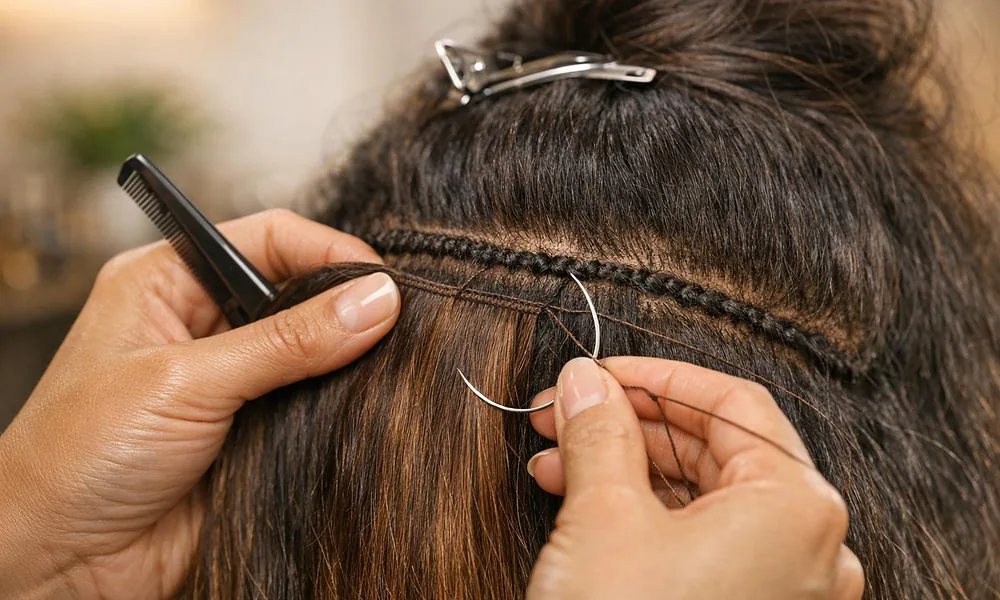
Sew-in extensions, also called weaves, are usually attached by sewing extension hair onto braided sections of your natural hair.
They are often used by people with thick, textured, or coily hair, although suitability depends on the person’s hair condition and the installation method.
Main benefits:
- Can provide a full, secure style.
- Reduces the need to attach and remove extensions every day.
- Works with several hair textures and styles.
Things to consider: Tight braids, heavy extensions, and repeated pulling can damage your natural hair. Your scalp must also be kept clean while the style is in place.
Typical cost: Around 150–400 for the extension hair, plus installation. The final price depends on the hair used and the stylist’s fee.
4. Micro-Link Hair Extensions

Micro-link extensions use small beads or rings to attach extension strands or wefts to sections of your natural hair. The beads are clamped in place rather than attached with glue.
Main benefits:
- Does not usually require adhesive or heat to attach the extensions.
- Allows movement when the extensions are fitted correctly.
- Can be adjusted as your natural hair grows.
Things to consider: The beads can slip, tangle, or pull on your natural hair if they are installed incorrectly. They also need regular professional checks and maintenance.
Typical cost: Around 300–800 or more, depending on the hair, installation, and salon.
5. Fusion Hair Extensions

Fusion extensions use small bonds, often made with keratin-based material, to attach extension strands to natural hair. Heat may be used to secure the bonds.
This method can create a natural-looking result because the extensions are attached in small sections.
Main benefits:
- Small bonds can blend well with natural hair.
- Individual strands allow flexible styling.
- They can stay in place for several months with proper care.
Things to consider: Installation and removal take time and require skill. Poor application, excessive heat, or rough removal can damage natural hair. This method may not suit people with fragile or thinning hair.
Typical cost: Around 800–2,000 or more for a full installation, depending on the hair and salon.
6. Halo Hair Extensions

Halo extensions use a thin, nearly invisible wire to hold a weft of hair around the head. Your natural hair sits over the wire to hide it.
You can usually put them on and remove them yourself without attaching clips, glue, or bonds to individual strands.
Main benefits:
- Quick to put on and remove.
- No adhesive or heat is normally needed.
- Useful for occasional wear and people who want a simple routine.
Things to consider: The wire must fit comfortably and stay secure. A poorly fitted or heavy halo may move or feel uncomfortable. It is not completely risk-free, so stop wearing it if it causes pulling or soreness.
Typical cost: Around 150–450 for many human-hair options, depending on quality and brand.
Hair Extensions Comparison: Cost, Lifespan, Installation and Damage

Use this table to compare the six types before deciding. Prices are approximate US-dollar estimates, not fixed market rates. They vary with hair quality, length, amount, location, and salon fees.
| Extension type | Typical starting cost | Wear and maintenance | Installation time | Main damage concern |
| Clip-in | 100–500 | Removed daily; reusable with care | 5–15 minutes | Pulling from heavy or poorly placed clips |
| Tape-in | 200–600 for hair, plus installation | Often needs maintenance every 4–8 weeks | About 45–90 minutes | Pulling, tangling, or breakage during removal |
| Sew-in | 150–400 for hair, plus installation | Often checked or changed after 6–8 weeks | About 2–3 hours | Tight braids and added weight |
| Micro-link | 300–800 or more | Timing depends on growth and attachment method | About 2–4 hours | Pulling, tangling, or poorly fitted beads |
| Fusion | 800–2,000 or more installed | Often worn for several months before removal | About 3–5 hours | Heat, bond damage, and difficult removal |
| Halo | 150–450 | Removed after wear; reusable with care | A few minutes | Poor fit, movement, or pressure |
These ranges are planning estimates. Confirm the current price and maintenance schedule with the seller or stylist before buying. The lifespan of the hair itself is also different from how long it can remain attached to your head.
A set of clip-ins may last a year or longer with occasional use and careful storage. A semi-permanent installation, however, needs attention as your natural hair grows. Do not keep extensions in longer than recommended simply to save money.
Remy Hair vs. Virgin Hair vs. Synthetic Hair

The material matters because it affects the look, feel, styling options, and price of your extensions.
Remy Human Hair
Remy hair is human hair collected and arranged so that the cuticles generally face the same direction. This can help reduce tangling when the hair is properly processed and cared for.
It is often a practical choice if you plan to wear extensions regularly and want a natural look.
However, the word Remy alone does not guarantee high quality. Processing, hair condition, and manufacturing also affect how well the extensions perform.
Virgin Human Hair
Virgin hair is generally described as human hair that has not been chemically processed, such as through dyeing or relaxing. Sellers often use the term for premium products.
Definitions and quality standards can vary between sellers, so check what the product label actually promises.
Synthetic Hair
Synthetic extensions are made from artificial fibers. They are often less expensive than human-hair options and can work well for occasional wear.
Standard synthetic hair may not tolerate heat styling. Some special heat-resistant fibers can handle limited heat, but you should follow the manufacturer’s instructions.
Which should you choose?

- Choose synthetic hair if you want a lower-cost option for occasional use.
- Consider Remy human hair if you plan to wear extensions regularly and want more styling flexibility.
- Consider virgin hair if you prefer minimally processed human hair and your budget allows it.
Which Hair Extensions Are Best for Your Hair Type and Lifestyle?

The best extension type is not the same for everyone. Your natural hair condition, desired look, daily routine, and comfort should guide your choice.
Fine or Thin Hair
Halo extensions or lightweight clip-ins may be worth considering because they do not require permanent bonds. However, the fit and weight still matter.
Tape-ins or other attached methods may work for some people, but a qualified stylist should check whether your hair can support them. Avoid any method that pulls on your roots or makes thinning worse.
Thick or Coarse Hair
Thicker hair may offer more options for blending extension wefts into your natural hair. Sew-ins or tape-ins may work, depending on your scalp and hair condition.
The goal is to match the extension’s weight and amount to your natural hair. Adding more hair is not always the best way to achieve a fuller look.
Curly, Coily, or Textured Hair

Choose extensions with a texture that blends with your natural hair. This may include curly or coily clip-ins, textured wefts, or a suitable sew-in.
For people with 4C hair, texture matching can make blending easier. You can also read our 4C hair care guide for advice on gentle handling and reducing breakage.
Whichever method you choose, avoid tight braids and heavy extensions that pull on your scalp.
Active Lifestyles
If you exercise often or prefer to wash and style your hair freely, removable extensions may be easier to manage.
Tape-ins and other attached methods can also work, but you need to follow the stylist’s advice for washing, drying, brushing, and maintenance.
Special Events
For weddings, parties, photos, or occasional use, clip-ins and halos are practical options. You can wear them when you need extra length or volume and remove them afterward.
You may not need a semi-permanent method if you only want extensions for a few occasions.
Can Hair Extensions Damage Your Natural Hair?

Yes. Hair extensions can cause breakage or hair loss if they put too much weight or tension on your natural hair.
One possible problem is traction alopecia, a type of hair loss caused by repeated pulling on the hair. The American Academy of Dermatology warns that tight extensions and weaves can damage hair follicles. When the damage becomes permanent, hair may not grow back in the affected areas.
The risk depends on several factors, including the attachment method, weight, installation, maintenance, and condition of your natural hair.
How to Reduce the Risk of Damage
- Do not ignore pain.
Extensions should not cause strong pulling, headaches, or scalp pain. If they do, ask your stylist to loosen or remove them.
- Choose a suitable weight.
Heavy extensions can put extra stress on your roots. The amount of hair should match your natural hair’s condition and ability to support it.
- Follow the maintenance schedule.
As your hair grows, attachments can move away from the scalp, tangle, or place stress on individual strands. Arrange maintenance and removal at the recommended time.
- Keep your scalp clean.
Follow the washing instructions for your chosen method. Product buildup and tangling can make extension care more difficult.
- Give your natural hair a break.
Avoid wearing heavy or tension-based styles continuously. Switch to a gentle hairstyle between installations when possible.
- Watch for early signs of damage.
Pain, itching, broken hairs, or thinning around the hairline are reasons to change the style and seek professional advice if the problem continues.
No attachment method is completely free from risk. Even removable extensions can cause problems if they are too heavy or repeatedly pull on the same areas.
Hair Extension Maintenance and the True Cost

The purchase price is only one part of the total cost. Before choosing a method, think about how much you will spend over the time you plan to wear it.
For attached extensions, you may need to pay for installation, maintenance, removal, and a new set of hair. You may also need suitable shampoo, conditioner, and a brush.
Removable extensions usually have fewer salon costs, but they still need cleaning, careful brushing, and proper storage.
How to Plan Your Budget
- Clip-ins and halos: Budget for the initial set and occasional replacement. They may be more cost-effective if you wear them only sometimes.
- Tape-ins: Include the hair, first installation, regular move-ups, and eventual replacement.
- Sew-ins: Include the hair, installation, removal, and the cost of each new installation.
- Micro-links: Include installation, maintenance, removal, and any replacement hair.
- Fusion: Budget for the initial application and professional removal. Ask the salon about the full cost before committing.
Ask your stylist for a clear estimate that covers both the first appointment and future maintenance. Prices can vary widely, so a low starting price does not always mean the method will cost less over a year.
Frequently Asked Questions About Hair Extensions
1. Which type of hair extensions lasts the longest?
The answer depends on whether you mean how long the extensions stay attached or how long the hair can be reused. Fusion extensions may remain installed for several months, while quality clip-ins and halos can be reused for a year or longer with proper care.
2. Are tape-in extensions better than clip-ins?
Tape-ins may suit people who want extensions that stay in place for everyday wear. Clip-ins are better for people who prefer to remove their extensions daily and avoid a salon installation. Neither is best for everyone.
3. Can tape-in extensions be reused?
Some tape-in hair can be reused after the old adhesive is removed and new tape is applied. Whether the hair can be reused depends on its quality, condition, and the manufacturer’s instructions. Ask your stylist before assuming it can be reused several times.
4. Do hair extensions ruin your hair?
Not always, but any extension method can cause damage if it is too heavy, too tight, poorly maintained, or removed incorrectly. Pain and repeated pulling are warning signs. Choose a method that suits your hair and follow its care instructions.
5. Which hair extensions are best for beginners?
Clip-ins and halos are often good starting points because they are removable and do not usually require a salon installation. They let you try extra length or volume before committing to a method that stays in your hair.
Final Thoughts
Choosing hair extensions is easier when you compare more than the starting price. Think about how often you will wear them, how much maintenance you can afford, and whether your natural hair can comfortably support them.
Clip-ins and halos are practical for temporary use. Tape-ins may suit people who want a style for everyday wear, while sew-ins, micro-links, and fusion extensions require more attention to installation and maintenance.
Before making a decision, ask about the full cost, the removal process, and the care routine. Most importantly, choose a method that feels comfortable and does not pull on your hair.
The best hair extensions are the ones that suit your budget and lifestyle without putting your natural hair at unnecessary risk.









