

Hair thinning can be frustrating, especially when a product promises thicker hair in a few weeks. Hair growth serums are sold with claims about stronger roots, fuller hair, and faster growth. But these products do not all work in the same way, and many have limited evidence behind them.
First, understand that hair growth and hair care are not the same. A serum may moisturize your scalp, reduce dryness, or make your hair look healthier without actually growing new hair. Treatments like minoxidil have stronger evidence for certain types of hair loss, while many popular ingredients still need more research.
This guide explains what the evidence says, what to check before buying a serum, how long results may take, and when hair loss needs medical attention instead of another product.
Key Takeaways
- Minoxidil has the strongest evidence among common topical options for certain types of hair loss.
- Rosemary oil, caffeine, and peptides have more limited evidence.
- Biotin is mainly useful when a deficiency exists.
- A healthier-feeling scalp or smoother hair does not necessarily mean new hair is growing.
- Results take time, and minoxidil benefits generally require continued use.
- Sudden shedding, bald patches, or scalp symptoms deserve medical assessment.
- Check ingredients, realistic claims, safety instructions, and long-term cost before choosing a product.
Hair Growth Serum Ingredients: What the Evidence Says
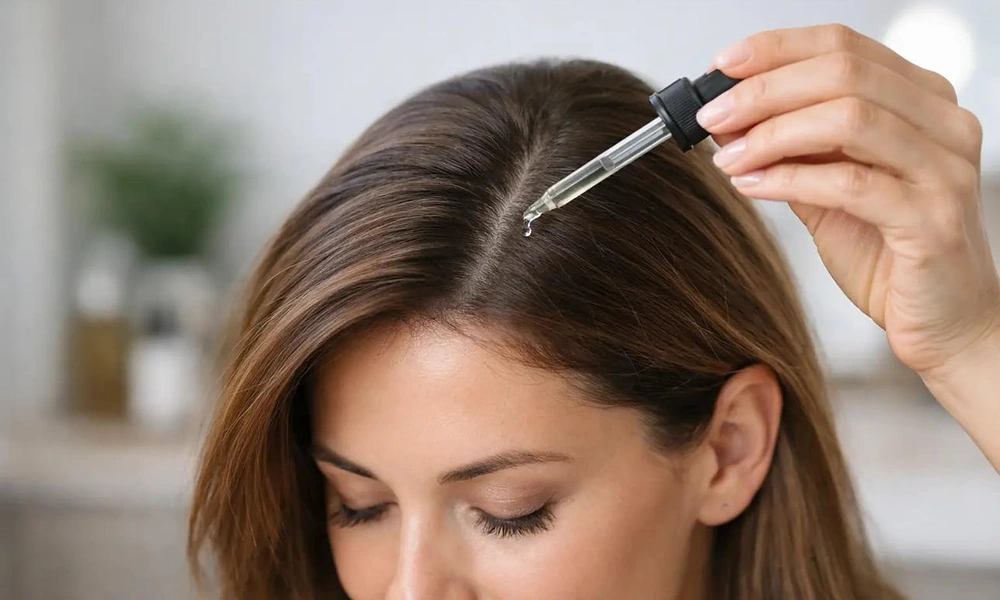
The ingredient list tells you more than the words on the front of the bottle. Look for the active ingredients, their stated purpose, and clear instructions. A long ingredient list does not automatically mean a product will regrow hair.
| Ingredient | What the evidence says | What to know |
| Minoxidil | Strong evidence for certain types of pattern hair loss | A medicine, not just a cosmetic serum; results require continued use |
| Rosemary oil | Limited early evidence | Not proven to work as well as minoxidil |
| Caffeine | Limited evidence | Laboratory findings do not guarantee noticeable hair growth in people |
| Peptides | Depends on the specific ingredient and formula | Broad claims about peptides do not prove regrowth |
| Biotin | Mainly useful when a deficiency exists | Supplements are unlikely to help hair loss caused by other factors |
| Niacinamide and plant oils | May support scalp or hair condition | Not established treatments for pattern hair loss |
Minoxidil: The Best-Studied Topical Option
Minoxidil is a topical medicine used to treat certain types of hair loss, including pattern hair loss. It can help slow further thinning and encourage regrowth in some people. However, it does not work for everyone, and it cannot guarantee a full return of lost hair.
Minoxidil products come in different strengths and forms. The suitable option and application schedule depend on the product, the person using it, and the type of hair loss. Follow the label or advice from a qualified healthcare professional rather than assuming that a stronger formula is always better.
One detail many buyers miss: minoxidil works only while you continue using it. If it helps and you stop treatment, the benefits gradually disappear. This makes it a longer-term commitment, not a short course.
Rosemary Oil: Promising, but Not Proven
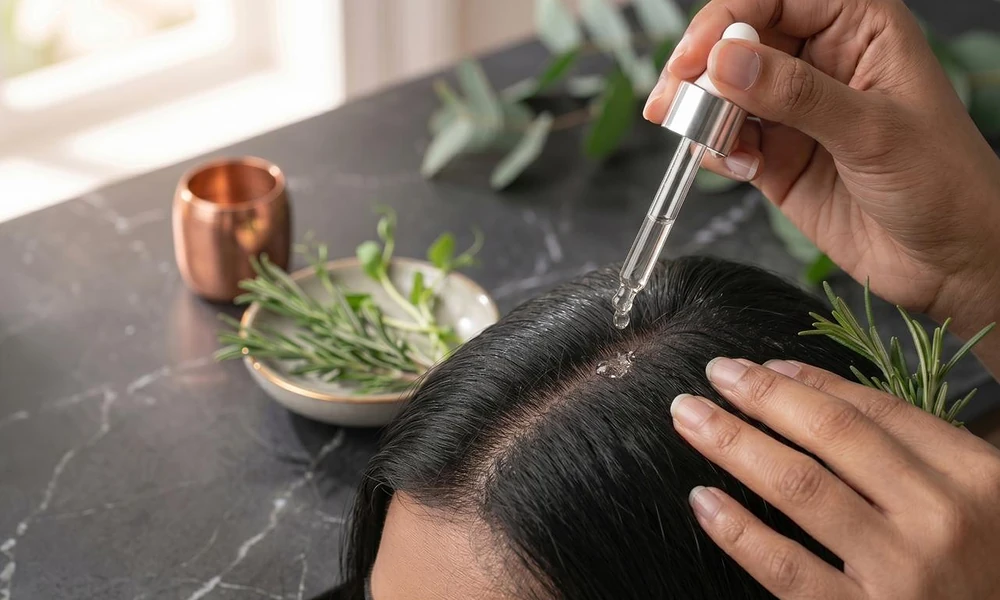
Rosemary oil is often promoted as a natural alternative to minoxidil. A small clinical study has explored its use for hair loss, but the evidence is not strong enough to conclude that rosemary oil works just as well as minoxidil.
Natural does not always mean gentle. Rosemary oil and other essential oils can irritate the scalp, especially when used in concentrated form. Check the product’s directions, and stop using it if it causes burning, persistent itching, or redness.
Caffeine, Peptides, and Other Popular Ingredients
Caffeine and peptides appear in many scalp serums, but evidence varies by ingredient and formula. Some early findings are interesting, yet there is not enough strong human evidence to treat every caffeine or peptide serum as a proven hair regrowth treatment.
Niacinamide and plant oils may help with scalp comfort or hair conditioning. That can be useful, but improving how your hair feels is different from treating the cause of hair loss.
Biotin: You May Not Need It
Biotin is often marketed for thicker hair, but taking extra biotin is not a reliable solution for hair loss when you are not deficient. Evidence for supplements in people without a deficiency is limited. High-dose biotin can also interfere with certain laboratory tests, so tell your healthcare professional if you take it.
How to Choose a Hair Growth Serum

Before spending money, ask three questions: What is the active ingredient? What problem is it meant to treat? What evidence supports that use?
A product designed to condition the scalp may be suitable for dryness but not for pattern hair loss. If your main concern is thinning, choose based on evidence and the likely cause rather than the number of ingredients.
Watch for these warning signs:
- Miracle claims: Promises of overnight growth or dramatic new density in days are not realistic.
- Guaranteed results: Hair loss treatments do not work equally well for everyone.
- Unclear ingredients: If the product does not clearly identify its ingredients and their purpose, it is difficult to judge what it can do.
- No proper directions: A trustworthy product should explain how to apply it and what precautions to follow.
- Before-and-after photos without context: Lighting, styling, hair length, and camera angles can make hair look fuller without proving regrowth.
- Pressure to buy several products: A complicated routine is not automatically more effective than a suitable, evidence-based treatment.
Also check the total cost over several months. A low-priced bottle may be expensive to maintain if you need several products at once. For treatments that require ongoing use, the long-term cost matters more than the first purchase.
How to Apply a Hair Growth Serum Correctly
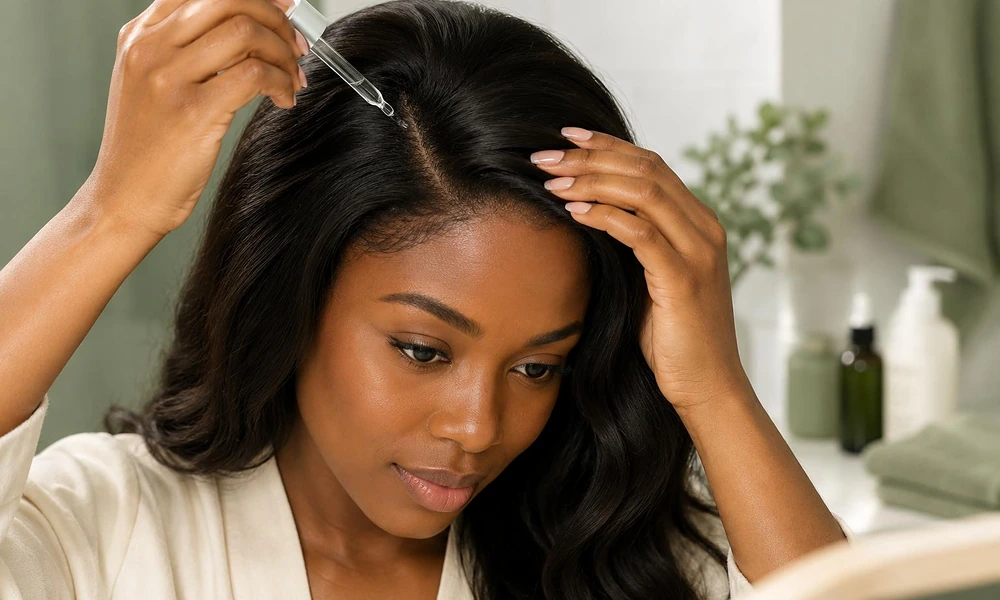
The right method depends on the formula. Some cosmetic serums are leave-in products, while medicines such as minoxidil have specific application instructions. Do not use one routine for every product.
For a typical leave-in scalp serum:
- Read the directions. Check whether the product should be applied to dry or damp hair and how often to use it.
- Part your hair. Create small sections so you can reach the scalp instead of coating the hair strands.
- Apply to the intended area. Use the amount stated on the label. Applying extra product will not necessarily improve results.
- Follow the leave-in or rinse-out instructions. Do not wash it out early or leave it on longer than directed.
- Wash your hands. Keep the product away from your eyes and any areas not listed on its label.
- Watch for irritation. Stop using the product if you develop a persistent reaction, and seek medical advice if symptoms are severe.
For minoxidil, follow the specific package instructions. Do not mix it with another scalp product or change its schedule based on general serum advice. Ask a pharmacist or dermatologist if you want to use multiple treatments together.
How Long Does a Hair Growth Serum Take to Work?

There is no single timeline for every serum. Cosmetic products that condition the hair may change how it feels relatively quickly, but that does not prove new growth.
For minoxidil, noticeable results can take around six to twelve months, although the timing and response vary. Some people see less shedding or early changes before they see clear regrowth. Consistent use according to the instructions is essential.
Take photos of the same areas every month using similar lighting, angles, and hair positioning. This can help you spot gradual changes more fairly than checking the mirror every day.
If the treatment is not helping, do not automatically increase the amount or add more products. Reconsider whether the diagnosis is correct and whether the treatment suits the cause of your hair loss.
When Hair Loss Needs a Dermatologist

A serum may not address the reason your hair is falling out. Hair loss can be related to pattern hair loss, illness, stress, nutritional deficiencies, medicines, hormonal changes, scalp conditions, or tight hairstyles. Different causes need different approaches.
Consider seeing a dermatologist if you notice:
- Sudden or heavy shedding
- Round or patchy bald areas
- Scalp pain, burning, severe itching, or scaling
- A rapidly widening part or receding hairline
- Hair loss with other new or unexplained symptoms
Do not wait six months to seek help if the loss is sudden, patchy, or accompanied by scalp symptoms. Early assessment can help identify the cause and avoid wasting time on an unsuitable treatment.
Important Safety Points People Often Miss
Minoxidil and other active scalp products need more care than an ordinary hair oil.
- Pregnancy and breastfeeding: Do not start minoxidil during pregnancy or breastfeeding without medical advice. Guidance generally recommends avoiding it in these situations.
- Possible side effects: Topical minoxidil can cause itching, dryness, flaking, or redness. Stop and seek medical advice if irritation persists. Chest pain, a racing heartbeat, faintness, or swelling needs prompt medical attention.
- Pets: Minoxidil can be highly toxic to cats and dogs. Keep the product, treated skin, hands, pillows, and any contaminated items away from pets.
- Broken or irritated skin: Do not apply a product to an inflamed or damaged scalp unless a healthcare professional advises you to do so.
- More is not better: Using extra product or applying it more often than directed may increase side effects without improving results.
Frequently Asked Questions
Do hair growth serums really work?
Some treatments work for certain types of hair loss. Minoxidil has stronger evidence than most cosmetic serums, but results vary.
Is rosemary oil as effective as minoxidil?
That has not been established. Research on rosemary oil is limited, so the two should not be treated as proven equals.
How long does a hair growth serum take to work?
It depends on the product. Minoxidil may take six to twelve months to show noticeable results.
Can I use two scalp serums together?
Do not assume they are safe to combine. Check the instructions and ask a pharmacist or dermatologist, especially if one product contains medication.
Can a serum regrow hair on a bald spot?
It depends on the cause and whether the follicles can still produce hair. New or expanding bald patches need medical assessment.
Does biotin help hair grow faster?
Biotin may help when a deficiency is present. Extra biotin is not proven to improve hair growth in most people who get enough already.
Final Thoughts
A hair growth serum may help, but only if it suits the cause of your hair loss and contains ingredients that can deliver the result you want. A product that makes hair feel softer is not necessarily a treatment for thinning, and a natural ingredient is not automatically more effective or safer.
Start by understanding what is happening to your hair. Check the evidence behind the ingredients, follow the product instructions, and give appropriate treatments enough time. If your hair loss is sudden, patchy, or unexplained, get the cause checked before relying on a serum.
Disclaimer: This article is for general information and is not a substitute for medical advice or a diagnosis. Speak with a qualified healthcare professional about persistent hair loss, medication use, or possible side effects.









