


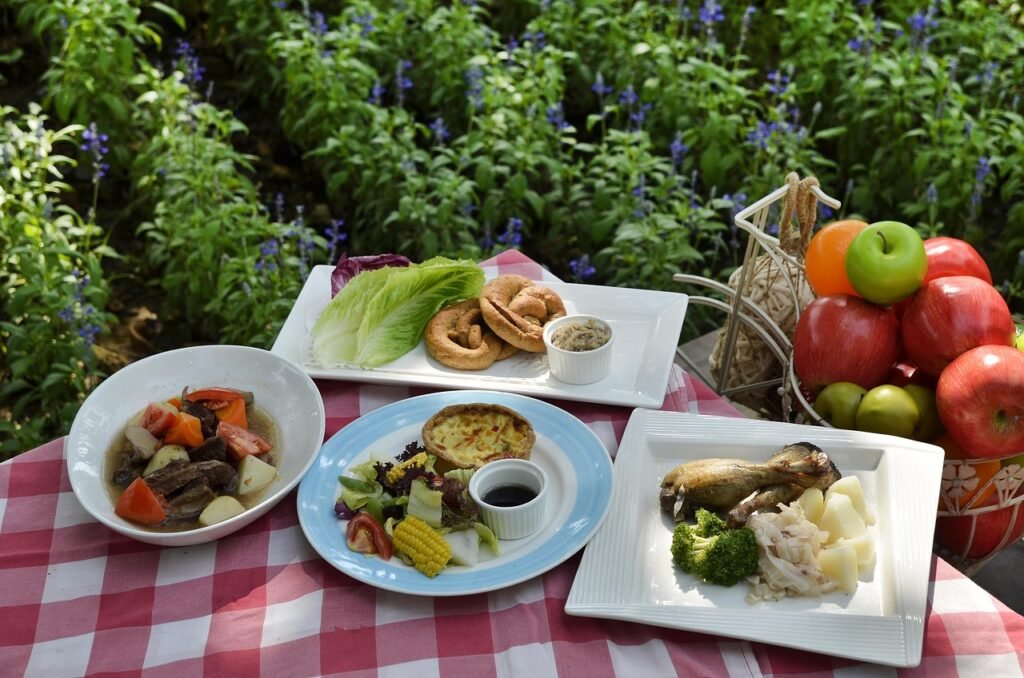
What if the best part of a picnic wasn’t the food at all, but the fact that you didn’t spend the whole afternoon worrying about it? That’s the quiet promise of genuinely healthy picnic recipes: food that travels well, tastes good warm or cold, and won’t send anyone home with an upset stomach. The trick isn’t finding “diet” versions of picnic classics. It’s choosing dishes built for the outdoors in the first place, then packing them with a little common sense.
This guide walks through the practical side of picnic cooking: which foods are safe, which recipes actually work, and the small habits that keep a basket of good food from turning into a stomachache.
Why picnic food gets risky in the first place
Most foodborne illness doesn’t come from a restaurant. It comes from food that sat out too long. The danger zone for perishable food is roughly 40°F to 140°F (4°C to 60°C), and bacteria multiply fastest in that range. That’s why standard guidance says perishable dishes left at room temperature should be refrigerated or thrown out within two hours — and within one hour if the outdoor temperature climbs above 90°F (32°C).
A sunny park bench easily hits that. So the core of healthy picnic planning isn’t just nutrition; it’s temperature control. A dish can be packed with vegetables and lean protein and still be a bad picnic choice if it can’t survive an afternoon in a warm car.
The practical answer is to build a menu around food that either starts cold and stays cold, or doesn’t need refrigeration at all. That means whole fruit, sturdy vegetables, hard cheeses, well-sealed grain salads, and baked goods that don’t rely on dairy.
Start with a menu that respects the two-hour rule

Before a single recipe, decide how the food will be kept. A few habits do most of the work:
- Pack two coolers. One for drinks (which gets opened constantly) and one for food (which stays shut). Every time a cooler opens, cold air escapes.
- Freeze water bottles or ice packs and tuck them between containers and on top.
- Keep the food cooler in the shade, ideally under a blanket or in the car’s air-conditioned cabin rather than the trunk.
- Bring a food thermometer if you’re serious about it. Cold dishes should stay at or below 40°F (4°C).
The other half of the equation is hygiene. Hands get grubby outdoors, and cross-contamination is a real risk when raw meat shares space with ready-to-eat food. Wash hands with soap and water for at least 20 seconds before handling food, and pack hand sanitizer with at least 60% alcohol for when there’s no sink. Keep raw meat in its own sealed container, on the bottom of the cooler, with its own utensils.
If you’re feeding a crowd and want dishes with a bit more personality, the same principles apply to other cuisines. A set of easy Cuban recipes for busy cooks translates well to picnic format, since many of the components are citrus-marinated and taste better cold.
The backbone of a healthy picnic: vegetables that travel
Whole, unpeeled produce is the lowest-risk picnic food there is. Apples, oranges, cherry tomatoes, carrots, and snap peas need no refrigeration and no utensils. Cut produce is fine too, as long as it stays cold.
The goal, nutritionally, is to make produce the center of the plate rather than a garnish. Public health guidance in most countries points the same direction: aim for at least five portions of fruit and vegetables a day, roughly 400 grams for adults. A picnic is an easy place to hit that target if the menu is built around it instead of around bread and cured meat.
A few vegetable-forward dishes that hold up well:
- Chickpea and herb salad with lemon, olive oil, and plenty of parsley. No mayo, no dairy, and it improves after an hour of marinating.
- Roasted vegetable and farro salad dressed with vinegar rather than a creamy dressing. Acidic dressings are more stable in warmth than dairy-based ones.
- Crunchy slaw with cabbage, grated carrot, and a vinegar-based dressing. Cabbage stays crisp far longer than lettuce.
- Skewers of cherry tomatoes, cucumber, and mozzarella packed on ice, assembled at the picnic site.
That last point matters: assemble delicate things on site. Anything that wilts, weeps, or sogs should be kept in separate containers and combined when you eat.
Protein choices that don’t spoil the afternoon
Protein is where picnic menus most often go wrong. Cold cuts, creamy egg salads, and soft cheeses are all high-risk in warm weather. Better options:
| Protein | Picnic strength | Watch out for |
|---|---|---|
| Hard-boiled eggs, unpeeled | Travel well, keep cold easily | Peel at the site, not ahead |
| Roast chicken, cooled and sliced | Good cold, filling | Must stay below 40°F |
| Canned tuna or salmon | Shelf-stable until opened | Mix dressing on site |
| Hard cheese (cheddar, parmesan) | Tolerates mild warmth | Keep wrapped, out of sun |
| Chickpeas, lentils, white beans | No refrigeration needed | Rinse and drain well |
| Nuts and seeds | Zero risk, good crunch | Watch portions if watching calories |
Plant proteins deserve a bigger role than they usually get. A lentil salad with herbs, red onion, and a mustard vinaigrette is sturdy, cheap, and satisfying, and it doesn’t carry the same spoilage risk as a chicken salad. If you want a meat option, cook it the night before, chill it thoroughly, and pack it cold rather than warm.
For anyone who enjoys cooking that rewards patience and simple ingredients, the philosophy behind easy Belgian recipes that reward slow cooking is a useful mindset shift: fewer components, better ingredients, less fuss at the destination.
Smart carbs and dressings that survive the trip
Bread, crackers, and grains are the safest part of a picnic menu, but they’re also where hidden salt and sugar creep in. A few swaps help:
- Choose whole-grain bread or crackers with a short ingredient list.
- Use vinegar- and oil-based dressings instead of creamy ones; they’re more stable and usually lower in salt.
- Season with lemon, herbs, garlic, and spices rather than relying on salt. Most adults eat well above the recommended limit of about 5 grams of salt a day, and picnic food is a common culprit because salty snacks are so convenient.
- Skip sugary drinks. Water, sparkling water with citrus, and unsweetened iced tea do the job. Free sugars should stay under 10% of daily energy, and ideally under 5%.
Pasta salads are fine if you dress them properly. Cook the pasta a minute past al dente so it stays tender when cold, toss it with oil while warm so it doesn’t clump, and add the vegetables just before packing.
Snacks, sides, and something crunchy
The snack aisle is where a healthy picnic quietly falls apart. Chips, dip, and sweet drinks add up fast. Better crunchy options:
- Homemade popcorn tossed with smoked paprika and a little parmesan.
- Roasted chickpeas with cumin and chili.
- Raw vegetables with a yogurt-based dip kept on ice.
- Whole fruit — peaches, plums, grapes, and berries in a sealed container.
If you want something fried and fun without derailing the whole menu, a batch of crispy fried pickles with southern crunch makes a great occasional treat, especially when balanced against a produce-heavy spread. The point isn’t purity. It’s proportion.
Drinks, dessert, and the small stuff people forget
Hydration matters more than most people expect outdoors. Pack more water than you think you need, and keep it separate from the food cooler so the food stays cold.
For dessert, fruit does most of the work. A bowl of strawberries, a watermelon cut into wedges at the site, or a simple oat-and-fruit bar made with less sugar than store-bought versions all land well. If you’re baking, choose recipes that don’t depend on cream or custard.
The forgotten items are usually the ones that make or break the meal: a sharp knife, a small cutting board, serving spoons, trash bags, paper towels, and a spare container for leftovers. Anything perishable that’s been out for more than two hours should go in the bin, not back in the cooler.
How to build the actual menu
A balanced picnic plate follows a simple structure: half vegetables and fruit, a quarter protein, a quarter whole grains, plus a little healthy fat. In practice, that looks like this:
- One sturdy grain or legume salad as the centerpiece.
- One protein that holds up cold (eggs, chicken, cheese, or beans).
- A big container of raw or lightly cooked vegetables.
- Whole fruit for dessert and snacking.
- Water as the default drink.
That structure is flexible enough to absorb almost any cuisine. If you like cooking that makes simple ingredients shine, the approach behind these easy Finnish recipes that reward simplicity fits picnic food almost perfectly: rye bread, fresh fish, dill, potatoes, and berries.
Common mistakes that ruin a good picnic
Most picnic problems are predictable, which means they’re avoidable.
- Making mayo-heavy salads “because it’s traditional.” They’re the least heat-stable thing on the table.
- Packing the cooler the night before and leaving it in a warm kitchen. Chill everything thoroughly first, then pack.
- Cutting fruit and vegetables hours ahead and letting them sit at room temperature.
- Assuming shade is cold enough. Shade slows warming; it doesn’t stop it.
- Forgetting utensils and a way to wash hands. Both get improvised badly.
- Overpacking. More food means more leftovers sitting out, and more waste.
There’s also a quieter mistake: treating a picnic as an excuse to abandon the habits that keep you well. The same care that goes into healthy gums and keeping them that way — small, consistent habits rather than dramatic gestures — applies to picnic planning. A little prep the night before does more than a heroic effort on the day.
Conclusion
Healthy picnic recipes aren’t a special category of food. They’re ordinary dishes chosen and packed with the outdoors in mind: produce that travels, proteins that hold up cold, dressings that don’t spoil, and a cooler that stays shut. Get the temperature control right and the menu almost writes itself. Get it wrong and even the healthiest salad becomes a risk.
The best picnic is the one where the food is good, the packing was simple, and nobody spends the drive home feeling unwell. Build the menu around vegetables and legumes, keep perishables cold, pack more water than you need, and let whole fruit handle dessert. That’s a picnic worth repeating.
Frequently asked questions
How long can picnic food sit out safely?
Perishable food should be refrigerated or discarded within two hours at room temperature. If the outdoor temperature is above 90°F (32°C), that window shrinks to one hour. Food that has been sitting longer should be thrown away rather than returned to the cooler.
What are the best picnic foods that don’t need refrigeration?
Whole fruit, unpeeled vegetables, hard cheese, nuts, seeds, bread, crackers, and canned fish are all low-risk without a cooler. Legume-based salads dressed with oil and vinegar also hold up better than dairy-based dishes, though they still benefit from being kept cool.
Are pasta and potato salads safe for a picnic?
They can be, with two conditions: use oil- or vinegar-based dressings rather than mayonnaise, and keep them cold in a cooler until serving. Mayo-based versions are the highest-risk picnic dishes because they spoil quickly in warmth.
How do I keep picnic food cold without a cooler?
Freeze water bottles or gel packs and pack them tightly around sealed containers inside an insulated bag. Place the bag in shade, avoid opening it repeatedly, and consider packing frozen food the night before so it thaws slowly and keeps everything else cold.
What should I pack for a healthy picnic for kids?
Small, easy-to-hold items work best: cherry tomatoes, cheese cubes, whole-grain crackers, apple slices kept cold, and homemade oat bars. Keep portions modest so leftovers don’t sit out, and pack water rather than juice or soda.
Is it safe to refreeze ice packs and reuse leftovers?
Ice packs can be refrozen and reused indefinitely. Leftover food is different: anything perishable that sat out for more than two hours should be discarded, not saved. When in doubt, throw it out — the cost of a wasted salad is far lower than the cost of a day spent unwell.









