


What happens when a family of nine takes on a gut renovation while cameras roll? That was the premise behind Home by Novogratz, the HGTV series that followed husband-and-wife designers Robert and Cortney Novogratz as they mixed high style with tight budgets and chaotic family life. The show ran for a brief stretch in the early 2010s, but its formula left a lasting mark on how homeowners think about renovation, color, and making a house work for the people inside it.
What Was Home by Novogratz?
Home by Novogratz was a home-design television series on HGTV starring Robert and Cortney Novogratz, a New York-based design couple. The premise was straightforward: each episode followed the pair as they planned and executed a renovation or design project, usually for a client but often with their own large family woven into the story. (Home expansion)
The show is best remembered for three things:
- Personality-driven design. The Novogratzes were not minimalist hosts. They were loud about color, pattern, and mixing eras, and the camera captured the arguments and pivots along the way.
- Family reality. With seven children, the couple’s own household was a running subplot, and the show used it to make the point that good design has to survive real life.
- Budget consciousness. Projects were framed around what a project actually costs, not a fantasy number, which made the design advice feel usable rather than aspirational.
Exact premiere and end dates, episode counts, and network scheduling details are worth checking against HGTV’s official show page or a trade-press archive if you need them for a citation, because those specifics are easy to misremember and vary between sources. What is not in dispute is the show’s positioning: it sat at the intersection of renovation entertainment and practical family design.
Who Are Robert and Cortney Novogratz?
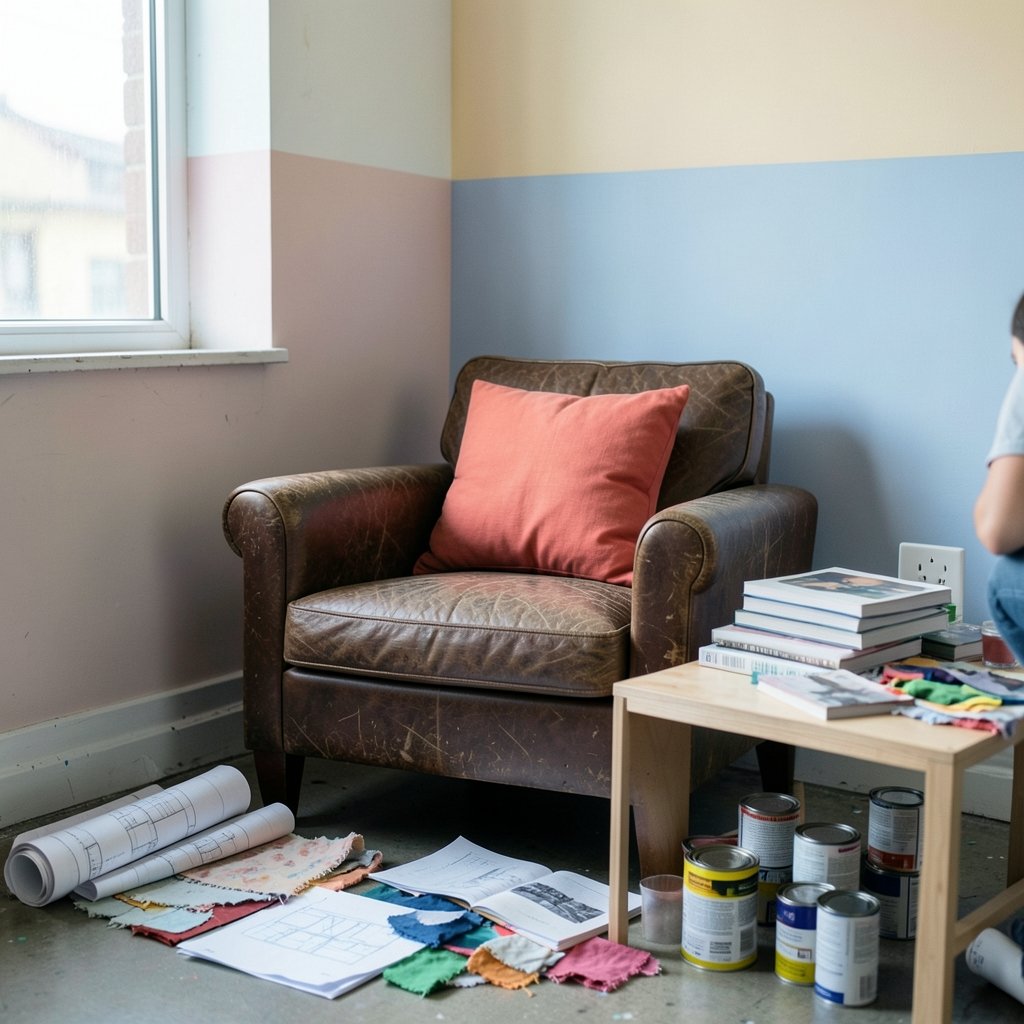
Robert and Cortney Novogratz are a married design team based in New York. Before Home by Novogratz, they had already appeared on television in a Bravo series, which introduced viewers to their eclectic, color-forward style and their unusually large household. They have also published design books and run a design firm, though titles, publication years, and current firm details should be verified against publisher pages and the couple’s official site rather than taken on memory.
Their design identity rests on a few consistent ideas:
- Color is not decoration, it is structure. The Novogratzes tend to use bold color as the organizing principle of a room rather than as an accent added at the end.
- Mix eras and price points. A vintage piece next to an inexpensive modern one is a signature move, and it is one of the reasons their work photographs well without looking like a showroom.
- Design for the people, not the photograph. Kid-proof surfaces, durable fabrics, and furniture that can take a hit matter as much as the palette.
That last point is where the show connected with ordinary homeowners. Plenty of design television sells a look. Home by Novogratz sold a method: decide how the room will be used, then let the style follow.
The Design Philosophy Behind the Series
Bold color used with discipline
Watching the show, the temptation is to conclude that the answer to every bland room is a saturated wall. In practice, the Novogratz approach is more controlled. Bold color works when the room has a clear focal point and the surrounding pieces are quiet enough to let it breathe. A deep teal wall with neutral upholstery and one patterned textile reads as confident. The same teal with five competing patterns reads as noise.
For homeowners trying this at home, the practical version is to pick one anchor color per room and let it appear in three places: a wall or large surface, a textile, and one small object. That repetition is what makes a bold choice look intentional rather than accidental.
Budget as a design constraint, not an excuse
The show’s projects were built around real budgets, and that framing is genuinely useful. A renovation budget is not a single number; it is a set of trade-offs. Spending more on the things you touch every day, such as faucets, cabinet hardware, and door handles, and less on things you look at from across the room, is a reliable way to make a modest budget feel generous. This is the same logic that makes a home renovation budget work in any market, and it is worth writing down before demolition starts rather than discovering it halfway through.
Designing for a full house
Seven children is an extreme case, but the underlying lesson scales down. Rooms that get used hard need:
- Washable or cleanable surfaces on seating and walls in high-traffic zones
- Storage designed into the room, not added as furniture after the fact
- Durable flooring that tolerates dropped objects and repeated cleaning
- Lighting on layers, so a room can shift from homework to dinner to guests without a full reset
These are unglamorous decisions, and they are exactly the ones that determine whether a finished room still works two years later.
What the Show Got Right, and Where It Fell Short
Home by Novogratz arrived at a moment when design television was split between aspirational luxury tours and strict budget makeovers. The show tried to occupy the middle, and it mostly succeeded. It also had the usual limitations of the format.
| Strength | Limitation |
|---|---|
| Real budgets discussed on camera | Timelines compressed for television |
| Durable, family-friendly material choices | Labor costs often glossed over |
| Strong point of view on color and pattern | Bold choices can date faster than neutrals |
| Personality and humor | Client disagreements sometimes overshadowed design detail |
The honest takeaway for viewers is that the design thinking travels well even when the specifics do not. A palette built for a family of nine in a New York townhouse will not translate directly to a two-bedroom apartment, but the decision-making process will.
Practical Lessons You Can Apply Without a TV Crew
Start with the function, then the palette
Before choosing a single paint color, list what the room must do on a normal Tuesday. Where do people sit, what gets dropped on the floor, what needs to be within arm’s reach? The answers determine furniture layout, surface materials, and storage. Color comes after.
Buy the anchor piece first
The most common mistake in budget renovation is buying accessories before the anchor. A sofa, a rug, or a piece of art sets the scale and palette for everything else. Buying small items first almost always leads to returns and mismatched rooms.
Spend where you touch
Hardware, faucets, light switches, and door handles are handled daily and are relatively inexpensive to upgrade. Replacing them is one of the highest-return small moves in a renovation, and it is the kind of detail that separates a room that feels finished from one that feels almost finished.
Plan storage before you plan decor
Every room that fails does so for the same reason: there was nowhere to put things. Built-in storage, closed cabinets, and baskets that actually match the room solve more design problems than any accent wall. For anyone weighing a larger project, thinking through home expansion early makes it easier to build storage into the structure instead of bolting it on later.
Let one room be loud
A house where every room competes for attention is exhausting. The Novogratz approach works best when one or two spaces carry the boldest choices and the rest support them. A saturated powder room or a patterned kids’ room can absorb risk that would feel overwhelming in a main living area.
How the Novogratz Style Fits Into a Broader Renovation Plan
Design television is a starting point, not a plan. Homeowners who want to borrow the show’s energy usually need to slot it into a larger sequence of decisions: budget, structural work, finishes, then furnishings. Skipping ahead to furnishings is the most common and most expensive mistake, because a sofa bought before the flooring is chosen often ends up wrong.
A few practical sequencing notes:
- Set the budget with a contingency. Ten to twenty percent is a reasonable cushion for surprises behind walls.
- Decide what stays. Keeping one beloved piece, a fireplace, or original flooring often anchors a renovation and saves money.
- Choose durable finishes in high-traffic zones. Save the delicate materials for low-traffic spaces.
- Furnish last, and slowly. Rooms furnished in one shopping trip tend to look like it.
For anyone thinking about how a bold renovation affects a home’s long-term value, the considerations overlap heavily with luxury home marketing: buyers respond to coherent design, and a strong point of view usually outperforms a neutral compromise, provided the work is well executed.
Where the Novogratz Influence Shows Up Today
The show’s fingerprints are visible in several trends that outlasted its run. Maximalism’s return, the mixing of vintage and contemporary furniture, and the willingness to paint a ceiling or a trim in a strong color all owe something to designers who treated bold choices as normal rather than risky.
The influence also shows up in how people talk about family design. The idea that a home can be both stylish and survivable, that a washable sofa is not a compromise but a smart choice, has become standard advice. That shift is partly a product of shows like this one, which put the mess on camera instead of hiding it.
For readers planning a project with a strong aesthetic point of view, it helps to look at how high-end buyers evaluate design decisions, since the same principles of coherence and quality tend to apply at every price point. A well-chosen luxury home scent or a carefully planned home cinema design follows the same rule as a bold paint color: it should feel like part of a plan, not an afterthought.
Common Mistakes Viewers Make After Watching Design TV
Watching a renovation show is motivating, and motivation without a plan is expensive. These are the mistakes that show up again and again:
- Copying a palette without checking the light. A color that sings in a sunlit loft can go flat in a north-facing room. Test paint on the actual wall, at different times of day.
- Underestimating labor. Materials are the visible cost; labor is the one that surprises people. Get itemized quotes.
- Buying for the photo, not the room. Open shelving looks wonderful and collects dust. Decide whether you will actually maintain it.
- Skipping the measure. Furniture that does not fit the room or the doorway is a return waiting to happen.
- Treating bold as a substitute for good. Color cannot fix a bad layout. Fix the layout first.
Each of these is avoidable with a short planning session and a tape measure, which is a much better use of an afternoon than a second trip to the furniture store.
Conclusion
Home by Novogratz was a short-lived series with a long tail. Its real contribution was not a specific palette or a signature sofa; it was the argument that bold design and real life are compatible, and that a budget is a tool rather than an apology. Robert and Cortney Novogratz built a design identity around color, mixing, and durability, and the show made that identity legible to people who had never hired a designer.
For homeowners, the lesson is portable. Decide how the room will be used, spend where hands touch, buy the anchor piece before the accessories, and let one space carry the risk. Those rules do not require a television crew, a large house, or a famous designer. They require a plan, a tape measure, and the willingness to make a decision and live with it. That is a fair summary of what the Novogratzes were selling, and it holds up better than most of what design television produces.
Frequently Asked Questions
What was Home by Novogratz about?
It was an HGTV design series starring Robert and Cortney Novogratz, a New York design couple. Each episode followed them through a renovation or design project, usually for clients, while weaving in their own large family and their preference for bold color, mixed eras, and budget-conscious choices.
Who are Robert and Cortney Novogratz?
They are a married design team based in New York known for eclectic, color-forward interiors and for designing around a large family. They appeared on television before Home by Novogratz, have published design books, and run a design firm. Specific dates and titles are best confirmed through official sources.
How many episodes did Home by Novogratz have?
Episode counts vary between sources and are easy to misstate, so the reliable approach is to check HGTV’s official show page or a trade-press archive. What matters more for viewers is the format: a project-driven show built around real budgets and family life rather than luxury tours.
What is the Novogratz design style?
It combines saturated color, mixed eras and price points, and durable materials chosen for real family use. The style treats color as the organizing principle of a room, pairs vintage pieces with affordable modern ones, and prioritizes surfaces that can survive daily life over finishes that only look good in photographs.
Can you copy the Novogratz look on a small budget?
Yes, with sequencing. Choose one anchor color per room, buy the largest piece first, upgrade hardware and lighting rather than replacing fixtures, and put money into durable surfaces in high-traffic areas. Bold choices cost the same as safe ones; the difference is planning, not price.
Why did the show appeal to ordinary homeowners?
Because it showed design decisions being made under real constraints. The budgets were discussed, the family chaos was visible, and the material choices were practical. Viewers could see the reasoning behind a room rather than only the finished photograph, which made the advice easier to apply in their own homes.









