

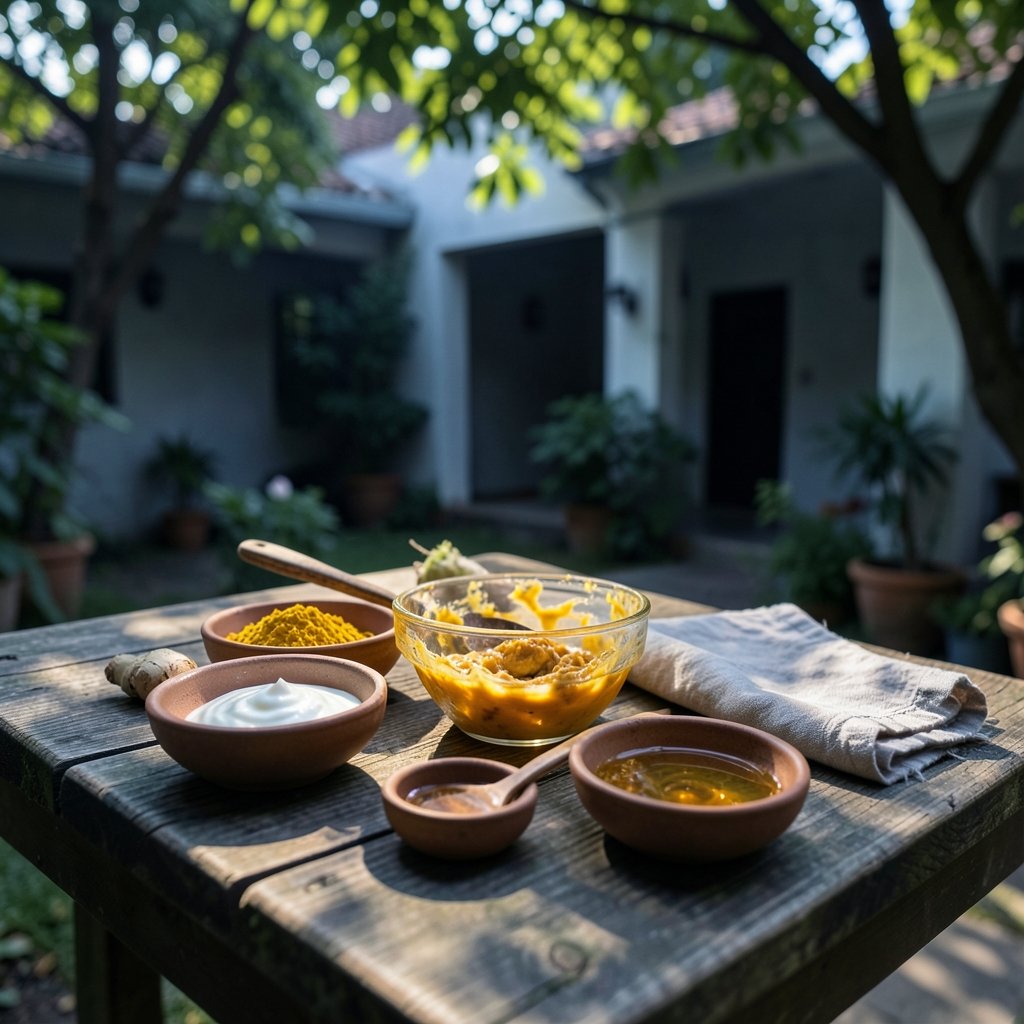
Can a spoonful of yellow kitchen spice really change your skin? That is the promise behind haldi masks, the turmeric-based face masks that have moved from South Asian family kitchens to beauty aisles and social feeds. The idea is simple: mix turmeric powder with yogurt, honey, milk, or rose water, spread it on, wait, rinse. Fans swear by the glow. Dermatologists tend to raise an eyebrow and reach for the patch-test instructions.
Both reactions have merit. Turmeric, called haldi in Hindi and Urdu, has a long cultural history in South Asian beauty routines, including pre-wedding haldi ceremonies where the paste is applied to the bride and groom. That tradition is real and worth respecting. What is less solid is the clinical evidence behind the modern claims, which range from fading dark spots to clearing acne. This article separates the two, explains what the research actually supports, and shows how to use a haldi mask without turning your face, or your favorite towel, permanently yellow.
What Is a Haldi Mask, Exactly?
A haldi mask is a face mask whose main active ingredient is turmeric powder, usually Curcuma longa, mixed with a liquid or carrier base. Common bases include plain water, yogurt, honey, milk, and rose water. The spice is the constant; everything else is a delivery vehicle and a comfort factor.
The star compound is curcumin, the yellow pigment that gives turmeric its color and most of its studied biological activity. Curcumin is the subject of a large body of research, though much of it involves cells in a lab dish or animals rather than people. Its low oral bioavailability, meaning how little of it survives digestion and reaches the bloodstream, is well documented. That matters less for a mask, which works on the skin surface, but it is a useful reminder that “scientifically studied” does not automatically mean “proven on faces.”
There is also a regulatory wrinkle worth knowing. In the United States, cosmetics are regulated under the Federal Food, Drug, and Cosmetic Act, and a product that claims to treat a condition such as acne would be classified as a drug rather than a cosmetic. In the European Union, cosmetics fall under Regulation 1223/2009, which requires a safety assessment and restricts what claims a product can make. Turmeric itself is not, to general knowledge, restricted as a cosmetic ingredient. The practical takeaway: a jar labeled “brightening” is making a cosmetic claim, while one labeled “cures acne” is stepping into medical territory, and the evidence rarely backs the stronger claim.
The Evidence: Promising, Not Proven
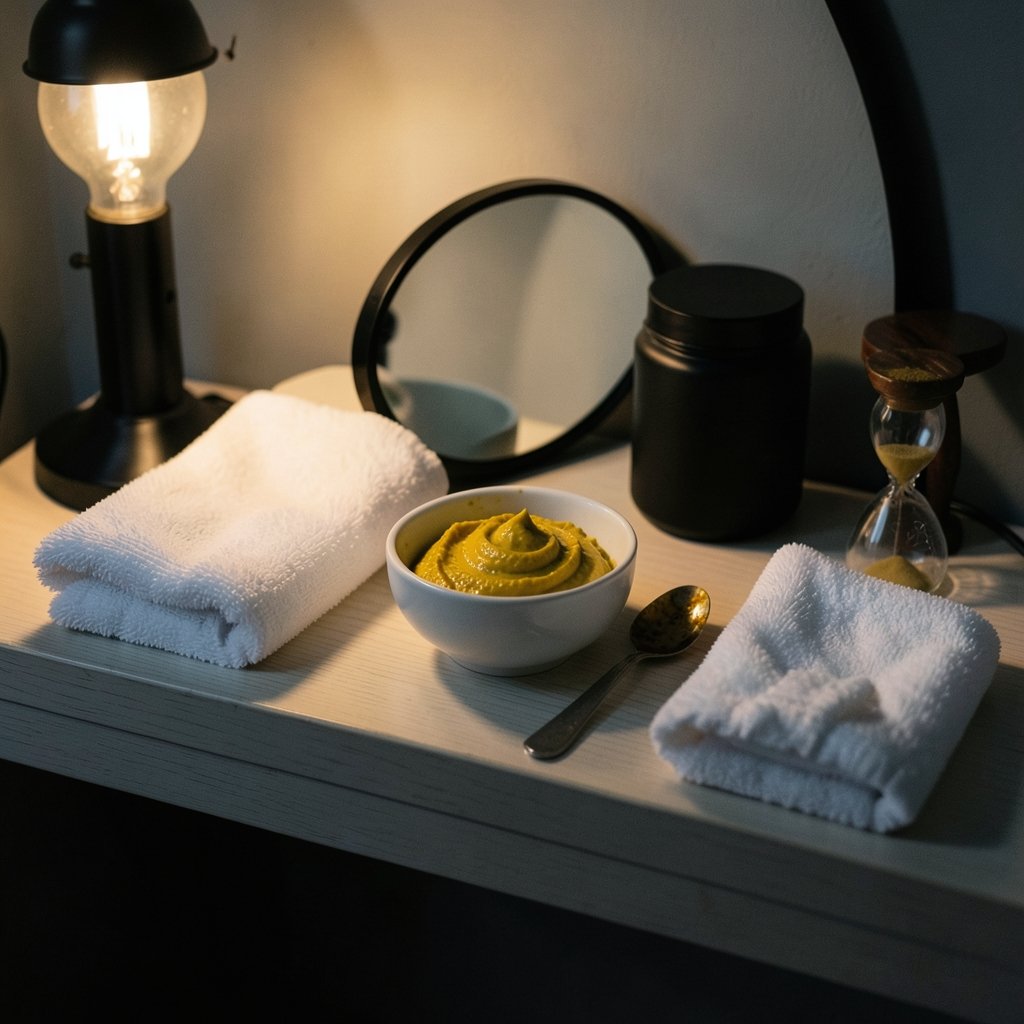
Here is where honesty matters. Most claims for turmeric on skin, whether for acne, pigmentation, or wound healing, rest on small in-vitro studies, animal research, and a handful of small human trials. There is no large, well-controlled trial of turmeric face masks specifically. Anyone who tells you otherwise is selling something.
That does not make haldi masks useless. It makes them low-risk experiments with modest expectations. Turmeric has genuine anti-inflammatory and antioxidant activity in laboratory settings. Whether a fifteen-minute yogurt mask delivers enough curcumin through the skin barrier to visibly fade a dark spot is a different question, and the honest answer is: possibly a little, probably not dramatically.
A few claims deserve extra skepticism:
- “Turmeric clears acne.” Some small studies suggest anti-inflammatory effects, but acne is complex and a spice paste is not a treatment plan.
- “Turmeric is a natural sunscreen.” Some sources describe turmeric as photoprotective, but the evidence is preliminary. A haldi mask is not a replacement for sunscreen, full stop.
- “Turmeric removes facial hair.” This claim circulates widely online and has no meaningful clinical support. At best, repeated paste use may make fine hair feel rougher.
If you want products with better-studied repair mechanisms, the conversation around bond-building treatments is a useful contrast. A K18 hair mask review shows what it looks like when a brand leans on a specific patented mechanism and published testing rather than tradition alone. Different category, same lesson: ask what the evidence actually is.
What Haldi Masks Can Realistically Do
Set expectations at the level the evidence supports and haldi masks become a pleasant, inexpensive addition to a routine rather than a miracle.
Temporary brightness. The most reliable effect is cosmetic and short-lived. Turmeric’s yellow tint can make skin look warmer and more even immediately after rinsing, partly because a trace of pigment lingers. It is a filter, not a permanent change.
Gentle exfoliation and hydration, depending on the base. A yogurt base adds lactic acid, a mild exfoliant. Honey is a humectant that draws water to the skin. Milk adds fat and protein. These ingredients do real, if gentle, work, and they deserve more credit than the turmeric itself.
A soothing ritual. There is value in a ten-minute pause with a warm paste on your face. That is not a clinical claim, and it does not need to be.
Possible help with mild inflammation. If turmeric’s anti-inflammatory activity translates at all through the skin barrier, it would show up as reduced redness rather than dramatic clearing.
What haldi masks will not do: erase acne scars in a week, replace a dermatologist, or permanently lighten skin. Anyone promising permanent pigment change from a kitchen ingredient is overselling. If you are layering masks with other treatments, it helps to know the general rules for how to use a hair mask and other leave-on products, because the same principles apply: patch test, follow timing, and do not stack actives carelessly.
How to Make and Use a Haldi Mask Safely
The steps below reflect the standard advice for DIY turmeric masks. None of it is complicated, but the details matter more than most people expect.
- Patch test first. Mix a small amount and apply it to the inner forearm or behind the ear. Wait 24 to 48 hours. Turmeric is a recognized cause of allergic contact dermatitis in some people, and a facial reaction is far worse than a forearm one.
- Use a small amount of turmeric. A pinch, roughly an eighth of a teaspoon, is plenty. More does not mean stronger results; it means more staining and more irritation.
- Choose a gentle base. Full-fat yogurt, honey, milk, or rose water all work. Avoid lemon juice, which is a common recipe addition and a reliable way to irritate skin.
- Apply to clean, dry skin. Spread a thin, even layer, avoiding the immediate eye area.
- Leave it on for 10 to 15 minutes. Not thirty. Not until it dries and cracks. Rinse with lukewarm water before the paste fully dries.
- Rinse thoroughly and follow with moisturizer. Any yellow tint left behind will fade over a few hours.
- Use it once or twice a week at most. More frequent use increases irritation risk without adding benefit.
If you already enjoy masking, the broader case for hair masks and their skin counterparts is worth reading, since the same discipline, patch testing and realistic timelines, separates a good routine from a frustrating one.
The Staining Problem Nobody Warns You About
Curcumin stains. It stains skin, towels, sinks, and especially anything white or light-colored. This is the single most common complaint about haldi masks, and it is entirely predictable.
Practical fixes that actually work:
| Problem | What helps |
|---|---|
| Yellow tint on skin | Rinse with lukewarm water, then cleanse with a mild oil-based cleanser; tint fades within hours |
| Stained towels | Use an old dark towel, never a white one; wash separately |
| Stained sink or counter | Wipe immediately with a damp cloth before the paste dries |
| Stained nails and cuticles | Apply with a silicone brush or the back of a spoon, not fingers |
| Yellow residue on hairline | Apply a thin barrier of moisturizer along the hairline first |
One more practical note: mix only what you will use in a single session. A turmeric paste left in the fridge for days is a bacterial playground, and the color intensifies as it sits.
Haldi Masks vs. Store-Bought Turmeric Products
The DIY versus packaged question comes down to control and consistency. A homemade mask lets you choose the base and skip preservatives, but it also means inconsistent dosing and no safety testing. A packaged turmeric mask offers a stable formula, but the turmeric content may be tiny, and the marketing claims may outrun the evidence.
| Factor | DIY haldi mask | Packaged turmeric mask |
|---|---|---|
| Cost per use | Very low | Moderate to high |
| Ingredient control | Full | Limited to label |
| Turmeric potency | Variable, easy to overdo | Usually low and standardized |
| Preservatives | None, but must be used fresh | Present, with shelf life |
| Allergy risk | Same, patch test still needed | Same, patch test still needed |
| Staining risk | High | Lower but real |
For most people, the DIY version is the better first experiment because it is cheap and easy to abandon. If you have sensitive skin or a history of contact allergies, a packaged product with a full ingredient list and a safety assessment is the more cautious route. Either way, the turmeric is the least predictable part of the formula.
Who Should Skip Haldi Masks
Turmeric is not for every face. Skip it, or get medical advice first, if any of the following applies:
- You have known allergies to turmeric, ginger, or related plants.
- You have active eczema, rosacea, or broken skin. A mask on compromised skin invites irritation.
- You are using prescription retinoids, strong acids, or recently had a peel or laser treatment. Your barrier is already working hard.
- You are prone to melasma or post-inflammatory hyperpigmentation. Any irritation can darken pigment rather than lighten it, which is the opposite of the goal.
- You are pregnant or breastfeeding and unsure. There is no strong evidence of harm from topical turmeric in typical cosmetic amounts, but irritation is possible, and a quick check with a clinician costs nothing.
The “natural equals safe” assumption is the most common mistake with haldi masks. Poison ivy is natural. Turmeric is generally gentle, but it is a known allergen for some people, and the yellow stain is a warning that the pigment binds to whatever it touches, including skin.
Conclusion
Haldi masks are a case study in the gap between tradition and evidence. Turmeric has earned its place in South Asian beauty culture, and a well-made mask with yogurt or honey is a pleasant, low-cost way to spend fifteen minutes. What it has not earned is the label of proven treatment for acne, scars, or pigmentation. The research is thin, the staining is real, and the allergen risk is documented.
The sensible approach is the unglamorous one: patch test, use a pinch not a spoonful, keep it on for ten minutes, rinse well, moisturize, and repeat no more than twice a week. Expect a temporary glow, not a transformation. If you are working on genuine skin concerns, a dermatologist will outperform any kitchen ingredient, and if you enjoy the ritual, enjoy it for what it is. A little yellow spice, a little warmth, and a realistic set of expectations.
Frequently Asked Questions
How often should you use a haldi mask?
Once or twice a week is the sensible ceiling for most skin types. Turmeric is generally gentle, but frequent application raises the risk of irritation and staining, and there is no evidence that daily use delivers better results. If your skin feels tight, red, or dry afterward, cut back or stop.
Can a haldi mask really fade dark spots?
The evidence is weak. Most claims about turmeric and pigmentation come from small lab studies and a few small human trials, not large controlled research on masks. Some people report a temporary brightening effect, but that is largely cosmetic. For persistent pigmentation, a dermatologist’s guidance is far more reliable than a kitchen paste.
Is a haldi mask safe for sensitive skin?
It can be, but patch testing is essential. Turmeric is a recognized cause of allergic contact dermatitis in some people, and sensitive skin reacts faster. Test a small amount on the inner forearm for 24 to 48 hours before going near your face, and skip the mask entirely if you have active eczema, rosacea, or broken skin.
How do you stop a haldi mask from staining your skin?
Use a pinch of turmeric rather than a spoonful, rinse with lukewarm water before the paste dries completely, and follow with a mild oil-based cleanser. A thin layer of moisturizer along the hairline helps too. Any faint yellow tint on skin typically fades within a few hours, but towels and sinks need immediate wiping.
Can you use a haldi mask instead of sunscreen?
No. Some sources describe turmeric as photoprotective, but that evidence is preliminary and contested. A turmeric mask offers no reliable sun protection, and skipping sunscreen to rely on a spice paste is a genuine risk, especially for anyone prone to pigmentation.
What is the best base to mix with turmeric for a face mask?
Yogurt, honey, milk, and rose water are all reasonable choices. Yogurt adds mild lactic acid, honey is a humectant, and milk adds fat and protein. Avoid lemon juice, a common recipe addition that irritates skin, and mix only enough for one use since a fresh paste has no preservatives.









