


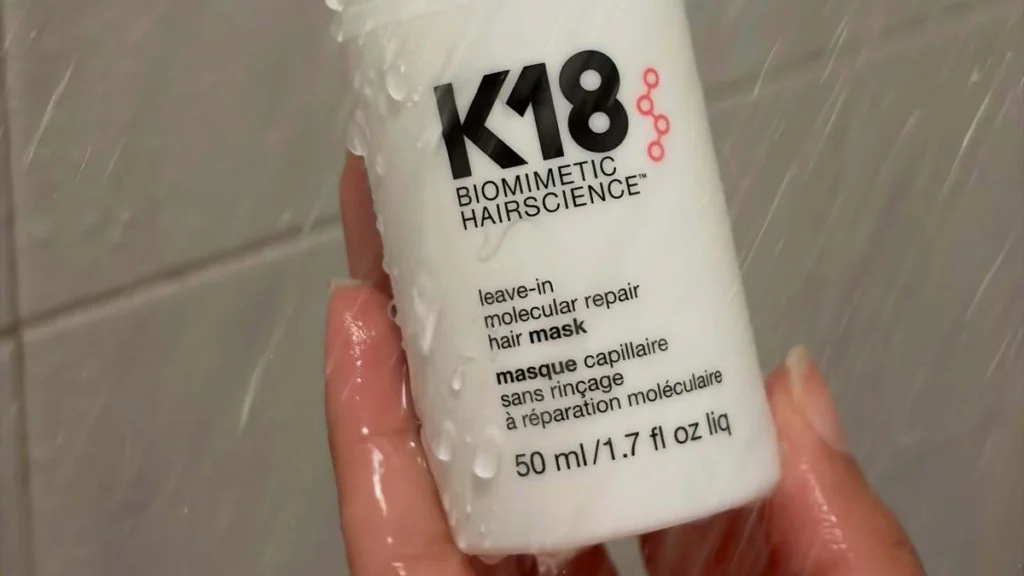
Bleached hair that snaps when you brush it, dry ends that never seem smooth, or curls that have lost their usual shape can make you look for a stronger hair treatment. The K18 hair mask is designed for this kind of damage. It uses a peptide-based formula and a four-minute, leave-in routine instead of the usual rinse-out conditioning treatment.
But there is a catch: K18 costs more than many regular hair masks, and its molecular repair claims can be difficult to judge from before-and-after photos alone.
In this review, we look at what the K18 Leave-In Molecular Repair Hair Mask is designed to do, what independent testers have reported, how to use it correctly, and where its limitations matter. The goal is simple: help you decide whether it fits your hair’s needs and your budget.
Key Takeaways
- K18 is a leave-in peptide treatment designed for damaged hair, not a standard moisturizing mask.
- Independent testers have reported improvements in softness, shine, and manageability, but results are not guaranteed.
- Use it on clean, damp hair without conditioner beforehand, wait four minutes, and do not rinse.
- Start with the recommended amount. Using more does not guarantee better results.
- The product may be more useful for chemically or heat-damaged hair than for hair that simply needs moisture.
- It cannot permanently repair split ends, restore hair that has broken off, or prevent future damage on its own.
What Is the K18 Hair Mask?
The K18 Leave-In Molecular Repair Hair Mask is a leave-in hair treatment made for damage associated with bleaching, coloring, chemical services, and heat styling.
Unlike a traditional rinse-out mask, you apply it after shampooing and leave it in your hair. The formula contains K18’s patented K18Peptide, along with conditioning ingredients such as cetearyl alcohol, cetyl esters, and hydrolyzed wheat protein. It also contains denatured alcohol and fragrance, which may matter if your hair or scalp does not tolerate certain ingredients well.
The product is intended to improve damaged hair’s strength and appearance. It is not a hair-growth treatment, a replacement for a haircut, or a permanent solution to every type of hair problem.
How Does K18’s Molecular Repair Claim Work?

Hair contains keratin proteins that help give each strand its structure. Bleaching, chemical treatments, and excessive heat can damage that structure, leaving hair weaker, rougher, or more likely to break.
K18 says its biomimetic peptide is designed to reach damaged areas within the hair and reconnect broken polypeptide chains. The company links this process to improved strength and elasticity. That is the product’s central scientific claim.
However, there is an important difference between a brand’s explanation of its technology and independent proof of every claimed result. A reviewer may observe softer hair or less breakage without proving exactly how much molecular repair occurred.
What does this mean for you? Look at practical results: Does your hair feel less brittle? Does it break less during detangling? Is it easier to manage between washes? Those changes are more useful for your buying decision than the word molecular on the packaging.
What Results Can You Realistically Expect?

Independent product reviews have reported improvements in softness, shine, detangling, and manageability. In a 2026 review, Fortune reported that its tester noticed softer, shinier hair that was easier to detangle. The Independent also reported improvements in hair feel and styling after several weeks of use. These are individual testing experiences, not guarantees for every user.
Here is what to look for:
- Less breakage: Damaged hair may become easier to handle, although results depend on how severe the damage is.
- Softer texture: Some users may notice smoother-feeling hair after treatment.
- Better manageability: Hair that tangles less may be easier to comb and style.
- Changes in curl definition: Some curly-haired users may notice a difference in how their curls look or feel, but the result is not guaranteed.
Do not expect every benefit after one application. K18 recommends using the mask for the first four to six washes after a salon service, then using it as needed.
What K18 Cannot Fix
This is the part many product reviews do not explain clearly enough.
- It cannot permanently repair split ends. A trim is the reliable way to remove them.
- It cannot bring back hair that has already broken off.
- It does not make future bleaching or excessive heat harmless.
- It does not guarantee faster hair growth or thicker new hair.
- It may not solve dryness caused by a routine that lacks enough conditioning or lubrication.
A repair treatment can help improve the condition and feel of damaged strands, but it cannot reverse every consequence of chemical damage.
How to Use the K18 Hair Mask Correctly

The application method differs from a normal hair mask. Follow the product’s instructions rather than adding it to your usual shampoo-and-conditioner routine without changes.
- Shampoo your hair. Clean hair helps prepare the strands for the treatment. If you have heavy styling-product buildup, K18 advises clarifying first.
- Skip conditioner before applying it. Conditioner may leave a coating that interferes with the intended application method.
- Towel-dry your hair. Your hair should be damp, not dripping wet.
- Apply the right amount. K18 recommends one to three pumps, depending on hair length and density. Start with less and add only if needed.
- Distribute it evenly. Work from the ends upward. Section long or thick hair if necessary.
- Wait four full minutes. Do not rinse the mask out.
- Style your hair. After the waiting period, you can comb your hair and apply other styling products.
K18 recommends using the mask for four to six washes, then switching to use as needed. Follow the current instructions on your specific product.
A Common Mistake: Using Too Much
More product does not automatically mean better results. K18’s recommended amount is based on hair length and density, and the formula may feel different depending on your hair type.
If your hair is fine, start at the lower end of the recommended amount. Thick, long, or very dense hair may need more careful sectioning to distribute the product evenly. Applying too much can make it harder to judge the results and may leave your hair feeling weighed down.
Do You Have to Skip Conditioner?

You should skip conditioner before applying K18, following the brand’s directions. But that does not mean you must stop conditioning your hair altogether.
K18’s instructions allow you to apply conditioner or other products after the four-minute waiting period.
This matters if your hair is curly, coily, long, or prone to tangles. A repair treatment and a moisturizing conditioner serve different purposes. If your hair still feels dry or difficult to detangle after the treatment, you may need additional conditioning in your routine.
K18 Hair Mask Pros and Cons
| Pros | Cons |
| Quick four-minute waiting period | Premium price compared with many regular masks |
| No rinsing required | Application routine takes some getting used to |
| Designed for chemically and heat-damaged hair | Results vary by hair condition and individual |
| May improve softness and manageability | Does not replace moisture care or trims |
| Can be used on different hair types | Small amounts must still be distributed evenly |
The biggest advantage is convenience. The biggest drawback is cost, especially if your hair mainly needs moisture and detangling rather than a specialized repair treatment.
Is the K18 Hair Mask Worth the Price?

The answer depends on your hair’s condition, how often you use it, and what you expect it to do.
It may be worth considering if:
- Your hair has been bleached or repeatedly colored.
- You notice breakage or roughness after chemical treatments.
- Your hair has become harder to manage after frequent heat styling.
- You are willing to follow the application routine and assess results over several uses.
You may not need it if:
- Your hair is generally healthy and only feels a little dry.
- Your main concern is tangling or lack of moisture.
- You rarely use chemical treatments or high heat.
- A regular conditioner or deep-conditioning mask already meets your needs.
Do not compare products only by the size of their bottles. Check the current price in your country, the amount you need per application, and how frequently you plan to use it. The cost per use is more informative than the price of the bottle alone.
Also, do not assume that an expensive repair treatment is automatically better for every hair type. If your main issue is dryness, a less expensive conditioning product may address your concern more directly.
Who Should Consider K18?
The K18 hair mask is most relevant to people dealing with noticeable damage from bleaching, coloring, chemical services, or repeated heat styling. Its leave-in format may also suit people who prefer a short routine.
It is less essential for someone whose hair is healthy but needs more softness, slip, or moisture. Those needs may be met by a conventional conditioner or mask.
If your hair is severely breaking, feels unusually stretchy when wet, or has suffered major chemical damage, speak with a qualified stylist before applying more chemical treatments. A product cannot guarantee that badly damaged hair will return to its original condition.
Frequently Asked Questions
Does K18 work after one use?
Some users notice changes in softness or manageability after one use. Results vary, and the brand recommends four to six consecutive washes initially.
Can I use conditioner after K18?
Yes. Wait four minutes after applying the mask, then use conditioner or other styling products if needed.
Is K18 suitable for curly hair?
It can be used on curly hair. The amount and results depend on hair length, density, damage, and conditioning needs.
Does K18 repair split ends?
It may improve the appearance and feel of damaged hair, but it cannot permanently mend split ends. Trimming removes them.
Can I use K18 on healthy hair?
You can follow the product directions, but you may not need a specialized repair treatment if your hair is already in good condition.
How often should I use K18?
K18 recommends using it for the first four to six washes, then as needed. Follow the instructions for your specific product.
Final Verdict
The K18 hair mask may be a useful option if bleaching, coloring, or frequent heat styling has left your hair weaker and harder to manage. Independent testing supports the possibility of improvements in hair feel and appearance, but it does not guarantee the same results for everyone or independently prove every part of the brand’s molecular repair explanation.
Before buying it, identify your main problem. If you are dealing with breakage and chemical damage, K18 may be worth trying according to its directions. If your hair mainly needs moisture, softness, or easier detangling, a less expensive conditioner or mask may be enough.
Disclaimer: This article is for general information, not a guarantee of product results or professional hair-care advice. Check the product label and consult a qualified stylist if your hair is severely damaged or your scalp is irritated.









