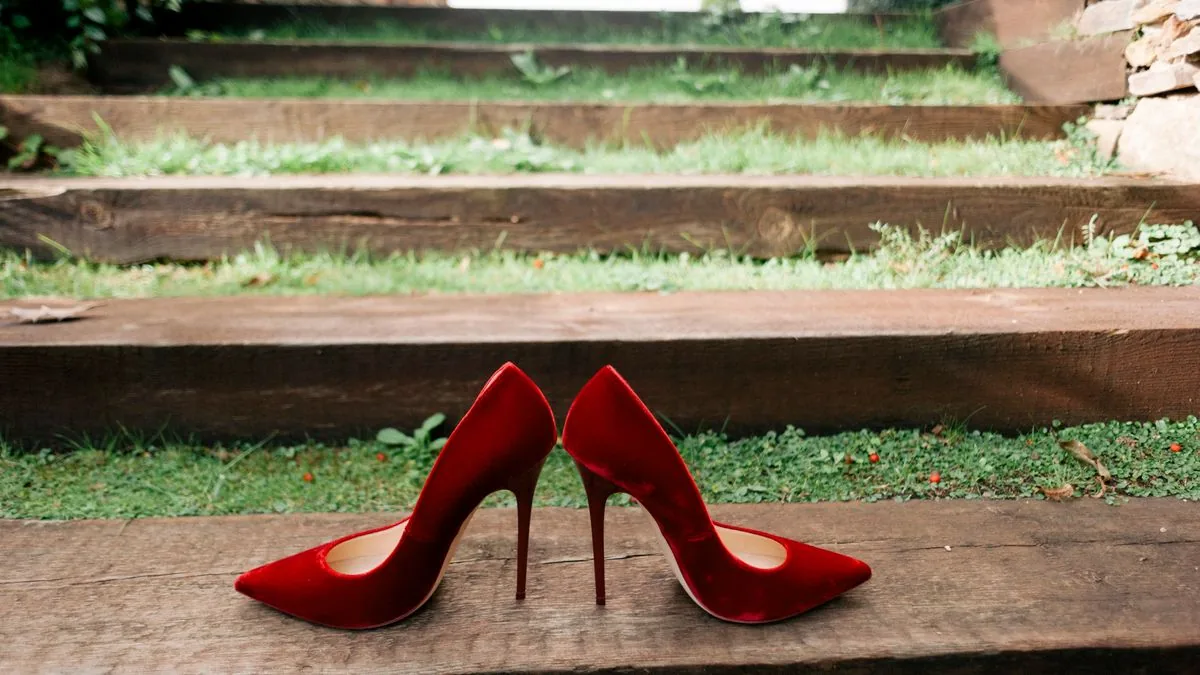
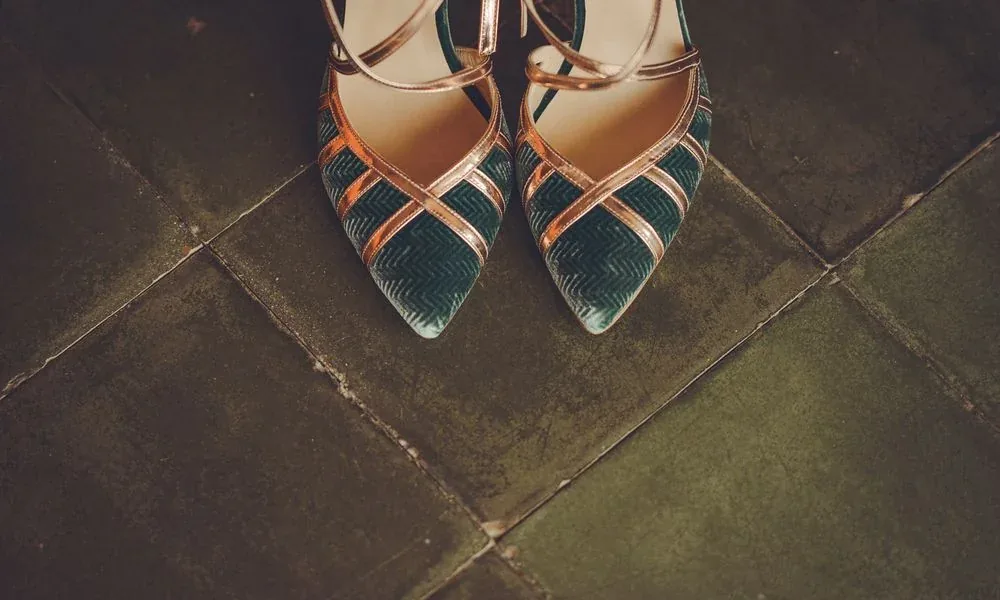
Velvet shoes have a softness that no other shoe material quite matches. The pile catches the light as you walk, so the colour seems to shift from deep to bright with every step. A plain outfit looks dressed up the moment velvet shoes appear, which is why they turn up at weddings and evening parties, not on wet commutes.
That softness is also why velvet needs more attention than smooth leather. Dust settles between the tiny fibres, rain flattens them, and a spilled drink soaks in fast. The good news is that caring for velvet is not difficult: most of the work is a quick brush after wearing, a little steam now and then, and a calm response when something spills.
This guide covers the whole routine, from the first brush on a new pair to removing mud, water marks and grease, bringing crushed pile back to life, and storing velvet shoes between seasons.
Key takeaways
- Brush velvet dry first, always: a soft clothes brush lifts dust and stands the pile up.
- Blot stains, never rub them, because rubbing pushes the mark deeper into the pile.
- Steam revives crushed pile: a few seconds of steam, then a brush against the pile, brings the nap back.
- Keep velvet dry: save these shoes for dry days and protect them before the first wear.
- No home routine rescues a soaked or torn pair; a cobbler or dry cleaner costs less than a replacement.
What makes velvet different from suede and leather
Velvet is a woven fabric, not a leather: two layers of cloth are woven at once and the threads between them are cut, leaving a dense pile of short, upright fibres. That pile can be silk, cotton, rayon or polyester: silk is the softest and most delicate, cotton is sturdier, and polyester is the most forgiving.
Suede looks similar but is the underside of a leather hide, sanded to raise a nap, while velvet is a woven textile. Suede needs a suede brush and suede protector; velvet responds to a soft clothes brush and gentle steam. Smooth leather has a sealed grain surface, and it is fed with cream and polish, but cream and polish have no place on velvet: they clog the pile and leave a greasy feel that brushing cannot fix. Velvet is a favourite for evening and bridal looks: see our guide to the best wedding shoes for a bride.
The small kit that covers almost everything
You need only five things. A soft clothes brush is the most important: look for natural bristles firm enough to lift dust but soft enough not to scratch the pile, and keep it only for velvet so it never picks up grit from another job. A clean microfibre cloth comes next, for blotting, and a lint roller is useful for a quick pass before an evening out.
The fourth item is a fabric protector spray made for velvet or delicate textiles, applied before the first wear and renewed through the season. The fifth is a handheld steamer, or a kettle used with care, for re-napping crushed pile. That is the whole kit: no creams, no polishes, no suede erasers and no stiff brushes.
The everyday routine: two minutes after every wear
The habit that saves velvet shoes takes two minutes. As soon as you take them off, hold one shoe over a bin or a towel and brush the whole upper with short, light strokes, working in the direction the pile naturally lies. Then brush once against the pile and once with it, to lift the dust out and lay the pile smooth again.
Do this while the shoes are dry and at room temperature, and never brush velvet while it is wet. Wet fibres clump together, and brushing them drags dirt across the pile and leaves streaks as it dries. If the shoes are damp from rain, let them dry first, stuffed loosely with plain white tissue so they keep their shape.
How to clean dust, mud and scuffs
Dust is the easiest problem velvet has, and the brush solves it. For a shoe that has only picked up a day of dust, a firm brushing in both directions, followed by a lint roller, is usually enough.
Mud needs patience, not water. Let it dry completely, however tempting it is to wipe it off at once, because wet mud smears into the pile and stains it. When the mud is dry, pick the larger pieces off, then brush firmly until the residue lifts. Scuffs on velvet are usually crushed pile rather than lost colour, and they often disappear with steam and a brush. Never use a suede eraser on velvet: it drags the fibres and leaves a shiny patch.
How to treat stains by type
Treat stains by type, because the wrong first step makes most of them worse. The rule for all of them is the same: blot, do not rub, and work from the outside of the mark towards the centre so it does not spread. Use a clean white cloth.
Water marks are the most common velvet stain. A splash leaves a ring because the pile dries unevenly. The fix is to even the dampness out: lightly dampen the whole panel, not just the mark, then let it dry slowly and brush the pile once dry. Grease needs an absorbent powder, not water: sprinkle cornflour or talc over the mark, leave it overnight, then brush it away and repeat if a shadow remains. Food and drink spills should be blotted at once with a dry cloth, then with a cloth dampened with a drop of mild washing-up liquid in cool water, and finally with plain water to lift the soap. Red wine is the hardest of these: if blotting does not lift it within minutes, take the shoes to a dry cleaner the same day.
How to bring back crushed pile with steam
Crushed pile is the velvet problem that worries owners most, and it is also the most satisfying to fix. Hold a handheld steamer about fifteen centimetres from the shoe and pass the steam over the crushed area for a few seconds, keeping it moving so no spot gets soaked. Then brush the area gently against the pile, and let the shoe dry before you wear it.
Without a steamer, a kettle works: hold the shoe well above the spout in the rising steam for a few seconds at a time. Never hold the shoe in the steam until it is wet, and never press a hot iron onto velvet, because heat and pressure flatten the pile permanently and can scorch silk velvet.
Rain, storage and the off-season
Rain is velvet’s worst weather: the pile soaks up water and can mark or stiffen if it dries too fast, so velvet shoes are dry-day shoes. If you are caught in a shower, blot the worst of the water with a dry cloth, stuff the shoes loosely with white tissue, and let them dry slowly at room temperature, away from radiators and direct sun.
Storage matters as much as cleaning, because velvet picks up dust and pressure marks in a crowded cupboard. Keep each pair in its own dust bag or breathable cotton bag, with shoe trees inside and space around it, and never store velvet in a sealed plastic bag or airtight box, where trapped moisture encourages mould. A well-organised closet protects velvet better than any spray, because shoes that are not squeezed together do not crush each other’s pile. In wet seasons, reach for sturdier footwear instead: see our round-up of the best fall boot trends.
Mistakes that ruin velvet shoes
The most common mistake is reaching for the wrong product. Leather cream, polish, wax and suede protector all belong to other materials, and each damages velvet in its own way: cream and polish clog the pile, wax leaves a greasy film, and a suede eraser pills the woven surface. The second mistake is water used too freely: velvet is not machine-washable, and soaking it distorts the shape. If a pair seems to need washing, it needs a dry cleaner.
The third mistake is heat: radiators, hair dryers and hot irons dry velvet too fast and can set a stain permanently. The fourth is rubbing a stain instead of blotting it, which pushes the mark deeper and flattens the pile into a shiny halo. The fifth is storing velvet shoes squeezed together in plastic, where they pick up dust, pressure marks and damp.
| Problem | What to do |
|---|---|
| Everyday dust | Brush dry in both directions after every wear |
| Dried mud | Let it dry fully, pick off the pieces, brush firmly, blot only if a mark remains |
| Water mark or ring | Dampen the whole panel evenly, dry slowly, brush when dry |
| Grease or oil | Cover with cornflour or talc overnight, brush away, repeat if needed |
| Salt mark | Brush off dry, blot with a little white vinegar and water, brush once dry |
| Food or drink spill | Blot at once, then blot with mild soapy water, then plain water to lift the soap |
| Crushed or shiny pile | Steam from fifteen centimetres away, brush against the pile, let dry fully |
| Rain-soaked shoes | Blot, stuff with white tissue, dry slowly away from heat |
Checklist: caring for velvet shoes honestly
Use these checks before you buy care products, and again each month.
- Check the material: velvet is a woven fabric, not suede or leather, so use a soft brush and steam, never cream or polish.
- Check your kit: a soft brush, a microfibre cloth, a lint roller, a fabric protector and a steamer.
- Check the order: brush dry first, blot stains without rubbing, and only then consider a damp clean or steam.
- Check the water: keep velvet as dry as you can, dry wet shoes slowly at room temperature, and never use heat or a machine wash.
- Check the pile: steam crushed areas from a distance and brush against the pile to stand the fibres up again.
- Check the storage: dust bags, shoe trees, space between pairs, and no sealed plastic bags.
Frequently asked questions
Can velvet shoes get wet?
They can survive a light shower, but not heavy rain. Blot the water off, stuff them with white tissue, let them dry slowly away from heat, and brush the pile once dry.
Can I wash velvet shoes in the washing machine?
No. Machine washing soaks the backing, distorts the shape and leaves water marks. Brush them dry, spot-clean by blotting, and take a badly soiled pair to a dry cleaner.
How do I remove a water stain from velvet shoes?
Lightly dampen the whole panel evenly, not just the mark, then let it dry slowly and brush the pile once dry. The ring usually fades as the fibres dry evenly.
What is the best brush for velvet shoes?
A soft clothes brush with natural bristles, kept only for velvet: firm enough to lift dust, soft enough not to scratch the pile. Avoid stiff brushes and suede erasers.
Can I use suede protector on velvet shoes?
Use a protector made for fabric or delicate textiles instead, and test it on a hidden spot first: suede protector is made for leather nap, not a woven pile.
How do I fix shiny, crushed velvet on shoes?
Steam the area from about fifteen centimetres away for a few seconds, then brush gently against the pile and let it dry fully. If it stays flat after two rounds, the fibres may be worn.
The bottom line
Caring for velvet shoes is not about owning many products. It is about a few habits: brush them dry after every wear, blot stains instead of rubbing them, steam crushed pile back to life, keep them dry and stored with space around them, and hand them to a professional when a repair is beyond a home fix.
Start with a soft brush, a fabric protector and a steamer. Build the two-minute brush into the moment you take your shoes off, save the pair for dry days, and judge the result after a season, not after a single clean.
Note: Silk velvet is more delicate than cotton or polyester velvet, so check the label inside your shoe and test any spray or soap on a hidden spot first. For valuable, vintage or badly stained pairs, ask a dry cleaner or cobbler before trying a new product.