A luxury carry-on is not about owning the most expensive suitcase. It is about arriving with clothes that look freshly pressed, jewellery and electronics intact. The difference between a traveller who glides off the plane and one who wrestles a bulging case out of the overhead bin is rarely money. It is a method.
Most people pack for the trip they imagine, not the trip they have booked: a spare outfit for a dinner that never happens, a third pair of shoes for weather that never arrives. The case closes only because someone sits on it, and by day two everything inside is creased and impossible to find. A luxury carry-on does the opposite: fewer pieces, each one chosen, each one in a known place.
This guide covers the system for 2027: the size and weight rules that get enforced, a capsule wardrobe for a week, folding and rolling methods, and how to pack liquids, valuables, and the personal item. It works for any destination, any season, and any trip up to a week.
Key takeaways
- Pack to the strictest airline on your itinerary: a cabin bag around 55 x 35 x 25 cm and a combined weight near 12 kg covers most flights.
- A ten-piece capsule in two neutrals plus one accent gives you a week of outfits without repeating a combination.
- Roll soft knits, fold structured pieces, and keep everything visible in slim packing cubes.
- Wear your heaviest shoes, coat, and blazer on the plane, and keep valuables, medication, and one outfit in the bag that never leaves your side.
- Leave full-size toiletries, a third pair of shoes, and anything a pharmacy at your destination sells behind.
Start With the Rules: Carry-On Size and Weight in 2027
Airlines do not share one carry-on rule, and a bag that passes in one country can be stopped at the gate in another. The United States standard of 22 x 14 x 9 inches, about 56 x 36 x 23 cm, is generous by European standards, so a case bought for domestic flights is often too deep for a European carrier. Measure it with wheels and handle included, and weigh it packed at home.
On Air France, the cabin bag limit is 55 x 35 x 25 cm, with a personal item of 40 x 30 x 15 cm under the seat. In economy, the two together are limited to 12 kg, so a heavy handbag can push a legal case over the limit. Other airlines vary widely, and budget carriers are stricter: Ryanair’s free bag is only 40 x 20 x 25 cm, EasyJet’s 45 x 36 x 20 cm. Pack to the tightest limit, and remember the liquids rule: each container 100 ml or less, all inside one clear, resealable, quart-sized bag.
Choose the Right Carry-On Before You Pack a Thing
A good carry-on earns its place by disappearing into the background of a trip: it rolls straight down a crowded aisle, fits the overhead bin without being forced, and still looks smart after its tenth flight. The difference shows up in small things: wheels that do not wobble and a handle that does not flex.
For a week, a hard-shell case of about 35 to 40 litres is the sweet spot. Anything larger tempts you to fill it; anything smaller forces hard choices about a second pair of shoes. Four double wheels roll better than two. Weight matters most: an empty case of 4 kg leaves you only 8 kg of clothes on a 12 kg limit, while a 2.5 kg case gives you half as much again. Aluminium is beautiful but heavy; polycarbonate is lighter and absorbs knocks. Lift the empty case with one hand before you buy.
Build a Capsule Wardrobe That Covers a Week
The capsule wardrobe is the secret behind every suitcase that looks effortless: a small set of interchangeable pieces in a tight palette that recombine into many outfits. Ten pieces, chosen well, beat twenty chosen at random, because every top works with every bottom. If your wardrobe needs a reset first, our guide to how to organize your closet is a good place to start.
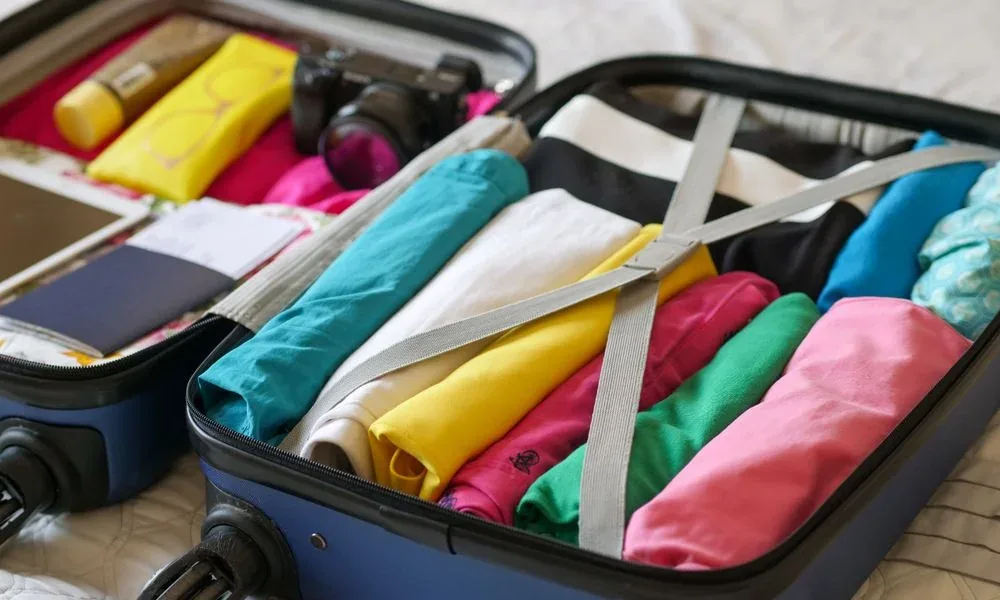
Pick two neutrals and one accent: black, navy, cream, or camel, plus burgundy, forest green, or soft blue. Lay the capsule on the bed and check every piece against every other; if a top only works with one bottom, it stays home. A week-long capsule is usually three tops, two bottoms, one dress or jumpsuit for day to night, one blazer, one knit, and sleepwear, plus one smart pair of shoes, one comfortable pair, and the bulkiest pair worn on the plane. Choose fabrics that travel well: silk, fine merino, and jersey shake out creases overnight, while heavy linen creases at once, so wear a linen blend on the travel day instead.
Fold, Roll, and Pack in Layers
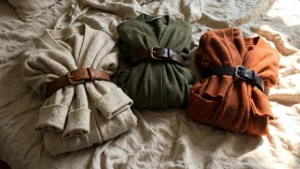
The folding-versus-rolling debate has a simple answer: do both. Rolling wins for soft clothes such as T-shirts, jersey dresses, knitwear, and underwear: a tight roll squeezes out air and comes out with fewer creases than a folded stack. Fold structured pieces such as blazers and tailored trousers, because rolling crushes their shape. To fold a shirt, button it fully, lay it face down, fold the sleeves in, then fold it in thirds; tissue paper between folds protects silk.
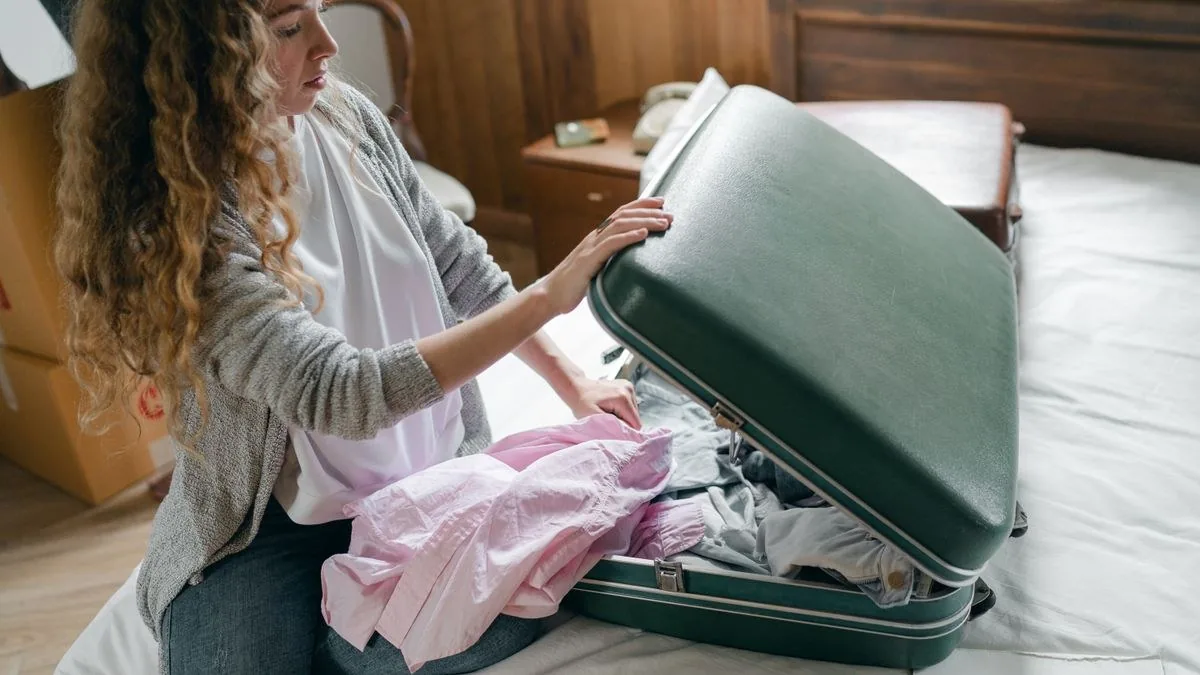
Pack in layers, heaviest and flattest first: trousers and knitwear at the bottom against the wheels, then rolled pieces and cubes packed tightly so nothing shifts, because movement causes creases. Shoes go in bags at the sides, stuffed with socks and belts. The top layer is the blazer, folded flat, and the dress laid across it, with the liquids bag in the lid pocket. Slim cubes, packed by category, keep the case organised, and a spare cube keeps worn clothes separate from clean ones. Test it at home: lift it to overhead-bin height. If it is hard to lift, the extra shoes must come out.
Liquids, Toiletries, and Valuables
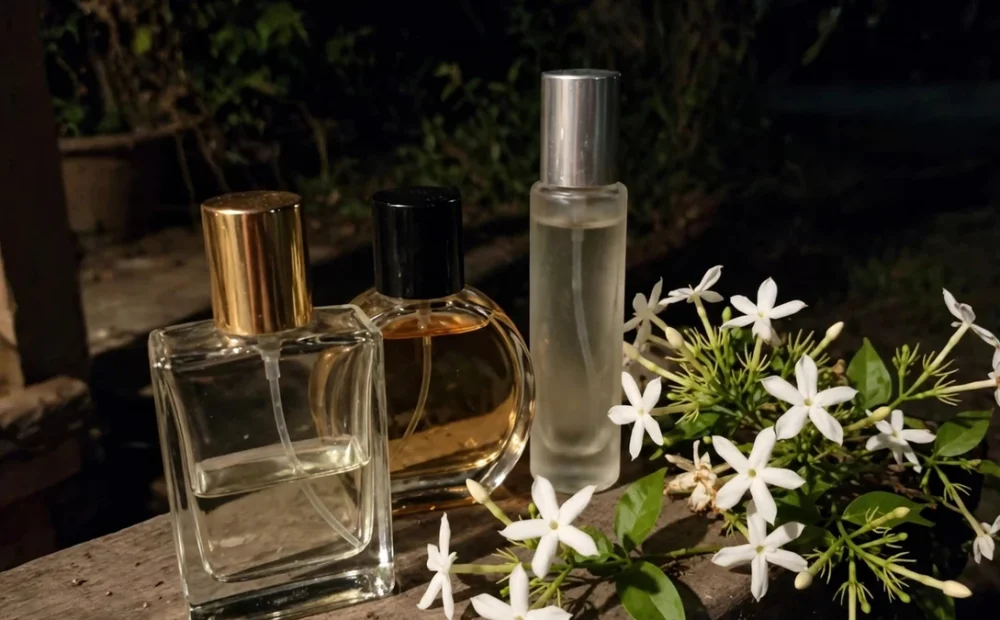
Toiletries are where luxury travellers overpack most: full-size bottles feel like a small luxury and weigh like a large one. Decant everything into 100 ml containers or smaller; a week’s skincare, shampoo, and conditioner fits in one quart-sized bag. Solid alternatives help more: a solid shampoo bar and a cleansing balm take up less space, never leak, and do not count against the limit. Keep the bag in the lid pocket for security, and double-bag anything that could leak, so a spill ruins a pouch, not a silk blouse. Decant perfume into a small atomiser; for a signature scent, our guide to the best luxury perfumes is a good place to choose one worth decanting.
Everything you cannot afford to lose goes in the bag that stays with you, not in the case that goes into the overhead bin. Jewellery, watches, cameras, laptops, passports, and cash are personal-item cargo, and a slim jewellery roll keeps necklaces from tangling. Photograph valuables before you travel, so a lost item can be described exactly. Medication and a spare pair of glasses travel in the personal item too, with one spare outfit in a small pouch, so even if your carry-on is gate-checked, you can freshen up on arrival.
The Personal Item: Your Second Carry-On
The personal item is the most underused part of the carry-on system: a whole second bag, free on most airlines as long as it fits under the seat. A structured tote or smart backpack of about 40 x 30 x 15 cm holds the valuables, the electronics, the liquids bag, a book, and the spare outfit. Choose one with a sleeve that slides over the carry-on handle, so the two bags move as one.
What goes in the personal item is a question of access, not volume: passport and boarding pass in an outside pocket, phone and charger within reach, and everything else in the order you will need it. Your everyday handbag can be the personal item, if it is big enough to hold a tablet and a pouch; if you are choosing one with travel in mind, our roundup of the best handbag trends covers the shapes that work hardest on a trip. On the plane, it goes under the seat, not in the overhead bin.
Packing for Different Trips: A Quick Comparison
A three-night city break, a week of business meetings, and a week by the sea all pack differently, even in the same case. The table shows how the system flexes.
| Trip type | Length | Capsule focus | Shoes | Pack this first | Leave behind |
|---|---|---|---|---|---|
| City break | 3 nights | Smart casual, one dress-up outfit | Walking shoes, one smart pair | Comfortable shoes, worn on plane | Evening gown, full toiletries |
| Business week | 5 nights | Tailored, neutral, two blazers | Smart shoes, one comfortable pair | Blazer, folded flat on top | Casual trainers, beachwear |
| Beach holiday | 7 nights | Light fabrics, swimwear, cover-ups | Sandals, one smart pair | Swimwear, sun protection | Heavy knitwear, tailored suits |
| Winter city trip | 4 nights | Knitwear, layers, one coat worn | Boots, worn on plane | Coat and boots, worn not packed | Summer dresses, sandals |
| Wedding weekend | 3 nights | One formal outfit, smart casual | Formal shoes, comfortable pair | Formal outfit, on top, tissue | Spare formal outfit |
| Long-haul + hop | 7 nights | Strictest airline capsule | One pair worn, one packed | Liquids bag, easy at security | Anything over the small limit |
| Multi-city tour | 7 nights | Versatile, weather-proof layers | Walking shoes, one smart pair | Packing cubes, by category | Single-use outfits |
Your Carry-On Checklist
- Case measured with wheels and handle included, weighed packed, under the strictest limit.
- Ten-piece capsule in two neutrals plus one accent, every piece checked against every other.
- Soft clothes rolled, structured pieces folded, everything in slim cubes, shoes in bags at the edges.
- Liquids bag of 100 ml containers in the lid pocket, valuables in the personal item.
- Heaviest shoes, coat, and blazer worn on the plane, spare outfit in the personal item.
- Case lifted one-handed to overhead-bin height at home, closed without sitting on it.
Frequently Asked Questions
How many outfits can I fit in a luxury carry-on?
A week of outfits fits in a 35 to 40 litre carry-on if you pack a capsule rather than a wardrobe. Ten interchangeable pieces give you far more combinations than ten random outfits.
Should I roll or fold my clothes?
Do both. Roll soft clothes such as T-shirts and knitwear, because rolling squeezes out air and avoids hard fold lines. Fold structured pieces such as blazers, because rolling crushes their shape.
What size carry-on should I buy for 2027?
Buy to the strictest airline you fly. A case around 55 x 35 x 25 cm, about 35 to 40 litres, passes on most European and long-haul carriers. Check the empty weight: on a 12 kg limit, a 4 kg case leaves only 8 kg.
How do I keep clothes from wrinkling in a carry-on?
Pack tightly so nothing shifts, because movement causes creases. Choose fabrics that travel well, such as silk and fine merino, and hang clothes as soon as you arrive. Steam in a hot bathroom removes most remaining creases.
Can I take perfume and full-size skincare in a carry-on?
Each liquid container must be 100 ml or less, all inside one clear quart-sized bag. Decant perfume and skincare into travel containers, or switch to solids, which do not count against the limit.
What should I do if my carry-on is gate-checked?
Keep valuables, medication, electronics, and one spare outfit in your personal item, which stays with you even if the case goes into the hold. Before handing it over, take out anything irreplaceable.
The Bottom Line
A luxury carry-on is a system, not a suitcase. Measure the bag, build a small capsule in a tight palette, roll the soft pieces, fold the structured ones, keep liquids and valuables within reach, and wear the heavy layers on the plane. One case will then carry you through a week in any city, in any season, without a crease or a struggle at the gate.
The real luxury is not what is in the case. It is stepping off the plane with nothing to wait for, walking past the carousel while everyone else waits, and arriving with clothes that look as good as they did when you packed them. Pack light: the trip starts the moment you land.
Note: Airline size, weight, and liquids rules change, and the strictest limit on your itinerary is the one that matters. Check your airlines’ current rules before you travel, and measure and weigh your packed case at home.