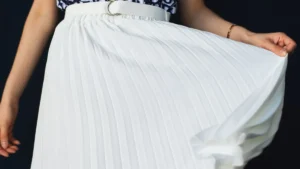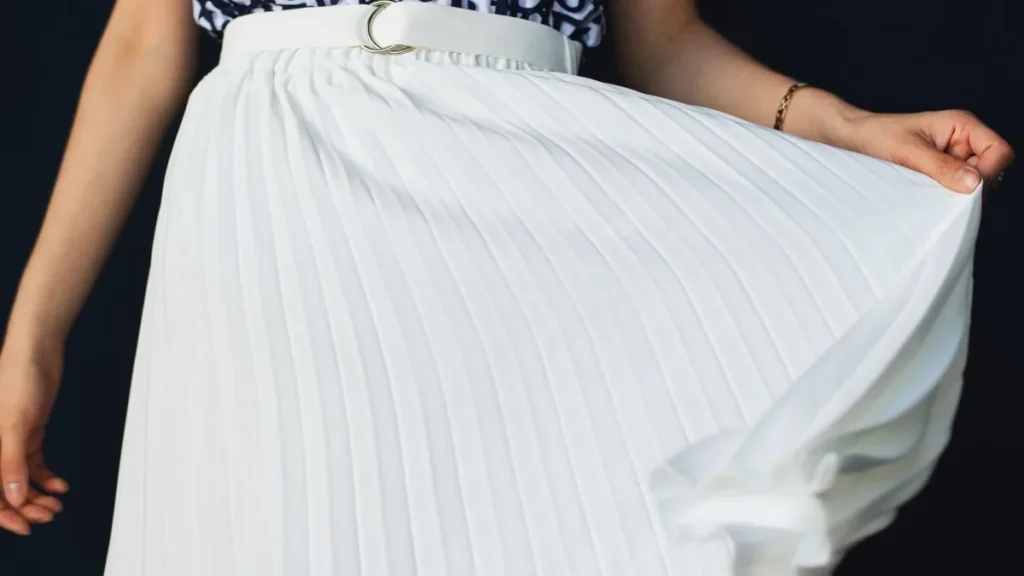
A pleated midi skirt is the hardest-working piece in a modern wardrobe, and also one of the easiest to get slightly wrong. It falls between the knee and the ankle, it moves when you walk, and it carries more volume than a straight skirt, so every choice around it — the top, the waistline, the shoes — shows. Get those three decisions right and the skirt does the rest, looking polished at work, relaxed at brunch and elegant after dark.
The secret is that a midi is not simply a longer mini or a shorter maxi. Its hem lands at mid-calf, often the widest part of the lower leg, so placement matters more than fabric or print. A hem that grazes the widest point of the calf can widen the leg, while a hem just above or below it keeps the leg looking long.
This guide stays firmly on the midi length: the right hem, a defined waist, tops and shoes that balance the pleats, and layering through every season.
Key Takeaways
- A true midi falls between the knee and the ankle, and the most flattering spot is usually mid-calf, just above or below the widest part of the calf.
- Define the waist every time: sit the waistband at your natural waist, tuck or crop the top, and add a slim belt when needed.
- Match the shoe to the skirt: light shoes for satin and chiffon, sturdier boots and loafers for leather, knit and heavy crepe.
- Keep the top fitted or tucked — an untucked top that ends at the hip hides the waist and breaks the outfit in half.
- One pleated midi covers work, weekends and evenings: change the top, the shoes and one layer, and the skirt stays the same.
What Makes a Midi Different From Any Other Pleated Skirt
A pleated skirt in any length shares the same pleats, but the midi length changes the whole equation. A mini shows the full leg and forgives a loose top. A maxi hides the leg entirely. A midi shows part of the leg, so the eye notices exactly where the hem ends and where the shoe begins. Midi styling is a game of lines: waistline, hemline and shoe line.
Start with the hem. True midi falls between the knee and the ankle, and the sweet spot for most people is mid-calf. Try the skirt on with the shoes you plan to wear. If the hem cuts across the widest part of your calf, try a skirt a couple of centimetres longer or shorter.
Then look at the pleats. Knife pleats are narrow and structured, holding their shape all day — a strong choice for work. Sunray and accordion pleats are wider and more fluid, suiting softer fabrics such as chiffon and satin. Box pleats add more volume at the hip and work best when the rest of the outfit is slim. Fabric follows the same logic: satin reads evening-ready, chiffon layers easily in warm weather, and leather gives the midi a modern edge. For 2027, deep burgundy, chocolate brown, forest green and ink navy lead, alongside black and ivory.
The Three Proportion Rules That Make a Midi Work
Every successful pleated midi outfit follows the same three rules.
Anchor the waistband at your natural waist. Your natural waist is the narrowest point of your torso. When a midi skirt sits there, the eye reads a clear structure: fitted top, defined middle, flowing skirt. When the waistband slides to the hips, the proportions blur — a slim belt creates the waistline a low waistband lacks.
Tuck, crop or cover — never let the top dangle. An untucked top that ends at the widest part of the hips hides the waist you just anchored and cuts the outfit in half. A full tuck suits lightweight shirts and blouses. A French tuck — only the front centre tucked in — suits sweaters and tees, where a full tuck would add bulk. A cropped top ending at the waistband is the third option.
Think in thirds. The top takes roughly one third of your height and the skirt two thirds, which lengthens the legs and balances the pleats. A heel helps, but it is not compulsory — a pointed flat, a loafer or a clean white trainer holds the same proportion.
Tops That Work With a Pleated Midi Skirt
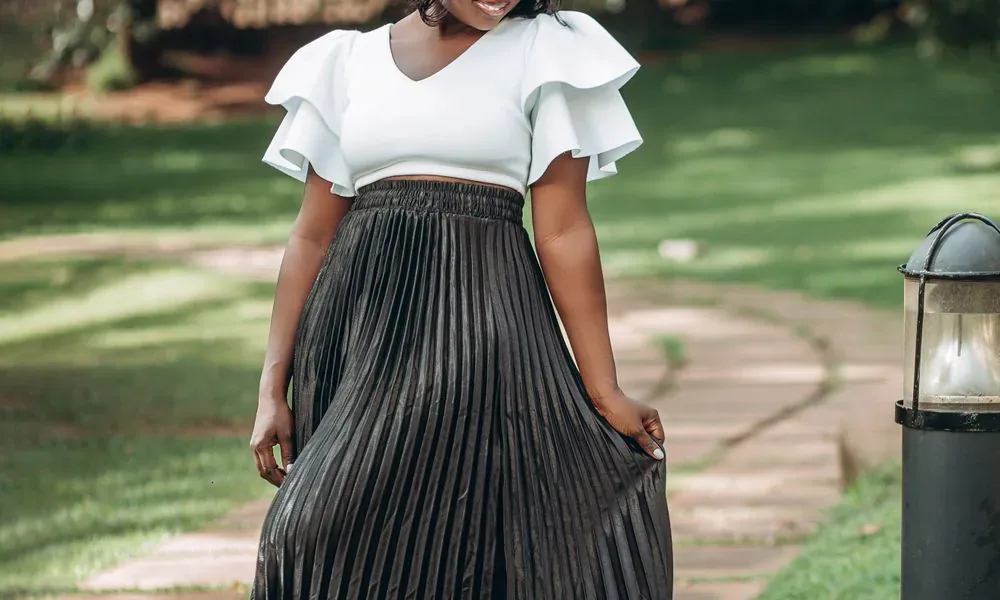
The rule is simple: the fuller the skirt, the more fitted the top should be. A pleated midi already brings volume and movement, so the top should stay close to the body.
A crisp white button-down shirt is the classic partner. Tucked into a navy or black pleated midi, it reads polished enough for the office and relaxed enough for lunch. A silk blouse softens the same formula: the fluid fabric sits neatly under a waistband, never adds bulk, and lifts a plain midi into something that feels considered. Our guide to the best silk blouses is a useful starting point for shapes that tuck cleanly.
A fine-knit turtleneck or a slim ribbed top is the cold-weather answer: tuck it in fully, add a slim belt, and the outfit stays sleek under a coat. A cropped cardigan works the same way in spring. For a casual day, a plain fitted tee or a sleeveless mock-neck top tucked into the skirt keeps the look easy, and a denim jacket worn open adds a layer without hiding the waist. For evenings, change the texture rather than the skirt — a lace top, a satin camisole or a fitted off-the-shoulder top turns the same midi into a dinner outfit.
Shoes: The Pairing That Decides the Whole Look
Shoes decide whether a pleated midi looks polished, casual or dressy, and the weight of the shoe should match the weight of the fabric: delicate satin wants a light shoe, sturdy leather can carry a boot.
Pointed-toe heels are the most reliable choice, because the point extends the leg line past the hem and stops the midi from shortening you. Kitten heels and block heels do the same job with more comfort. Strappy heeled sandals lift a satin or chiffon midi for evenings and weddings, while a heeled ankle boot anchors a leather or knit midi when the weather turns.
Flats work too, provided they are pointed or slim. Ballet flats and pointed loafers keep the line clean, and a loafer with a white sock is a preppy finish. White trainers are the casual option that actually works: a clean, slim trainer keeps the outfit relaxed — but avoid heavy, chunky trainers with a delicate pleated midi, because the shoe overwhelms the hem.
One Skirt, Seven Occasions
| Occasion | Top | Shoes | Layer and finishing touch |
|---|---|---|---|
| Office day | White shirt, fully tucked | Pointed heels or loafers | Tailored blazer, structured tote |
| Weekend brunch | Fitted tee or mock-neck top | White trainers or ballet flats | Denim jacket, crossbody bag |
| Date night | Satin camisole or lace top | Strappy heeled sandals | Small clutch, statement earring |
| Wedding guest | Silk blouse or off-shoulder top | Kitten heels or heeled sandals | Light wrap, delicate jewellery |
| Autumn day out | Fine-knit turtleneck, tucked | Block-heel ankle boots | Trench coat, slim belt |
| Winter workday | Ribbed knit, thermal layer | Knee-high leather boots | Long wool coat, opaque tights |
| Evening event | Backless or low-back top | Metallic heeled sandals | Cropped blazer, metallic clutch |
| Summer holiday | Cropped cardigan, linen shirt | Flat leather sandals | Straw tote, sunglasses |
Layering a Pleated Midi Skirt Through the Seasons
Layering is where a pleated midi earns its keep: the skirt never changes, only the layers around it do. Keep the outer layer simple so the pleats can show through.
A tailored blazer is the most useful layer you can own for a midi skirt. Worn open over a tucked-in shirt, it sharpens the outfit for work, and a slightly oversized blazer balances the flare of the skirt without hiding it. If you are choosing one, our round-up of the best blazers for women covers the cuts that sit best over a full skirt.
A trench coat is the spring and autumn answer. Worn open over a pleated midi, it lets the skirt move freely. Keep the coat in a neutral — beige, stone or navy — and let the skirt carry the colour. Our guide to the best trench coats will help you find a length that falls just below the midi hem rather than cutting across it.
In winter, a fine-knit turtleneck tucked into the skirt, opaque tights and knee-high boots make the midi a genuine cold-weather outfit under a long wool coat. In summer, a linen shirt, a camisole or a cropped cardigan is enough. A cropped leather jacket is the evening wildcard, because a jacket that ends at the waist keeps the proportions intact.
Fitting a Pleated Midi to Your Frame
Petite frames need the most care with a midi, because the length can overwhelm a smaller frame. Choose a high waist, a hem just below the knee rather than at mid-calf, and a pointed shoe. A front slit shows more leg as you walk, and a cropped or tucked top keeps the waist visible. Avoid wide belts. Taller frames can wear the full mid-calf length and carry wider pleats and heavier fabrics. For curvier figures, the pleats skim rather than cling, and a high waist with a slim belt defines the shape; for straighter figures, a belt and a fuller pleat add curves.
Your Pleated Midi Checklist
- Hem check: the hem sits just above or below the widest part of your calf, never exactly on it.
- Waist check: the waistband sits at your natural waist, and the top is tucked, cropped or belted — never left dangling.
- Top check: the top is fitted or tucked, so the pleats stay the fullest part of the outfit.
- Shoe check: the shoe matches the fabric weight, and the toe is pointed or slim enough to lengthen the leg.
- Layer check: the coat, blazer or jacket is open or cropped, so the pleats can move and show.
- Care check: the pleats are sharp, the skirt hangs straight, and nothing pulls across the hips.
Frequently Asked Questions
What shoes go best with a pleated midi skirt?
Pointed-toe heels are the most reliable choice, because they extend the leg line past the hem. Kitten heels suit autumn, strappy sandals suit evenings, and white trainers or pointed loafers keep the same skirt casual. Match the shoe weight to the fabric.
Can petite women wear a pleated midi skirt?
Yes, with the right proportions. Choose a high waist, a hem just below the knee rather than at mid-calf, and a pointed shoe. A front slit shows more leg, and a cropped or tucked top keeps the waist visible.
What top should I wear with a pleated midi skirt?
A white shirt or silk blouse suits work, a fine-knit turtleneck suits cold weather, a fitted tee suits weekends, and a lace top or satin camisole suits evenings. Tuck it in fully, French tuck the front, or wear a cropped length.
How do I wear a pleated midi skirt to work?
Pair a navy, black or charcoal pleated midi with a tucked-in shirt or silk blouse, pointed heels or loafers, and a tailored blazer. Keep the fabric matte rather than metallic and skip loud prints. The same skirt works for dinner if you swap the blazer for a clutch.
Can you wear a pleated midi skirt in winter?
Yes. Wear a fine-knit turtleneck tucked into the skirt, opaque tights, knee-high boots and a long wool coat. Steam the pleats after wearing a long coat.
What is the difference between a midi skirt and a pleated midi skirt?
A midi skirt is defined by its length: it falls between the knee and the ankle. A pleated midi skirt is a midi skirt with pleats — vertical folds that add volume, movement and texture.
The Bottom Line
A pleated midi skirt rewards a little attention and repays it all week. Anchor the waist, tuck the top, let the hem fall just above or below the widest part of your calf, and match the shoe to the fabric. Do those four things and one skirt covers the office, the weekend and the evening, in every season. The pleats are the statement.
Note: fit varies between brands, so try a pleated midi with the shoes you plan to wear before deciding on the length — a hem that looks right barefoot can sit very differently in heels.