
Silver bangle bracelets tarnish. It is not a fault, it is chemistry. Silver reacts with sulphur in the air, and the result is a dark film that creeps across the surface, first in the creases and the low spots, then across the whole band. A bangle worn every day stays brighter than one left in a drawer, because skin and clothing rub the surface clean, but sooner or later every silver bangle needs a proper clean.
The good news is that cleaning a silver bangle is simple, and the gentlest method is usually the best one. Warm water, a drop of mild soap and a soft cloth will deal with most dirt and light tarnish. The mistakes people make are reaching for something stronger than the bangle needs, scrubbing a textured or stone-set piece like a plain band, or putting a clean bangle away wet. Each of those does more harm than the tarnish did.
Below is a nine-step method for cleaning silver bangle bracelets at home in 2027, from inspection to storage. Each step explains what to do, what to avoid, and how long it takes, so you can clean a single bangle in ten minutes or a whole collection in an afternoon, without damaging the metal, the finish or any stones.
Key takeaways
- Warm water with a drop of mild soap and a soft cloth is the safest clean for most silver bangles, and it is enough for light dirt and early tarnish.
- Identify the metal and any stones before you start, because oxidised finishes, soft stones and glued settings need a gentler method than a plain polished band.
- Silver dip works fast but it is aggressive, so it should never be used on oxidised, stone-set or antique bangles, and it should not be your first choice for a plain bangle either.
- Dry every bangle completely before you store it, because moisture left on silver is the fastest route to fresh tarnish.
- No cleaning method restores a bangle that is bent, cracked or worn through to base metal, and a piece that is damaged should go to a jeweller rather than into a cleaning bath.
What silver bangle bracelets actually need from cleaning
A silver bangle needs two things from cleaning: the removal of dirt and tarnish, and no damage to the metal, the finish or the setting. That sounds obvious, but it is where most cleaning goes wrong. A method that is perfect for a plain polished band can strip the dark finish from an oxidised bangle, loosen the glue under a stone, or scratch a soft metal with an abrasive cloth. The right method depends on what the bangle is made of and how it is finished.
Tarnish itself is a thin layer of silver sulphide on the surface. It is not dirt, and it is not damage, and it does not mean the silver is poor quality. It forms faster in humid air, near cooking, in bathrooms, and when silver is stored next to rubber, wool or certain papers. It forms more slowly on a bangle that is worn often, because regular contact keeps the surface rubbed bright.
Cleaning is also a good time to inspect. A bangle that is cleaned regularly is a bangle whose problems are caught early, a loose stone, a thinning edge, a dent that is starting to crack. Our guide to cleaning bangle bracelets covers the general method for all metals, and the steps below adapt it specifically to silver, where the finish and the stones matter most.
What to look for before you clean
Start by reading the bangle. Check for a 925 hallmark, which tells you the piece is solid sterling silver and can take a normal clean. Check the finish: a bright polish, a hammered texture, a brushed surface or a dark oxidised finish each need a different touch. Check for stones, and note whether they are set in claws, bezels or glue, because glued stones and soft stones such as turquoise, pearl and opal should never be soaked or dipped.

Next, gather what you need before the bangle touches water: a bowl of warm, not hot, water, a drop of mild washing-up liquid, two soft lint-free cloths, a soft-bristled brush such as a baby toothbrush, and a dry towel. If you plan to polish, add a silver polish cloth or a small amount of gentle silver polish. Do not use toothpaste, baking soda paste, or abrasive scouring pads, all of which scratch silver.
Finally, decide how far the bangle needs to go. Light dirt and a dull surface need only soap and water. Visible tarnish that soap will not shift needs a silver polish cloth. Heavy black tarnish on a plain band may need a proper silver polish. A bangle with stones, an oxidised finish or damage should stop at soap and water, and anything beyond that should go to a jeweller. Knowing where to stop is the most useful cleaning skill there is.
How to clean silver bangle bracelets, step by step
Take the bangles off and inspect them first
What to do: Remove every bangle, look at it in good light, and note the finish, any stones, any dents, and any loose settings. What to avoid: Do not clean a bangle you have not looked at, because you will not know if a stone is loose until it is gone. Best for: Every bangle, every time. Time needed: 2 minutes. Standout tip: Run a fingertip around the inside of the band to feel for rough spots or sharp edges that signal damage.
Identify the metal and any stones before you touch water
What to do: Check the hallmark and the finish, and identify any stones and how they are set. What to avoid: Do not assume a silver-coloured bangle is solid sterling silver, and do not soak a stone-set or oxidised bangle without checking first. Best for: Oxidised, stone-set and antique bangles. Time needed: 2 minutes. Standout tip: If a stone is glued rather than claw-set, keep the bangle out of water entirely and clean it with a damp cloth only.
Mix warm water with a drop of mild soap
What to do: Fill a bowl with warm, not hot, water and add a single drop of mild washing-up liquid, then stir. What to avoid: Do not use hot water, which can loosen glue, and do not use a harsh detergent, bleach or an antibacterial soap. Best for: All silver bangles as a first clean. Time needed: 1 minute. Standout tip: Warm water lifts grease and skin oils far better than cold water, and a single drop of soap is enough.
Soak plain silver bangles briefly
What to do: Place plain, stone-free silver bangles in the soapy water for five to ten minutes so the soap can loosen dirt and surface tarnish. What to avoid: Do not soak stone-set, oxidised or glued bangles, and do not leave any bangle soaking for an hour. Best for: Plain polished or hammered bangles with light to moderate tarnish. Time needed: 5 to 10 minutes. Standout tip: Soak bangles one at a time or in a single layer, so they do not knock against each other and scratch.
Clean gently with a soft cloth or brush
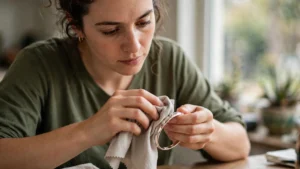
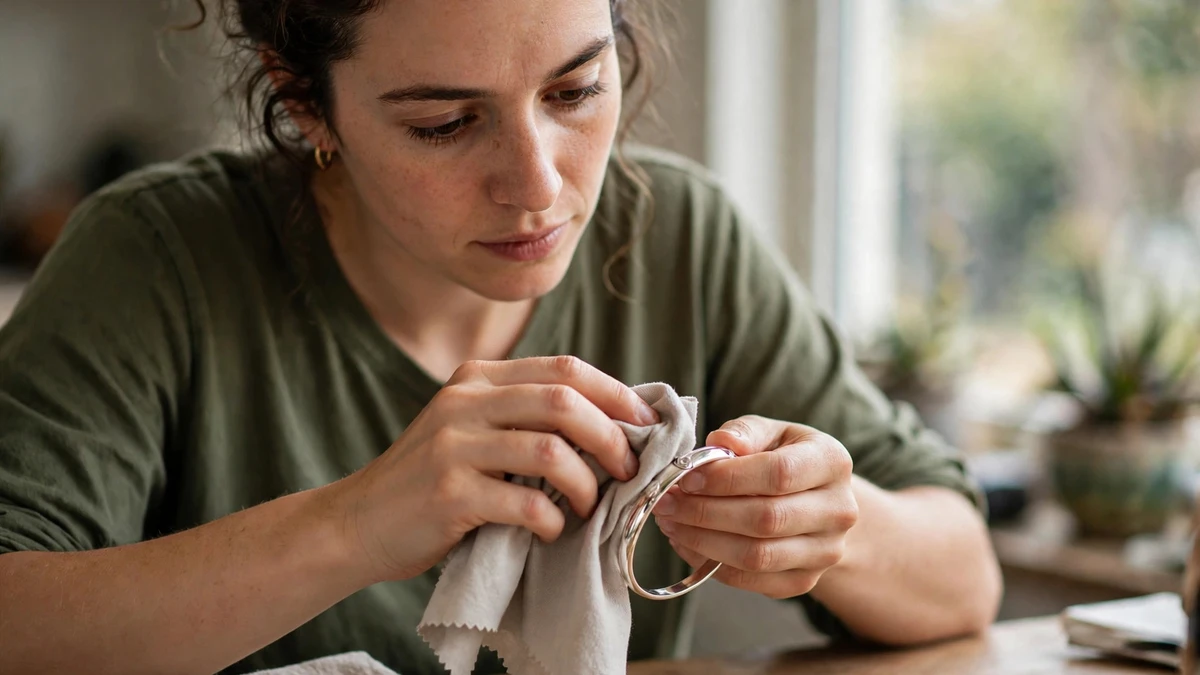
What to do: Lift the bangle out, rub it gently with a soft cloth, and use a soft brush for engraved lines, hammered texture and the inside of the band. What to avoid: Do not scrub hard, do not use a scouring pad, a rough sponge or toothpaste, and do not press on a stone setting. Best for: Removing loosened dirt and tarnish from textured and engraved bangles. Time needed: 2 to 3 minutes per bangle. Standout tip: Let the cloth do the work and go around the band twice rather than pressing hard once.
Rinse under clean lukewarm water
What to do: Rinse the bangle under clean lukewarm running water, turning it so every part is rinsed, until the water runs clear. What to avoid: Do not rinse over an open drain, and do not use hot water. Best for: Every bangle after soaping or brushing. Time needed: 1 minute. Standout tip: Put a plug in the sink or rinse over a bowl, so a dropped bangle does not disappear down the drain.
Dry fully with a soft lint-free cloth
What to do: Pat the bangle dry with a soft lint-free cloth, then leave it on a dry towel for a few minutes before storing it. What to avoid: Do not put a damp bangle away, do not dry it with a hairdryer on high heat, and do not use a rough towel. Best for: Every bangle, every time. Time needed: 2 to 3 minutes. Standout tip: Dry the inside of the band carefully, because water trapped against the skin side is the first place new tarnish appears.
Polish lightly and check the settings again
What to do: If tarnish remains, rub the bangle lightly with a silver polish cloth, or apply a small amount of gentle silver polish, then buff with a clean cloth. What to avoid: Do not polish oxidised bangles, do not use silver dip on a stone-set or oxidised piece, and do not polish over a stone. Best for: Plain polished bangles with tarnish that soap did not shift. Time needed: 3 to 5 minutes per bangle. Standout tip: Polish in straight lines along the band rather than in circles, which shows fewer marks on a polished surface.
Store them properly straight away
What to do: Put each dry bangle in its own soft pouch or a lined box, ideally with an anti-tarnish strip, and keep the box somewhere cool and dry. What to avoid: Do not pile bangles loose in a drawer, do not store them in a bathroom, and do not store silver next to rubber bands or wool. Best for: Keeping a clean bangle bright between wears. Time needed: 2 minutes. Standout tip: A sealed zip bag with the air pressed out works well as a low-cost anti-tarnish store for a single bangle.
Which cleaning method suits your bangle
A plain polished or hammered bangle can take the full method: soap, a short soak, a gentle rub, a rinse, a dry, and a polish if it needs one. That is the most forgiving combination, and it is the one most bangles will take. A brushed bangle is similar, but polish it lightly and in the direction of the brushing, or you will change the finish.
An oxidised bangle should stop at soap and water, with a soft cloth and no polish, no dip and no abrasive. A stone-set bangle should be cleaned with a damp cloth and a soft brush around, not over, the setting, and never soaked or dipped. A bangle you are unsure about should be treated as the most delicate thing it might be, and if you are still unsure, a jeweller will clean it for a small fee and check the settings at the same time.
The same logic applies to the rest of your silver. A bangle bracelet is a simple shape, so it is a good piece to learn on, and once you are confident with a bangle, the method transfers easily to rings, chains and earrings, with the same caution around stones and finishes.
The caveats that matter
The biggest risk in cleaning silver is not tarnish, it is over-cleaning. Silver is soft, and every polish removes a microscopic layer of metal. A bangle polished gently once a month will last for decades. A bangle scrubbed with an abrasive paste every week will thin, lose its hallmark, and eventually wear through. Gentle and occasional beats aggressive and frequent.
| Detail | What is known |
|---|---|
| Safest first clean | Warm water, a drop of mild soap, and a soft cloth |
| Soaking | Five to ten minutes for plain bangles only; never soak stone-set, oxidised or glued pieces |
| Silver dip | Fast but aggressive; never use on oxidised, stone-set or antique bangles |
| Baking soda and foil | Works on plain silver but is too harsh for oxidised finishes and soft stones, so it is not a routine clean |
| Ultrasonic cleaners | Not safe for stone-set, glued or fragile bangles; fine for plain solid bands only, and only if the machine is designed for jewellery |
| Drying | Pat dry with a soft cloth and leave to air for a few minutes; never store a bangle damp |
| How often | Clean when the bangle looks dull, roughly monthly for a daily-worn piece, less often for occasional wear |
| When to stop | If a stone is loose, the bangle is bent or cracked, or the finish is lifting, take it to a jeweller |
If a bangle has sentimental or monetary value, or if it is antique, take it to a jeweller rather than experimenting at home. A professional clean is inexpensive, it includes a setting check, and it is far cheaper than repairing a stone that came out in a cleaning bath or a finish that was stripped by a dip. Once it is clean, our guide to storing silver jewellery covers keeping it bright.
Checklist: cleaning silver bangles honestly
Use these checks before you clean, and again before you store the bangle.
- Inspect first: check the finish, the stones and the settings before the bangle touches water.
- Start gentle: soap and water first, and only move to polish if the tarnish does not shift.
- Keep it short: soak plain bangles for five to ten minutes, never for an hour.
- Use soft tools only: a soft cloth and a soft brush, never toothpaste, scouring pads or baking soda paste.
- Dry completely: pat dry, then air-dry for a few minutes before storing, including the inside of the band.
- Store it dry: a pouch or lined box with an anti-tarnish strip, somewhere dry, not a bathroom.
Frequently asked questions
How often should I clean silver bangle bracelets?
Clean a daily-worn bangle when it looks dull, roughly once a month, and an occasionally worn bangle two or three times a year. Wearing a bangle regularly keeps it brighter, so a piece you wear every day may need less cleaning than one that sits in a drawer.
Can I use baking soda and foil to clean silver bangles?
It works on plain silver, but it is too harsh for oxidised finishes, soft stones and glued settings, and it removes a small amount of metal each time. It is not a good routine clean. Soap and water, followed by a silver polish cloth if needed, is safer for most bangles.
Is silver dip safe for bangle bracelets?
Silver dip is safe only for plain, solid, stone-free silver, and even then it is aggressive. It should never be used on oxidised, stone-set, glued or antique bangles, because it strips the dark finish, can loosen glue, and can damage soft stones. For most people, a polish cloth is a better choice.
How do I clean a silver bangle with stones?
Use a damp soft cloth and a soft brush around the setting, never soak it, never dip it, and never use an ultrasonic cleaner. Dry it fully and check that the stone is secure. If the stone is loose or the setting is damaged, take the bangle to a jeweller.
Why did my silver bangle turn black?
It has tarnished, which is silver reacting with sulphur in the air. Humidity, cooking, bathrooms, rubber and wool all speed it up. It is normal, and it is reversible with gentle cleaning. A bangle that turns black very quickly may be stored somewhere damp or sulphurous, so check where you keep it.
Can I use an ultrasonic cleaner on silver bangles?
Only on plain, solid, stone-free bands, and only in a machine designed for jewellery. Never use one on a stone-set, glued, oxidised or fragile bangle, because the vibration can loosen stones and crack delicate settings. When in doubt, clean by hand.
The bottom line
Cleaning a silver bangle bracelet is a ten-minute job, and the gentlest method is usually the right one. Warm soapy water, a soft cloth, a thorough dry and a dry place to store it will keep most bangles bright for years. Polish is for tarnish that soap will not shift, and silver dip is a last resort for a plain band, never for a stone-set or oxidised piece.
Clean when the bangle looks dull, not on a schedule, inspect it every time you clean it, and take anything damaged, loose or valuable to a jeweller. A silver bangle looked after this way does not just stay bright, it stays wearable, and that is the whole point of owning one.