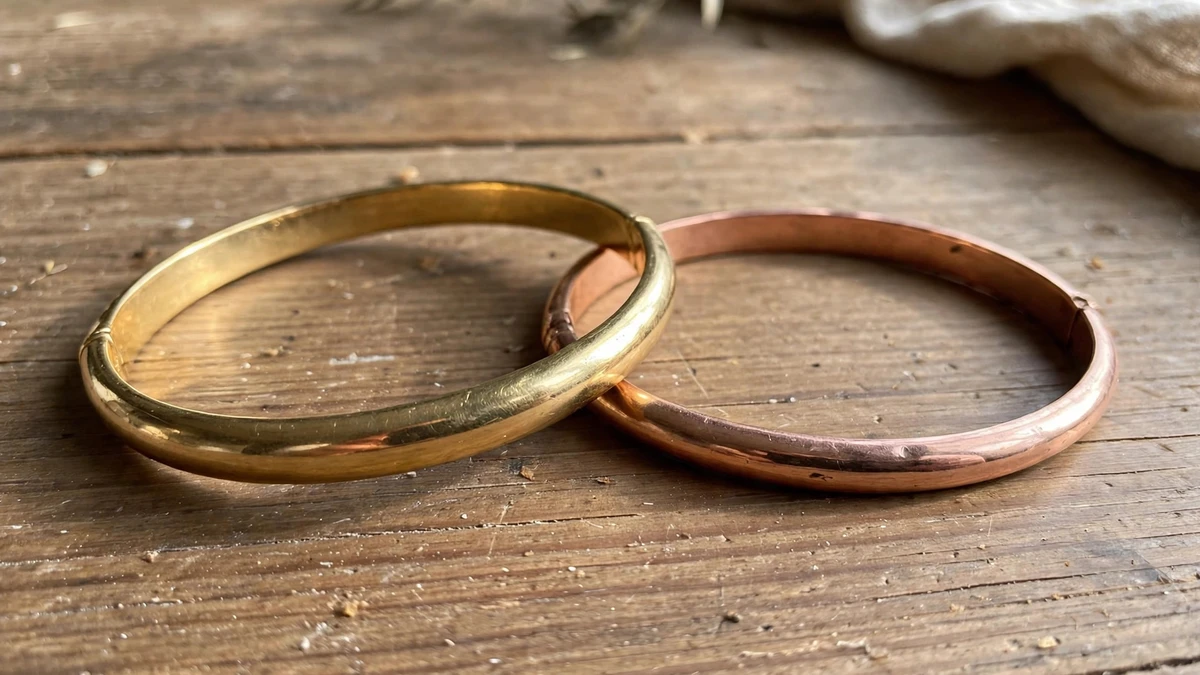

Gold and rose gold bangle bracelets look similar at a glance, but they behave differently on the wrist, against the skin, and in photographs. Yellow gold is warm, bright, and traditional. Rose gold is softer, pinker, and more modern, with a copper blush that flatters many skin tones and sits well beside both gold and silver jewellery.
The choice matters more than it seems, because a bangle is worn close to the skin all day and appears in almost every close photograph. The wrong metal can look washed out against a pale wrist, too yellow against a cool dress, or too pink against a warm one. The right metal disappears into the look and lets the bangle, the dress, and the wearer do the talking.
Below are nine comparisons that matter between gold and rose gold bangle bracelets in 2027, from colour and skin tone to price, durability, and how each metal ages. Each point is described by what it shows, what to consider, and who each metal suits best, so you can choose with confidence rather than habit.
Key takeaways
- Yellow gold is warm and bright, while rose gold is softer and pinker, with a copper blush that suits many skin tones.
- Rose gold suits cool and neutral skin tones well, while yellow gold suits warm skin tones and traditional wedding palettes.
- Rose gold is usually slightly harder and more durable than yellow gold, because of the copper in the alloy.
- Both metals need the same care, but rose gold can darken slightly over time, while yellow gold can look scratched more easily.
- Neither metal suits every wrist, every dress, and every budget, and a bangle in the wrong metal for your skin tone will look washed out, no matter how good the design is.
What gold and rose gold bangles actually are
Yellow gold is gold alloyed with silver and copper, which gives it its warm, sunny colour. The higher the karat, the richer the colour and the softer the metal. An 18-karat gold bangle is a deep, warm yellow. A 14-karat bangle is paler and harder. A 9-karat bangle is the palest and the hardest of the three, and the most affordable.
Rose gold is gold alloyed with a higher proportion of copper, which gives it its pink blush. The more copper, the pinker the colour. An 18-karat rose gold bangle is a soft, dusty pink. A 14-karat rose gold bangle is a little deeper and a little harder. Rose gold became popular in the 2010s and has stayed popular, because it suits both warm and cool skin tones and looks modern without looking trendy.
A bangle in either metal can be solid gold, gold-filled, or gold vermeil. Solid gold is the most durable and the most expensive. Gold-filled has a thick layer of gold bonded to a core, and it holds up well for years. Gold vermeil has a thinner layer over sterling silver, and it is the most affordable, but it needs gentler care. The metal colour and the construction are separate choices, and both matter.
How we compared them and what to look for
Look first at the colour against your skin. Hold a gold bangle and a rose gold bangle against the inside of your wrist in natural daylight, not under shop lighting. Yellow gold usually looks best on warm skin, where it picks up the warmth. Rose gold usually looks best on cool and neutral skin, where its pink blush adds colour without clashing. If both look good, the choice comes down to the dress and the rest of your jewellery.

Look next at the rest of your jewellery. A bangle should sit comfortably beside an engagement ring, a watch, and earrings. Yellow gold suits a yellow gold ring and warm-toned stones. Rose gold suits a rose gold or white gold ring, and it sits well beside silver, which makes it a flexible choice if your jewellery box is mixed. Our guide to gold vs silver bracelets covers the wider metal choice, if you are still deciding between warm and cool metals.
Finally, look at the price and the durability. Rose gold and yellow gold at the same karat usually cost about the same, because both are mostly gold. The difference is in the alloy, not the price. Rose gold is slightly harder, because copper is harder than silver, so it resists scratches a little better. Yellow gold is softer, so it shows scratches sooner, but it is easier for a jeweller to repair and resize.
Gold vs rose gold bangle bracelets: 9 comparisons that matter
Colour and warmth
What it shows: Yellow gold is bright, warm, and sunny. Rose gold is soft, pink, and muted, with a copper blush that reads as modern rather than traditional.
What to consider: Yellow gold can look too yellow against very pale skin or a cool white dress. Rose gold can look washed out against very warm, deep skin if the pink is too pale. Best for: Yellow gold for warm skin and traditional looks; rose gold for cool and neutral skin. Material: Gold alloy. Price range: Similar at the same karat. Standout feature: Yellow gold’s brightness against rose gold’s soft blush.
Skin tone match
What it shows: Yellow gold flatters warm undertones, where it echoes the warmth in the skin. Rose gold flatters cool and neutral undertones, where its pink adds colour without clashing.
What to consider: Skin tone is a guide, not a rule. Many people with warm skin wear rose gold beautifully, and many with cool skin wear yellow gold well. Try both against your wrist before deciding. Best for: Yellow gold for warm undertones; rose gold for cool and neutral undertones. Material: Gold alloy. Price range: Similar at the same karat. Standout feature: Rose gold’s flexibility across skin tones.
Price at the same karat
What it shows: At the same karat and weight, yellow gold and rose gold bangles cost about the same, because the price is set by the gold content, not the colour.
What to consider: A rose gold bangle may cost slightly more at a small jeweller if the alloy is less commonly stocked, but the difference is usually small. Compare like for like, same karat, same weight, same maker. Best for: Either metal, if price is the deciding factor. Material: Gold alloy. Price range: Similar at the same karat. Standout feature: No meaningful price gap between the two colours.
Durability and scratches
What it shows: Rose gold is slightly harder than yellow gold, because copper is harder than the silver used in yellow gold. That means rose gold resists small scratches a little better.
What to consider: Neither metal is scratch-proof, and both will show wear over years of daily use. A hammered or textured finish hides scratches better than a mirror polish in either metal. Best for: Rose gold for everyday wear; yellow gold for occasional wear. Material: Gold alloy. Price range: Similar at the same karat. Standout feature: Rose gold’s slight edge in hardness.
How each metal ages
What it shows: Yellow gold keeps its colour well, but a polished finish softens and dulls with wear. Rose gold can darken slightly over time as the copper in the alloy reacts with air and moisture.
What to consider: Both can be polished back to their original colour by a jeweller. Rose gold should be kept dry and stored in a pouch, because moisture speeds up the darkening. Best for: Yellow gold for a bangle kept for decades; rose gold for a bangle polished regularly. Material: Gold alloy. Price range: Similar at the same karat. Standout feature: Yellow gold’s stable colour over time.
Matching with other jewellery
What it shows: Yellow gold matches yellow gold rings, warm stones, and traditional pieces. Rose gold matches rose gold, white gold, and silver, which makes it easier to mix with a varied jewellery box.
What to consider: Mixing metals is widely accepted now, so a perfect match matters less than it used to. But a bangle that clashes with an engagement ring will be noticed in every photograph. Best for: Yellow gold for a matched gold set; rose gold for a mixed-metal collection. Material: Gold alloy. Price range: Similar at the same karat. Standout feature: Rose gold’s ability to sit beside silver and white gold.
Wedding and occasion wear
What it shows: Yellow gold is the traditional wedding metal, and it suits classic, formal, and warm-toned weddings. Rose gold suits modern, romantic, and blush-toned weddings, and it photographs softly in daylight.
What to consider: The dress colour matters. Yellow gold suits ivory and champagne. Rose gold suits blush, white, and cool ivory. Try the bangle with the dress on before the day. Best for: Yellow gold for traditional weddings; rose gold for modern and blush weddings. Material: Gold alloy. Price range: Similar at the same karat. Standout feature: Rose gold’s soft look in wedding photographs.
Everyday wear and versatility
What it shows: Rose gold reads as slightly more casual and modern, which makes it easy to wear every day with jeans, work clothes, and evening wear. Yellow gold reads as slightly more formal and traditional.
What to consider: A slim bangle in either metal works for everyday wear. A wide or heavily decorated bangle in either metal is better kept for occasions. Best for: Rose gold for everyday versatility; yellow gold for formal occasions. Material: Gold alloy. Price range: Similar at the same karat. Standout feature: Rose gold’s easy, modern feel for daily wear.
Resale and long-term value
What it shows: Both metals hold value in line with their gold content, and neither is a better investment than the other at the same karat. Resale value depends on weight and karat, not colour.
What to consider: Fashion changes, and rose gold’s popularity could fade, but the gold content does not. A well-made bangle in either metal keeps its material value. Best for: Either metal, if long-term value matters. Material: Gold alloy. Price range: Similar at the same karat. Standout feature: Equal value by weight and karat, regardless of colour.
Which metal suits which skin tone and style
Warm skin, with golden or olive undertones, usually suits yellow gold best. The warmth in the metal echoes the warmth in the skin, and the bangle looks like it belongs. Rose gold can also work on warm skin, especially a deeper rose gold, but a very pale rose gold can look washed out.
Cool skin, with pink or blue undertones, usually suits rose gold best. The pink blush adds colour to the wrist without clashing, and it sits well beside silver and white gold jewellery. Yellow gold can still work on cool skin, especially a paler 9-karat gold, but a deep 18-karat yellow gold can look too warm. Our guide to the best gold bangle bracelets covers yellow gold bangles in detail, if you lean that way.
Neutral skin, where the undertone is hard to place, suits both metals, and rose gold is often the safer first choice, because it is softer and less likely to clash with either warm or cool clothing. Style matters too: a traditional, formal wardrobe suits yellow gold, while a modern, mixed-metal wardrobe suits rose gold. When in doubt, try both against your wrist in daylight and choose the one that makes your skin look healthier, not the one that looks best in the box.
The caveats that matter
Gold and rose gold bangles are both gold, and both need the same basic care: keep them dry, store them separately so they do not scratch each other, and clean them gently with warm soapy water and a soft cloth. The differences are small, but they are real, and they are worth knowing before you spend money on a piece you will wear for years.
| Detail | What is known |
|---|---|
| Colour | Yellow gold is warm and bright; rose gold is soft and pink with a copper blush |
| Best skin tone | Yellow gold for warm undertones; rose gold for cool and neutral undertones |
| Price | About the same at the same karat and weight; price follows gold content |
| Durability | Rose gold is slightly harder and resists scratches a little better |
| How it ages | Yellow gold keeps its colour; rose gold can darken slightly with moisture |
| Matching jewellery | Yellow gold suits gold sets; rose gold sits well beside silver and white gold |
| Best for weddings | Yellow gold for traditional weddings; rose gold for modern and blush weddings |
| What it does not do | Neither metal suits every skin tone or every dress, and neither is a better investment |
If you have a nickel allergy, check the alloy before buying, because some gold alloys contain nickel, and rose gold alloys can vary. A reputable jeweller should be able to tell you what is in the alloy. If you are unsure, a gold-filled or solid gold bangle from a known maker is a safer choice than an unbranded piece with no information about its composition.
Checklist: choosing between gold and rose gold honestly
Use these checks before you buy, and again when the bangle arrives.
- Hold both metals against your wrist in natural daylight, and choose the one that makes your skin look healthier.
- Match the bangle to your engagement ring metal first, then to the dress or outfit.
- Compare price at the same karat and weight, and do not pay a premium for colour alone.
- Check the clasp and the finish, and ask about the alloy if you have sensitive skin.
- Think about how often you will wear it, and choose the harder metal if it will be an everyday piece.
- Store the bangle in a pouch, keep it dry, and clean it gently with warm soapy water.
Frequently asked questions
Is rose gold real gold?
Yes. Rose gold is gold alloyed with copper, which gives it its pink colour. An 18-karat rose gold bangle is 75 percent pure gold, the same as an 18-karat yellow gold bangle. The colour comes from the alloy, not from a coating, so it does not wear off.
Does rose gold tarnish?
Rose gold can darken slightly over time, because the copper in the alloy reacts with air and moisture. This is slow and reversible with a professional polish. Keeping the bangle dry and stored in a pouch slows it down. Our guide to why gold jewellery never goes out of style explains how gold alloys behave over time, and why proper storage matters for every colour of gold.
Can I wear gold and rose gold bangles together?
Yes. Gold and rose gold sit well together in a stack, and many people mix them deliberately. Keep the bangles slim and in a similar finish, so the stack looks intentional rather than accidental, and avoid mixing more than two metals in one stack.
Which is better for sensitive skin?
Neither is automatically better. Both are gold alloys, and the alloy composition matters more than the colour. If you have sensitive skin or a nickel allergy, ask the jeweller about the alloy, and choose a solid gold or gold-filled piece from a reputable maker.
Is rose gold still in fashion in 2027?
Yes. Rose gold became popular in the 2010s and has stayed popular, because it suits many skin tones and sits well with both warm and cool jewellery. It reads as modern rather than trendy, and it is now a standard option alongside yellow and white gold.
Which metal should I choose for a wedding bangle?
Match the ring metal first. A yellow gold ring suits a yellow gold bangle, and a rose gold or white gold ring suits a rose gold bangle. After that, match the dress: yellow gold for ivory and champagne, rose gold for blush and cool white.
The bottom line
Gold and rose gold bangle bracelets are both real gold, at about the same price, and the choice comes down to colour, skin tone, and the rest of your jewellery. Yellow gold is warm, bright, and traditional, and it suits warm skin and classic weddings. Rose gold is soft, pink, and modern, and it suits cool and neutral skin, mixed-metal collections, and everyday wear. Rose gold is slightly harder and more durable, while yellow gold keeps its colour more steadily over time.
Try both against your wrist in daylight, match the bangle to your ring, and choose the metal that makes your skin look healthier. The right choice is the one you will reach for every day, not the one that is most fashionable this year.