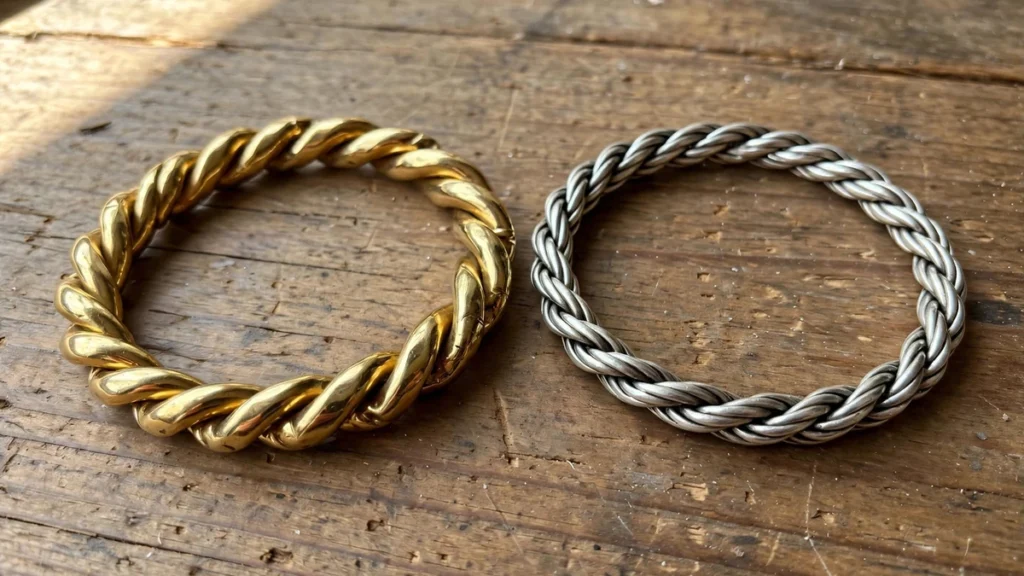
Gold and silver are the two metals almost every bracelet collection starts with, and choosing between them is rarely just about colour. Gold is warm, rich and traditionally the more expensive choice. Silver is cool, bright and usually the more affordable one. Both can look beautiful, both can last for years, and both can disappoint if you choose the wrong one for your skin, your wardrobe, or your budget.
The real differences are practical as much as visual. Gold does not tarnish, which makes it easier to look after, but it costs considerably more, and a thin gold bracelet can feel light for its price. Silver is cheaper and brighter, but it tarnishes, needs regular cleaning, and can feel cool against warm skin tones. Neither metal is better in every way, which is why the choice comes down to how you wear bracelets, not which metal wins a beauty contest.
This guide compares gold and silver bracelets across nine points that matter, from colour and skin tone to price, care, durability and everyday wear. Each comparison explains what the difference actually is, what to watch for, and which metal suits which wrist, so you can choose with your habits in mind, not just a photograph.
Key takeaways
- Gold is warm-toned and does not tarnish, while silver is cool-toned, brighter, and needs regular cleaning to stay bright.
- Gold usually suits warm skin tones and silver usually suits cool skin tones, but the undertone of the piece matters more than the rule.
- Silver bracelets cost considerably less than gold ones of the same size, which makes silver easier to experiment with and replace.
- Gold is softer than sterling silver in its pure form, so everyday gold bracelets are usually alloyed, while silver is more prone to scratches and tarnish.
- No metal suits every wrist, every wardrobe or every budget, and a bracelet in either metal can be a poor choice if the fit, the clasp or the finish is wrong.
What gold and silver bracelets actually are
A gold bracelet is made from gold mixed with other metals to make it strong enough for daily wear. Pure gold, 24 karat, is too soft for a bracelet that gets knocked around, so most gold bracelets are 14 or 18 karat, meaning 14 or 18 parts gold in 24, with the rest made up of metals such as copper, silver or zinc. The karat affects both the colour and the price: higher karat gold is richer in colour and more expensive, lower karat gold is harder and more affordable.
A silver bracelet is usually sterling silver, which is 92.5 percent silver and 7.5 percent other metals, most often copper. That small amount of copper gives sterling silver its strength, but it is also what causes tarnish, the dark film that appears when silver reacts with air and moisture. Fine silver, which is 99.9 percent pure, is softer and tarnishes less, but it is too soft for most bracelets and rarely used for pieces that are worn every day.
How we compared gold and silver bracelets
This comparison looks at the two metals the way a wearer experiences them, not the way a jeweller grades them. Each of the nine comparisons covers one practical difference, colour, skin tone, price, care, durability, weight, versatility, ageing, and everyday comfort, and explains what each metal offers and what it asks of you in return. The aim is not to declare a winner, because there is not one, but to make the trade-offs clear.

Price is compared for bracelets of similar size and design, because a thin gold chain and a chunky silver cuff are not a fair comparison. Care is compared for daily wear, not for pieces kept in a box. Durability is compared for bracelets worn most days, since a bracelet that lives in a drawer does not test either metal. Where the two metals behave differently over time, that difference is stated plainly, with the practical consequence for the wearer.
The comparisons also assume sterling silver and 14 or 18 karat gold, the two forms most people actually buy. Plated jewellery behaves differently, and where that matters, it is noted. For the broader picture of how the two metals compare across all jewellery, our guide to gold vs silver jewellery covers rings, necklaces and earrings as well as bracelets.
Gold vs silver bracelets 2027: 9 comparisons that matter
Colour and warmth
What it shows: Gold is warm, yellow and rich, and it catches light with a soft glow. Silver is cool, white and bright, and it reflects light more sharply. What to consider: Gold can look yellow against very pale skin, and silver can look cold against very warm skin, so the effect depends on the wearer as much as the metal. Best for: Gold for warm, autumnal wardrobes; silver for cool, monochrome and black-and-white outfits. Material: 14 or 18 karat gold vs sterling silver. Price range: Gold from around $150 for a slim chain to several thousand for a solid cuff; silver from around $40 to a few hundred. Standout feature: Gold’s warmth is its signature; silver’s brightness is its own.
Skin tone
What it shows: Gold usually flatters warm undertones, where the veins on the wrist look greenish, while silver usually flatters cool undertones, where the veins look bluish. What to consider: The rule is a guide, not a law; many people wear both metals well, and the shade of the metal matters as much as the metal itself. Best for: Gold for warm undertones; silver for cool undertones. Material: Yellow gold vs sterling silver. Price range: Similar to the colour comparison above. Standout feature: Rose gold sits between the two and suits more skin tones than either yellow gold or silver alone.
Price and value
What it shows: A gold bracelet costs several times more than a silver bracelet of the same size and design, because gold itself is far more expensive per gram. What to consider: Gold holds its value better and can be resold for a meaningful amount, while silver’s resale value is modest. Best for: Silver for experimenting with styles and for trend-led pieces; gold for a piece you expect to keep for years. Material: 14 karat gold vs sterling silver. Price range: A slim silver chain $40 to $120; a slim 14 karat gold chain $200 to $800 and up. Standout feature: Silver lets you try a style cheaply before committing to it in gold.
Care and cleaning
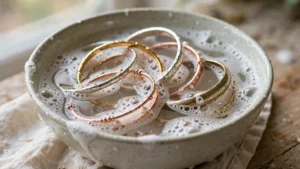
What it shows: Gold does not tarnish and needs only occasional cleaning with warm soapy water, while silver tarnishes and needs regular polishing to stay bright. What to consider: Silver tarnishes faster in humidity, near perfumes and lotions, and when it is not worn, so a silver bracelet left in a drawer will darken. Best for: Gold for low-maintenance wearers; silver for anyone happy to clean jewellery every few weeks. Material: 14 or 18 karat gold vs sterling silver. Price range: Cleaning costs are small for both, but silver needs a polishing cloth and more frequent attention. Standout feature: Gold’s resistance to tarnish is its biggest practical advantage, and our guide to cleaning gold jewellery covers the simple routine that keeps it bright.
Durability and scratches
What it shows: Sterling silver is harder than pure gold, but 14 karat gold is harder than sterling silver, so everyday gold bracelets are usually the more scratch-resistant of the two. What to consider: Both metals scratch with daily wear, and silver shows scratches more visibly because its bright surface contrasts with the mark. Best for: 14 karat gold for hard daily wear; silver for gentler, occasional wear. Material: 14 karat gold vs sterling silver. Price range: Repair and re-polishing costs are similar for both metals. Standout feature: Gold can be re-polished to look new more easily than silver, which loses metal each time it is polished.
Weight and comfort
What it shows: Gold is denser than silver, so a gold bracelet of the same size feels heavier on the wrist, while silver feels lighter and easier to forget. What to consider: Heavier is not always worse; some people like the solid feel of gold, while others find a heavy bracelet tiring by the end of the day. Best for: Silver for all-day comfort and for stacking; gold for a single statement bracelet. Material: 14 karat gold vs sterling silver. Price range: Weight affects price in gold more than in silver, because gold is sold largely by weight. Standout feature: A silver stack of three or four bracelets can weigh less than a single chunky gold cuff.
Versatility across outfits
What it shows: Silver reads as modern, minimal and versatile, pairing easily with black, white and cool colours, while gold reads as warm, classic and slightly dressier. What to consider: Gold suits evening and formal outfits more naturally, while silver suits daytime, office and casual outfits more easily. Best for: Silver for a capsule wardrobe in cool tones; gold for a wardrobe built around warm neutrals. Material: Sterling silver vs 14 karat gold. Price range: No price difference for versatility itself. Standout feature: Mixed-metal bracelets, which combine gold and silver in one piece, suit more outfits than either metal alone.
How each metal ages
What it shows: Gold keeps its colour for decades with little change, while silver darkens with tarnish and develops a patina that some people love and others dislike. What to consider: Silver’s patina can be polished away, but it returns, so silver asks for ongoing attention to stay bright. Best for: Gold for a bracelet you want to look the same in ten years; silver for anyone who likes the lived-in look of a patina. Material: 14 karat gold vs sterling silver. Price range: Long-term care costs are higher for silver. Standout feature: Antique silver’s darkened patina is prized by collectors, while tarnished modern silver usually just looks neglected.
Everyday wear and lifestyle
What it shows: Silver is the easier metal for active days, water, and hands-on work, because it is cheaper to replace and lighter to wear, while gold suits quieter days and occasions where the bracelet is meant to be noticed. What to consider: Neither metal likes chlorine or harsh chemicals, and both should come off for swimming, cleaning and heavy manual work. Best for: Silver for travel, work and everyday wear; gold for occasions, evenings and pieces with sentimental value. Material: Sterling silver vs 14 karat gold. Price range: Losing a silver bracelet costs far less than losing a gold one. Standout feature: Many people own both: silver for daily wear, gold for the bracelet that matters most.
Which metal suits which wrist and wardrobe
Start with the wardrobe. If your clothes are mostly cool-toned, black, white, navy, grey, silver will get more wear. If they are mostly warm-toned, cream, camel, olive, rust, gold will get more wear. Then look at the wrist. Warm undertones usually suit gold, cool undertones usually suit silver, and if you are unsure, try both in daylight and see which one makes your skin look healthier rather than washed out.
Budget is the third factor, and it is the one that decides most purchases. Silver lets you own several bracelets, try different styles, and replace a lost piece without distress. Gold asks for a bigger commitment, and it rewards that commitment with permanence and resale value.
Care is the last thing to weigh. If you will clean jewellery every few weeks and store it properly, silver is no trouble at all, and our guide to cleaning silver jewellery makes the routine simple. If you want a bracelet you can wear daily and forget about, gold is the easier metal to live with. Be honest about which kind of wearer you are, because the metal that suits your habits will always look better than the one that fights them.
The caveats that matter
The biggest caveat is that not all gold and silver bracelets are what they seem. Gold-plated bracelets have a very thin layer of gold over a base metal, and that layer wears off a bracelet faster than on any other piece of jewellery, because a bracelet rubs against skin, sleeves and desks all day. Gold vermeil and gold-filled pieces last longer, but they still wear, and they should be bought with that in mind. Silver-plated jewellery has the same problem in reverse, with a thin silver layer that wears through to the base metal beneath.
Allergies are the second caveat. Nickel is the usual trigger, and it appears in some gold alloys and in some silver alloys, particularly in cheaper pieces. If a bracelet leaves a mark or an itch, stop wearing it and check what it is made of. Hypoallergenic options exist in both metals, and they are worth choosing for a bracelet that sits against the skin all day.
| Detail | What is known |
|---|---|
| Colour | Gold is warm and rich; silver is cool and bright |
| Skin tone | Gold usually suits warm undertones; silver usually suits cool undertones |
| Price | Gold costs several times more than silver for the same size and design |
| Tarnish | Gold does not tarnish; silver tarnishes and needs regular polishing |
| Durability | 14 karat gold is harder than sterling silver; both scratch with daily wear |
| Weight | Gold feels heavier; silver feels lighter and suits stacking |
| Resale value | Gold holds value well; silver’s resale value is modest |
| What neither does | Neither suits every wrist, wardrobe or budget; plated versions wear through faster |
Checklist: choosing between gold and silver bracelets
Use these checks before you buy, and keep them in mind when you already own both.
- Check your wardrobe: cool tones favour silver, warm tones favour gold.
- Check your skin in daylight: try both metals on the wrist and see which flatters it.
- Check the budget honestly: silver for experimenting, gold for a lasting piece.
- Check the form: solid or filled lasts longer than plated, especially on a bracelet.
- Check the care you will actually do: silver needs regular polishing, gold needs very little.
- Check the clasp and fit before the metal: a good clasp and a comfortable fit matter more than the karat.
Frequently asked questions
Is gold or silver better for a bracelet?
Neither is better overall. Gold does not tarnish, holds its value and suits warm tones, while silver is brighter, lighter, cheaper and suits cool tones. Choose by your skin, your wardrobe and how much care you are willing to do.
Can I wear gold and silver bracelets together?
Yes. Mixed-metal stacks are a current look, and a shared texture or a single repeated colour ties the metals together. Keep the mix to two metal tones in a small stack so it looks deliberate.
Why does my silver bracelet keep tarnishing?
Silver reacts with air, moisture and sulphur, and it tarnishes faster in humidity, near perfumes and lotions, and when it is not worn. Regular wearing, a quick wipe after use, and dry storage slow it down, and a silver polishing cloth restores the shine.
Is gold vermeil as good as solid gold for a bracelet?
It looks like gold and costs far less, but the gold layer is thinner than solid gold and wears over time, especially on a bracelet that rubs all day. It is a good choice for trying a style, and a less good choice for a bracelet you expect to wear daily for years.
Which metal is better for sensitive skin?
Both can irritate if the alloy contains nickel, which is the usual trigger. Look for nickel-free or hypoallergenic pieces in either metal, and stop wearing a bracelet that leaves a mark or an itch until you know what it is made of.
Do gold bracelets scratch more easily than silver?
Pure gold is softer than sterling silver, but 14 karat gold is harder than sterling silver, so everyday gold bracelets are usually more scratch-resistant. Both metals scratch with daily wear, and both can be re-polished.
The bottom line
Gold and silver bracelets are not rivals so much as two different answers to the same question. Gold offers warmth, permanence and very little maintenance, at a price that asks for commitment. Silver offers brightness, lightness and affordability, at the cost of regular cleaning and a shorter life for the finish. The right choice is the metal that matches your skin, your wardrobe, your budget and your willingness to look after it.
Many people end up owning both, and that is the most honest answer of all: silver for the everyday bracelet that takes the knocks, gold for the one that matters most. Choose the metal for the life the bracelet will lead, and it will look right for years.