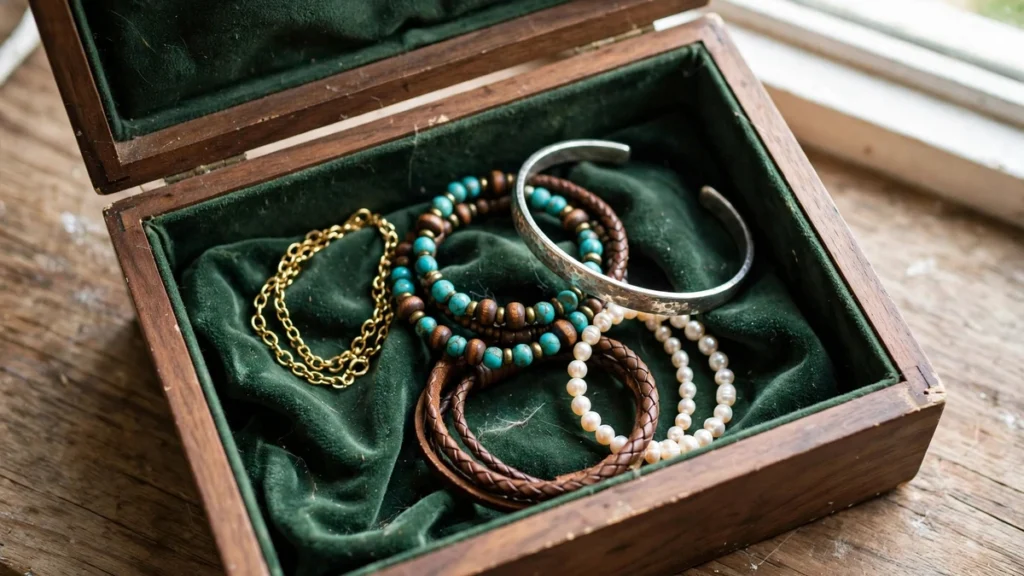
Bracelets are the hardest jewellery to store well. Necklaces hang, rings sit in slots, and earrings pair up neatly, but bracelets are long, flexible, and prone to tangling, scratching, and stretching. Left in a pile in a drawer, a good bracelet can be scratched by a harder stone, kinked by a chain, or stretched out of shape by its own weight within a season.
The problem is not a lack of storage options. It is that most people store bracelets the way they store everything else, tossed together in a box, and then wonder why a tennis bracelet has lost stones or a beaded bracelet has gone slack. Bracelets need their own space, their own support, and a little more thought than the rest of the collection.
Below are nine steps for storing bracelets properly in 2027, from cleaning each piece before you put it away to choosing the right organiser for the bracelets you actually own. Each step is described by what to do, what to avoid, and how long it takes, so you can build a routine that protects every bracelet you own.
Key takeaways
- Bracelets need their own space: never store them loose in a pile with other jewellery.
- Clean and dry every bracelet before storing it, because skin oils and moisture cause tarnish and damage.
- Keep each bracelet separate, in its own pouch, slot, or compartment, so pieces cannot scratch each other.
- Hang bangles and cuffs, lay chains and tennis bracelets flat, and never hang beaded or elastic bracelets.
- No storage method fixes a bracelet that is already damaged, and a stretched elastic or a loose clasp needs repair, not better storage.
Why bracelets need their own storage
A bracelet is a long, flexible piece of jewellery, and that shape is exactly what makes it vulnerable. A chain bracelet can kink if it is folded tightly. A beaded bracelet can stretch if it hangs under its own weight. A tennis bracelet can lose stones if it knocks against a harder piece in the same box. And a bangle can scratch a softer bracelet in a single night if they are stored touching.
The other problem is that bracelets are often the last thing you take off and the first thing you toss aside. After a long day, it is tempting to drop a bracelet into a drawer and deal with it later. That habit is what causes most bracelet damage, not wear, and it is easy to fix once you have a proper place for each piece.
Good bracelet storage is not expensive or complicated. It is a matter of giving each bracelet its own compartment, keeping the storage dry and cool, and spending two minutes cleaning a piece before you put it away. The nine steps below cover every type of bracelet, from a solid gold bangle to a beaded bracelet on elastic cord, and they work whether you own three bracelets or thirty.
How to store bracelets properly
The method below works for every bracelet, but the details change with the type. A bangle and a tennis bracelet do not need the same treatment, and a leather bracelet needs different care from a pearl one. Read the steps in order, then adapt them to the pieces you own.

Before you start, gather what you need: a soft cloth, a few small pouches or a lined organiser, and a dry, cool place to keep them. You do not need special products. A clean, dry drawer with a lined tray is enough for most collections, and a dedicated organiser is worth the small cost if you own more than a handful of bracelets. Our guide to storing jewellery properly covers the general principles for a whole collection, and the steps below apply those principles specifically to bracelets.
The 9 steps to storing bracelets properly
Clean each bracelet before you put it away
What to do: Wipe every bracelet with a soft, dry cloth after wearing it, to remove skin oils, sweat, and any cream or perfume that has settled on the metal or stones.
What to avoid: Do not put a bracelet away damp, and do not use a harsh cleaner or a rough cloth on gold, pearls, or plated pieces. Best for: Every bracelet, every time you wear it. Time needed: One minute. Standout tip: Keep a soft cloth in your jewellery box so cleaning becomes part of taking the bracelet off.
Cleaning before storage is the single most useful habit in this guide. Skin oils and moisture are the main causes of tarnish on silver and gold vermeil, and they also dull pearls and stones over time. A quick wipe takes a minute and saves hours of cleaning later.
Dry every bracelet completely
What to do: Let a bracelet air-dry for a few minutes after cleaning, and check that clasps, links, and any cord or elastic are fully dry before you store it.
What to avoid: Never store a bracelet that is still damp from washing, rain, or a swim, and never dry it with heat from a hairdryer or a radiator. Best for: Silver, gold vermeil, pearls, and leather bracelets. Time needed: Two to five minutes. Standout tip: Lay the bracelet flat on a dry cloth while it dries, so it keeps its shape.
Give each bracelet its own pouch or slot
What to do: Store each bracelet in its own soft pouch, or in its own compartment in a lined organiser, so no two pieces touch each other.
What to avoid: Do not pile bracelets together in one box or one drawer, and do not store a bracelet loose with rings or necklaces. Best for: Every bracelet, especially gold, silver, and gemstone pieces. Time needed: A few minutes to set up. Standout tip: Soft cloth pouches are cheap, and they stop scratching better than any box divider.
This step prevents most bracelet damage. A diamond or a hard stone can scratch gold in a single night, and a chain can tangle around a bangle in minutes. Separate storage is the simplest protection there is, and it also makes it easier to find the bracelet you want.
Lay chains and tennis bracelets flat
What to do: Lay chain bracelets and tennis bracelets flat in a compartment, with the clasp closed, so the chain does not kink and the stones do not press against anything hard.
What to avoid: Do not hang a chain bracelet from a hook, and do not fold it tightly or coil it into a small space. Best for: Chain bracelets, tennis bracelets, and link bracelets. Time needed: Under a minute. Standout tip: Close the clasp before storing, so the chain cannot tangle around itself.
Chain bracelets kink when they are folded or hung, and a kinked link is hard to straighten without weakening it. Laying a chain flat, with the clasp fastened, keeps it in its natural shape and stops it tangling with its neighbours.
Hang bangles and cuffs, never beaded bracelets
What to do: Store solid bangles and cuffs on a bracelet stand or a padded bar, where they hold their shape and stay separate from other pieces.
What to avoid: Never hang a beaded bracelet, an elastic bracelet, or a chain bracelet, because hanging stretches elastic and kinks chains. Best for: Solid bangles, cuffs, and rigid bracelets. Time needed: A few minutes to set up. Standout tip: A bracelet stand on a dressing table is also a good reminder to wear the pieces you own.
Keep bracelets away from harder stones and metals
What to do: Store soft metals like gold and silver away from diamonds, sapphires, and other hard stones, and keep pearls away from anything that can scratch them.
What to avoid: Do not store a pearl bracelet next to a diamond bracelet, and do not let a gold bracelet rub against a steel one. Best for: Mixed collections with gold, silver, pearls, and gemstones. Time needed: A few minutes to rearrange. Standout tip: If you are short on space, wrap the softer piece in a cloth before storing it next to a harder one.
Hardness matters more than most people realise. A diamond can scratch almost anything, and a sapphire can scratch gold with ease. Separate compartments solve this, but if two pieces must share a space, the softer one should always be wrapped.
Store in a cool, dry place away from humidity
What to do: Keep your bracelet storage in a cool, dry room, away from bathrooms, windows, and radiators, and add a small silica gel packet to the box if your home is humid.
What to avoid: Do not store bracelets in a bathroom, where steam and humidity cause tarnish, and do not leave them in direct sunlight. Best for: Silver, gold vermeil, pearls, and leather bracelets. Time needed: A few minutes to choose a spot. Standout tip: A bedroom drawer is almost always better than a bathroom shelf.
Humidity is the quiet enemy of stored jewellery. Silver tarnishes faster in damp air, leather can grow mildew, and pearls can lose their lustre. A cool, dry drawer with a silica gel packet is all the protection most bracelets need.
Keep clasps closed and chains fastened
What to do: Fasten every clasp before storing a bracelet, so the chain cannot tangle, the ends cannot snag, and the clasp itself stays in good working order.
What to avoid: Do not store a bracelet with the clasp open, and do not force a stiff clasp, as forcing it can bend the mechanism. Best for: Chain, link, and tennis bracelets. Time needed: A few seconds per bracelet. Standout tip: If a clasp feels stiff, have it checked by a jeweller rather than forcing it.
An open clasp is a tangle waiting to happen. A fastened bracelet stays in its own shape, cannot hook onto its neighbours, and puts less strain on the clasp spring, which means the clasp lasts longer.
Check your bracelets every few months
What to do: Take each bracelet out every few months, check the clasp, the links, the elastic, and the settings, and clean it before putting it back.
What to avoid: Do not leave bracelets unworn and unchecked for a year or more, and do not ignore a loose stone or a stretched elastic. Best for: Every bracelet, especially ones you wear rarely. Time needed: Fifteen minutes for a whole collection. Standout tip: Check the fit of your bracelets at the same time, using our guide to measuring your bracelet size, so you know which pieces still fit well.
Storage is not a one-time job. Elastic stretches, clasps wear, and stones loosen, even in a box. A quick check every few months catches problems while they are cheap to fix, and it also reminds you of pieces you have forgotten you own.
Which storage suits your bracelet collection
If you own only a few bracelets, a lined tray with separate compartments is enough. Keep the tray in a drawer, away from humidity, and give each bracelet its own space. A small box with a few pouches works just as well, and it is easy to take travelling.
If you own a larger collection, a dedicated organiser is worth the investment. Look for one with a mix of compartments, slots, and a bracelet stand, so bangles can hang and chains can lie flat in the same box. Our roundup of the best jewellery organisers covers the options that work well for bracelets, including trays with deep compartments and stands that keep bangles separate.
For travel, carry bracelets in individual pouches inside a hard case, and never pack them loose in a bag. A bracelet that survives a holiday in a pouch will look the same when you get home, while one that rattles around loose in a suitcase may not.
The caveats that matter
The most common mistake in bracelet storage is treating all bracelets the same. A beaded bracelet on elastic cord needs the opposite treatment to a solid bangle, and a pearl bracelet needs more care than a steel one. The steps above work because they are adapted to the type, not applied blindly to every piece.
The second mistake is storing a bracelet that needs repair. A stretched elastic, a loose stone, or a clasp that does not close properly will not improve in storage, and it may get worse if the bracelet is worn or moved around. Have it repaired first, then store it properly.
| Detail | What is known |
|---|---|
| Best general rule | One bracelet per compartment, never piled together |
| Chains and tennis bracelets | Lay flat, clasp closed, never hang or fold tightly |
| Bangles and cuffs | Hang on a stand or bar, where they hold their shape |
| Beaded and elastic bracelets | Lay flat, never hang, because hanging stretches them |
| Cleaning before storage | Wipe with a soft cloth and dry fully, every time |
| Best storage place | A cool, dry drawer, away from bathrooms and sunlight |
| What causes most damage | Scratches from harder pieces, tangles, and moisture |
| When to repair, not store | A stretched elastic, a loose stone, or a clasp that will not close |
Leather bracelets deserve a special note. Leather absorbs moisture and can grow mildew in a damp box, and it can also dry out and crack in very dry, hot storage. Keep leather bracelets in a cool, dry place, away from direct heat, and condition the leather occasionally if the maker recommends it.
Checklist: storing bracelets properly
Use these checks when you put a bracelet away, and again when you reorganise your collection.
- Clean it first: wipe with a soft cloth and let it dry fully before storing.
- Give it its own space: one pouch or compartment per bracelet, never piled together.
- Lay chains flat and hang bangles, but never hang beaded or elastic bracelets.
- Fasten the clasp: a closed clasp stops tangles and protects the mechanism.
- Keep it dry and cool: a bedroom drawer beats a bathroom shelf every time.
- Check it regularly: inspect clasps, links, elastic, and settings every few months.
Frequently asked questions
Can I store bracelets together in one box?
Only if each bracelet has its own compartment or pouch. Bracelets stored loose together will scratch, tangle, and kink each other, especially when hard stones meet soft metals. Separate storage is the single most important rule.
Should I hang my bracelets or lay them flat?
It depends on the type. Hang solid bangles and cuffs, which hold their shape. Lay chain, link, and tennis bracelets flat, with the clasp closed. Never hang beaded or elastic bracelets, because hanging stretches them out of shape.
How do I stop silver bracelets from tarnishing in storage?
Clean and dry each bracelet before storing it, keep it in a closed pouch or box away from humidity, and add a silica gel packet or an anti-tarnish strip. A cool, dry bedroom drawer is far better than a bathroom.
Can I store bracelets in a bathroom?
It is best not to. Steam and humidity from showers cause tarnish on silver and gold vermeil, mildew on leather, and damage to elastic cord. A bedroom drawer or a dressing-table organiser is a much safer place.
How do I store a beaded bracelet so it does not stretch?
Lay it flat in a compartment, never hang it, and do not coil it tightly. Elastic cord stretches under its own weight when hung, and a stretched bracelet is hard to fix. If it is already slack, have it restrung rather than storing it and hoping it recovers.
What is the best organiser for bracelets?
One with a mix of deep compartments for chains and tennis bracelets, a stand or bar for bangles, and soft lining throughout. A lined tray in a drawer works for a small collection, while a dedicated organiser with separate sections is better for a larger one.
The bottom line
Storing bracelets properly is simple once you know the rules: clean and dry each piece, give it its own space, lay chains flat, hang bangles, and never hang a beaded bracelet. Keep the storage cool and dry, fasten every clasp, and check your bracelets every few months for wear.
A bracelet that is stored well will look the same in a year as it does today, and it will be ready to wear whenever you reach for it. That is the whole point of storage, not to hide your bracelets away, but to keep them in the condition that makes you want to wear them.