
A cuff bracelet is the boldest bracelet in the jewellery box, and also one of the easiest to misunderstand. It is a rigid, open band that slips over the wrist and sits on its own, with a gap at the back or the side instead of a clasp. That open shape is what makes it a cuff, and it is also what makes it so practical: there is no fiddly catch to fasten, no chain to tangle, and no sizing guesswork beyond getting the width right.
The confusion usually starts with bangles. A bangle is a closed circle that must slide over the hand. A cuff is open, so it goes on from the side and can be eased open or closed a little to fit. That small difference changes everything about how it wears, how it suits different wrist sizes, and how it pairs with the rest of an outfit. A cuff reads as a deliberate statement, even when it is slim and plain, because its shape is architectural rather than decorative.
This guide explains what a cuff bracelet is, how it differs from the bracelets it is most often confused with, and how to choose, wear and care for one in 2027. The facts below cover the shape, the materials, the history, the fit, and the styling choices that matter most, so you can buy a cuff with confidence and wear it without wondering whether it suits you.
Key takeaways
- A cuff bracelet is a rigid, open bracelet with a gap instead of a clasp, worn by slipping it over the side of the wrist.
- Cuffs differ from bangles, which are closed circles, and from chain bracelets, which are flexible links with a clasp.
- Fit is measured by wrist size plus the gap, and most cuffs can be adjusted slightly by hand, within reason.
- Gold, silver, stainless steel, leather and enamel cuffs each suit different occasions, budgets and skin sensitivities.
- No cuff suits every wrist or every outfit, and a cuff that pinches, spins constantly, or scratches easily is the wrong cuff, not a sign you need to get used to it.
What a cuff bracelet actually is
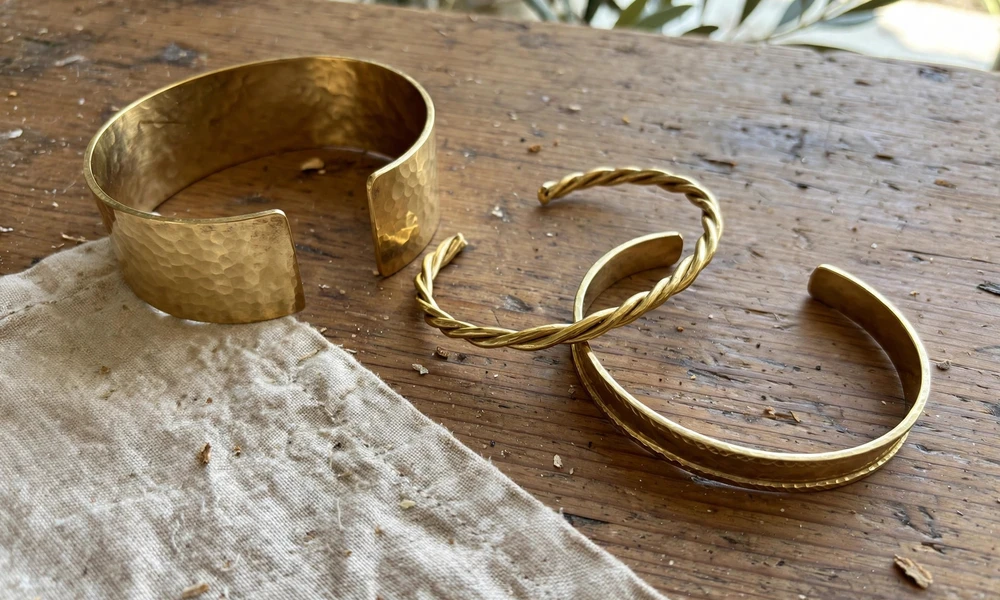
A cuff bracelet is a solid, inflexible band shaped to follow the curve of the wrist, with an opening that lets it slide on from the side. The opening usually sits at the underside of the wrist, where it is least visible, though some designs place it at the front as a feature. The band itself can be narrow, like a slim strip of metal, or wide, covering several centimetres of the forearm. Both are cuffs, and the difference is a matter of style rather than definition.
The name comes from the cuff of a sleeve, and the resemblance is deliberate. A wide cuff bracelet sits where a shirt cuff would sit, framing the wrist in the same way. The design has been around for centuries, from the solid gold cuffs of ancient Egypt to the wide enamel cuffs of the 1960s, and it keeps returning because the shape is both striking and simple. There is nothing to break, nothing to fasten, and nothing to lose, which is part of its appeal.
A cuff is also a one-piece bracelet, which sets it apart from most other styles. Chain bracelets are made of links, tennis bracelets of stones in settings, and charm bracelets of a chain with attachments. A cuff is a single form, and that simplicity is what gives it its strength and its look. When you see a smooth, unbroken band of metal around a wrist, with a small gap underneath, you are looking at a cuff.
How to tell a cuff from a bangle or a chain bracelet
The quickest test is the gap. If the bracelet is a rigid band with an opening, it is a cuff. If it is a rigid band with no opening, it is a bangle. If it bends and has a clasp, it is a chain bracelet. That single check sorts out most of the confusion, and it is worth doing in a shop before you buy, because retailers sometimes use the words loosely.
The second test is how it goes on. A bangle must pass over the hand, which means it has to be wide enough for your knuckles and can feel loose once it is on the wrist. A cuff slides on from the side, so it can fit the wrist more closely without needing to clear the hand. A chain bracelet fastens with a clasp, usually with one hand, and hangs more loosely. Each method suits different people: if you dislike bracelets sliding over your hand, a cuff is the comfortable answer.
Our guide to how to measure your bracelet size explains the measurements that matter here, because a cuff that is too tight will pinch and a cuff that is too loose will spin and slip. The wrist measurement plus a small allowance for the gap is what you need, and most cuffs are sold in standard sizes with a little flexibility built in.
9 facts about cuff bracelets worth knowing
A cuff is defined by its open shape, not its width
What it shows: The opening is the defining feature of a cuff bracelet. A slim cuff and a wide cuff are both cuffs, because both are rigid bands with a gap. Width is a style choice, not a definition. What to consider: Do not assume a narrow band is a bangle. Check for the gap before deciding what you are buying.
Best for: Anyone learning the difference between bracelet styles. Material: Any rigid material. Price range: No set range, it follows the material. Standout feature: The open gap that defines the style.
Most cuffs can be adjusted slightly by hand
What it shows: Many metal cuffs can be eased open or closed a little by gentle pressure, which is why they fit a range of wrist sizes. This is one of the cuff’s practical advantages over a fixed-size bangle. What to consider: Adjust gently and rarely. Repeated bending weakens metal, and hard or stone-set cuffs should not be bent at all.
Best for: People between standard sizes. Material: Gold, silver, brass and stainless steel. Price range: No set range, it follows the material. Standout feature: A forgiving fit that a closed bangle cannot offer.
Wide cuffs make the strongest statement
What it shows: A wide cuff, covering two centimetres or more of the wrist, reads as a deliberate fashion choice. What to consider: A wide cuff limits wrist movement slightly and can catch on sleeves, so it suits occasions where you are not typing all day.
Best for: Evening wear and statement styling. Material: Gold, silver, enamel and resin. Price range: Mid-range to luxury. Standout feature: A broad, unbroken surface that catches the light.
Slim cuffs are the everyday option
What it shows: A slim cuff, only a few millimetres wide, is the easiest cuff to wear daily. It sits close to the wrist, works under a sleeve, and pairs well with a watch or a second slim bracelet. What to consider: A slim cuff can look lost on a larger wrist, so the proportion matters. Choose a width that suits your wrist, not just your taste.
Best for: Daily wear and office looks. Material: Gold, silver and stainless steel. Price range: Affordable to mid-range. Standout feature: A clean line that works with almost anything.
Cuffs have been worn for thousands of years
What it shows: Solid cuff bracelets appear in Egyptian, Greek and Roman jewellery, often in gold and worn as a sign of status. What to consider: A cuff with a historical or vintage-inspired design is a style choice, not an antique, unless it is sold with proper provenance.
Best for: Lovers of classic jewellery. Material: Gold and silver, historically. Price range: Varies widely by age and material. Standout feature: A design with genuine history behind it.
Enamel and resin cuffs add colour without weight
What it shows: Enamel and resin cuffs offer bold colour and pattern at a lower weight than solid metal, which makes wide designs comfortable to wear. They are a good way to try a statement cuff without the price of solid gold. What to consider: Enamel can chip if knocked, and resin can scratch, so these cuffs need more care than plain metal.
Best for: Colourful and seasonal styling. Material: Enamel over metal, and resin. Price range: Affordable to mid-range. Standout feature: Bright colour in a lightweight band.
Leather cuffs suit a relaxed, modern look
What it shows: A leather cuff, often with metal studs or a simple buckle, suits casual and modern outfits and is a popular choice for men as well as women. It is lighter and softer than a metal cuff, and it ages with wear. What to consider: Leather darkens and softens over time, and it does not suit formal occasions. Keep it dry and away from perfume.
Best for: Casual and everyday styling. Material: Leather with metal details. Price range: Affordable. Standout feature: A soft, relaxed alternative to rigid metal.
A cuff pairs best with one strong piece, not a crowd
What it shows: Because a cuff is already a strong shape, it usually looks best worn alone or with a watch, rather than stacked with several other bracelets. What to consider: If you do stack, keep the other pieces slim and simple, and wear the cuff on the opposite wrist from a chunky watch.
Best for: Minimal and confident styling. Material: Any. Price range: No set range. Standout feature: A shape strong enough to carry the wrist on its own.
Good cuffs are finished smoothly inside and out
What it shows: A well-made cuff has smooth, rounded edges and a polished interior, so it sits comfortably against the skin and does not catch on clothing. Rough edges and sharp corners are signs of poor finishing. What to consider: Run a finger along the inside edge before buying. If it feels rough or sharp, it will feel worse after a full day on your wrist.
Best for: Comfort over a long day. Material: Any well-finished metal. Price range: Mid-range and above, usually. Standout feature: A smooth interior that makes the cuff comfortable to wear.
Which cuff bracelet suits you
Start with your wrist size and your daily routine. A slim metal cuff suits most people for daily wear, because it is light, comfortable, and easy to pair. If you want a statement, a wide gold or enamel cuff works for evenings and special occasions, while a leather cuff suits relaxed, casual days.
Consider your skin sensitivity too. Solid gold and sterling silver suit most skin, while plated cuffs can irritate sensitive skin if the plating wears thin. Stainless steel is a good hypoallergenic option at a lower price, and it holds up well to daily wear. If you have reacted to jewellery before, choose a solid metal or stainless steel cuff rather than a plated one, and keep the inside of the cuff clean and dry.
Think about what you already own. A gold cuff pairs naturally with gold rings and earrings, while a silver cuff suits a cooler palette. Mixing metals can work, but it is easier to start with one metal family and build from there. A bangle bracelet is the closest alternative if you like the rigid look but prefer a closed circle, and comparing the two side by side in a shop is a good way to decide which shape suits your wrist.
The caveats that matter
Cuffs are durable, but they are not indestructible. A metal cuff that is bent repeatedly will eventually weaken and crack, especially at the ends of the gap, so adjust it gently and as rarely as possible. Stone-set cuffs should never be bent, and enamel cuffs should be kept away from hard surfaces.
| Detail | What is known |
|---|---|
| What defines a cuff | A rigid, open band with a gap instead of a clasp |
| How it differs from a bangle | A bangle is a closed circle; a cuff is open and slips on from the side |
| How it differs from a chain bracelet | A chain bracelet is flexible links with a clasp; a cuff is one solid form |
| Best everyday choice | A slim metal cuff in gold, silver or stainless steel |
| Best statement choice | A wide gold, enamel or resin cuff for evenings and occasions |
| Who should choose carefully | Sensitive skin should favour solid metal or stainless steel over plated cuffs |
| What to avoid | Repeated bending, stone-set cuffs that are bent, and enamel cuffs knocked on hard surfaces |
| What it does not do | It does not fit every wrist or every outfit, and a poor fit is a sign to choose a different size or style |
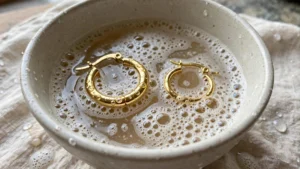
Care is simple. Wipe a metal cuff with a soft cloth after wearing, store it in a pouch or a lined box so it does not scratch other jewellery, and keep it away from perfume, hairspray and cleaning products. A chain bracelet needs a different kind of care, because its links trap dirt, while a cuff’s smooth surface is easy to keep clean with a quick wipe.
Checklist: choosing a cuff bracelet honestly
Use these checks before you buy, and again after a week of wear.
- Check the gap: the cuff should slide on from the side without forcing, and sit comfortably without pinching.
- Check the fit: it should stay put on your wrist, not spin constantly or slide up your forearm.
- Check the inside edge: run a finger along it. It should feel smooth and rounded, not rough or sharp.
- Check the material: solid metal or stainless steel for sensitive skin, plated only if you are happy to replace it later.
- Check the width against your wrist: slim for daily wear, wide for occasions, and a width that suits your wrist size.
- Check the finish: no rough spots, no loose stones, no chipped enamel, and a clasp-free shape that feels secure.
Frequently asked questions
What is the difference between a cuff bracelet and a bangle?
A cuff is a rigid band with an opening, so it slips on from the side of the wrist. A bangle is a closed circle, so it must slide over the hand. That is the whole difference, and it changes how each one fits and feels.
Are cuff bracelets comfortable to wear all day?
A well-fitted slim cuff is comfortable for most people, because it is light and sits close to the wrist. A wide or heavy cuff can feel noticeable after several hours, so try it on and move your wrist before buying.
Can I adjust a cuff bracelet to fit my wrist?
Many metal cuffs can be eased open or closed slightly by gentle pressure. Do it rarely and gently, and never bend a stone-set or enamel cuff, because it can crack the stones or chip the enamel.
Do cuff bracelets suit small wrists?
Yes, if you choose the right width. A slim cuff suits a small wrist well, while a very wide cuff can overwhelm it. Look for smaller sizes and a narrow band, and check that the cuff does not slide up your forearm.
Can men wear cuff bracelets?
Yes. Leather cuffs and slim metal cuffs are popular with men, and they suit casual and smart-casual outfits. A wide, heavily decorated cuff is usually a women’s style, but the slim, plain versions are worn by everyone.
How do I stop a cuff bracelet from scratching?
Store it in its own pouch or a lined compartment, away from other jewellery. Wipe it with a soft cloth after wearing, and avoid wearing it against a watch or a rough surface that can mark the metal.
The bottom line
A cuff bracelet is a rigid, open band that slips over the side of the wrist, with a gap instead of a clasp. That simple shape is what makes it different from a bangle, which is a closed circle, and from a chain bracelet, which is flexible links with a clasp. It is a design with a long history, and it keeps returning because it is practical, durable, and easy to wear well.
Choose a slim metal cuff for daily wear, a wide cuff for evenings and occasions, and a leather cuff for relaxed days. Check the fit, the inside edge, and the material before you buy, and store it properly so it stays smooth and comfortable. The right cuff is the one that feels like it belongs on your wrist, and you will know it as soon as you put it on.