
A gold cuff bracelet is one of the easiest pieces of jewellery to wear well. It slips on without a clasp, sits cleanly on the wrist, and works with almost everything you already own, from a plain white shirt to an evening dress. The problem is not finding one you like. It is knowing what you are actually buying, because a cuff labelled gold can be solid gold, gold-filled, gold vermeil, or simply gold-plated, and those four things differ enormously in price, durability, and how long the colour lasts.
That is why this guide focuses on the construction first and the style second. A slim, well-made gold-filled cuff can outlast a chunky gold-plated one by years, and a solid gold cuff, while expensive, is the only one that will never wear through to another metal underneath. An open cuff is easier to put on and take off than a closed bangle, but it needs the right amount of spring.
Below are nine gold cuff bracelets worth considering in 2027, from a classic solid gold piece to affordable gold-filled and vermeil options that look far more expensive than they are. Each one is described by what it does well, what to watch for, and who it suits best, so you can choose with your wrist, your wardrobe, and your budget in mind.
Key takeaways
- A gold cuff bracelet is an open, clasp-free bracelet that slips onto the wrist and suits almost every outfit, from everyday to evening.
- Solid gold lasts longest and never wears through, while gold-filled offers the best balance of durability and price, and gold vermeil is the most affordable way into a real gold surface.
- Fit matters as much as finish: a cuff should slide on easily but sit snugly enough not to spin or slide down to your hand.
- Plain, polished cuffs are the most versatile, while hammered, twisted, and stone-set designs suit evenings and special occasions.
- No gold cuff is scratch-proof or tarnish-proof, and a gold-plated cuff will eventually show the metal underneath, however well it is made.
What a gold cuff bracelet actually is
A cuff bracelet is a rigid, open bracelet that holds its shape rather than draping around the wrist like a chain. The opening at the back, or sometimes at the side, lets you slide it on and gently squeeze it to fit. Unlike a bangle, which must pass over the hand, a cuff can be worn by almost anyone, whatever the size of their hand, and unlike a chain bracelet, it has no clasp to fiddle with or break.
Gold cuffs come in four main constructions. Solid gold is gold all the way through, usually 9ct, 14ct, or 18ct, mixed with other metals for strength. Gold-filled is a thick layer of real gold bonded to a brass or copper core, and it is far more durable than plating. Gold vermeil is a layer of gold over sterling silver, usually at least 2.5 microns thick. Gold-plated is the thinnest coating of all, often less than half a micron, and it wears away fastest. The label matters more than the look, because all four can look identical on day one.
A slim cuff, around 3 to 5 millimetres wide, is a quiet everyday piece. A medium cuff, around 8 to 12 millimetres, reads as a deliberate statement without overwhelming the wrist. A wide cuff, 20 millimetres or more, is an evening piece that works best worn on its own. Our guide to the best cuff bracelets of 2027 covers the full range of styles beyond gold, if you want to compare metals and shapes side by side.
How we chose these cuffs and what to look for
Look first at the construction and the hallmark. A reputable seller will state clearly whether a cuff is solid gold, gold-filled, gold vermeil, or gold-plated, and will give the carat and the thickness of the gold layer where it matters. If the listing only says gold and gives no detail, treat it as plated and price it accordingly. A hallmark, a maker’s mark, or a clear product specification is worth more than a flattering photograph.
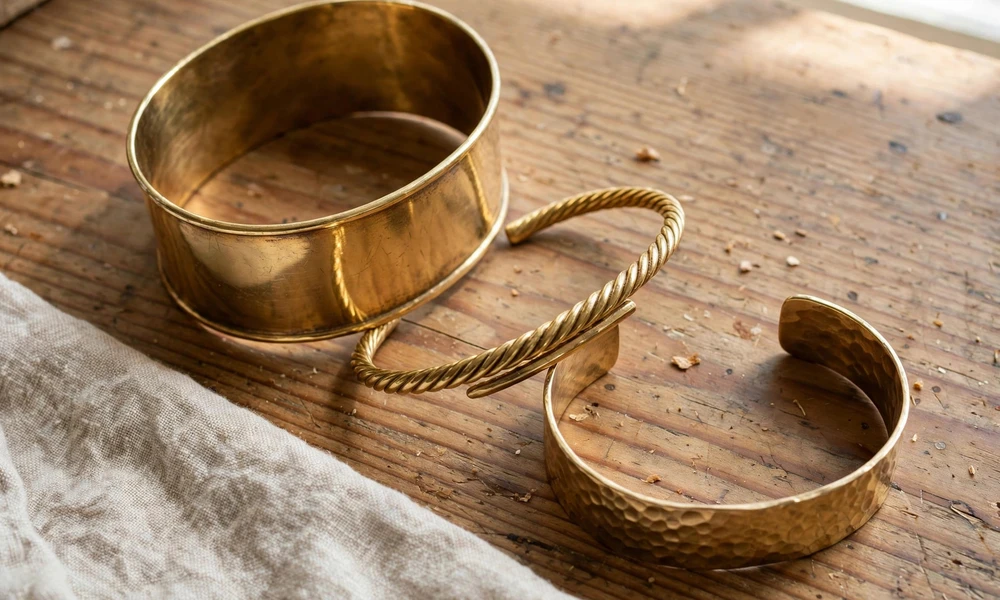
Look next at the fit. A cuff should slide onto the wrist with a little resistance and then sit in place, If it spins freely, it is too loose. If you have to force it on, it is too tight, and the metal will be under strain every time you wear it. Many cuffs can be gently adjusted, but only a little, and only by hand, never by bending them sharply, which can crack the metal.
Finally, look at the finish and the edges. A well-made cuff has smooth, rounded edges that do not catch on skin or fabric, a consistent polish or texture, and no sharp joins at the ends. A hammered or brushed finish hides small scratches far better than a high polish. Weight is a useful clue too: a solid-feeling cuff is usually better made than a feather-light one.
The 9 best gold cuff bracelets of 2027
The Classic Solid Gold Cuff
What we like: Solid 14ct gold all the way through, a clean polished finish, and a medium width that works from the office to dinner. It will never wear through to another metal, and it can be polished back to new again and again.
What to consider: The most expensive option on this list, and a polished finish shows fine scratches sooner than a textured one. Best For: A forever piece or a milestone gift. Material: Solid 14ct gold. Price Range: $800–$1,500. Standout Feature: Will never wear through to another metal.
The Slim Gold Vermeil Cuff
What we like: A slim, elegant profile in gold vermeil over sterling silver, light enough to wear all day and easy to stack with a watch or a second bracelet. The gold layer is thick enough to last well with care.
What to consider: Vermeil will wear with heavy daily use, especially on the inside of the wrist, and it should be kept away from water and perfume. Best For: Everyday elegance on a smaller budget. Material: Gold vermeil over sterling silver. Price Range: $80–$160. Standout Feature: Real gold surface at an accessible price.
The Gold-Filled Open Cuff
What we like: A thick layer of gold bonded to a brass core, which makes it far more durable than a plated cuff, with an open design that is easy to slip on and adjust gently. The warm, slightly brushed finish hides everyday marks.
What to consider: Heavier than a vermeil cuff, and the open ends need to be checked now and then to make sure they have not been bent out of shape. Best For: Daily wear without the solid gold price. Material: Gold-filled over brass. Price Range: $120–$250. Standout Feature: Durable gold layer that resists wearing through.
The Hammered Gold Cuff
What we like: A hand-hammered texture that catches the light beautifully, a medium width that makes a clear statement, and a finish that hides scratches and small marks better than any polished cuff.
What to consider: The texture makes it harder to clean thoroughly, and the bold finish suits fewer outfits than a plain polished cuff. Best For: Evenings and occasions when you want the cuff to be noticed. Material: Gold vermeil over sterling silver. Price Range: $100–$220. Standout Feature: Hammered texture that hides scratches.
The Gold Cuff with a Diamond Accent
What we like: A slim gold cuff finished with a single small diamond or a row of tiny pavé stones at the centre, adding sparkle without turning the piece into evening-only jewellery. The setting is secure and sits flush with the metal.
What to consider: Stone-set cuffs need more care than plain ones, and the stones should be checked regularly to make sure none are loose. Best For: Special occasions, weddings, and milestone gifts. Material: Solid 14ct gold with diamond accents. Price Range: $900–$2,000. Standout Feature: Diamond accent that adds sparkle without bulk.
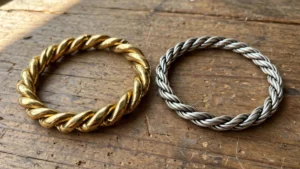
The Twisted Rope Gold Cuff
What we like: A twisted rope design that gives the cuff movement and texture, in gold vermeil with a warm, rich colour. The rope detail makes it look more expensive than its price, and it pairs well with both plain and patterned sleeves.
What to consider: The twisted surface can catch on fine knitwear, and it is harder to polish than a smooth cuff. Best For: Adding texture to a simple outfit. Material: Gold vermeil over sterling silver. Price Range: $90–$180. Standout Feature: Twisted rope texture that catches the light.
The Wide Statement Gold Cuff
What we like: A bold, wide cuff in polished gold-filled metal that makes an instant statement, worn on its own with a plain dress or a simple blouse. The width gives it real presence, and the open back keeps it comfortable.
What to consider: Too bold for most offices and too wide to wear with a watch on the same wrist, and it will knock against desks and tables more than a slim cuff. Best For: Evenings, parties, and occasions. Material: Gold-filled over brass. Price Range: $150–$300. Standout Feature: Wide polished band with real presence.
The Gold Cuff with a Pearl Detail
What we like: A slim gold cuff finished with a single freshwater pearl at each open end, a soft, classic combination that suits weddings, spring outfits, and anyone who likes their jewellery understated rather than bold.
What to consider: Pearls are soft and need care: keep them away from perfume, hairspray, and water, and wipe the cuff after wearing. Best For: Brides, spring occasions, and soft, classic styling. Material: Gold vermeil over sterling silver with freshwater pearls. Price Range: $110–$200. Standout Feature: Freshwater pearls at each open end.
The Minimal Polished Gold Cuff
What we like: The simplest cuff on the list: a narrow band of polished gold-filled metal with no texture, no stones, and no decoration. It goes with everything, stacks with anything, and never looks out of place.
What to consider: A high polish shows fine scratches quickly, so it needs an occasional gentle polish to keep its shine. Best For: Minimalists and everyday stacking. Material: Gold-filled over brass. Price Range: $90–$170. Standout Feature: Clean, unadorned band that goes with everything.
Gold, gold-filled and gold vermeil: what the label means
The label on a gold cuff is the single most important thing to read before you buy, because it decides how long the piece will last. Solid gold is gold through and through, and it is the only option that will never wear through to another metal. Gold-filled is the next step down in price but not in durability: a thick layer of gold is bonded to a core metal, and it can last for years of daily wear.
Gold vermeil is a layer of gold over sterling silver, at least 2.5 microns thick. It is real gold on a precious metal base, but the gold layer is thinner than gold-filled, so it needs more care and will eventually wear on the parts that rub most. Gold-plated is the thinnest coating of all, and the least durable and the hardest to repair once it starts to wear.
A solid gold or gold-filled cuff can be worn daily without much thought, while a vermeil or plated cuff is better kept for occasions, or worn daily only if you are willing to store it carefully and keep it dry. Our guide to the best gold-filled jewellery of 2027 explains the construction in more detail, and our advice on how to style gold jewellery will help you wear a cuff with the rest of your jewellery, rather than against it.
The caveats that matter
A gold cuff is a simple piece, but it is not a maintenance-free one. Every gold surface scratches, and a polished cuff will show fine marks sooner than a textured one. A gentle polish will usually restore the shine, but deep scratches on a thin gold layer cannot be polished away without wearing the gold thinner. A scratch on solid gold is a scratch on gold, while a scratch on a plated cuff can expose the metal underneath.
| Detail | What is known |
|---|---|
| Most durable option | Solid gold, which never wears through to another metal |
| Best value for daily wear | Gold-filled, with a thick bonded gold layer that lasts years |
| Most affordable real gold | Gold vermeil over sterling silver, with care and dry storage |
| Least durable option | Gold-plated, with a very thin coating that wears away fastest |
| How a cuff should fit | Slides on with slight resistance, sits snugly, does not spin freely |
| Best finish for hiding marks | Hammered or brushed, which disguise small scratches far better than polish |
| What to keep it away from | Water, perfume, hairspray, and harsh cleaning products |
| What it does not do | No gold cuff is scratch-proof, and no plated cuff keeps its colour forever |
Fit is the other caveat. A cuff that is too loose will slide, spin, and knock against everything. A cuff that is too tight will pinch and be under strain every time you put it on. Buy the right size, adjust it gently if you must, and never bend a cuff sharply or repeatedly, because metal fatigues and can crack.
Checklist: choosing a gold cuff bracelet honestly
Use these checks before you buy, and again when the cuff arrives.
- Check the construction: solid gold, gold-filled, gold vermeil, or gold-plated, stated clearly by the seller.
- Check the fit: it should slide on with slight resistance and sit snugly without spinning.
- Check the edges: smooth and rounded, with no sharp joins that catch on skin or fabric.
- Check the finish: hammered or brushed if you want to hide scratches, polished if you want shine and do not mind upkeep.
- Check the weight: a solid-feeling cuff is usually better made than a feather-light one.
- Check the care: keep it dry, store it in a pouch or lined box, and wipe it after wearing.
Frequently asked questions
What is the difference between a gold cuff and a gold bangle?
A cuff is open and rigid, so it slips onto the wrist and can be adjusted slightly, while a bangle is a closed circle that must pass over the hand. Cuffs suit more wrist and hand sizes, and they are easier to put on and take off.
Is gold-filled better than gold vermeil?
For daily wear, yes. Gold-filled has a thicker layer of gold bonded to its core, so it lasts longer and resists wearing through. Gold vermeil is real gold over sterling silver and looks beautiful, but it needs more care and will wear sooner on the parts that rub most.
Can I wear a gold cuff every day?
Yes, especially in solid gold or gold-filled. A vermeil or plated cuff can be worn daily too, but it will last longer if you keep it dry, store it properly, and take it off for swimming, exercise, and cleaning.
How do I know my cuff size?
Measure around your wrist where the cuff will sit, then choose a cuff with an opening that lets it slide on with slight resistance. Most cuffs are sold in small, medium, and large, and many can be gently adjusted by hand, but only a little at a time.
Can I wear a gold cuff with a watch?
Yes, but wear them on different wrists, or choose a slim cuff that sits comfortably beside the watch without knocking against it. A wide cuff and a watch on the same wrist will rub and scratch each other.
How do I clean a gold cuff bracelet?
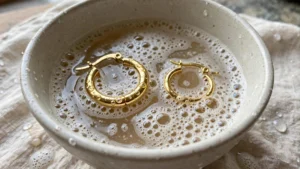
Wipe it with a soft, dry cloth after wearing, and wash it now and then in warm water with a drop of mild soap, then dry it fully. Avoid harsh cleaners, ultrasonic cleaners on stone-set cuffs, and polishing cloths that are too abrasive for a thin gold layer.
The bottom line
The best gold cuff bracelet in 2027 is the one that matches how you will actually wear it. For a forever piece, solid gold is the honest choice. For everyday wear without the solid gold price, gold-filled is the best balance of durability and value. For an affordable way into a real gold surface, gold vermeil is a good starting point, as long as you store it carefully and keep it dry.
Choose the construction first, then the fit, then the style. A plain, well-made cuff in the right size is worth more than a bold piece that pinches, spins, or loses its colour within months.