A wool blazer is the most useful jacket a wardrobe can own. It holds its shape all day, keeps you warm without a coat, and makes simple clothes look considered. Yet wool blazers are also the ones most often left hanging, because wool is not one fabric but many: a featherweight tropical worsted behaves nothing like a heavy tweed. Knowing your wool turns the jacket from a guessing game into a reliable outfit.
In 2027, the wool blazer is having a quiet moment. Oversized cuts, soft shoulders, grey plaid and tonal dressing are everywhere, and the blazer no longer belongs only in the office. The same wool blazer can anchor a work outfit, a jeans outfit and a dress outfit, if the weight, weave and layers suit the weather and the occasion.
This guide stays strictly on wool: the fabrics, weights and weaves, the 2027 shapes, practical outfits for work, weekends and evenings, and the care that keeps wool looking good.
Key takeaways
- Match the cloth to the season: tropical wool for spring, mid-weight worsted most of the year, flannel or tweed for deep winter.
- Super 110s to 130s is the sweet spot for a first wool blazer — soft, yet hard-wearing enough for weekly use.
- Pair textured wool with smooth, simple pieces, and smooth worsted with one textured layer.
- One wool blazer can serve work, weekends and evenings — change the layer underneath, the bottoms and the shoes, not the jacket.
- Brush after wearing, steam instead of ironing, and dry clean only when truly needed.
What makes a wool blazer different
Wool is a family, not a single fabric. Worsted wool is the smooth, tightly woven workhorse: the fibres are combed straight before spinning, giving a clean surface, a sharp drape and excellent crease recovery. It is the cloth of most tailored blazers, and the most formal. Flannel is brushed wool, soft and matte, warmer and slightly less formal. Tweed is a thick, textured weave with flecks of colour, made for cold weather and casual settings. Hopsack and fresco are open, breathable weaves for warm weather.
The Super number on a label describes how fine the wool fibre is, not how good the cloth is. Super 100s is the durable workhorse for weekly wear. Super 110s to 120s feels softer, with a subtle sheen — the sweet spot for one good wool blazer. Super 130s to 150s is luxury territory: silkier, but it creases easily and wears faster at the elbows. Weight matters as much as fineness, and it is the number that sets the season. Lightweight wool, about 7 to 9 ounces, belongs in spring and warm rooms. Mid-weight wool, about 9 to 11 ounces, is the four-season sweet spot. Heavyweight wool, 12 ounces and up, is flannel and tweed, at home from late autumn to early spring.
Wool blazer fabrics at a glance
| Fabric | Feel and look | Weight | Best season | Best for | Pair with |
|---|---|---|---|---|---|
| Worsted wool | Smooth, sharp drape | 9–11 oz | Year-round | Work, formal days | Shirts, fine knits |
| Super 120s wool | Soft, subtle sheen | 9–11 oz | Year-round | A first good blazer | Silk, trousers |
| Flannel wool | Brushed, soft, matte | 12 oz and up | Autumn, winter | Cold-weather work | Turtlenecks, dark denim |
| Tweed | Thick, textured | 12 oz and up | Autumn to spring | Weekends | Corduroy, chunky knits |
| Tropical wool | Light, airy | 7–9 oz | Spring, summer | Warm days, travel | Linen, cotton |
| Hopsack, fresco | Open weave, breathable | 7–9 oz | Warm weather | Hot offices | Light knits, pale trousers |
| Wool-cashmere | Very soft, fluid | 9–12 oz | Autumn, winter | Evenings, occasions | Cashmere knits, silk |
| Wool with stretch | Crisp, a little give | 9–11 oz | Year-round | Long days | Anything |

Choosing the right weight for the season
Start with your calendar, not the shop rail. With real winters, your most-worn wool blazer will be a mid-weight worsted or a flannel, working from October to April. With mild winters, a tropical wool or a light worsted covers far more of the year. One mid-weight blazer in navy, charcoal or camel beats three beautiful blazers in the wrong weights.
Spring suits the lighter end of wool: a tropical wool or hopsack blazer over a cotton shirt or a fine knit, under a trench coat on a cool morning. Summer is the only season where wool needs a caveat: even tropical wool is still wool, so wear it open, keep the layers minimal, and save flannel and tweed for autumn. Autumn is where wool blazers earn their keep. In winter, the wool blazer is a mid-layer under a proper coat, then works alone indoors.
The 2027 wool blazer shapes
The leading 2027 shapes are relaxed rather than rigid. The oversized wool blazer keeps growing, worn open over slim trousers or straight jeans. Soft shoulders are the other big shift: the padded shoulder of the classic suit blazer has given way to a natural shoulder, which suits wool, because the cloth itself provides the structure.
Double-breasted wool blazers are back for evenings, worn buttoned, and best in a smooth worsted or a fine flannel. The cropped wool blazer ends at the waistband and works best with high-waisted trousers or a midi skirt. Plaid is the pattern of the year, from subtle grey windowpane checks to bold brown and navy tartans. Colour in 2027 leans quiet and tonal: camel, charcoal, deep green and burgundy. If you own one wool blazer, make it navy or charcoal in a mid-weight worsted. For more ideas on choosing between the many blazer styles available, see our guide to the best blazers for women.
Five wool blazer outfits that always work
1. The work outfit. A navy worsted wool blazer, a white shirt, tailored charcoal trousers and loafers. The smooth wool reads formal, the white shirt keeps it crisp, and worsted wool resists creasing all day.
2. The tonal outfit. A deep green wool blazer, slim olive tapered trousers, a white ribbed knit top and brown loafers. Keeping blazer and trousers in the same colour family creates one long line. Tonal dressing is a leading 2027 trend, and wool suits it, because texture stops one colour from looking flat.
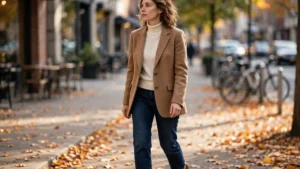
3. The weekend outfit. A camel wool blazer, a cream turtleneck, straight-leg dark jeans and brown loafers. The warm camel softens the denim; the fine knit keeps the neckline tidy.
4. The plaid outfit. A grey plaid wool blazer over a cream turtleneck with slim black trousers and black loafers. The cream knit softens the plaid; the black base keeps it from feeling busy.
5. The evening outfit. A black double-breasted wool blazer over a silk camisole with wide-leg trousers and heeled boots. The smooth worsted gives it polish, and the wide trousers balance the strong shoulders.
What to wear under a wool blazer
Layer thin under wool and thick over it. Fine knits, shirts and camisoles sit neatly beneath a wool blazer; chunky knits belong under an open one, not crammed under a tailored jacket. A turtleneck is the best cold-weather partner: it fills the neckline, adds warmth without bulk, and contrasts beautifully with textured wool. A cashmere turtleneck under a flannel blazer is one of the most luxurious combinations in any wardrobe; our guide to how to wear a cashmere sweater covers the knits that work best.
Over the blazer, the rule is simple: a coat should be longer and roomier than the jacket underneath. A wool blazer under a wool coat is the warmest combination; see our guide to choosing the perfect wool coat before buying. A trench coat over a wool blazer works in spring and autumn. Never force a slim coat over a bulky tweed blazer: the shoulders will pull and both pieces will look wrong.
Colours, patterns and accessories
Wool takes colour differently, because the texture deepens it. A camel wool blazer looks richer than a camel cotton one; a burgundy wool blazer looks softer than a burgundy silk one. That depth is why neutral wool blazers are so versatile: navy, charcoal, camel and grey pair with almost everything. If you want one colour blazer, choose burgundy or deep green.
Patterns in wool need plain partners. A plaid or checked wool blazer needs a solid top, solid bottoms and quiet shoes, so the pattern has room to breathe. The exception is tonal layering: a grey plaid blazer over a grey knit works, because the shared colour holds it together. Keep accessories simple: a slim belt, a small structured bag and one piece of jewellery. Shoes set the tone: loafers and ankle boots for everyday, pointed heels for evenings, white trainers only with a relaxed wool blazer.
Fit and care
Wool forgives less than stretch fabrics, so fit matters more. The shoulder seam should sit close to your shoulder, and a buttoned single-breasted blazer should close without straining, lapels lying flat. Sleeves should end near the wrist bone. Try every outfit sitting down as well as standing up: a blazer that looks perfect standing can bunch at the waist when you sit, so undo the button, as you should with any single-breasted blazer.
Wool looks after itself well, and most damage to wool blazers comes from over-cleaning. Brush it after wearing, hang it on a wide hanger, and rest it a day between wears. Steam is better than ironing: a handheld steamer relaxes creases without pressing the cloth flat. Dry clean only when it is actually dirty or stained, because repeated dry cleaning strips the natural oils from the wool. Store wool blazers with cedar blocks or lavender sachets to deter moths.
Your wool blazer checklist
- Check the label: worsted year-round, flannel or tweed for winter, tropical wool for warm weather.
- Choose mid-weight, 9 to 11 ounces, and Super 110s to 130s for a first blazer.
- Match the blazer length to your bottoms — hip-length with jeans, longer with slim trousers, cropped with high waists.
- Layer thin underneath: fine knits, shirts and camisoles.
- Keep the rest of the outfit plain when the wool is textured or patterned.
- Brush after wearing, steam instead of ironing, and dry clean only when truly needed.
Frequently asked questions
Can you wear a wool blazer in summer?
Yes, if you choose the right wool. Tropical wool, hopsack and fresco are open, breathable weaves for warm weather, around 7 to 9 ounces. Wear it open over a light top and save flannel and tweed for autumn.
What is the best wool blazer for a first buy?
A mid-weight worsted wool blazer in navy or charcoal, in Super 110s to 120s. It works for work and evenings, survives weekly wear, and pairs with more of your wardrobe than any other jacket.
How do you stop a wool blazer from looking too formal?
Change the partners, not the jacket. Wear it open over a plain T-shirt or fine knit, with straight-leg jeans and loafers or clean trainers.
Can you wear a wool blazer with jeans?
Yes, it is one of the best combinations there is. A camel or grey wool blazer with dark straight-leg jeans and a fine knit is smart, not formal. Keep the jeans dark and simple, and let the texture of the wool do the work.
How do you clean a wool blazer without ruining it?
Brush it after wearing, air it, and steam out creases rather than ironing. Spot-clean small marks with a damp cloth, and dry clean only when the blazer is genuinely dirty or stained.
Is a wool blazer worth the price over a polyester one?
For most people, yes. Wool drapes and breathes better, resists creasing and odour, and lasts far longer. Polyester may look similar on the rail, but it feels warmer, creases more, and loses its shape sooner.
The bottom line
Styling a wool blazer comes down to respecting the cloth. Choose the weight for the season, the weave for the occasion, and the fineness for how often you wear it, then keep the rest simple and let the wool speak. A mid-weight worsted blazer in navy or charcoal carries you through work, weekends and evenings for years.
Start with the wool blazer you already own. Check its label — smooth worsted, brushed flannel or textured tweed — and build one outfit around what the cloth actually is. The right partners are probably already in your wardrobe.
Note: Fit and comfort vary from person to person, so use these guidelines as a starting point and adjust them to your own body, wardrobe, and workplace. If a wool blazer feels uncomfortable when you sit, reach, or walk, try a different size, cut, or fabric rather than forcing a style that does not suit you.