How to Wear a Corsage 2027
A corsage is one of the simplest accessories to wear and one of the easiest to get wrong. It is a small arrangement of flowers, worn on the wrist or pinned to a dress, and when it is placed well it finishes an outfit in a way nothing else can. When it is placed badly, it slides, snags, wilts, or pulls the eye to the wrong place entirely.
The good news is that wearing a corsage well comes down to a few practical choices. Which side it goes on, whether it sits on the wrist or the bodice, how large it should be, and how it is fastened all matter more than the flower itself. A modest corsage worn well will always look better than an expensive one worn badly.
Below are nine ways to wear a corsage in 2027, from choosing the right side to storing it after the event, each described by what works, what to watch for, and who it suits best, so you can wear yours with confidence rather than worry.
Key takeaways
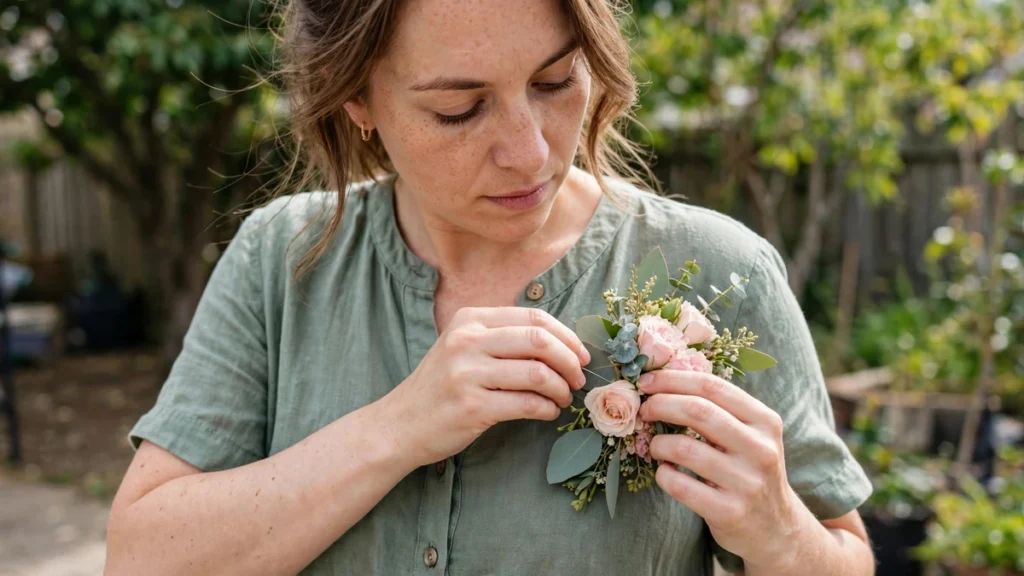
- A pin-on corsage goes on the left side, over the heart, and a wrist corsage sits on the inside of the wrist, where it is visible and secure.
- Wrist corsages suit strapless and sleeveless dresses, while pin-on corsages suit jackets, blazers, and structured bodices.
- Keep the flower head around five centimetres across, and the whole corsage light enough to forget about.
- Match the flower to the dress in colour and formality, and match any metal or jewel accents to your other jewellery.
- No corsage suits every outfit, and a fresh flower that is wilting, browning, or shedding petals should be removed rather than worn.
What wearing a corsage actually involves
Wearing a corsage involves three decisions. The first is where it goes, on the wrist or pinned to the bodice, and on which side. The second is how it is fastened, with a pin, an elastic band, or a ribbon, in a way that holds all evening without damaging the dress. The third is how it is looked after during the event, because a fresh flower needs a little care to stay fresh.
None of this is difficult, but it is worth thinking about before the day. A pin-on corsage needs a dress with enough structure to hold a pin, and a pin that is strong enough to hold the flower. A wrist corsage needs a band that fits snugly, so it does not slide down to the hand or up to the forearm. Both need a flower that is fresh when you put it on, not one that has been sitting in a warm car for an hour.
The rest is a matter of proportion and colour. A corsage should be in scale with the wearer and the dress, and it should add a note of colour rather than a shout. When those things are right, a corsage looks effortless, which is exactly the point.
How we chose these tips and what to look for
Look first at the dress. A strapless or sleeveless dress has no bodice to pin to, so a wrist corsage is the natural choice. A dress with a jacket, a blazer, or a structured bodice can take a pin-on corsage on the left side. A fine silk or beaded dress should not be pierced, so a wrist corsage is safer even if you prefer the look of a pin-on. The dress decides, not the flower.

Look next at the fastening. A pin-on corsage needs a strong pin with a secure clasp, and it should be pinned through the lining or a seam, not through the middle of a delicate panel. A wrist corsage needs an elastic band that fits snugly without cutting in, or a ribbon tied in a bow that will not come undone. Test the fastening at home, on the dress you will wear, before the event.
Finally, look at the flower itself. Fresh flowers should be firm, with petals that are not bruised or browning. Silk flowers should have matte petals and a natural curve. Dried flowers should be fully dry and not shedding. A silk dress is a good partner for a corsage, because the smooth fabric shows the flower clearly, but it also shows pin holes, so a wrist corsage is often the better choice with silk.
The 9 ways to wear a corsage in 2027
Wear it on the left side
What we like: The traditional placement, over the heart, which looks natural in photographs and feels balanced on the body. What to consider: If you carry a bag on your left shoulder, the strap can knock the corsage, so switch the bag to the right for the evening. Best for: Pin-on corsages at weddings, proms, and formal dinners. Cost: Nothing extra, just the corsage itself. Time needed: A minute to pin it on.
Choose wrist or pin-on
What we like: Wrist corsages suit strapless dresses and leave no holes in the fabric, while pin-on corsages suit jackets and structured bodices. What to consider: A wrist corsage can slide and catch on bags and chairs, while a pin-on can pull fine fabric, so test both before the day. Best for: Anyone deciding between the two styles for a wedding or prom. Cost: Wrist corsages cost about the same as pin-on, around £15 to £40. Time needed: A few minutes to try both on with the dress.
Keep it small
What we like: A small corsage, with a flower head around five centimetres across, looks elegant and never overwhelms the dress. What to consider: A corsage that is too small can disappear entirely, especially on a dark dress, so check it in a mirror at arm’s length. Best for: Petite women, simple dresses, and daytime events. Cost: Smaller corsages are often cheaper, around £10 to £25. Time needed: No extra time, just a smaller flower.
Match the flower to the dress
What we like: A flower that picks up a colour in the dress, or contrasts gently with it, looks considered and polished. What to consider: An exact colour match can look flat, while a clashing colour can look accidental, so aim for a near match or a soft contrast. Best for: Anyone choosing a corsage to go with a specific dress. Cost: Nothing extra, just a careful choice. Time needed: A few minutes holding the flower against the dress in daylight.
Match the metal and jewellery
What we like: A corsage with gold wire or a pearl accent sits comfortably alongside gold jewellery, while silver wire suits silver. What to consider: Mixing metals can work, but it needs to look deliberate, so keep one metal as the main note. Best for: Evening events, where jewellery and corsage are both on show. Cost: Nothing extra, just a consistent choice. Time needed: A few minutes laying the jewellery and corsage out together.
Keep it level and secure
What we like: A corsage that sits level, with the flower facing outwards, looks tidy all evening and photographs well. What to consider: A heavy corsage can droop, especially on a soft bodice, so use two pins or a stronger pin if needed. Best for: Pin-on corsages on jackets and structured dresses. Cost: A spare pin costs almost nothing. Time needed: A minute to pin it, and a quick check in a mirror.
Pin a corsage through the lining or a seam where possible, so the pin does not leave a hole in the outer fabric. Push the pin in from underneath, through the corsage, and back out through the fabric, so the flower sits flat. Carry a spare pin in your bag, in case the first one loosens during the evening.
Pair a bold corsage with a plain dress
What we like: A bold flower, such as a deep red rose or a large orchid, looks striking against a plain black or navy dress. What to consider: A bold corsage on a busy dress can look crowded, so keep one as the focus and let the other be quiet. Best for: Evening events and formal dinners. Cost: Bold flowers cost a little more, around £25 to £50. Time needed: No extra time, just a confident choice.
Save the bold blooms for evenings and weddings
What we like: Large, richly coloured flowers suit the drama of an evening wedding or a black-tie dinner, where the light is low and the dress is formal. What to consider: A bold bloom at a daytime garden party can look overdressed, so save it for after dark. Best for: Evening weddings, galas, and formal dinners. Cost: Evening flowers cost about the same as daytime ones. Time needed: No extra time, just the right occasion.
Take it off before you hang the dress
What we like: Removing the corsage before you hang the dress keeps the fabric free of pin holes, sap, and water stains. What to consider: A fresh corsage left on a dress overnight can stain it, and a pin left in can rust, so take both off promptly. Best for: Anyone who wants to wear the dress again. Cost: Nothing. Time needed: A minute at the end of the night.
When the evening is over, unpin the corsage carefully and put it in water if it is fresh, or in a box if it is silk or dried. Check the dress for pin holes or marks before you hang it, and deal with any stains promptly. A corsage is a small detail, but looking after the dress it was worn with is part of wearing it well.
Which approach is right for you
Start with the dress and the occasion. A strapless dress at a wedding calls for a wrist corsage. A jacket at a formal dinner calls for a pin-on. A daytime garden party calls for something small and light, while an evening wedding calls for something richer. The dress and the occasion decide most of it, and the flower is the last choice, not the first. If you are still unsure, ask the florist to show you both styles on the dress, because seeing them in place answers the question faster than any description.
Then think about comfort. You will wear the corsage for four to twelve hours, so it should feel light and secure. If it slides, droops, or needs constant adjusting, it is the wrong size, the wrong fastening, or the wrong flower. A corsage you forget about is a corsage worn well. A corsage you keep touching is telling you something is wrong.
Finally, think about the photographs. A corsage is often in the frame, on the wrist in a toast, on the lapel in a portrait, so it should look tidy from every angle. A brooch is a useful comparison here, because it follows the same rules, left side, level, and in scale with the outfit, and it shows how a small, well-placed detail can carry a whole look.
The caveats that matter
Wearing a corsage well is mostly a matter of avoiding a few common mistakes. The most common is size, a corsage that is too large for the wearer or the dress. The second is fastening, a pin that is too weak, or a wrist band that is too loose. The third is timing, a fresh flower collected too early and left in a warm car, or worn long after it has started to wilt.
| Detail | What is known |
|---|---|
| Best side for a pin-on | Left side, over the heart, unless a bag strap interferes |
| Best wrist for a wrist corsage | Left wrist, on the inside, where it is visible and secure |
| Size guide | Flower head around 5 cm across for most women |
| How long fresh lasts | Four to six hours for most flowers, eight or more for orchids |
| Who should avoid pin-on | Anyone in very fine, beaded, or silk fabric that pin holes would damage |
| Storage before the event | Cool place, out of direct sun, in water if fresh, in a box if silk |
| When to remove it | If petals brown, wilt, or shed, or if the fastening no longer holds |
| What it does not do | It does not suit every outfit, and it cannot fix a dress that does not fit well |
If you have sensitive skin or a pollen allergy, test a fresh corsage on your wrist for an hour before the event, or choose silk, dried, or jewelled instead. If the corsage is for a wedding, ask the florist to make a spare, so a wilted flower can be swapped without fuss.
Checklist: wearing a corsage honestly
Use these checks before the event, and again when you put the corsage on.
- Check the dress: does it have a lapel or structured bodice for a pin-on, or is a wrist corsage safer?
- Check the size: the flower head should be around 5 cm across, and the whole corsage should feel light.
- Check the fastening: pin it to a scrap of fabric, or try the wrist band on, before the day.
- Check the match: hold the corsage against the dress in daylight, not just under shop lights.
- Check the timing: collect fresh corsages on the day, and keep them cool until you wear them.
- Check the spare: carry a spare pin and a small tissue, in case a petal bruises or a pin loosens.
Frequently asked questions
Should a corsage go on the left or the right?
Traditionally on the left, over the heart, for a pin-on corsage. A wrist corsage usually goes on the left wrist too, but the right wrist is fine if you are left-handed or if your watch is on the left. What matters is that it is secure and visible, not which side it is on.
Can I wear a corsage with a sleeveless dress?
Yes, and a wrist corsage is usually the best choice, because there is no bodice to pin to. A pin-on corsage can work on a sleeveless dress if the bodice is structured, but it can pull the fabric, so test it first.
How long will a fresh corsage last?
Most fresh corsages look their best for four to six hours. Orchids and spray roses can last eight hours or more. Keep the corsage cool before the event, avoid direct sun, and mist it lightly with water if the florist advises it.
Will a pin damage my dress?
It can, especially on fine silk, beaded, or very light fabric. Pin through the lining or a seam where possible, and use a sharp, fine pin. If the fabric is very delicate, choose a wrist corsage instead, which puts no holes in the dress at all.
What should I do if my corsage wilts during the event?
Remove it discreetly and put it in water if you can. Do not try to revive a wilted flower by squeezing it, which bruises the petals further. If you have a spare, swap it in. A luxury watch is a good reminder here, because like a watch, a corsage is a small detail that is noticed when it is wrong, and forgotten when it is right.
Can I keep my corsage afterwards?
Silk, dried, and jewelled corsages can be kept for years. Fresh corsages can be pressed or dried, but they will not keep their shape. If you want a keepsake, choose silk or dried, or ask the florist to make a matching silk version for afterwards.
The bottom line
Wearing a corsage well is not about the flower. It is about the placement, the size, and the fastening. Left side for a pin-on, inside of the wrist for a wrist corsage, around five centimetres across, and secure enough to forget about. Get those four things right, and almost any flower will look good.
Choose the style that suits the dress, match the flower to the occasion, test the fastening before the day, and carry a spare pin. That is the honest way to wear a corsage, as a small, considered detail that finishes an outfit, rather than a large one that competes with it.