


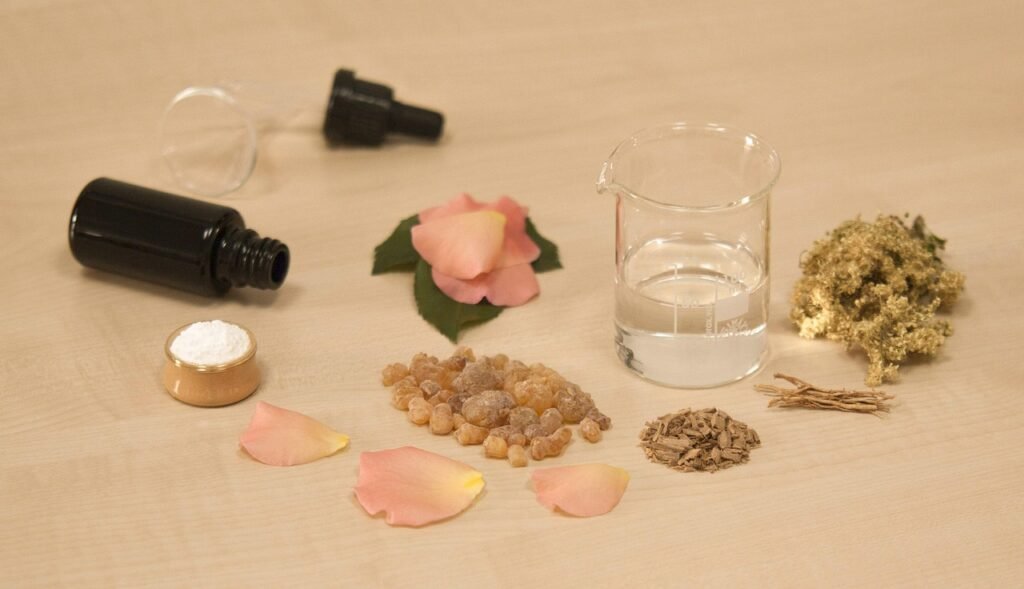
What if the most interesting scent in the room came from someone’s kitchen table rather than a department store counter? That question sits at the heart of the indie perfume oil scene, a corner of the fragrance world where small makers sell concentrated, alcohol-free scents in roll-on bottles, often straight from their own websites or craft markets. It is a world of single-batch blends, handwritten labels, and buyers who treat a 5 ml vial the way others treat a rare record. It is also a world with real quality gaps, confusing terminology, and safety questions that deserve honest answers. Here is what the category actually looks like, what separates a good oil from a bad one, and how to shop it without wasting money.
What “indie perfume oil” actually means
A perfume oil is a fragrance concentrate applied directly to skin, usually without the high alcohol content found in sprays. The general concept of perfume and its many formats is well documented in reference works, though the exact boundaries between categories are looser than marketing suggests. Indie perfume oil simply adds the “indie” qualifier: made by a small, independent producer rather than a large house.
That word “indie” is descriptive, not regulated. There is no official body that certifies a perfume as indie. In common usage, it refers to small makers, often selling online, at markets, or through craft marketplaces, as distinct from “niche” houses that are small but established and widely distributed. A one-person operation blending in a spare room and a ten-year-old niche brand with a PR agency can both call themselves independent. Buyers should treat the label as a signal of scale, not of quality.
Concentration is the other source of confusion. The familiar tiers — parfum or extrait, eau de parfum, eau de toilette, eau de cologne — are conventional industry labels rather than a single legally fixed standard. Percentage ranges vary depending on which reference you consult. Anyone who tells you there is one universal number for each tier is oversimplifying. In practice, indie perfume oils often sit at the stronger end, because the format itself is a concentrate.
Why oils instead of sprays

The format has practical advantages that explain its popularity.
- Skin proximity. Oil sits close to the body and releases scent slowly. Many wearers describe it as a “personal bubble” fragrance rather than a room-filler.
- No alcohol blast. Alcohol-heavy sprays can smell sharp for the first thirty seconds. Oils generally skip that phase.
- Travel-friendly. Roll-ons are small, non-aerosol, and easy to carry.
- Layering. Because oils are concentrated, a tiny amount can be combined with another scent to build something custom.
There are trade-offs. Oils typically project less than sprays, so people standing across the room will not smell you. Scent longevity varies enormously depending on the base oil and the aroma materials used, and some oils fade within two hours while others last through a workday. The carrier matters too: jojoba, fractionated coconut, and similar light oils are common because they absorb reasonably well and do not go rancid quickly.
Reading a label like someone who knows the industry
Labels are where the indie category gets messy. In the EU, cosmetic products, including fragrance oils, fall under Regulation (EC) No 1223/2009, which sets labeling, safety, and responsible-person requirements. Certain fragrance allergens must be declared above specified thresholds, and that allergen list was updated in 2023. In the US, fragrance ingredients are regulated as cosmetics under the FD&C Act and the Fair Packaging and Labeling Act, and “fragrance” may be listed generically, a long-standing transparency criticism.
What does this mean at the point of sale? A well-run indie brand will typically show:
| Label element | What it tells you | Red flag if missing |
|---|---|---|
| Ingredient list | Carrier oil, fragrance, any declared allergens | No ingredients at all |
| Net volume | How much you actually get | Vague “travel size” only |
| Maker contact | A real way to reach a person | No contact route anywhere |
| Batch or date | Freshness and traceability | Nothing to identify the batch |
| Warnings | Skin-use guidance | Claims that it is “chemical-free” |
That last row matters. Fragrance is a recognized cause of allergic contact dermatitis, and patch testing plus allergen disclosure are the main ways to reduce risk. A maker who promises a scent can never irritate anyone is making a claim no responsible formulator would make. A maker who tells you to patch test on the inner arm and wait 24 hours is behaving like a professional. (The row)
The essential oil versus fragrance oil trap
This is the single most common point of confusion in the category, and it catches experienced buyers too. Essential oils are plant-derived extracts. Fragrance oils are often synthetic or blended materials. They are not interchangeable, and indie sellers sometimes conflate them, either accidentally or to sound more natural.
Neither category is inherently safer. Essential oils contain real allergens and can cause reactions; some are phototoxic on skin. Synthetic aroma materials are not automatically worse and are often the only way to achieve certain effects, including many fruit and aquatic notes. What matters is disclosure and honest description, not a “natural” badge.
A practical tip: if a listing says “100% essential oil” but the scent is described as “blue raspberry cotton candy,” be skeptical. That profile is essentially impossible from pure plant extracts. If a listing says “fragrance oil” and lists the carrier and any allergens, that is a more trustworthy presentation even if it sounds less romantic.
How indie makers actually build a scent
Most small perfume oil operations follow a similar arc, and understanding it helps you judge what you are buying.
- Brief and concept. The maker picks a direction, often a memory or a mood rather than a classic category.
- Material selection. Aroma materials are sourced, sometimes as small samples, sometimes in larger amounts. Cost and availability drive a lot of decisions.
- Trials. The blend is tested at different concentrations in the carrier oil. This stage can take weeks or months.
- Maceration. The mixture rests so the materials marry. Skipping or shortening this step is a common shortcut, and it shows in a harsh or disjointed opening.
- Stability and safety review. A careful maker checks how the scent ages and whether it complies with industry safety standards.
- Small-batch release. Bottles are filled, labeled, and sold, often in limited runs.
The International Fragrance Association publishes standards that limit the use of certain materials. Compliance is industry self-regulation, not law, but reputable indie makers reference it because retailers and distributors expect it. If you are comparing makers, a brand that mentions safety standards without being asked is usually a better bet than one that gets defensive about the question.
Where the category gets it right, and where it stumbles
The strengths are real. Indie makers can take risks that large houses cannot justify: odd combinations, hyper-specific concepts, tiny production runs. Buyers who want something nobody else is wearing find genuine value here. The community aspect matters too. Many brands are built through direct conversation with customers, and feedback shapes the next release.
The weaknesses are equally real. Batch consistency is the big one. A scent you love in January may smell slightly different in June, because materials change, suppliers change, and small runs are not always reproducible. Some makers handle this transparently by labeling batches and noting reformulations. Others quietly change the formula, which frustrates repeat buyers.
Then there is the sampling problem. Indie oils are often sold in full bottles with limited options to try first. The practical workaround is to buy sample sets or decants when offered, test on skin rather than paper, and give each scent at least a few hours. Paper strips lie about oils; skin chemistry changes everything.
Practical buying advice that saves money
A few habits separate happy indie buyers from disappointed ones.
Test on skin, in small amounts, early. Apply to the inner wrist or forearm, wait, and watch for redness or itching. Do this with every new maker, even one you trust.
Buy samples before bottles. A 2 ml sample costs far less than a 10 ml bottle you will never finish. If a brand does not offer samples, that is a signal about how they view new customers.
Ask about batch dates. A polite question about when the current batch was made tells you a lot about how the maker operates. So does the answer.
Store oils properly. Keep bottles away from heat and direct light. A dark drawer beats a sunny windowsill. Most oils keep well for a year or two, but citrus-heavy blends can turn faster.
Do not chase “clean” marketing. Fragrance is chemistry. The useful questions are about disclosure, patch testing, and allergen information, not about whether a word on the label sounds natural.
Read the returns policy before ordering. Small makers often cannot accept opened returns for hygiene reasons. Knowing that upfront prevents frustration.
If you also follow adjacent categories, the same instincts apply: the way people talk about home fragrance oils for diffusers and candles overlaps heavily with skin-worn oils, and the labeling questions are nearly identical. Buyers who have learned to read a 4c hair product label for ingredient honesty tend to spot a sloppy fragrance listing quickly, because the skill is the same: check what is disclosed, not what is promised.
The regulatory picture, briefly
Two frameworks dominate. In the EU, the cosmetics regulation sets labeling, safety, and responsible-person duties, and the 2023 update to the allergen list expanded what must be declared. In the US, fragrance ingredients fall under cosmetics law, and generic “fragrance” listing remains permitted, which is why transparency varies so much between brands. Neither framework certifies quality. They set floors, not ceilings.
Marketplace policies add another layer. Because many indie oils are sold through online platforms, much of the labeling buyers see is governed by platform rules rather than law. Those policies change frequently, so what was required last year may not be required now. That is one more reason to buy from makers who publish full ingredient lists voluntarily.
Conclusion
Indie perfume oils reward curiosity but punish carelessness. The format offers something the big houses rarely can: concentrated, personal scents from people who are genuinely invested in what they make. The catch is that “indie” guarantees nothing about safety, consistency, or honesty. The buyers who do well in this category are the ones who sample before committing, read labels like an auditor, patch test every new maker, and ask direct questions about batches and allergens. Do that, and a tiny roll-on bottle can deliver more character than a shelf full of mass-market sprays. Skip it, and you will accumulate a drawer of pretty vials you never wear.
Frequently asked questions
Are indie perfume oils safer than alcohol-based sprays?
Not automatically. Safety depends on the specific aroma materials and how they are formulated, not on whether the product contains alcohol. Fragrance is a recognized cause of allergic contact dermatitis in any format. Patch testing and clear allergen disclosure are the real safeguards, and they matter just as much for oils.
How long do indie perfume oils last on skin?
It varies widely. Some oils fade within two hours, while others last most of a day. The carrier oil, the concentration, and the individual aroma materials all play a role, and so does your own skin chemistry. Testing a sample on skin over several hours is the only reliable way to know.
What is the difference between an essential oil and a fragrance oil?
Essential oils are plant-derived extracts, while fragrance oils are often synthetic or blended materials. They are not interchangeable, and neither is inherently safer. A listing that claims a pure essential oil blend but describes an implausible scent profile, such as blue raspberry candy, is probably mislabeling.
Why do indie perfume oils smell different from batch to batch?
Small production runs use materials that can vary by supplier and season, and makers sometimes reformulate. Some brands label batches and disclose changes, which is good practice. Others change formulas quietly. If consistency matters to you, ask about batch dates before ordering a repeat bottle.
Do indie perfume oils need to follow labeling laws?
Yes, where cosmetics rules apply. In the EU, fragrance oils fall under the cosmetics regulation, which requires labeling, safety documentation, and declaration of certain allergens above set thresholds. In the US, fragrance ingredients are regulated as cosmetics, and “fragrance” may be listed generically, which is why disclosure varies so much between brands.
How should I store a perfume oil to make it last?
Keep it away from heat and direct light, ideally in a dark drawer or box. Citrus-heavy blends tend to turn faster than resinous or woody ones. Most oils stay good for a year or two when stored sensibly, but a bottle left on a sunny windowsill can degrade in weeks.









