

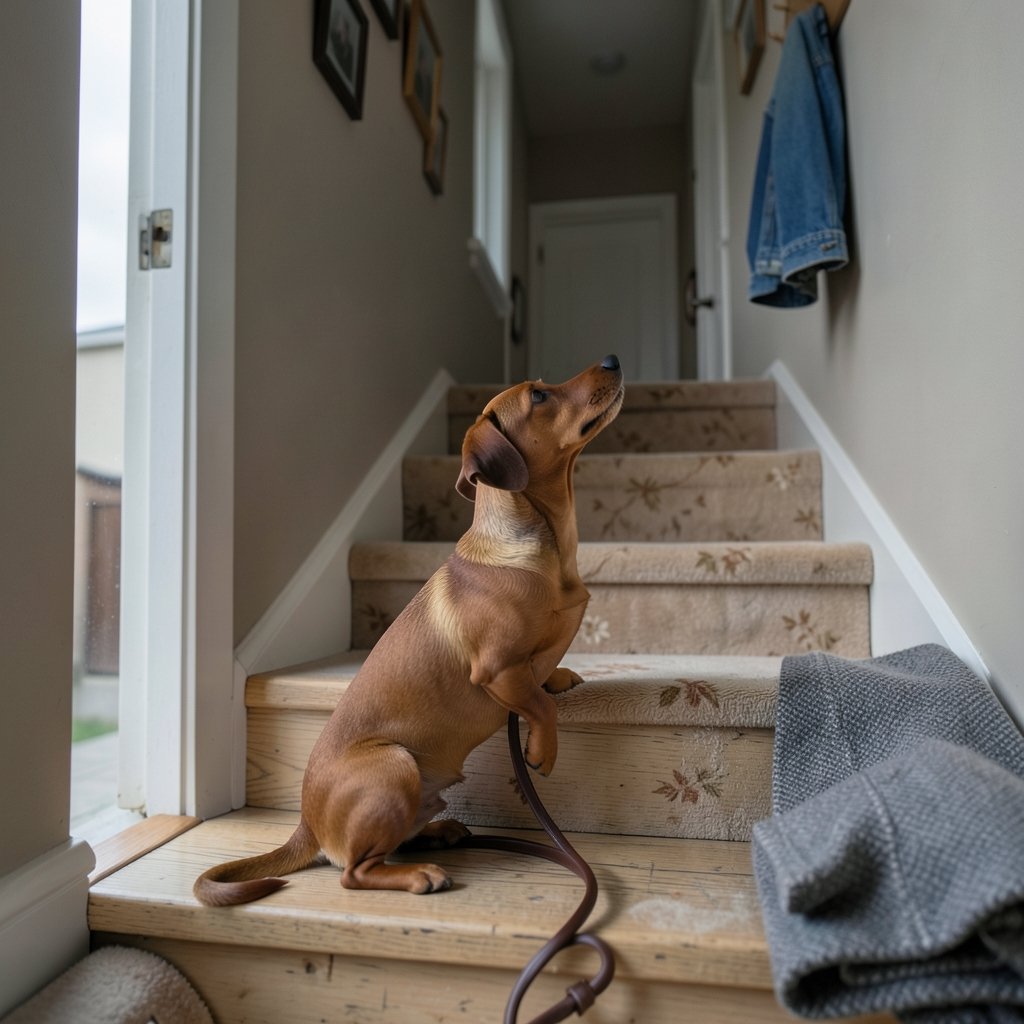
What would you do if your dog suddenly refused to climb the stairs, yelped when picked up, or dragged a back leg? Most owners assume it is a pulled muscle or a bit of stiffness. Sometimes it is. But when the problem is intervertebral disc disease (IVDD), those early clues are the warning shot before something far more serious happens. IVDD is one of the most common causes of spinal cord injury in dogs, and the difference between a dog that walks again and one that never does often comes down to how quickly an owner recognizes the signs. Here is what the condition actually involves, how it is treated, and what genuinely helps in practice.
What IVDD Actually Means
Between the bones of a dog’s spine sit cushion-like discs. Each disc has a soft, gel-like center and a tougher outer ring. In a healthy spine, these discs absorb shock and let the vertebrae move smoothly. In intervertebral disc disease, that cushion fails. The material inside bulges or breaks through and presses on the spinal cord or the nerve roots branching off it.
The result is a spectrum. A mildly affected dog has back or neck pain. A moderately affected dog wobbles, crosses the legs, or knuckles over on the paws. A severely affected dog loses the ability to walk, and in the worst cases loses bladder control and deep pain sensation in the limbs. The spinal cord is delicate tissue, and pressure on it does not stay harmless for long.
Hansen Type I and Type II: Two Different Problems
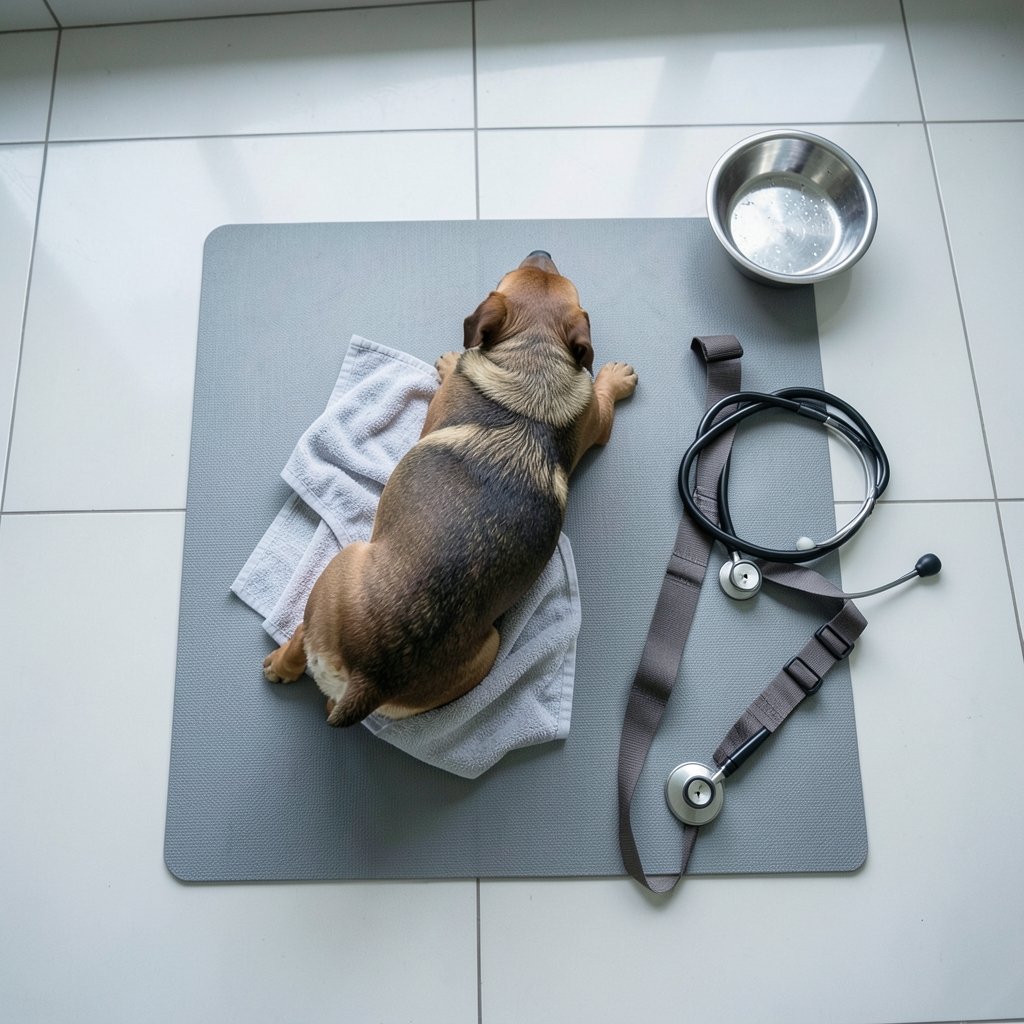
Veterinarians separate IVDD into two classic patterns, named after the researcher who described them in the 1950s.
| Feature | Hansen Type I | Hansen Type II |
|---|---|---|
| Mechanism | Acute extrusion of degenerated disc material | Chronic, slow protrusion of the disc |
| Typical breeds | Chondrodystrophic breeds (short legs, long backs) | Often larger, non-chondrodystrophic breeds |
| Typical age | Young to middle-aged adults | Older dogs |
| Onset | Sudden, often after minor activity | Gradual, worsening over weeks or months |
With Type I, the disc material is already abnormal and hardened, so it can burst through with startling speed. A dog can jump off the couch and be unable to walk an hour later. Type II is more of a slow squeeze, and owners often mistake it for ordinary aging. Both types damage the spinal cord, but they demand different conversations about timing and treatment.
Which Dogs Are at Risk
Chondrodystrophic breeds carry the highest risk. That group includes the Dachshund, Beagle, Cocker Spaniel, Shih Tzu, Lhasa Apso, Pekingese, and French Bulldog. The Dachshund is the breed most often cited in veterinary discussions of IVDD, largely because its long back and short legs concentrate stress on the discs. If your dog is a Dachshund, read the rest of this article with extra attention.
Genetics is not the whole story. Body condition matters. Carrying extra weight loads the spine, and overweight dogs tend to have more severe episodes and slower recoveries. Age plays a role too, though the pattern depends on the type: Type I tends to strike younger to middle-aged dogs, while Type II is more common in older animals.
The Symptoms, Graded From Mild to Severe
Veterinarians grade IVDD by how badly the spinal cord is affected, and that grade drives nearly every treatment decision. In practical terms, owners see a progression:
- Pain only. The dog is reluctant to move, cries when lifted, hides, or stands with a hunched back and a tucked belly. Neck pain may show up as reluctance to lower the head to the food bowl.
- Ambulatory paresis. The dog can still walk but is wobbly, weak, or uncoordinated in the hind limbs. Paw placement looks sloppy.
- Non-ambulatory paresis. The dog can move the legs but cannot stand or walk without support.
- Paraplegia. The hind limbs are paralyzed. The dog may still urinate on its own, or may not.
- Loss of deep pain perception. When a veterinarian pinches the toe firmly and the dog shows no conscious response, the situation is grave. This is the single most important prognostic marker and a strong signal for urgent referral.
That last point deserves emphasis. Loss of deep pain perception changes the outlook dramatically, and it is not something an owner can assess at home. It requires a professional neurological exam.
How IVDD Is Diagnosed
Diagnosis starts with a thorough neurological examination: gait observation, paw placement, spinal reflexes, and pain palpation along the spine. That exam tells the vet where the problem likely sits and how severe it is.
Plain X-rays are commonly taken, but they cannot reliably confirm spinal cord compression. They help rule out other causes, such as fractures or bone disease. To actually see the disc and the cord, advanced imaging is needed. MRI is preferred because it shows soft tissue in detail. CT with myelography is another option. In many cases, imaging happens right before surgery so the surgeon can pinpoint the exact disc.
This is one of the most common owner frustrations: the vet says the dog needs an MRI, and the owner wonders why a simple X-ray will not do. The answer is that the spinal cord and discs are soft tissue, and soft tissue needs the right camera.
Conservative Treatment: When Rest Is the Right Call
For dogs with pain only or mild deficits, conservative management is often appropriate. The core of it is strict rest, typically several weeks of crate confinement with only short leash walks for bathroom breaks. Strict means strict. A dog that is allowed to wander the house, jump on furniture, or play with another dog is not resting, and the disc can worsen.
Alongside rest, veterinarians typically use pain medication and anti-inflammatories, muscle relaxants in some cases, and nursing care. Bladder management matters if the dog cannot urinate normally. Physiotherapy and controlled rehabilitation often follow once the acute phase passes.
Here is a practical tip that owners routinely get wrong: the dog will start to feel better before the rest period is over. That is precisely when people relax the rules and the dog re-injures itself. Follow the veterinarian’s timeline, not the dog’s improved mood.
Surgery: What It Involves and When It Is Considered
Surgery, most commonly a hemilaminectomy, removes the disc material pressing on the cord. It is generally considered when deficits are severe or getting worse, when pain cannot be controlled with medication, or when episodes keep recurring. (The row)
The decision is time-sensitive. Dogs that still have deep pain perception generally have a better prognosis after surgery than those that have lost it. Recovery is not instant. It can take weeks to months, and some dogs keep residual deficits such as a wobbly gait or a tendency to scuff their paws. Many dogs return to a good quality of life, but owners should plan for rehabilitation work, not just a surgery date.
Cost is a real factor, and so is access. Not every region has a veterinary neurologist or a practice equipped for advanced imaging and spinal surgery. Owners facing a severe episode should ask early about referral options rather than waiting until the dog deteriorates.
What Recovery Actually Looks Like at Home
The post-treatment period is where owners do the heaviest lifting. A few things make a genuine difference:
- Slippery floors are the enemy. Hardwood and tile give no traction. Rugs, yoga mats, and non-slip runners along the dog’s main routes reduce the risk of a fall during recovery.
- A harness beats a collar. Leash pressure on the neck is unkind to a dog with spinal disease. A well-fitted harness spreads the load.
- Support slings help. A towel or purpose-made sling under the hindquarters lets you help a weak dog outside to toilet without straining the spine.
- Bladder care is not optional. A dog that cannot empty its bladder properly needs help, and urine sitting in the bladder invites infection. Ask the vet to show you how to express the bladder if needed.
- Weight matters more than ever. Trimming a few pounds off a recovering dog reduces the load on the spine every single day.
Rehabilitation, including controlled exercise, hydrotherapy, and strength work, is often recommended after the acute phase. It should be guided by a professional, because the wrong exercise at the wrong time can do harm.
Preventing the Next Episode
Recurrence at other disc sites is possible, which is why long-term management gets serious attention. Weight management is the most consistently recommended step. Activity modification matters too: limit repetitive jumping, use ramps or steps for furniture and cars, and avoid rough play that twists the spine.
Owners of high-risk breeds sometimes ask about screening or preventive exercise programs. The honest answer is that evidence for preventive exercise is limited. Keeping a dog lean and avoiding high-impact stunts is sensible and low-risk. Routine screening of apparently healthy dogs is not a settled practice, so it is worth a direct conversation with your vet rather than assuming a scan is needed.
Breed matters here too. If you share your life with a dog built like a Dachshund, or one with the dense, low-slung frame seen in some 4c hair-style coat breed groups such as the French Bulldog, plan the environment around the spine from day one. Ramps, rug runners, and a lean body condition are cheaper than spinal surgery.
When to Call the Vet Immediately
Some signs do not wait for a scheduled appointment. Contact a veterinarian promptly if your dog shows:
- Sudden back or neck pain, crying when lifted, or a hunched posture
- Weakness, wobbliness, or knuckling in the hind limbs
- Inability to stand or walk
- Loss of bladder or bowel control
- Any rapid worsening of the above
Suspected IVDD is often treated as an urgent case. The window for the best outcomes is narrow, and a dog that is still walking today may not be tomorrow. (2b hair)
Conclusion
IVDD is not a rare curiosity. It is a common, often painful, sometimes paralysing spinal condition, and it rewards owners who pay attention early. The breed you live with, the number on the scale, the speed at which you act on a wobbly gait, and the discipline you show during crate rest all shape the outcome. Nobody can promise a perfect recovery, but the practical levers are real: keep the dog lean, protect the spine from jumps and slips, treat sudden back pain as urgent, and follow the rest and rehab plan even when the dog acts cured. That combination gives a dog with IVDD the best realistic shot at walking, playing, and living well.
FAQ
What are the first signs of IVDD in dogs?
The earliest signs are usually pain rather than paralysis. A dog may be reluctant to move, cry when picked up, hide, stand with a hunched back, or refuse to lower its head to eat. Some owners notice a stiff, choppy gait or a reluctance to climb stairs. Any sudden back or neck pain deserves prompt veterinary assessment.
Can a dog recover from IVDD without surgery?
Yes, in milder cases. Dogs with pain only or mild weakness often recover with strict crate rest, pain medication, and nursing care over several weeks. Surgery is generally considered when deficits are severe, worsening, or recurring. The decision depends on the neurological exam, not on owner preference alone.
Is IVDD painful for dogs?
It can be very painful. Disc material pressing on the spinal cord and nerve roots causes significant discomfort, which is why pain relief is part of every treatment plan. Some dogs with advanced paralysis show less obvious pain response, but that does not mean the condition is harmless. It means the cord injury is severe.
Which dog breeds are most likely to get IVDD?
Chondrodystrophic breeds carry the highest risk, including the Dachshund, Beagle, Cocker Spaniel, Shih Tzu, Lhasa Apso, Pekingese, and French Bulldog. The Dachshund is the breed most often cited. Mixed-breed dogs can be affected too, so breed is a risk factor rather than a guarantee.
How long does recovery from IVDD take?
Recovery varies widely. Mild cases managed conservatively often improve over several weeks of rest. Dogs treated surgically may need weeks to months of rehabilitation, and some keep residual weakness or an unsteady gait. Bladder function and deep pain perception at the time of treatment are among the strongest indicators of how recovery will go.
Can I prevent IVDD in my dog?
There is no guaranteed prevention, especially in genetically predisposed breeds. What owners can do is reduce load on the spine: keep the dog at a healthy weight, limit repetitive jumping, use ramps for furniture and cars, provide traction on slippery floors, and avoid rough play that twists the back. Evidence for specific preventive exercise programs is limited, so focus on weight and environment.














