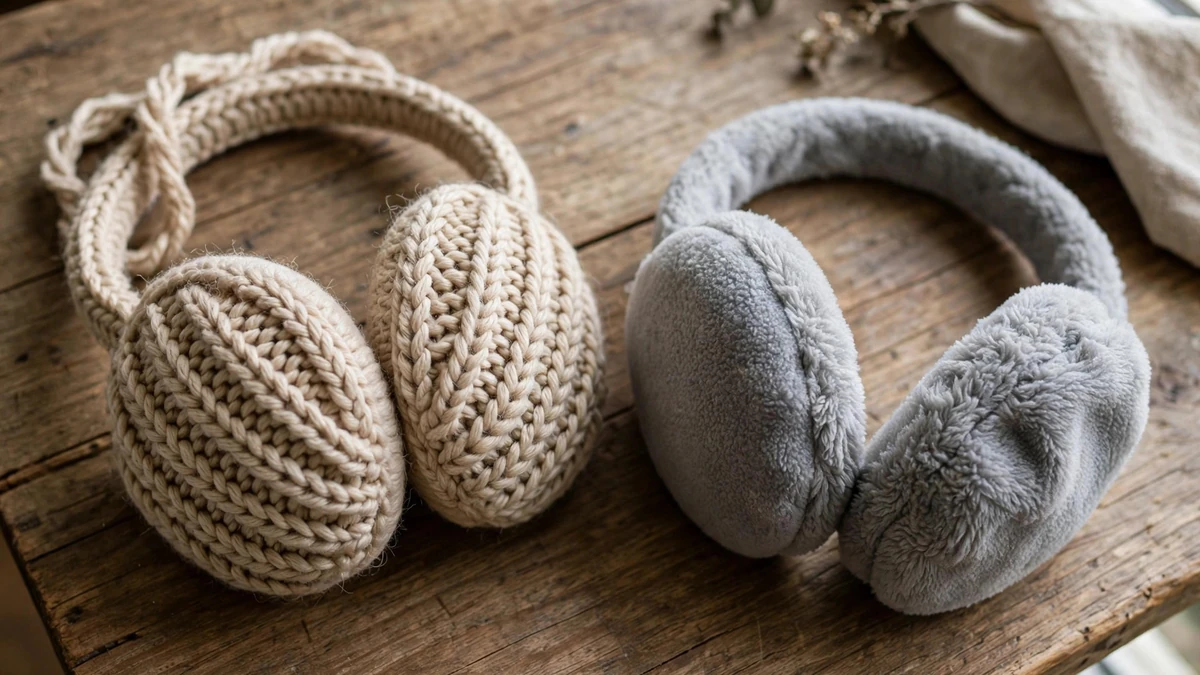

Earmuffs are the simplest answer to cold ears, and the choice that matters most is not the brand or the colour. It is the material. Knit and fleece are the two materials you will meet again and again, and they behave very differently on a cold morning, on a windy walk, and after a season of daily use. One feels soft and traditional, the other feels smooth and technical, and the right one depends on how cold your winters are, how much you move, and how much care you are willing to give a small accessory.
Knit earmuffs are made from yarn, usually wool, acrylic, or a blend, worked into a soft band that sits over the ears. They breathe well, they look at home with a wool coat and a scarf, and they feel warm in a gentle, even way. Fleece earmuffs are made from a brushed synthetic fabric, usually polyester, that traps air in tiny fibres. They block wind better, they dry faster, and they shrug off light snow and drizzle in a way knit rarely does.
Below are nine comparisons that matter in 2027, from warmth and wind to care, packing, and price. Each one is described by what it does well, what to watch for, and who it suits best, so you can choose by the winters you actually live in, not by the label.
Key takeaways
- Knit earmuffs breathe well and feel soft against the skin, while fleece earmuffs block wind better and dry faster after snow or rain.
- Fleece is the stronger choice for wet, windy days and active use; knit is the stronger choice for calm, dry cold and classic winter outfits.
- Fit matters more than material: earmuffs that gap at the ear or slip off the head will feel cold whatever they are made from.
- Knit needs gentler washing and can pill over time, while fleece can be machine washed but can flatten and lose loft with rough care.
- No earmuff replaces a hat in deep cold or driving wind, and no material stays warm if it is soaked through.
What knit and fleece earmuffs actually are
A knit earmuff is built the way a jumper is built. Yarn is looped into a fabric, either by hand or by machine, and shaped into a band with two padded cups that sit over the ears. The cups usually have a soft lining, and the band is often adjustable or slightly stretchy. The warmth comes from the yarn itself and from the air held between the loops, which is why a thick knit feels warm at once and why a loose, open knit can feel draughty on a windy day.
A fleece earmuff is built from a synthetic pile fabric. Polyester fibres are brushed into a dense, soft surface that traps a layer of still air against the ear. The cups are usually the same fleece inside and out, with a firmer band underneath. The warmth comes from that trapped air, and because the fibres are fine and tightly packed, wind passes through far less easily than it does through an open knit.
Both types are worn the same way, over the top of the head or behind it, and both leave the top of the head uncovered, which is the whole point. They keep ears warm without flattening hair or overheating the head, and they are easy to take on and off indoors. The differences show up in use: how they feel after an hour, how they cope with wind and damp, how they wash, and how they look with the rest of a winter outfit.
How we chose these comparisons and what to look for
Look first at the fabric and how tightly it is made. A dense, close knit holds warmth and blocks more wind than a loose, lacy one, and a thick, plush fleece insulates better than a thin, flat one. Hold the earmuff up to the light: if you can see through the knit easily, wind will pass through it too. Press the fleece: it should spring back and feel even, not thin in patches.

Look next at the band and the fit. The band should sit comfortably without pressing, and the cups should cover the whole ear with no gap at the bottom. A band that is too tight causes headaches within an hour; a band that is too loose lets the earmuffs slide down. Our guide to the best winter earmuffs explains why fit comes before material, because even the warmest fabric cannot help an ear it does not cover.
Finally, look at the lining and the care label. A soft lining, whether brushed fleece inside a knit cup or a smooth inner layer inside a fleece cup, makes a real difference to comfort over a long walk. Check whether the pair can be hand washed or machine washed, and whether the band can be folded flat for a pocket. These small details decide whether the earmuffs get worn every day or left in a drawer.
The 9 comparisons that matter in 2027
Warmth on the coldest days
What we like: Fleece holds a slight edge in still, deep cold, because its dense fibres trap a steady layer of warm air and do not let it escape. What to consider: A thick, dense knit is nearly as warm, and a thin fleece can feel cold below freezing. Best for: Fleece for the coldest mornings, knit for moderate winter days. Material: Brushed polyester fleece vs wool or acrylic knit. Price range: About £15 to £60 for either. Standout feature: Fleece keeps its warmth even when the temperature drops sharply.
Wind protection
What we like: Fleece is the clear winner here: its tightly packed fibres slow the wind down, so the ear underneath stays warm. What to consider: Knit lets wind through, especially open or loosely woven styles, which can make a mild day feel bitter. Best for: Fleece for coastal walks and open streets, knit for sheltered streets and calm days. Material: Dense polyester fleece vs open-loop knit. Price range: About £15 to £55. Standout feature: Fleece cuts the wind chill that knit lets straight through.
Comfort against the skin
What we like: Knit feels softer and more natural against the ear, especially wool blends with a brushed lining. What to consider: Some wool can itch, and some fleece can feel clammy once you warm up. Best for: Knit for sensitive skin and long, slow walks, fleece for short, active outings. Material: Soft wool-blend knit vs smooth microfleece. Price range: About £20 to £65. Standout feature: Knit feels warm and gentle from the first minute.
Comfort is personal, and the lining matters as much as the outer fabric. A knit cup with a fleece lining gives the best of both worlds, and it is worth checking before you buy. If your skin is easily irritated, look for a soft inner layer rather than bare wool against the ear.
Weight and bulk
What we like: Fleece is lighter for the same warmth, so it feels barely there on the head. What to consider: Thick knit can feel heavy and can press on the head after a couple of hours. Best for: Fleece for all-day wear and travel, knit for short outings and cosy days at home. Material: Lightweight polyester fleece vs chunky wool knit. Price range: About £15 to £50. Standout feature: Fleece gives warmth without weight.
Packability and travel
What we like: Fleece folds flat and springs back, so it slips into a coat pocket or a bag without a second thought. What to consider: Knit holds its shape less well when crushed and can look rumpled after a day in a bag. Best for: Fleece for commuting and travel, knit for wearing from the front door. Material: Flexible fleece vs structured knit. Price range: About £15 to £55. Standout feature: Fleece packs flat and recovers its shape instantly.
If your earmuffs live in a pocket between uses, fleece is the practical choice. Knit is better kept on a hook or in a drawer, where it keeps its shape. A folding band helps either type, so check whether the band collapses flat before you buy.
Care and cleaning
What we like: Fleece is the easier of the two: most pairs can be machine washed on a gentle cycle and dry quickly. What to consider: Knit usually needs hand washing and slow drying, and it can shrink if washed hot. Best for: Fleece for daily wear and muddy commutes, knit for occasional wear and careful owners. Material: Machine-washable polyester fleece vs hand-wash wool knit. Price range: About £15 to £60. Standout feature: Fleece is wash-and-go; knit asks for patience.
Durability and everyday wear
What we like: Fleece keeps its shape and colour through a season of daily use with little visible wear. What to consider: Knit can pill, stretch, and snag, especially at the band and the edges of the cups. Best for: Fleece for everyday commuting, knit for gentle use and special outings. Material: Dense fleece vs wool or acrylic knit. Price range: About £20 to £65. Standout feature: Fleece looks new for longer.
Style and versatility
What we like: Knit looks more considered with a winter outfit, pairing naturally with wool coats, scarves, and classic colours. What to consider: Fleece can look sporty or plain, and it suits casual outfits better than tailored ones. Best for: Knit for smart winter outfits, fleece for casual days and outdoor activities. Material: Textured knit vs smooth fleece. Price range: About £15 to £70. Standout feature: Knit adds texture and warmth to a look; fleece keeps it simple.
Style is the one comparison knit wins outright. A well-chosen knit pair looks like part of an outfit, while fleece looks like gear. That does not make fleece wrong, only different: if your winter wardrobe leans casual and practical, fleece fits it perfectly.
Price and value
What we like: Both are affordable, and good pairs of either material cost about the same, so price rarely decides the choice. What to consider: Hand-knitted or luxury wool pairs cost more, and very cheap fleece can feel thin and flat. Best for: Either material for a first pair, fleece for the best value over a full season. Material: Wool or acrylic knit vs polyester fleece. Price range: About £12 to £70. Standout feature: Fleece gives the most warmth per pound over a whole winter.
Which earmuff is right for you
Choose fleece if your winters are wet and windy, if you walk or commute outdoors every day, or if you want something you can wash without thinking. It is the practical choice, the lighter choice, and the one that copes best with real winter weather. It suits active people, commuters, and anyone who wants warmth without fuss.
Choose knit if your winters are cold but calm, if you wear wool coats and classic winter outfits, or if you simply prefer the feel and look of a knitted accessory. It is the softer, more considered choice, and it pairs beautifully with the rest of a winter wardrobe. A pair of the best hats for men can help you judge the same trade-off in headwear, because the knit-versus-technical question runs through all winter accessories.
If you cannot decide, consider a knit cup with a fleece lining, or own one of each. A fleece pair for wet weekdays and a knit pair for dry weekends costs less than a single good winter coat, and it covers every kind of winter day. The wrong choice is not picking the wrong material; it is picking a pair that does not fit, so try before you buy whenever you can.
The caveats that matter
Neither material is waterproof, and neither is a substitute for a hat in deep cold. Earmuffs warm the ears, not the head, and in driving wind or heavy snow they can leave the top of the head exposed to the cold. People who feel the cold badly, or who spend long periods outdoors, should pair earmuffs with a hat or a hooded coat rather than relying on earmuffs alone.
| Detail | What is known |
|---|---|
| Warmest in deep cold | Fleece, by a small margin, because its dense fibres hold warm air |
| Best in wind | Fleece, clearly, as knit lets wind pass through the loops |
| Softest against the skin | Knit, especially wool blends with a soft lining |
| Lightest to wear | Fleece, which gives the same warmth with less weight |
| Easiest to wash | Fleece, usually machine washable and quick to dry |
| Most durable | Fleece, which resists pilling, stretching, and snagging |
| Best looking with winter outfits | Knit, which adds texture and suits wool coats |
| What neither does | Neither is waterproof, and neither warms the top of the head |
If you wear glasses, check the fit carefully: the band can press the arms of glasses into the head, and a tight cup can push them out of place. Try the earmuffs on with your glasses before buying, and look for a band that sits comfortably without squeezing. The same goes for hearing aids, which can whistle or shift under a tight cup.
Checklist: choosing knit or fleece earmuffs honestly
Use these checks before you buy, and again after a week of wear.
- Check the fit: the cups should cover the whole ear with no gap, and the band should sit comfortably for an hour.
- Check the fabric: hold knit up to the light to judge the wind, and press fleece to check it springs back evenly.
- Check the lining: a soft inner layer matters more than the outer fabric for all-day comfort.
- Check the care label: make sure you are willing to wash it the way it needs to be washed.
- Check the band: it should fold flat for a pocket and recover its shape without a fight.
- Check the outfit: knit suits tailored winter clothes, fleece suits casual and outdoor clothes.
Frequently asked questions
Are knit or fleece earmuffs warmer?
Fleece is warmer in wind and deep cold, because its dense fibres trap warm air and block the wind. A thick knit is nearly as warm on a calm day, so the gap is small unless the weather is harsh.
Can I wear earmuffs with glasses?
Yes, but try them on first. A tight band can press the arms of glasses into your head, and a stiff cup can push them out of place. Look for a soft, flexible band and cups that sit flat over the ear.
How do I wash knit earmuffs?
Hand wash in cool water with a gentle detergent, press out the water without wringing, and dry flat away from direct heat. Hot water and machine washing can shrink wool knit, so read the label first.
Can fleece earmuffs go in the washing machine?
Most can, on a gentle cycle in cool water, and they dry quickly. Avoid fabric softener, which can flatten the fibres, and let them air dry rather than using a hot dryer.
Do earmuffs work in rain?
They help in light drizzle, and fleece copes better than knit, but neither is waterproof. In heavy rain the cups soak through and lose warmth, so a hooded coat or an umbrella is a better plan. A warm winter coat, such as one from our guide to the best winter coats for women, matters more than any earmuff once the weather turns truly wet.
How long should a good pair of earmuffs last?
A well-made fleece pair usually lasts two to three winters of daily use, while a knit pair lasts one to three depending on care. Pilling, stretching, and a flattened band are the usual signs it is time to replace them.
The bottom line
Fleece is the practical winner for most winters: warmer in wind, lighter, easier to wash, and harder to wear out. Knit is the softer, more stylish choice, and on calm, dry days it is every bit as warm. The material matters less than the fit, the lining, and whether the pair suits the weather you actually walk in.
Choose fleece for wet weekdays and active days, knit for dry weekends and tailored coats, or one of each if your winters swing between the two. Either way, buy a pair that covers the whole ear, sits comfortably for an hour, and washes the way you are willing to wash it. That is the honest way to keep your ears warm all winter.