

What if the study habits you trust most are the ones quietly wasting your time? That is the uncomfortable finding behind decades of memory research. Highlighting feels productive. Rereading a chapter feels like progress. Yet both rank among the least effective ways to learn, according to a major review of ten study techniques. The good news: a handful of simple, sometimes uncomfortable methods work far better, and they take less time than the rituals most people replace.
Why Effort Feels Wrong but Works
Learning is not the same as feeling fluent. When a page feels easy to read, the brain mistakes familiarity for mastery. That mistake has a name: the metacognitive illusion. Fluency from rereading predicts how confident you feel, not how much you will remember next week.
The counterintuitive fix is what researchers call desirable difficulties. Study methods that slow you down and force effort, such as recalling an answer before checking it, produce stronger long-term memory even though they feel harder in the moment. A large review of ten techniques rated practice testing and distributed practice as high-utility, while rereading, highlighting, and summarization were rated low-utility.
Practical takeaway: when a study session feels effortless, treat that as a warning sign, not a reward. The slight struggle of pulling information out of your head is the work that builds memory.
Test Yourself Instead of Rereading
Retrieval practice, often called the testing effect, is the single most reliable learning technique. In classic experiments, students who read a passage once and then tested themselves remembered more a week later than students who read the same passage repeatedly.
The mechanism is straightforward. Each time you retrieve a fact, you strengthen the path back to it. Rereading only strengthens the feeling of recognition.
How to do it without a formal quiz:
- Close the book or notes after reading a section.
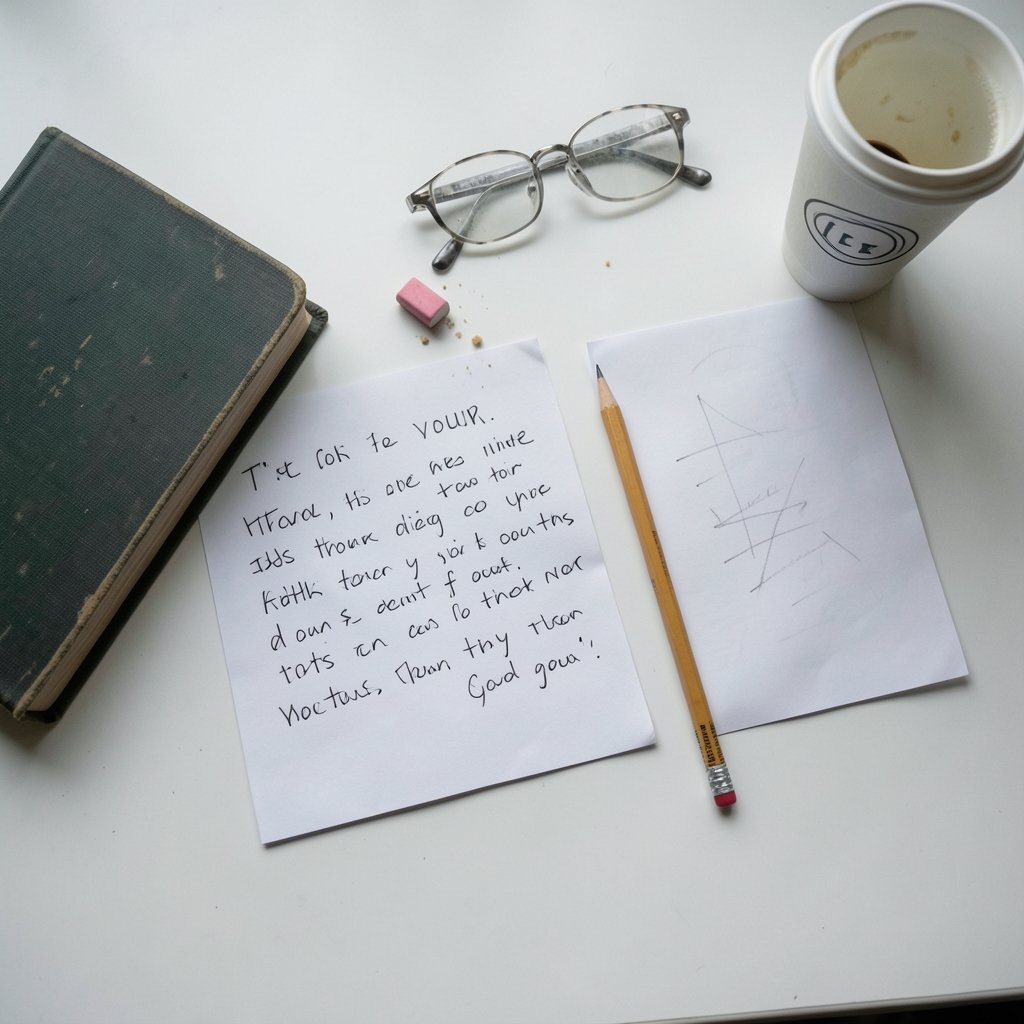
- Write down everything you remember on a blank page, in your own words.
- Reopen the source and check what you missed.
- Repeat the recall attempt the next day, not immediately.
A common mistake is testing yourself too soon, while the material is still fresh in short-term memory. That feels successful but proves little. Wait at least a few hours, ideally a day, so recall requires real effort. Flashcards work well for this, but only if you genuinely try to answer before flipping.
Space It Out, Don’t Cram It
The spacing effect is the second high-utility technique. A meta-analysis of 254 studies found that distributing practice over time reliably beats massing it into one session. Cramming can get you through a test tomorrow; spacing is what keeps the material a month later.
The optimal gap depends on how long you need to remember something. For an exam in a month, review sessions spread across days and weeks beat one long night. For a skill you want to keep for years, the gaps should stretch even further.
| Method | Time cost | Retention after a week | Retention after a month |
|---|---|---|---|
| One long cram session | High upfront | Moderate | Poor |
| Rereading twice | Moderate | Weak | Weak |
| Spaced self-testing | Spread out, lower per session | Strong | Strong |
A workable schedule for most people: study new material today, recall it tomorrow, again in three days, then in a week, then in a month. Each review can be short, five to ten minutes, because retrieval does the heavy lifting.
Mix Topics to Build Judgment
Interleaving means mixing different but related problem types in one session instead of blocking practice of a single type. A study of math practice found that interleaved practice improved test scores compared with blocked practice.
Interleaving works best when the topics are easy to confuse, such as different kinds of algebra problems or similar grammar rules. The benefit comes from learning to tell them apart and choose the right approach, which is exactly what a real test or real job demands.
The catch is that interleaving feels worse while you are doing it. Accuracy during practice drops, and learners often assume the method is failing. It is not. The confusion is the training.
Blocked practice still has a place: use it when you are first learning a new skill and need repetition to get the basics down. Switch to interleaving once you can perform the skill correctly.
Break Material Into Manageable Chunks
Working memory holds only a small amount of information at once. Cognitive load theory, developed in the 1980s and updated in later reviews, explains why dense material overwhelms learners and why chunking helps.
Two kinds of load matter. Intrinsic load is the real complexity of the subject. Extraneous load is everything else: cluttered slides, unclear instructions, jumping between tabs. You cannot remove the first, but you can cut the second.
What actually works in practice:
- Learn one small piece until it is automatic, then add the next.
- Work through a single worked example before attempting a similar problem alone.
- Remove distractions from the study space rather than relying on willpower.
- Write notes in your own words, which forces processing instead of copying.
A common mistake is trying to learn a whole system at once, such as an entire language’s verb forms in one sitting. Splitting it into chunks and spacing those chunks turns an impossible task into a series of small wins.
Sleep Is Part of Studying
Memory consolidation happens during sleep. A review of the evidence concluded that sleep plays an active role in strengthening memories formed during the day rather than only a passive one.
This changes how a smart learner plans a week. Staying up late to cram trades short-term exposure for long-term retention. A full night’s sleep after a study session does more for memory than another hour of rereading at midnight.
Practical habits that help: finish demanding study at least an hour before bed, keep a consistent sleep schedule, and review difficult material earlier in the day so sleep can do its work overnight.
Ignore the Learning Styles Myth
One of the most persistent myths is that people learn best when teaching matches their “visual,” “auditory,” or “kinesthetic” style. A review of the evidence found no adequate support for this matching idea.
That does not mean format is irrelevant. Diagrams help when the material is spatial. Audio helps when the content is spoken language. The point is to match the format to the content, not to a fixed label about yourself. Someone who believes they are a “visual learner” may avoid valuable reading practice for no good reason.
The same skepticism applies to any method that promises ease. If a technique requires no effort and feels comfortable, it probably is not building durable memory.
Build a Weekly Routine That Holds Up
Knowing the techniques is easy. Doing them consistently is the hard part. A simple weekly structure beats an elaborate plan that collapses by Wednesday.
Here is a routine that fits around a normal schedule:
- Monday: Read or watch new material once, actively, and write a short summary from memory.
- Tuesday: Recall Monday’s material on a blank page, then check and correct.
- Wednesday: Study new material, then answer mixed questions covering both Monday and Wednesday.
- Thursday: Short recall session on the week’s material, plus one older topic to keep it alive.
- Friday: Practice problems interleaved across topics, focusing on ones you confuse.
- Weekend: Rest, sleep well, and do one brief review of anything still shaky.
Notice how little time is spent reading. Most of the week is spent retrieving, mixing, and correcting. That is the shift that separates effective learners from busy ones.
The same principle applies outside classrooms. Professionals who want to master a skill, whether a trade, a language, or a creative craft, benefit from deliberate recall and spaced practice far more than from passive consumption of tutorials. Even niche communities built around specific interests, from textured hair care routines to fashion subcultures like the row, reward people who test ideas in practice rather than absorbing content endlessly. The pattern holds: try, recall, adjust, repeat. For those curious about how structured learning programs are designed at a professional level, the Luxury Home Marketing Institute offers a window into how training gets organized around real application rather than passive study. (4c hair)
Common Mistakes That Undo Good Study
Even people who know the research slip into old habits. Watch for these:
- Confusing recognition with recall. Highlighting a textbook makes the words familiar, not memorable. Cover the page and try to explain it instead.
- Studying in one long block. A three-hour session feels impressive but beats two spaced 45-minute sessions only in exhaustion.
- Skipping the correction step. Retrieval without checking mistakes can lock in wrong answers. Always verify.
- Testing only easy material. Practice should target what you get wrong, not what you already know.
- Ignoring sleep before a big day. A rested brain retrieves better than a tired one that crammed until 2 a.m.
A useful rule of thumb: if your study session did not include a moment of struggle, it probably did not include much learning. That struggle might come from recalling a definition, mixing problem types, or explaining a concept aloud without notes. All of them count.
Conclusion
Effective learning depends less on hours logged or pages highlighted than on how you spend those hours. Retrieval practice, spacing, interleaving, chunking, and sleep are the techniques with the strongest evidence behind them, and they share one trait: they feel harder than the alternatives. That discomfort signals that memory is being built, not merely refreshed. Start small this week. Read less, recall more, space it out, and let sleep finish the job. The results will show up long after a cram session would have faded.
How long should a study session be?
Most people do well with sessions of 25 to 50 minutes followed by a short break. The exact length matters less than what happens inside the session. A focused 30 minutes of self-testing beats two hours of passive rereading, so prioritize retrieval over duration.
Is cramming ever a good idea?
Cramming can carry you through a test the next morning, but retention drops quickly afterward. If you must cram, follow it with spaced reviews in the following days. For anything you need to keep, spacing from the start is far more efficient.
Do flashcards really work?
Yes, when used correctly. Flashcards work because they force retrieval, but only if you genuinely try to answer before flipping. Cards you flip too quickly or review in one giant session lose most of their benefit. Space them out and focus on the ones you get wrong.
Why does interleaving feel harder than studying one topic at a time?
Because it is harder in the moment. Mixing topics forces your brain to choose the right approach each time, which lowers practice accuracy but improves real performance later. The dip in comfort is a sign the method is working, not failing.
Can I learn effectively without much time?
Yes. Short, frequent recall sessions are highly efficient. Ten minutes of self-testing each day, spread across a week, often beats a single long study block. The key is consistency and spacing rather than total hours.
What role does sleep play in learning?
Sleep actively consolidates memories formed during the day. Cutting sleep to study more usually backfires, because the material is less likely to stick. A regular sleep schedule and a full night after demanding study are part of the learning process, not a break from it.














