


What happens when the quietest label in Paris joins forces with one of American fashion’s loudest personalities? That is the question hanging over the A.P.C. x Marc Jacobs collaboration, a pairing that sounds unlikely until you look at what each side brings to the table. One brand built its reputation on restraint, raw denim, and the idea that a good wardrobe should be almost boring. The other was shaped by grunge, theatricality, and a designer who has never met a silhouette he could not exaggerate. Put them in the same room and you get a collection that asks shoppers to think about what “basics” really mean.
Two Brands, Two Very Different Personalities

A.P.C. stands for Atelier de Production et de Création. Jean Touitou founded the French label in 1987, and it grew famous for exactly what its name suggests: production and creation, in that order. The house is known for minimalist ready-to-wear, Japanese denim, and a stubborn refusal to chase trends. Its clothes are the kind that look plain on a hanger and quietly excellent on a body. Logos are small. Colors are muted. Nothing shouts.
Marc Jacobs launched his namesake label in 1984 and served as artistic director of Louis Vuitton from 1997 to 2013. His work swings between grunge-era nostalgia, pop-art irreverence, and red-carpet drama. Where A.P.C. edits, Marc Jacobs amplifies. Where A.P.C. whispers, Marc Jacobs puts on a show.
That contrast is the entire appeal of the collaboration. It is not two similar brands reinforcing each other. It is a genuine collision of design philosophies, and the results tend to divide opinion in the most interesting way.
What the Collaboration Actually Is

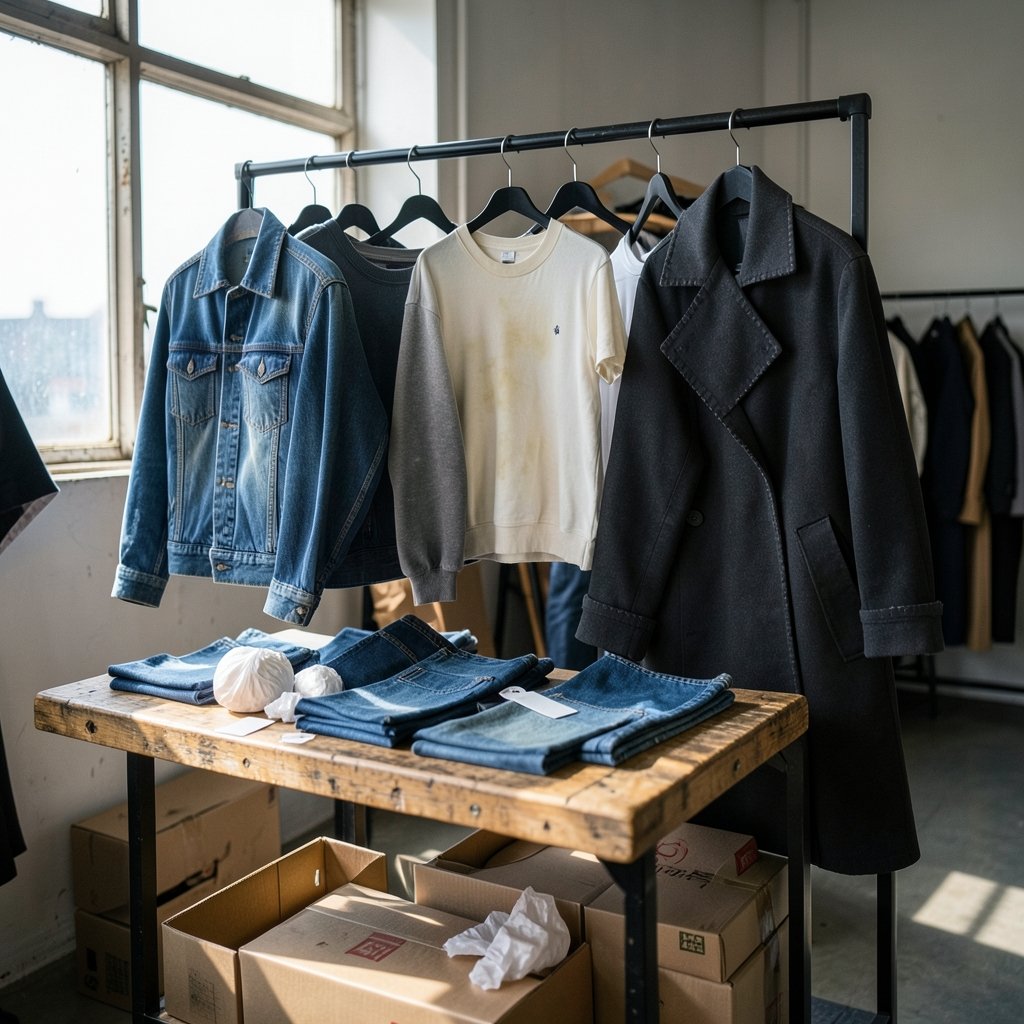
A.P.C. has a long history of collaborations with other labels and artists, and the Marc Jacobs project fits that pattern: a limited capsule rather than a permanent line. Treat any specific release date, product list, or price point as something to confirm against the brands’ own announcements before you plan a purchase, because collaborative drops move fast and details get restated incorrectly across resale listings and social posts.
What you can reasonably expect from a capsule like this follows the standard collaboration playbook:
- A tight product range. Usually a handful of pieces rather than a full wardrobe, often centered on denim, sweatshirts, T-shirts, and one or two statement items.
- Dual branding. Co-branded labels, embroidery, or prints that make the partnership visible without covering the garment in logos.
- Limited distribution. A.P.C. stores, Marc Jacobs retail, and a small number of stockists, with online drops that sell through quickly.
- Premium pricing. Collaboration pieces typically sit above each brand’s standard pricing because of the co-branding and limited run.
If you are shopping secondhand, this is where things get messy. Resale platforms fill up with items described as “A.P.C. x Marc Jacobs” that are simply one brand or the other, or neither. Check the interior label, the care tag, and the stitching before you pay a premium.
Why This Pairing Makes More Sense Than It Looks
On paper, the match seems odd. In practice, it follows a logic that fashion has leaned on for years: the quiet brand borrows energy, and the loud brand borrows credibility.
A.P.C. gains visibility with an audience that might find its core line too plain. Marc Jacobs gains a connection to the durable, everyday-clothing crowd that buys raw denim and wears the same jacket for a decade. Both brands get something they cannot easily manufacture on their own.
A practical angle exists. A.P.C.’s strength is construction and fabric sourcing, particularly denim. Marc Jacobs’ strength is image-making and cultural relevance. A capsule that applies Marc Jacobs’ eye for proportion to A.P.C.’s fabric quality is a genuinely useful product idea rather than a marketing stunt.
Shoppers who care about how clothes are made tend to notice this. A collaboration that combines a recognizable name with a manufacturer’s discipline usually holds up better than one that slaps two logos on a blank garment. That distinction matters more than the hype cycle around the drop.
How to Judge a Collaboration Like This Before You Buy
Most people evaluate collaborations emotionally, then regret it. A calmer approach works better. Here is what actually helps in practice.
| What to check | Why it matters | Common mistake |
|---|---|---|
| Fabric and construction | Determines whether the piece lasts past the hype | Buying for the logo and ignoring the material |
| Fit relative to each brand | A.P.C. runs slim; Marc Jacobs runs variable | Ordering your usual size without checking measurements |
| Co-branding placement | Affects how wearable the piece is long term | Choosing the loudest logo version, then rarely wearing it |
| Resale liquidity | Tells you how the market values the drop | Assuming limited means valuable |
| Care requirements | Raw denim and delicate prints need attention | Machine washing on hot and shrinking the fit |
A useful rule: if you would not buy the garment without the collaboration label, do not buy it with the label. The co-branding should be a bonus, not the reason.
The Practical Side: Sizing, Care, and What Goes Wrong
Collaboration capsules create specific headaches, and most of them are avoidable.
Sizing is the big one. A.P.C. is famous for a slim, close cut, especially in shirting and denim. Marc Jacobs pieces can run anywhere from relaxed to oversized depending on the line. When two size charts meet, neither one wins. Always look for actual garment measurements rather than the size on the tag, and if you are between sizes on a raw denim piece, remember that unsanforized or rigid denim can behave differently after washing.
Care is the second. Raw or rigid denim needs time before its first wash, and co-branded prints and embroidery are less forgiving than plain fabric. Turn garments inside out, wash cold, and skip the dryer unless you want the fit to change. If a piece has a printed graphic, iron it from the inside or not at all.
Authenticity is the third. Limited drops attract counterfeits and mislabeled resale listings. Ask for photos of the interior label, the care tag, and the stitching at the seams. A genuine collaboration piece will carry branding from both houses, and the construction quality should match the higher of the two brands, not the lower.
For anyone building a wardrobe around durable basics, this is familiar territory. The same instincts that help you choose everyday denim apply here: buy for fabric and fit, not for the story.
Where the Collaboration Fits in a Real Wardrobe
A capsule like this works best as an accent, not a foundation. The pieces that tend to earn their place are the ones that combine a recognizable design idea with everyday wearability: a good pair of jeans, a heavyweight sweatshirt, a jacket with one visible co-branded detail.
The pieces that tend to sit unworn are the loudest ones. That is not a knock on Marc Jacobs, whose whole appeal is theatricality. It is simply how wardrobes work. A statement piece needs occasions. A plain piece needs none.
If you are curious how this plays out in other corners of fashion and lifestyle, the same logic applies to almost any limited release. The pattern shows up in regional travel decisions and in drinks branding too, where the label does a lot of the persuading. The Marco island florida know before you visit or move there guide is a good example of why checking the substance behind a name beats trusting the name alone, and the breakdown of what’s actually in a bottle of La Marca Prosecco and who it’s for makes a similar point about packaging versus product. Fashion collaborations are no different. The label starts the conversation. The garment has to finish it.
Styling the Pieces Without Looking Like a Walking Advertisement
Co-branded clothing has one real styling risk: it can look like merchandise rather than an outfit. A few habits help.
- Anchor the loud piece with quiet ones. If the top carries visible dual branding, wear it with plain trousers and simple shoes.
- Limit yourself to one collaboration piece per outfit. Two co-branded items compete and read as costume.
- Treat logos as texture, not focal points. From a distance, a small embroidered mark reads as detail, which is usually the goal.
- Let the fit do the talking. A well-cut sweatshirt with modest branding looks better than an oversized one covered in print.
This is where A.P.C.’s design language is genuinely useful. Its restraint gives the collaboration a spine, and pieces styled with that restraint tend to age better than the louder options. If you want to understand how a brand builds an identity around a single defining feature, the culture around 4c hair is a useful parallel: specificity and consistency build loyalty far more reliably than novelty.
What to Watch For If You Are Considering the Drop
Timing matters as much as taste with limited capsules. A few practical notes:
- Follow both brands directly. Announcements usually appear on official channels before they reach press coverage.
- Know your size in advance. Measure a garment you already own and compare it to the published size chart.
- Decide your budget before the drop. Scarcity pushes people past their limits, and resale prices rarely reward impatience.
- Check the return policy. Collaboration items are sometimes final sale.
- Wait a season if you are unsure. If a piece is still on your mind months later, it was probably worth buying. If not, you saved money.
The resale market is worth watching but not chasing. Limited does not automatically mean valuable, and plenty of collaboration pieces trade below retail within a year. Buy what you will wear.
Conclusion
The A.P.C. x Marc Jacobs collaboration is best understood as a meeting of opposites: French restraint and American showmanship, production discipline and image-making flair. Whether the individual pieces earn a place in your closet depends far less on the hype than on the usual fundamentals. Check the fabric. Check the fit. Check the construction. Decide whether you would wear the garment if the co-branding were invisible.
Use that approach on every limited drop you encounter, including this one. Collaborations come and go on a fast cycle, and the pieces that survive are almost always the ones that were good clothes first and collectibles second. If the pairing appeals to you, enjoy it for what it is: a rare chance to see two very different design minds negotiate over a single garment. Just make sure the negotiation ends with something you will actually wear.
Frequently Asked Questions
What is the A.P.C. x Marc Jacobs collaboration?
It is a limited capsule collection between A.P.C., the French minimalist label founded by Jean Touitou in 1987, and the American designer Marc Jacobs, whose namesake brand launched in 1984. The project pairs A.P.C.’s restrained everyday clothing with Marc Jacobs’ more expressive design language, typically across a small range of co-branded pieces.
Is A.P.C. x Marc Jacobs a permanent line?
No. A.P.C. has a long history of one-off collaborations with other brands and artists, and this project follows that pattern. Capsules like this are released in limited runs and are not restocked indefinitely, which is why specific pieces can be hard to find after the initial drop.
How does A.P.C. sizing compare to Marc Jacobs sizing?
They are not interchangeable. A.P.C. is known for a slim, close cut, particularly in shirting and denim, while Marc Jacobs sizing varies by line and can range from relaxed to oversized. Always compare actual garment measurements against something you already own rather than assuming your usual size will fit.
How can I tell if a resale listing is genuine?
Look for branding from both houses on the interior label and care tag, and ask for close-up photos of the stitching and seams. Construction quality should match the stronger of the two brands. Be skeptical of listings that show only one brand’s labeling or use vague photos that hide the tags.
Are collaboration pieces worth buying?
Only if you would wear the garment without the co-branding. Collaboration pieces carry a premium because of the limited run and dual branding, so the fabric, fit, and construction need to justify the price on their own. If the logo is the main appeal, the piece often ends up unworn.
How should I care for co-branded denim and sweatshirts?
Wash cold, turn garments inside out, and avoid the dryer if you want to preserve the fit, especially with rigid or raw denim. Skip washing raw denim for as long as practical at first. For printed graphics and embroidery, iron from the inside or not at all to protect the detailing.









