


What comes to mind when someone says “South Pacific”? Probably turquoise lagoons, overwater bungalows, and islands small enough to walk across in an afternoon. Papua New Guinea breaks every one of those assumptions. It sits on the eastern half of the world’s second-largest island, speaks more languages than any other country on Earth, and carries a population that may now exceed ten million people. It is the South Pacific’s heavyweight in almost every sense, and yet it remains one of the least understood countries in the region.
This guide walks through what makes Papua New Guinea tick: its geography, its extraordinary cultural and linguistic diversity, its resource-driven economy, its disaster exposure, and its place in a Pacific neighborhood that has become a stage for great-power competition. Whether you are planning a visit, studying the region, or simply curious about a country that rarely makes headlines, here is what actually matters.
A Country of 600 Islands and One Very Large Half-Island
Papua New Guinea occupies the eastern half of New Guinea, the island it shares with the Indonesian provinces of Papua and West Papua. Add the Bismarck Archipelago, Bougainville, and roughly 600 smaller islands, and you get the largest Pacific Island country by both land area and population. The terrain is brutal and beautiful at once: jagged highlands cut by deep valleys, active volcanoes, and rivers that can swell without warning.
That geography shapes everything. For centuries, mountain ridges and swampy lowlands kept communities apart, which is a big part of why the country ended up with such a staggering number of languages. Even today, roads are scarce outside a few corridors, and many communities rely on small aircraft, boats, or footpaths to reach markets, clinics, and schools.
Papua New Guinea gained independence from Australia on 16 September 1975. It is a constitutional monarchy and parliamentary democracy, with English, Tok Pisin, and Hiri Motu as official languages. Tok Pisin, an English-based creole, is the most widely spoken lingua franca and the practical language of business, radio, and everyday cross-cultural communication.
More Languages Than Any Other Country on Earth
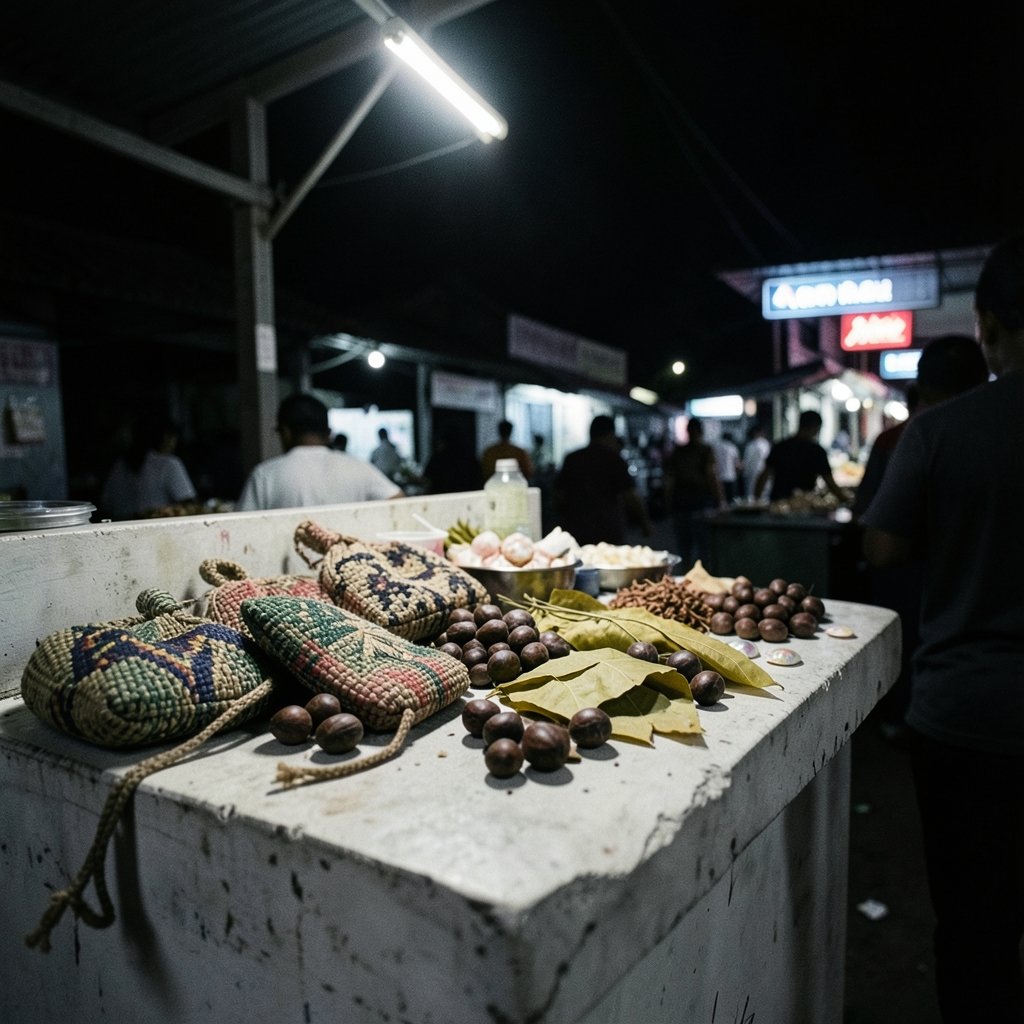
Here is a number worth pausing on: more than 800 living languages are spoken in Papua New Guinea, with commonly cited figures landing between 820 and 850. That is roughly a tenth of all the languages in the world, packed into a country with a landmass smaller than California. No other nation comes close.
For visitors and outside observers, this diversity has practical consequences. It means that national identity is layered on top of strong local identities. People often identify first with their clan, valley, or province. Wantok, a Tok Pisin concept meaning “one talk” or “same language,” describes the mutual obligation network that governs much of social and economic life. To understand how business, politics, and family actually work in the country, you have to understand wantok.
The diversity shows up in appearance too. Hair texture varies enormously across the country, and the famous Huli wigmen of the highlands, with their elaborate ceremonial headdresses, are only one example of many distinct traditions. If you are reading about Pacific hair and beauty traditions more broadly, you may come across terms like 4c hair and 2b hair in global hair-typing guides. Those categories come from a different context entirely, and they are a useful reminder that outside classification systems rarely capture how Pacific communities think about identity and appearance. Local meanings are always richer than imported labels.
The Economy: Rich Ground, Uneven Benefits
Papua New Guinea is resource-rich. Gold, copper, liquefied natural gas, oil palm, coffee, and cocoa all matter to the export economy. The PNG LNG project began exporting gas in 2014 and became a pillar of government revenue. On paper, the country has the ingredients for prosperity.
In practice, the picture is more complicated. The economy is heavily exposed to commodity prices, so a dip in global gas or gold prices ripples straight through to government budgets. Most Papua New Guineans, meanwhile, depend on subsistence agriculture rather than formal employment. The World Bank classifies the country as lower-middle income, and development indicators lag well behind regional peers.
A practical observation for anyone doing business there: relationships come before contracts. Expect lengthy trust-building, and do not mistake slow decision-making for disinterest. Also budget realistically for logistics. Moving equipment to a highland site can cost more than the equipment itself, and weather can erase a week of progress without warning. These are not anecdotes about inefficiency; they are structural features of operating in a country with extreme terrain and thin infrastructure.
Bougainville: An Unresolved Question
In November and December 2019, Bougainville held a non-binding independence referendum. Around 98 percent of voters chose independence. That result was never in much doubt given the history, which includes a devastating civil conflict from 1988 to 1998. What remains unresolved is implementation: ratification by the PNG Parliament and the precise shape of any future relationship between Bougainville and the national government.
This is a live political issue, and the status can shift with each round of negotiations. Anyone citing Bougainville in research or commentary should check the most recent reporting rather than relying on a fixed description. The question touches the country’s constitutional foundations and its mining future; the Panguna copper mine is central to both the conflict and the economic argument.
Living With Earthquakes, Volcanoes, and Drought
Papua New Guinea sits on the Pacific Ring of Fire, and the consequences are not theoretical. Earthquakes are frequent, volcanic activity is a constant background risk, and cyclones affect coastal areas. The 1997–98 El Niño event brought severe drought and frost to the highlands, devastating staple crops and causing widespread food shortages.
Sea-level rise and coastal flooding are growing concerns, particularly for low-lying atoll communities and coastal villages. For planners and travelers alike, the practical takeaway is that disaster preparedness is not optional. Travelers should check advisories before visiting volcanic regions such as Rabaul, and anyone working in community development should build flexibility into timelines, because a single seismic event can redirect national attention and resources overnight.
Health infrastructure adds another layer of challenge. The country has some of the region’s poorest health indicators, including high maternal mortality and a major tuberculosis burden. Medical facilities outside major centers are limited, and evacuation to Port Moresby or abroad may be necessary in serious cases. Travel insurance with medical evacuation coverage is a practical necessity here, not a formality.
A Pacific Neighborhood Under Pressure
Papua New Guinea is a founding member of the Pacific Islands Forum, established in 1971 as the South Pacific Forum and renamed in 2000. It also belongs to the Melanesian Spearhead Group and the Pacific Community, known as the SPC. The Forum’s 2050 Strategy for the Blue Pacific Continent, adopted in 2022, sets out the region’s long-term framework for collective action on climate, security, and development.
The regional mood has shifted, though. Competition among Australia, China, and the United States has intensified across the South Pacific. In 2022, China and Solomon Islands signed a security agreement that prompted widespread regional concern. In 2023, Papua New Guinea signed a defence cooperation agreement with the United States. These are sensitive, evolving arrangements, and their current status should be verified against recent reporting rather than treated as fixed facts.
Regional architecture has also flexed. Kiribati withdrew from the Pacific Islands Forum in 2022 amid a dispute over the Micronesian presidency, a reminder that Pacific solidarity is real but not seamless. For observers, the pattern to watch is how smaller island states leverage competition among larger powers to secure financing for climate adaptation and infrastructure, and how Papua New Guinea, as the region’s largest member, chooses to position itself.
Population: Handle the Numbers With Care
The most recent national census before recent years was in 2011, when the population stood at roughly 7.3 million. A census was conducted in 2024, but the completeness and release of its results have been uncertain. Estimates for 2024 to 2026 range roughly between 10 and 12 million people. That is a wide band, and it matters for planning: service delivery, electoral boundaries, and development budgets all depend on accurate counts.
The honest position is that any precise current population figure should be treated with caution unless it comes directly from the national statistical office. For students and researchers, citing a range with a clear explanation of the uncertainty is more defensible than quoting a single confident number.
Practical Tips for Visitors and Researchers
If you are heading to Papua New Guinea, a few things genuinely help.
- Respect local protocols. In many communities, you should seek permission before photographing people, entering customary land, or attending ceremonies. A local guide or sponsor smooths the way enormously.
- Build in buffer time. Domestic flights cancel, roads wash out, and boats wait for weather. A tight itinerary is a stressed itinerary.
- Carry cash and plan for connectivity gaps. Mobile coverage is improving but patchy outside towns, and card acceptance is limited in many places.
- Learn a few words of Tok Pisin. Even a basic greeting changes how people receive you, and it signals respect for the local lingua franca.
- Take health precautions seriously. Malaria precautions, vaccinations, and evacuation insurance are standard advice for good reason.
A common mistake outsiders make is treating the country as a single culture because it is a single state. It is not. Approaches that work in Port Moresby may fail entirely in a highland village or on an outer island. Ask, listen, and adjust.
The same principle applies to reading about Pacific pop culture and style. A tag like the row might appear in discussions of regional fashion and beauty trends, but local scenes have their own logic and their own audiences. Treat imported framing as a starting point, never the final word.
Conclusion
Papua New Guinea is the South Pacific’s most populous, most linguistically diverse, and most geographically demanding country. It is a resource economy whose benefits are unevenly shared, a democracy managing an unresolved constitutional question in Bougainville, and a nation living permanently with seismic and climatic risk. It is also a founding voice in Pacific regionalism at a moment when that region matters more to the wider world than it has in decades.
For readers, the practical lesson is to approach the country with specificity. Learn the difference between the coast and the highlands, between Tok Pisin and English, between a headline about a security pact and the lived reality of a village council meeting. The details are where Papua New Guinea actually lives, and they reward the effort.
What is the capital of Papua New Guinea?
Port Moresby is the capital and largest city, located on the southern coast of the main island. It is the country’s administrative and commercial center and the main gateway for international flights.
How many languages are spoken in Papua New Guinea?
More than 800 living languages are spoken, with commonly cited figures between 820 and 850. That makes it the most linguistically diverse country in the world. English, Tok Pisin, and Hiri Motu are the official languages, and Tok Pisin serves as the most widely used lingua franca.
When did Papua New Guinea become independent?
Papua New Guinea gained independence from Australia on 16 September 1975. It remains a constitutional monarchy and parliamentary democracy and is a founding member of the Pacific Islands Forum.
What happened in the Bougainville referendum?
A non-binding independence referendum was held in November and December 2019, with about 98 percent voting for independence. Ratification by the PNG Parliament and the details of any future arrangement remain unresolved, so the issue should be checked against current reporting.
Is Papua New Guinea safe for travelers?
It depends heavily on where you go and how you travel. Port Moresby and some other towns have high rates of crime, while many rural and remote areas are welcoming and calm. Travelers should use reputable local guides, avoid traveling alone at night in cities, check current advisories, and carry medical evacuation insurance given limited health facilities outside major centers.
What is the main export of Papua New Guinea?
Gold, copper, and liquefied natural gas are the leading exports, alongside agricultural products such as oil palm, coffee, and cocoa. The PNG LNG project began exporting gas in 2014 and became a major source of government revenue, though the economy remains highly exposed to commodity price swings.









