

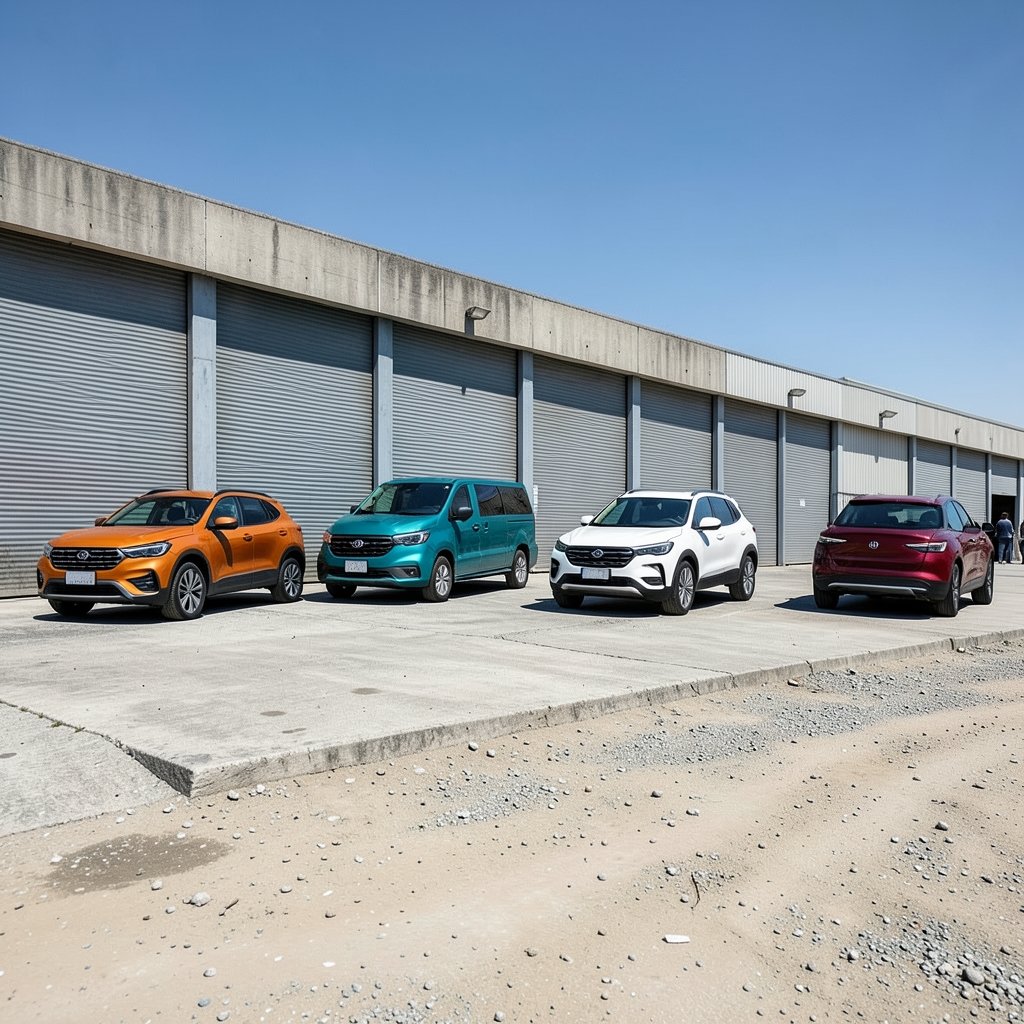
What makes an SUV “mid-size” in the first place, and why do two shoppers with the same budget walk away with completely different vehicles that both get called the best mid-size SUV? The answer is that the label hides more than it reveals. Mid-size is not one class. It is a crowded zone where two-row crossovers, three-row family haulers, plug-in hybrids, and electric SUVs all jostle for the same parking space. Picking well means understanding what the label actually measures, where the ratings come from, and which trade-offs you can live with every day.
What “Mid-Size SUV” Actually Means
Here is the first surprise for most buyers: there is no single authority that defines a mid-size SUV. The US EPA sorts vehicles by interior passenger and cargo volume, while consumer media and dealers often sort by exterior size, price, or marketing position. A vehicle can be mid-size under one scheme and compact under another. Several electric SUVs that shoppers think of as mid-size are officially classified as compact by interior volume. (One size fits most fashion)
That matters because the class label drives comparisons. If a review ranks a vehicle against three-row family SUVs and another ranks the same vehicle against five-seat crossovers, both can be “right” and still tell you nothing useful about your garage.
The practical fix is to ignore the label and measure your own needs. Ask three questions before reading a single review:
- How many people ride regularly, and how many only occasionally?
- What does the cargo area need to swallow on a normal weekend, not a once-a-year move?
- Where will it park, and does width or length actually matter on your street?
If you want a sense of how much variety exists inside one brand’s range, the breakdown of the Honda SUV lineup, from the CR-V and HR-V to the electric e:Ny1, shows how quickly size and packaging shift between models that all look similar in photos.
Two Rows or Three? The Split That Matters Most

The most useful dividing line in this segment is not size at all. It is seating. Mid-size SUVs split into two-row models (usually five seats) and three-row family SUVs, and the two groups differ sharply in price, cargo space, and driving feel.
| Factor | Two-row mid-size SUV | Three-row mid-size SUV |
|---|---|---|
| Typical seating | 5 | 6 to 8 |
| Cargo behind second row | Generous | Moderate to generous |
| Cargo behind third row | Not applicable | Often tight |
| Driving feel | Lighter, easier to park | Heavier, longer wheelbase |
| Price for similar equipment | Lower | Higher |
| Best for | Couples, small families, empty nesters | Families with regular third-row passengers |
A common mistake is buying a three-row SUV “just in case” and then discovering the third row stays folded 50 weeks a year while the vehicle costs more, burns more fuel, and fits fewer parking spaces. The reverse mistake is just as common: a family buys a roomy two-row crossover, then realizes carpool duty regularly requires six seats. Count actual bodies in actual seats for a typical month before you decide.
Fuel Economy, Footprint, and Why Bigger SUVs Look Efficient
Fuel economy comparisons in this segment are trickier than the window stickers suggest. US fuel-economy standards set targets by vehicle footprint, calculated from track width times wheelbase. Larger vehicles face lower mpg targets than smaller ones. That structure means a big three-row SUV can look respectable relative to its regulatory target while still drinking far more fuel than a compact crossover.
For shoppers, the takeaway is simple: compare real-world mpg within a size group, not across the whole segment. A 25 mpg three-row and a 25 mpg two-row are not equivalent achievements, because the three-row is hauling more mass and volume for the same fuel.
Electrification adds another layer. Electric mid-size SUVs have multiplied in recent years, and plug-in hybrids now sit between conventional gas models and full EVs, offering electric-only range plus a gas engine for longer trips. Two cautions apply to both. First, EPA range figures are test-cycle estimates, not guarantees, and cold weather, highway speeds, and roof racks all pull them down. Second, plug-in hybrid efficiency figures depend on how often you actually charge; a PHEV that never gets plugged in can be less efficient than a plain hybrid.
Safety Ratings: Check the Test Year and the Stars
Safety is where buyers most often misread the data. Two rating programs dominate, and they are not interchangeable.
The Insurance Institute for Highway Safety (IIHS) has changed its tests repeatedly. It revised its side-impact test in 2020 and its moderate overlap front test in 2022, and it added a tougher front crash-prevention evaluation. A Top Safety Pick awarded in 2019 is not equivalent to one awarded in 2024, because the bar moved. Meanwhile, the National Highway Traffic Safety Administration (NHTSA) runs its own New Car Assessment Program, with separate crash and rollover testing and its own five-star scale. A vehicle can shine on one program and merely do fine on the other.
Practical rules that save headaches:
- Compare ratings from the same test year whenever possible.
- Check whether a “Top Safety Pick” is the base award or the “Plus” tier, which requires stronger headlights and better front crash prevention.
- Look at the specific test that matters for your driving, such as side impact for urban intersections.
- Remember that ratings apply to a model year, not a nameplate. A redesign can change everything.
Where Rankings Disagree, and Why That Is Fine
Consumer outlets rank mid-size SUVs using very different methods. Some lean on reliability surveys, some on initial quality data, some on instrumented road tests, and some on owner satisfaction. Rankings frequently disagree, and reliability data typically lag by a model year or more. That is not a scandal. It is a signal that “best” depends on what you value.
A useful habit is to read three reviews from outlets with different methodologies and note where they agree. If all three praise ride quality and all three criticize the infotainment, you have found something real. If one calls the seats excellent and another calls them flat, that is a personal-fit issue you need to test yourself with a proper test drive, ideally longer than 15 minutes.
The same logic applies to adjacent segments. A practical guide to the Mazda SUV models, every CX from small to large, illustrates how one brand spreads its lineup across price and size bands, and how the “right” model depends on which band fits your budget rather than which one wins a comparison test.
Towing, Payload, and the Fine Print Nobody Reads
Maximum tow ratings are marketing numbers until you read the footnotes. A 5,000-pound rating usually applies to a specific trim with a tow package, a particular axle ratio, and sometimes just the driver aboard. Base models often tow far less. Payload, the weight of people and cargo you can add, is capped separately and is frequently the real limit for families loading up for a trip.
Before signing, check the owner’s manual or the manufacturer’s towing guide for the exact configuration you are buying, including trim, engine, drivetrain, and whether a cooler or hitch receiver is fitted. Then do the arithmetic: tongue weight, passengers, gear, and accessories all count against payload. Buyers who skip this step are the ones who discover at the boat ramp that their “5,000-pound” SUV is rated for considerably less as equipped.
Practical Tips That Actually Work in the Showroom
Experience from years of buying advice points to a handful of habits that separate happy owners from regretful ones.
First, bring your own child seats to the test drive. Installing them takes two minutes and reveals more about second-row access than any spec sheet. Second, park the vehicle in a tight spot, or at least simulate it by checking turning circle and mirror width. Third, load the cargo area with something bulky, like a stroller or a cooler, to see whether the liftover height and opening shape work for you. Fourth, sit in the third row yourself if you are buying one, and note whether your knees touch the second row.
A fifth tip: check the tire and wheel size. Large wheels look great in photos and cost more to replace, ride harder, and are more vulnerable to pothole damage. Finally, test the infotainment with the screen you will actually use, at night if possible. Glare and menu depth are the two most common complaints after purchase.
The same principle of matching product to real use shows up far beyond cars. A guide to matte sizes and frame mats explains how a few millimeters of specification change what fits on a wall, and a djembe buyer’s guide to sound, size, and tradition makes the same point about instruments: the spec that matters is the one tied to how you will actually use the thing. Vehicle shopping rewards the same discipline.
Electric and Hybrid Mid-Size SUVs: What to Know Before You Commit
Electric mid-size SUVs are now a genuine subcategory rather than a novelty, and plug-in hybrids bridge the gap for buyers who are not ready to go fully electric. The practical questions are different from gas-vehicle shopping.
Charging access comes first. If you cannot charge at home or at work, a plug-in hybrid’s electric range is mostly theoretical, and a full EV becomes a logistics project. Second, check real-world range expectations rather than the label: highway driving, cold temperatures, and heavy loads all reduce range, and the gap between the estimate and reality is widest in exactly the conditions families drive in. Third, look at cargo space, because batteries often eat into it, and a mid-size EV can have less usable trunk volume than a smaller gas crossover.
For buyers weighing brands, the overview of the Maserati SUV lineup, from the Levante and Grecale to the electric future, is a useful reminder that even luxury marques are moving in this direction, and that the electric versions often change packaging, weight, and price in ways that matter more than the badge.
How to Build Your Shortlist
A sensible process narrows the field fast without relying on anyone’s ranking.
- Set a hard budget that covers insurance, tires, and fuel or charging costs in addition to the monthly payment.
- Decide two rows or three, based on real passenger counts.
- Pick a powertrain: gas, hybrid, plug-in hybrid, or electric, based on charging access.
- Confirm the towing and payload figures for the exact trim you want.
- Check safety ratings from the same test year across your finalists.
- Test drive the top two back to back on the same route, including a rough road and a parking lot.
That sequence eliminates most of the segment in an afternoon. The remaining choice usually comes down to seat comfort, visibility, and how the controls feel, which are exactly the things no ranking can settle for you.
Conclusion
The best mid-size SUV is not a single winner. It is the one that matches your passenger count, your parking situation, your charging access, and your cargo reality. The label itself is loose, safety stars are only comparable within the same test year, and rankings disagree because they measure different things. Do the arithmetic on towing and payload, read the footnotes, and spend your test drive on the seats and screens you will live with daily. Buyers who do that rarely regret their choice, and they stop caring which outlet crowned which vehicle.
Frequently Asked Questions
Is a mid-size SUV the same as a three-row SUV?
No. Mid-size describes a size band, and that band includes both two-row five-seat crossovers and three-row family SUVs. The seating layout matters more than the label because it drives price, cargo space, and how the vehicle feels to drive. Some three-row models are also classified as mid-size by interior volume while others sit in a larger class.
Why do safety ratings from different years not compare directly?
Because the tests change. The Insurance Institute for Highway Safety revised its side-impact test in 2020 and its moderate overlap front test in 2022, and it has added tougher front crash-prevention requirements. A Top Safety Pick from an earlier year was earned against an easier standard, so compare awards only within the same test year.
Do EPA fuel economy and range numbers reflect real driving?
They are test-cycle estimates, not guarantees. Real results vary with speed, temperature, load, and accessories like roof racks. Electric range in particular drops in cold weather and at sustained highway speeds, and plug-in hybrid efficiency depends heavily on how often the vehicle is actually charged.
Can I trust the maximum towing rating on the brochure?
Only with the fine print. Maximum tow ratings typically apply to a specific trim with a tow package, and payload limits are separate and often the real constraint for families. Check the owner’s manual or the manufacturer’s towing guide for your exact configuration, then add up passengers, gear, and tongue weight.
Why do expert rankings of mid-size SUVs disagree so often?
Because outlets weight different things. Some score reliability survey data, some initial quality, some instrumented road tests, and some owner satisfaction, and reliability data usually lag by a model year or more. Read several sources and look for points of agreement rather than treating any single ranking as final.
Should I choose a plug-in hybrid or a full electric mid-size SUV?
It depends on charging access. A plug-in hybrid makes sense if you can charge regularly for short trips but want a gas engine for long ones; without regular charging, its efficiency advantage shrinks. A full EV suits buyers with reliable home or work charging who can plan longer trips around charging stops.














